You are sitting in the chair, and the stylist asks how much length you want to keep. The answer is almost always: enough to pull back, but with something happening around the face. That is the sweet spot of a long layered cut, and why Charming Long Layers 2027 fill so many saved boards. They solve the problem of hair that feels heavy and shapeless without losing the weight.
17 variations are here, from low-upkeep air-dried textures to neat blowouts, for straight, wavy, and fine hair. You will find the one that fits your density and your daily routine, no guesswork needed.
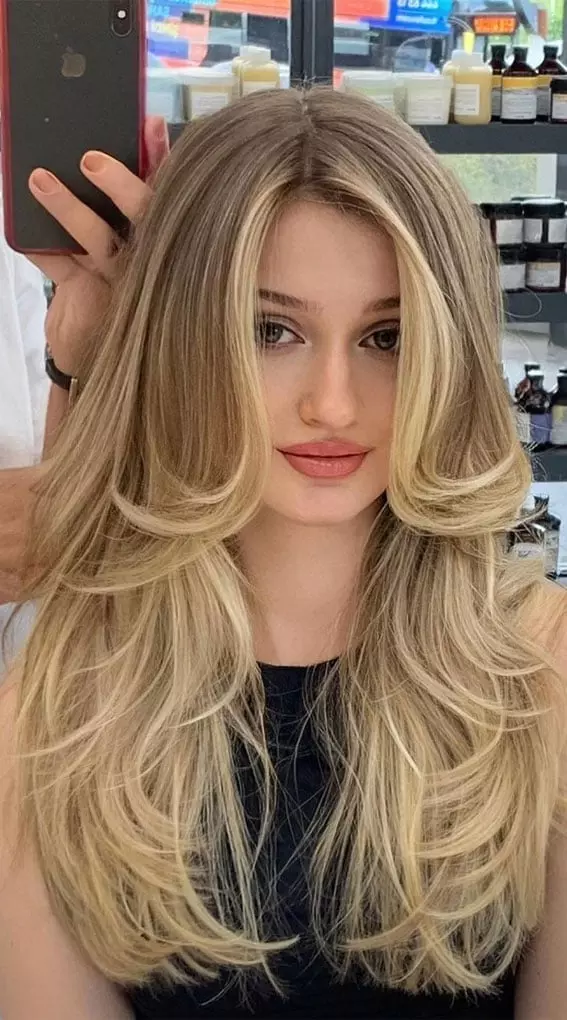
Ash blonde curtain bangs and face-framing layers
Middle part, soft curtain bangs, and ash blonde color with lighter highlights. This cut is built around symmetry. The fine, wavy texture lets the layers fan outward from the cheekbone, not cling. You need at least collarbone length to start. Tell your stylist: long layers with soft curtain bangs, ash blonde with subtle lighter highlights. The precision layering defines the look; the bangs should sweep the cheekbone and no further. Round and heart faces get the most out of this shape. This style requires bangs. The curtain is not optional.
Blow-dry the bangs with a round brush, aiming the nozzle downward so the pieces separate cleanly. Trim the layers every eight weeks, or the movement goes flat.
Softening a dark brown base with blonde highlights and curtain bangs
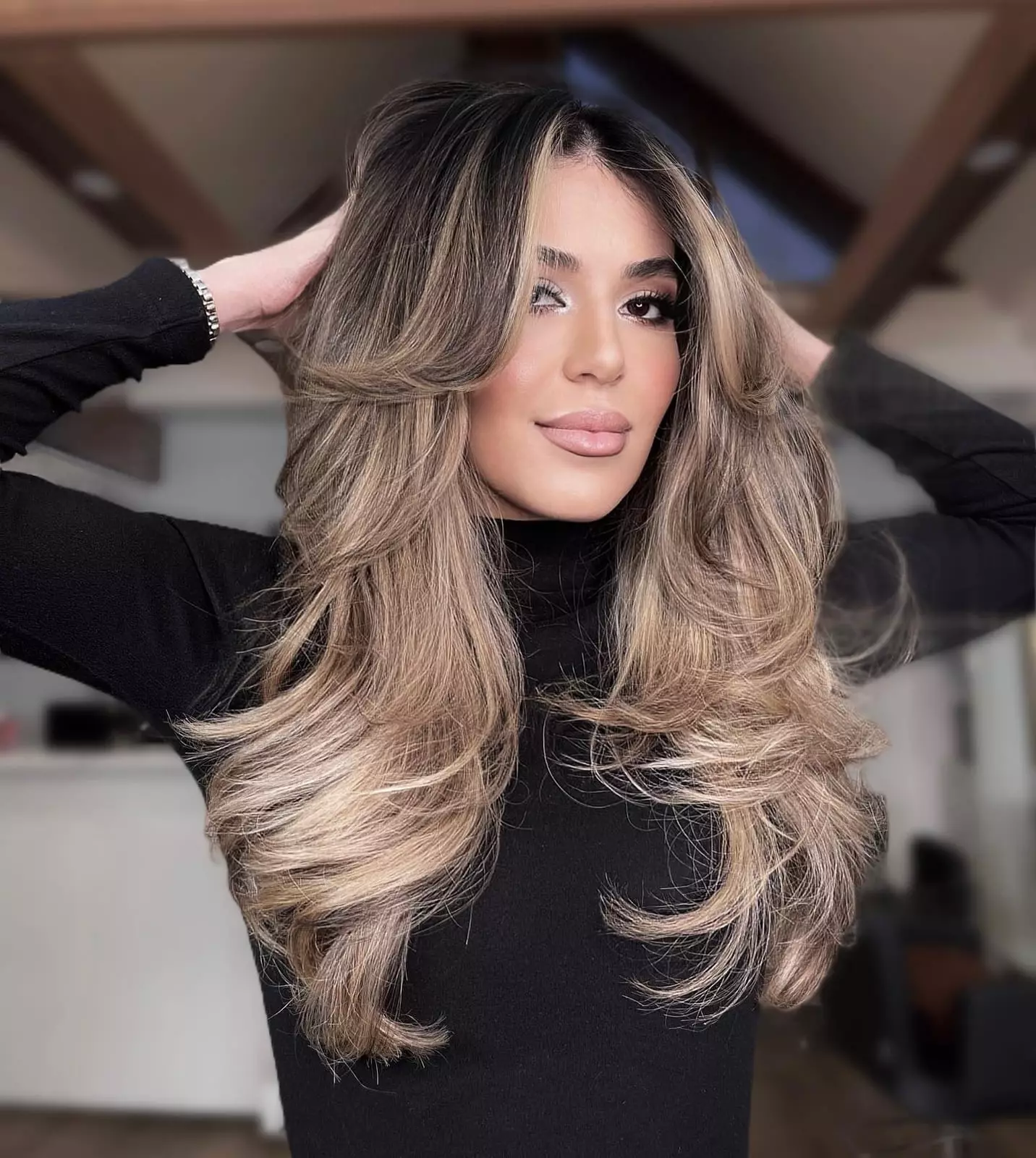
Contrast this with a solid dark brown blunt cut. The blonde highlights here do the softening. The dark brown base keeps depth, while thin lighter strands break up the weight. The curtain bangs and long layers frame the face without shortening it. Fine to medium wavy hair holds the wave best. Not for extremely thick hair that resists a blowout curl. A middle part keeps the bangs balanced on both sides. Volumizing spray before drying lifts the layers without heat damage.
Trim the curtain bangs every four to six weeks, or they start to look heavy.
Fine highlights add dimension to ash blonde fringe

Fine highlights on an ash blonde base. The technique is subtle but deliberate. The face-framing fringe sweeps away from the face, not straight across. A bouncy blowout finishes the ends, giving fine wavy texture a lift it does not get from air-drying. Collarbone length or longer keeps the proportion right. Skip it if your hair is too fine to hold volume without product. Tell your stylist: long layers with face-framing fringe, ash blonde with fine highlights. A texturizing spray on dry ends adds definition that the cut alone cannot hold.
Dark brown subtle highlights with curtain bangs and straight texture
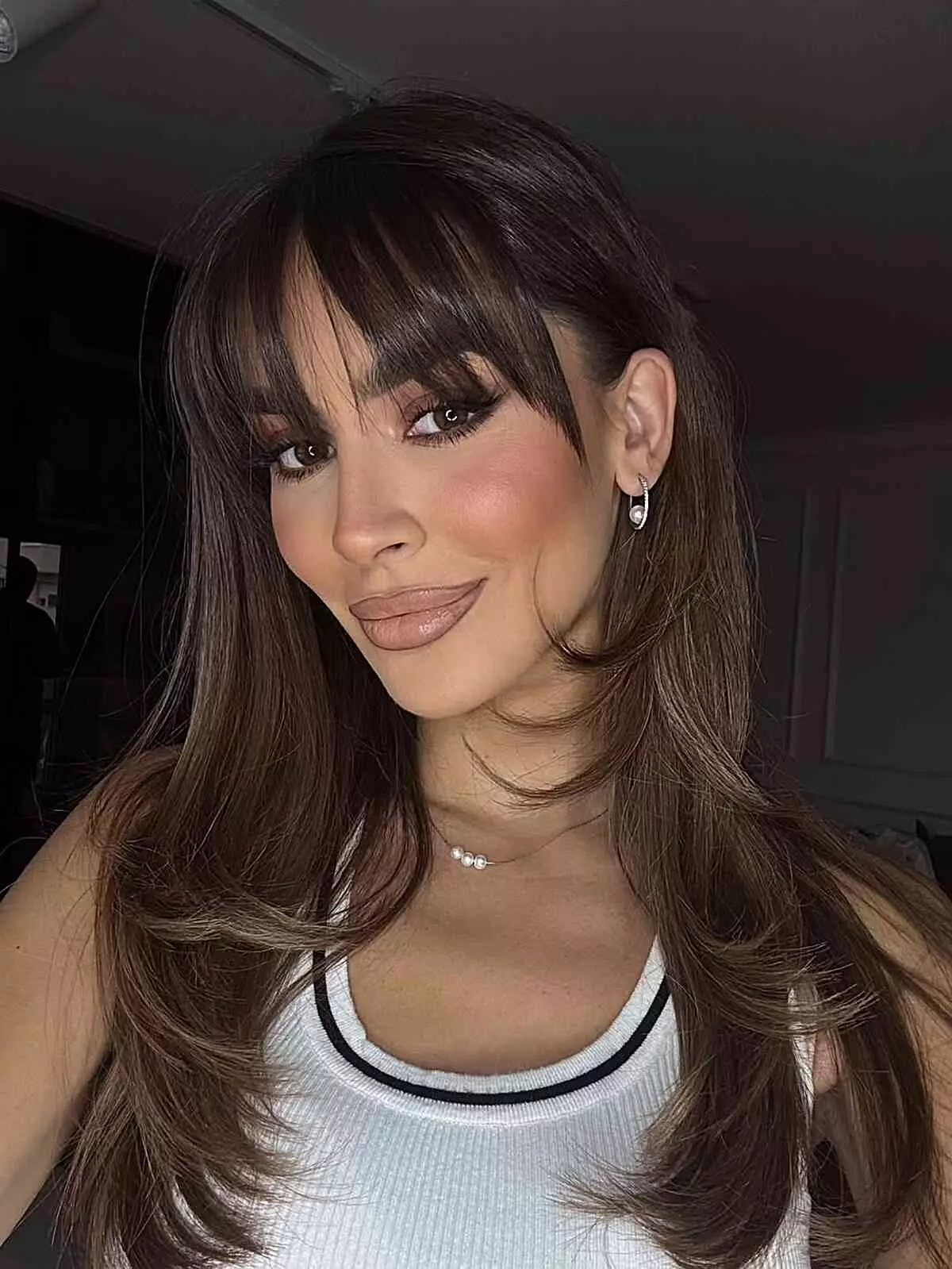
Straight, fine hair gets a neat finish here because the layers are cut into the interior, not just the ends. The curtain bangs blend smoothly into face-framing layers, so there is no harsh line at the jaw. Thin lighter strands scattered through the dark brown base add dimension without looking stripey. The blowout stays sleek, not fluffy. Curly hair or a strong wave will not hold this shape. A smoothing serum on dry hair keeps flyaways down.
Face-framing layers highlight dark brown fine texture
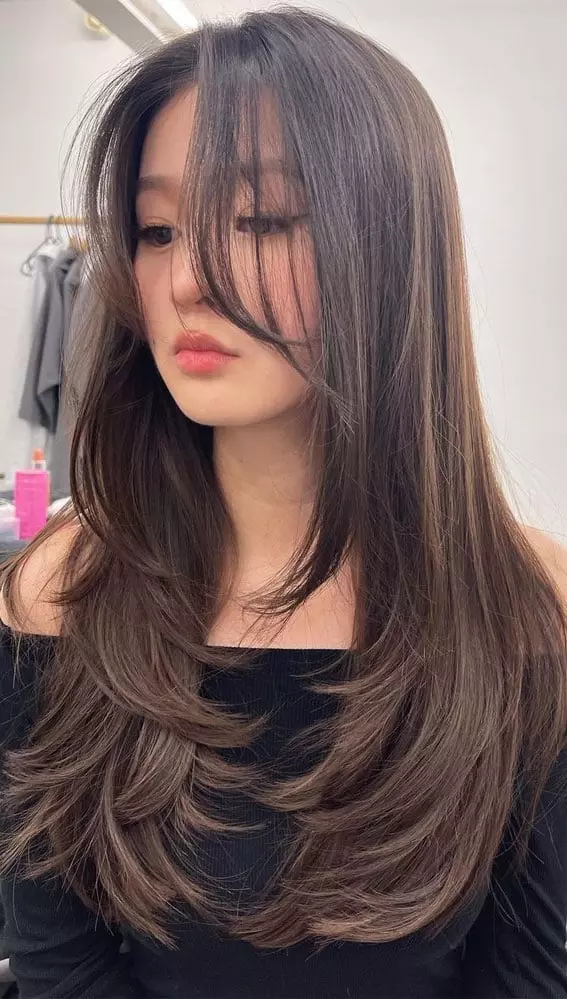
Does precision layering actually work on fine, straight hair? Yes, when the shortest layer hits just below the chin. The dark brown base stays solid; fine highlights add a subtle lift at the ends. The curtain bangs are cut to part in the middle, so they frame the face evenly. Collarbone length is the minimum to keep the weight from collapsing the layers. Pass when you prefer no bangs or have thick hair that may be hard to style. Tell your stylist: long layers with curtain bangs, dark brown with fine highlights, precision face-framing. A flat iron smooths the bangs and layers in under five minutes.
Parted fringe frames face with dark brown wavy texture
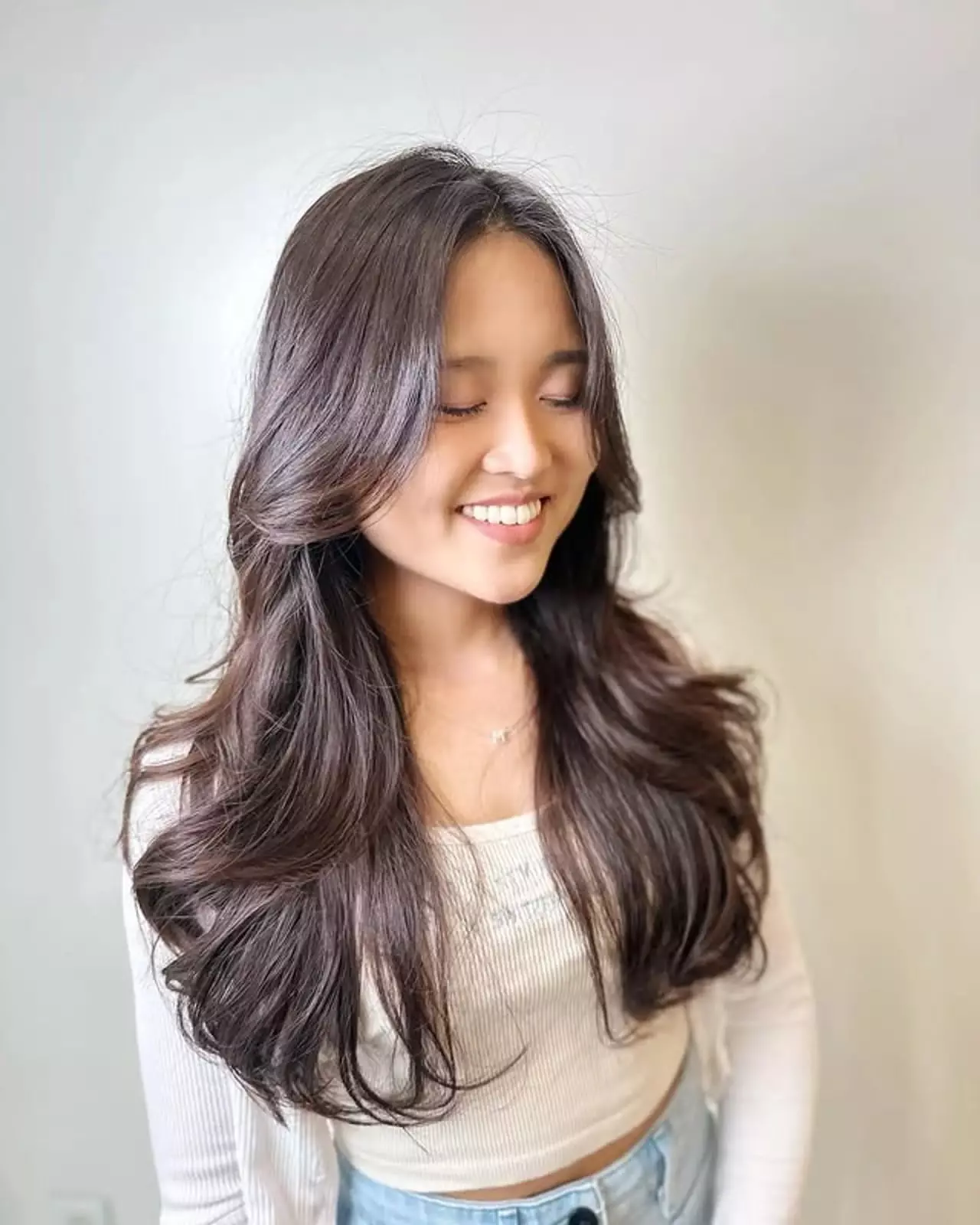
Seven minutes with a blow dryer and a round brush is the price of this look. The dark brown base stays glossy, while the parted fringe and face-framing layers give fine, wavy texture a reason to move. Curtain bangs that sweep away from the face soften a square or round jaw without hiding it. Pass when your hair is very straight and refuses to hold a wave, or when you truly hate bangs. A sea salt spray and four weeks between fringe trims keeps the shape honest.
Multiple layers add movement to dark brown wavy texture

A side parting changes the whole geometry. The curtain bangs fall heavier on one side, so the face-framing layers stack differently than they would with a center part. Multiple layers running through the fine, wavy texture create a stacked volume that a single layer cannot. The dark brown cut is precise because the stylist cut each section to land at a slightly different point. Blow drying with a diffuser encourages the wave pattern without fighting it. This long layers 2027 variation looks undone without being messy.
This cut requires precision layering. The layers here sacrifice a clean edge for movement, and a blunt cut will not deliver that. For everyone else, the side-part curtain bangs frame the eyes.
Voluminous blowout adds fullness to thick wavy hair
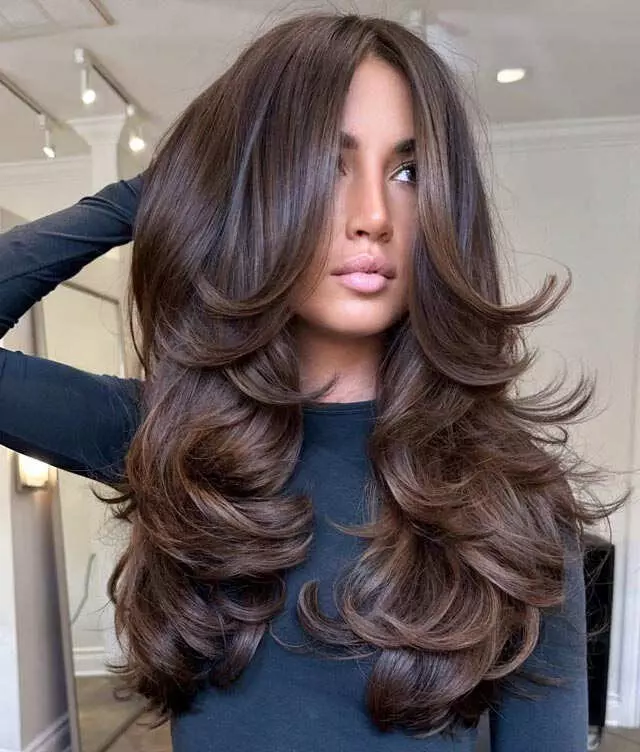
Does your thick, wavy hair ever feel like too much? A voluminous blowout transforms it into an asset. With no bangs and a middle parting, the face-framing layers land at the cheekbone and jaw, softening the edges of a long face shape. The dark brown base with subtle highlights keeps the texture from looking flat. This cut relies on density, so it works best for hair that can hold volume. A round brush and heat are required for styling. Tell your stylist: long layers, dark brown with subtle highlights. An eight-week trim rhythm keeps the shape from collapsing.
Ash brown with blonde highlights and soft waves
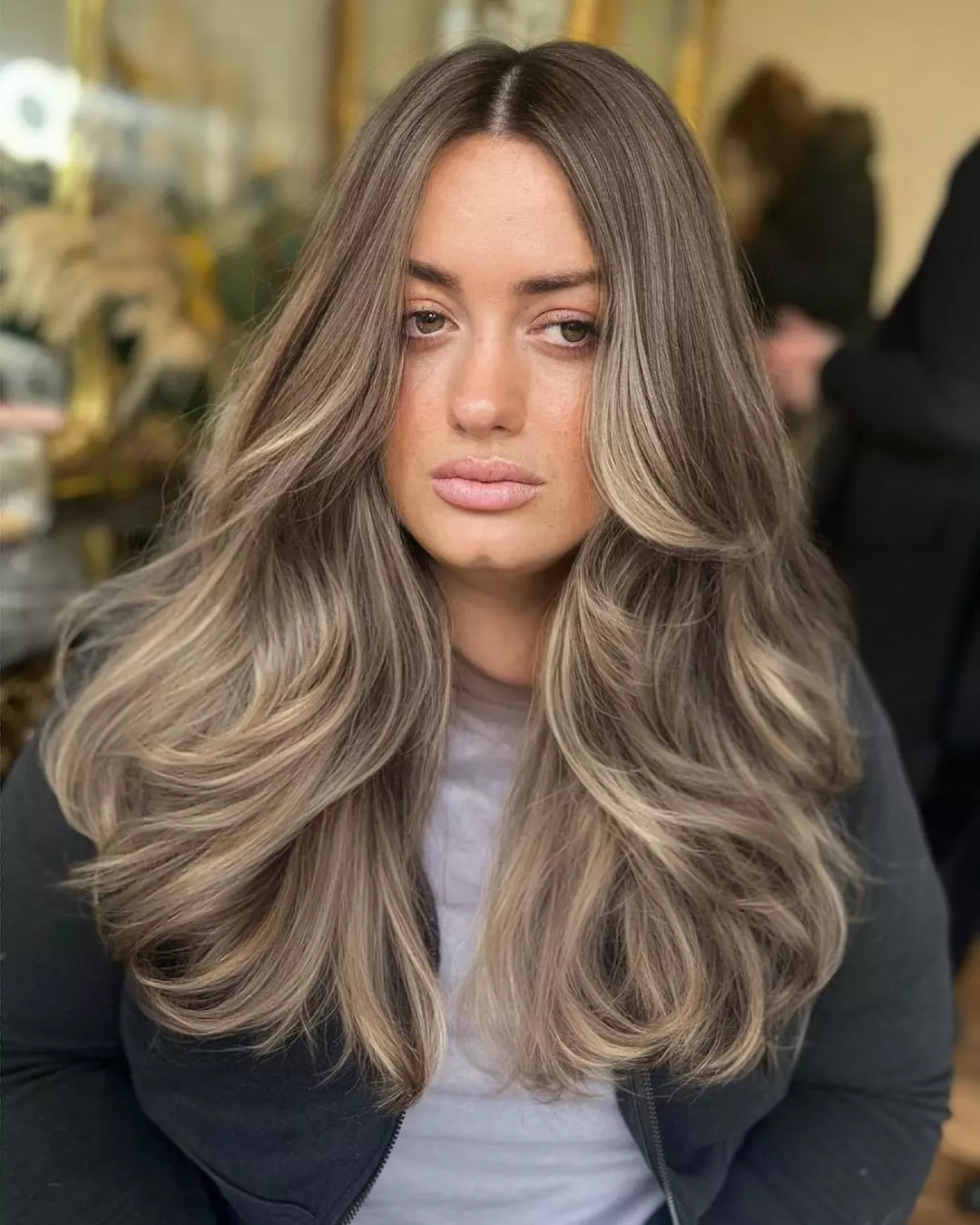
An ash brown base with subtle blonde highlights gives the hair a refined look because the contrast is low. The middle part and no bangs keep the focus on the soft wave pattern and the face-framing layers that skim the collarbone. Fine, wavy texture benefits from the lighter pieces, which create the illusion of more body. A wave-enhancing cream applied to damp hair, then air-dried or diffused, delivers this finish in under quarter of an hour. It works best for those who want movement rather than a single-length blunt cut.
Caramel highlights create lighter effect on dark blonde
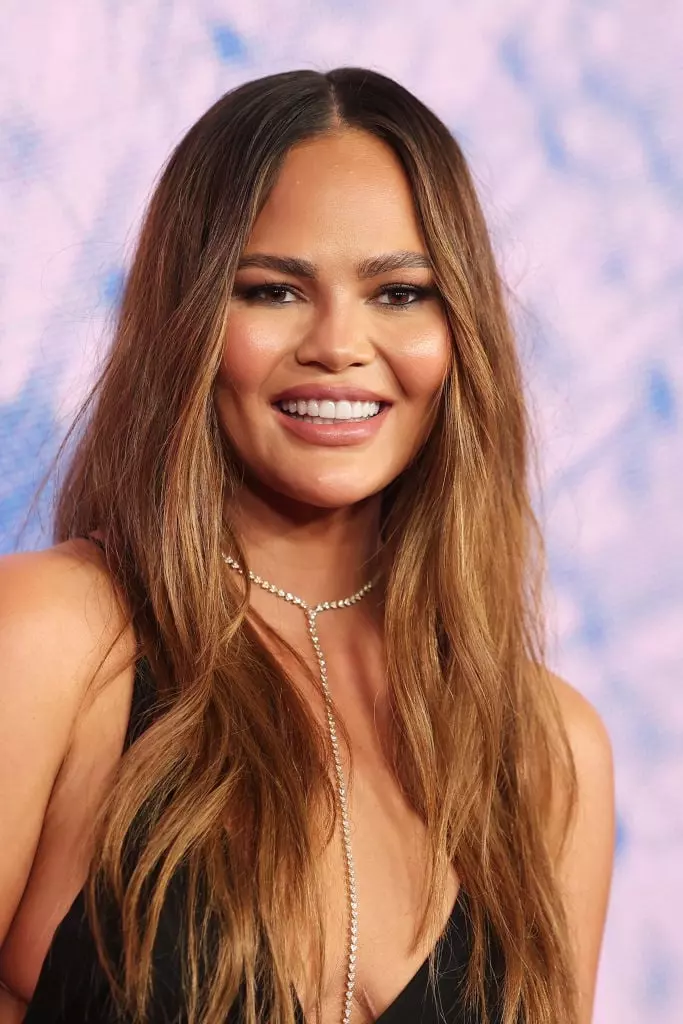
Caramel highlights on a dark blonde base require a colorist who understands placement. The goal is a lighter effect, not a stripe. Long layers with face-framing pieces that start at the chin ensure the lighter strands land where they reflect light. A centered parting and no bangs keep the silhouette clean, while the fine, wavy texture gives the cut a relaxed finish. Hair that is very coarse and resists soft waves may not achieve the same look. Ask your colorist for: dark blonde with caramel highlights, face-framing placement. A texturizing spray and a scrunch are the entire styling routine.
Warm brown with caramel highlights and voluminous blowout

Warm brown with caramel highlights is a color choice that adds dimension. The middle part and face-framing layers create softness around the jaw without losing length. Fine to medium wavy hair holds this blowout best. If your hair resists volume at the roots, this style may not be ideal.
That blowout requires a round brush and a volumizing mousse. A texture spray at the ends keeps the wave from falling flat by midday.
Dimension created with lighter blonde strands on dark blonde

Dimension here comes from lighter blonde strands on a dark blonde base, not chunky streaks. The centered part and loose waves give it a lived-in feel that works for fine wavy hair. A straight, resistant texture will fight the wave pattern. Pass when your hair needs heat every time to hold a bend. A texturizing spray and a quick scrunch are all you need after the blow-dry.
Auburn highlights appear on dark brown fine wavy hair
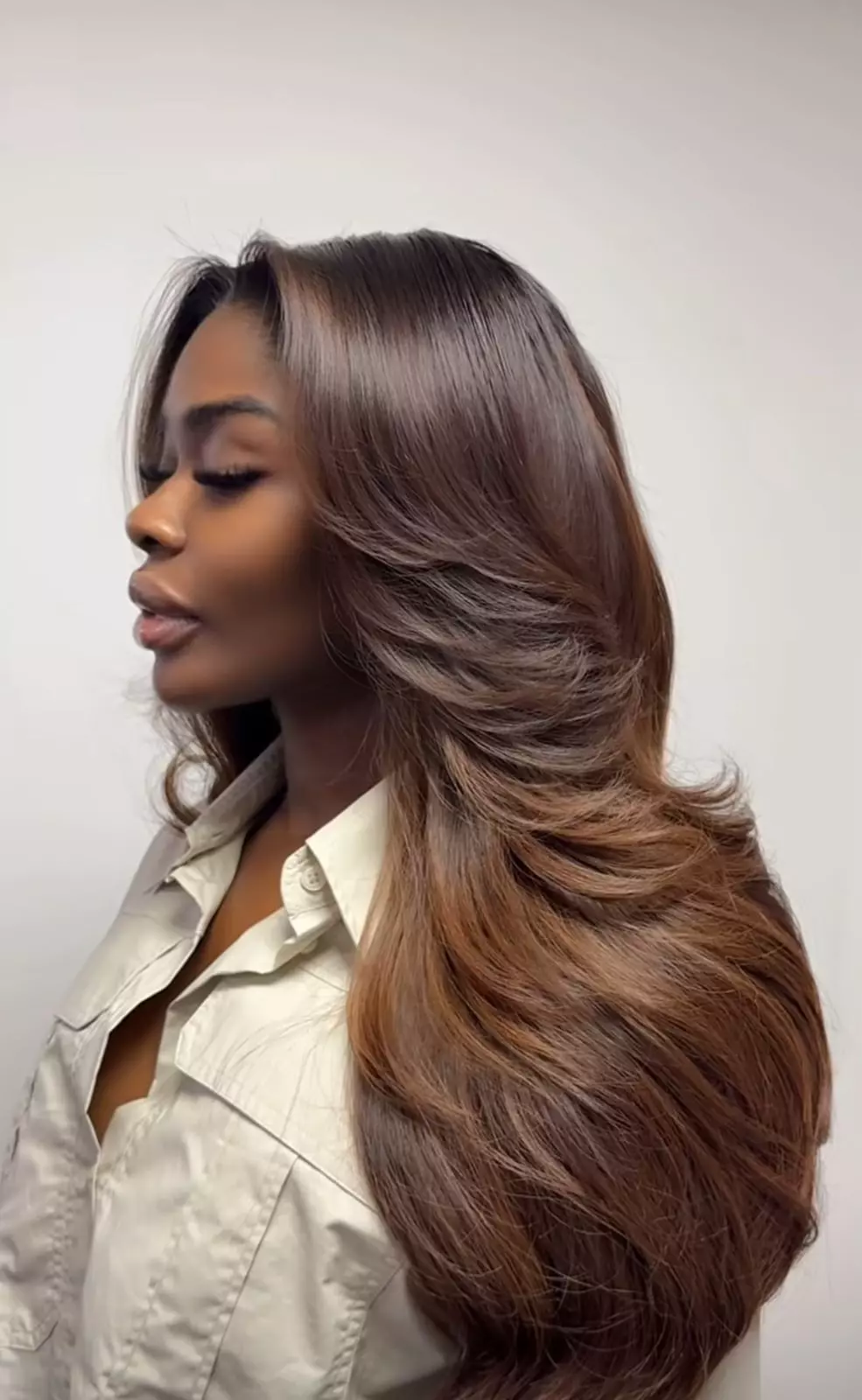
Subtle auburn highlights on a dark brown base create warmth. The middle part and face-framing layers soften a square jaw or a strong chin. The mistake is asking for chunky highlights instead of fine ribbons of color. Fine wavy hair needs the color placed close to the part to look natural. A blowout with a volumizing spray at the roots gives this cut its shape.
Cascading layers with subtle waves and highlights
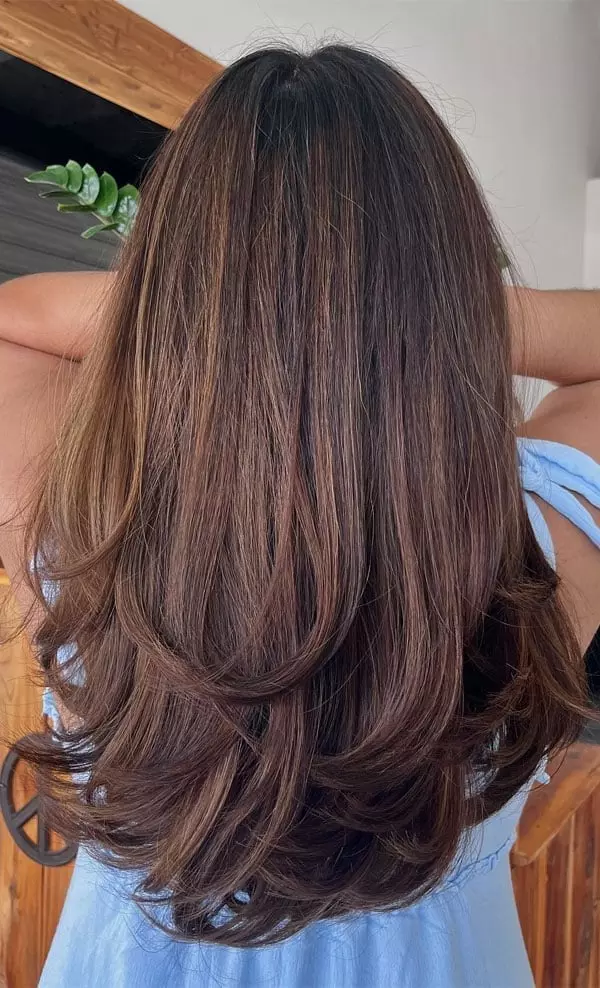
Layers that start mid-length and cascade to the mid-back create movement that fine wavy hair can actually support. The dark brown base with subtle highlights adds depth without a heavy root line. A gentle blowout with a large round brush gives the soft curl its shape. It works best on hair at least mid-back length or with natural wave.
Air-dried dark brown layers for a natural look

Not every layered cut needs a blowout. This one works because the face-framing layers start around the chin, giving structure to fine straight hair that air-dries flat. The middle part and dark brown color keep it simple. Skip it if your hair is thick and curly, as the layers can disappear into the volume. A smoothing serum applied to damp hair reduces frizz without weighing down the ends.
Deep plum straight fine hair with face-framing layers
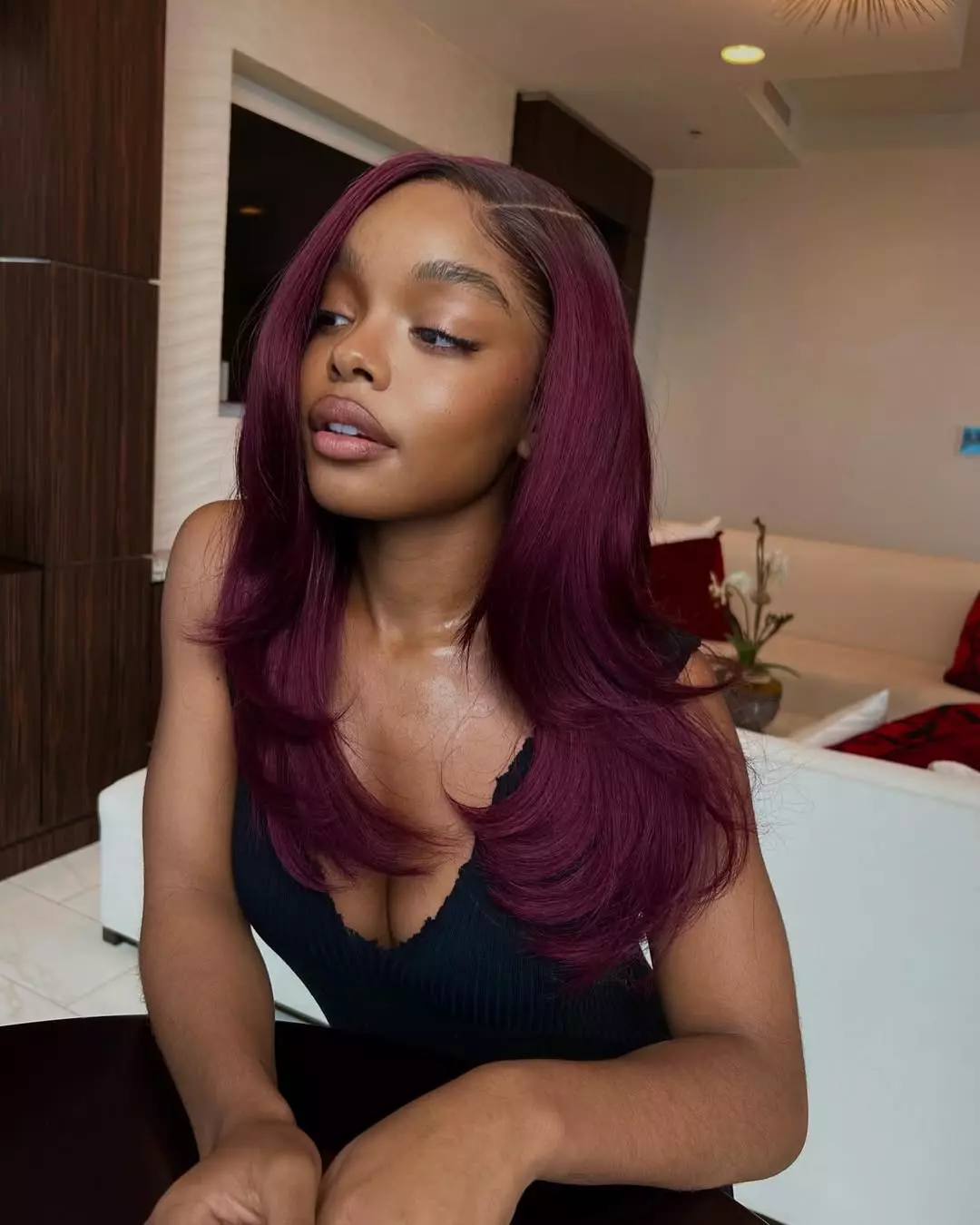
Color this deep needs a precise cut to keep it from looking heavy. The long layers start subtly around the chin, so the front pieces add dimension without losing density. Fine, straight texture holds a smooth blowout well, but the real work happens in the chair: your stylist carves each face-framing section to blend into the rest, not just chop at an angle.
Ask your stylist for: long layers, deep plum with lighter strands, face-framing. A side parting helps the color shift look deliberate. This shade demands maintenance.
Thick wavy hair with face-framing layers and a blowout
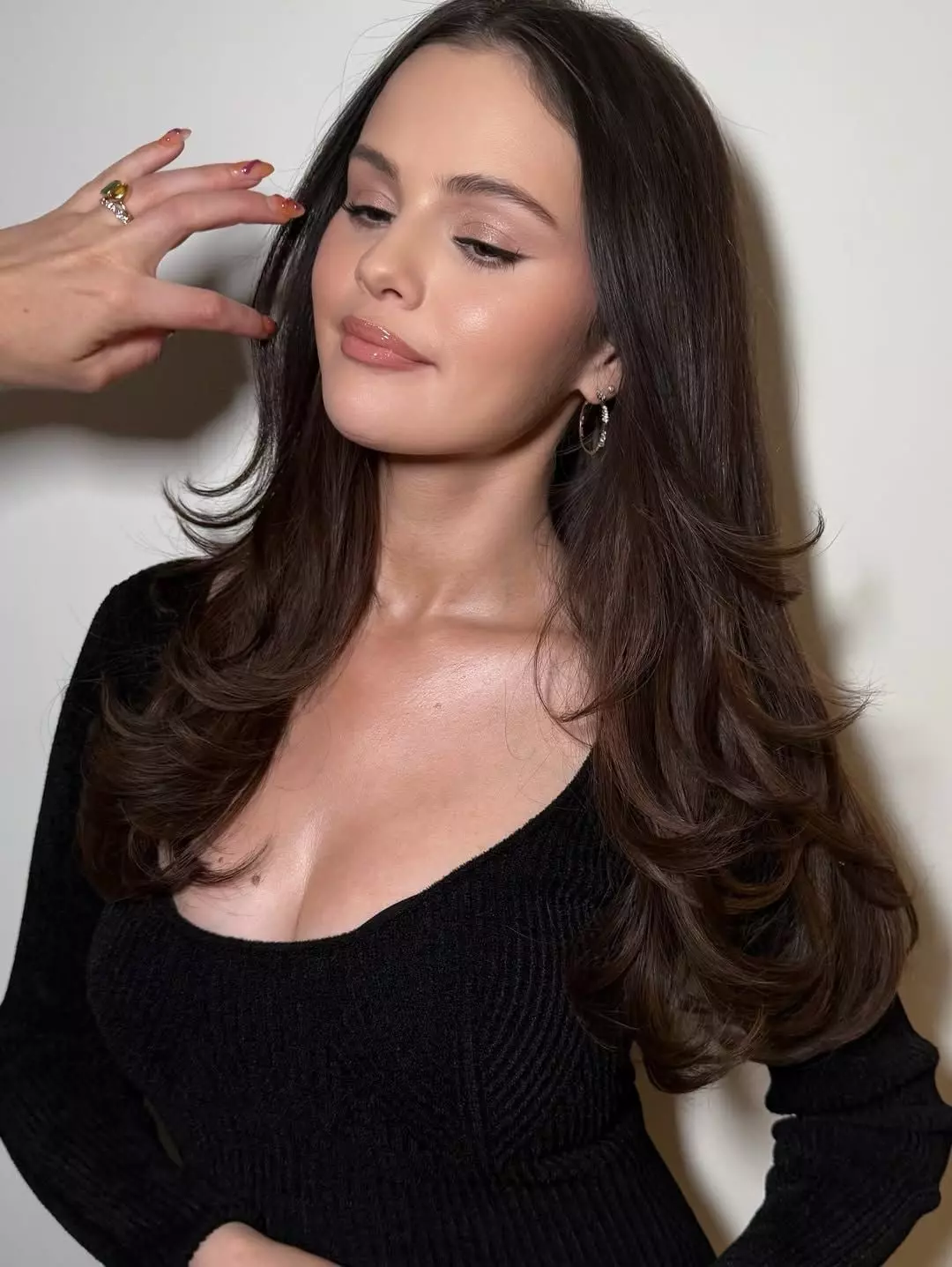
The catch: precision matters here. A blunt cut on thick hair poufs at the ends; layers that start too high create a mushroom shape. You get a cut that moves with you, not a daily wrestling match.
Final Thoughts
Pick the style that fits your morning routine and your stylist’s best skill.
- Fine hair: light layers and curtain bangs for weightless volume.
- Wavy texture: long layers that encourage your natural wave pattern.
- Ten minutes to style: face-framing layers that air-dry into shape.
- Color upkeep: schedule trims every 8 to 10 weeks to keep the cut fresh.
Find the perfect long layers to enhance your natural texture.