You’re at that point in the grow-out where the ends feel heavy and the fringe is a maybe. A solid medium length cut buys you another season without starting over, and the right layers make it look like you planned the whole thing.
That is why Gorgeous Medium Length Hair 2027 fills so many saved boards: 33 options that run from neat and salon-fresh to relaxed and home-styled. Some lean into texture, others into bangs or a color shift. One of them fits your morning routine and your next trim date.
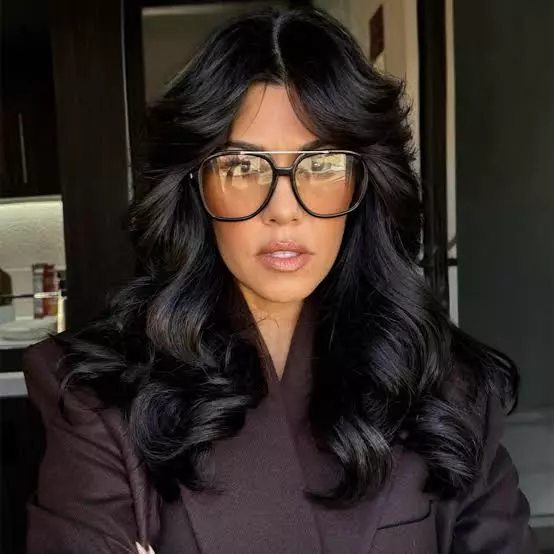
Voluminous curtain bangs for a dark brown wavy lob
A deep middle part and long layers give this cut its architecture, not luck. The wavy lob with curtain bangs works best for thick hair that holds a round-brush blowout past lunch. Skip it if your texture is fine and tends to go flat by noon; the volume is the whole point. Tell your stylist: collarbone lob with long layers and voluminous curtain bangs, middle part. Curtain bangs need a trim every four to six weeks.
Ash blonde bob with side-swept bangs
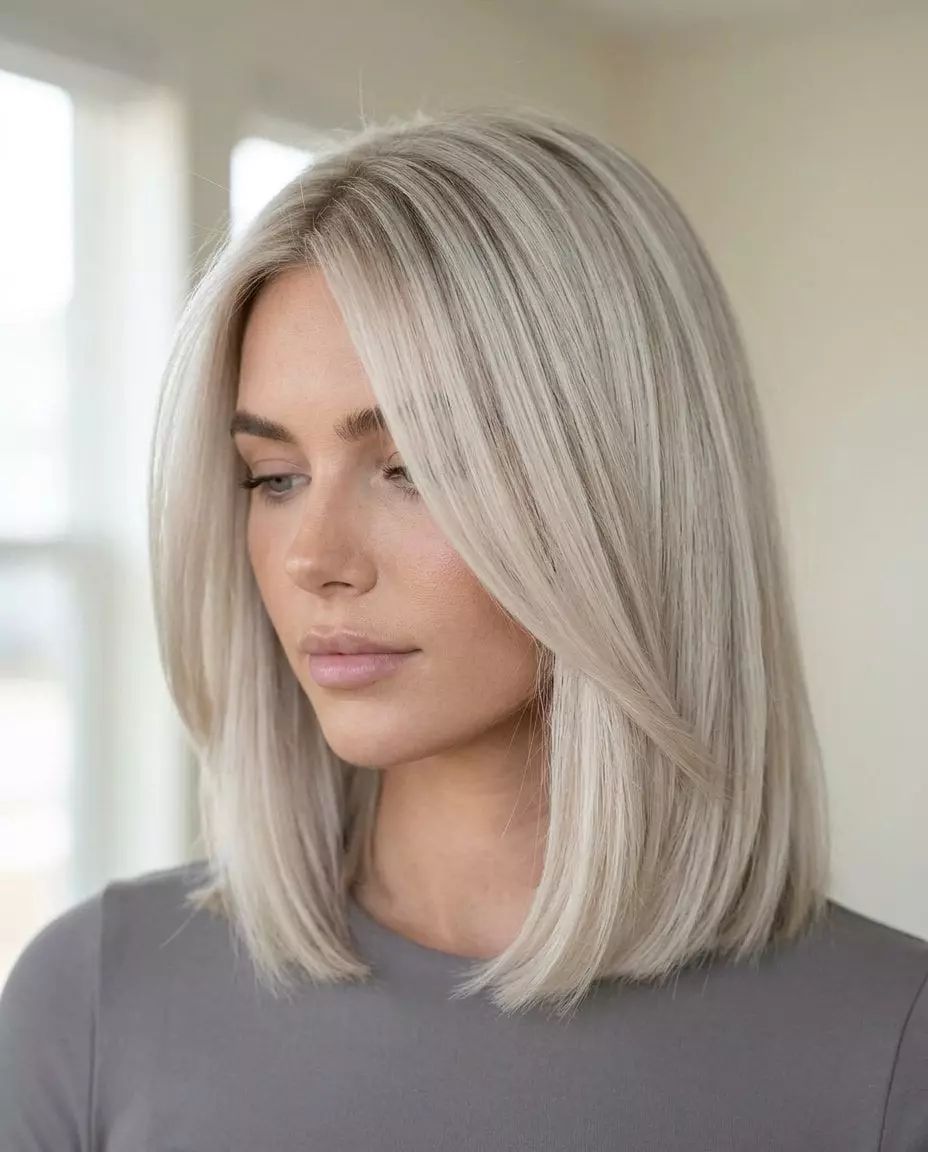
Can a bob do subtle face-framing layers and still feel like a bob? Yes, if the side-swept bangs are cut soft and the collarbone length stays. The ash blonde with subtle highlights keeps it modern without the brass. Straight fine hair is the candidate here. A round-brush blowout buys you three days of polish.
Layered shag with honey highlights and curtain bangs, close-up take
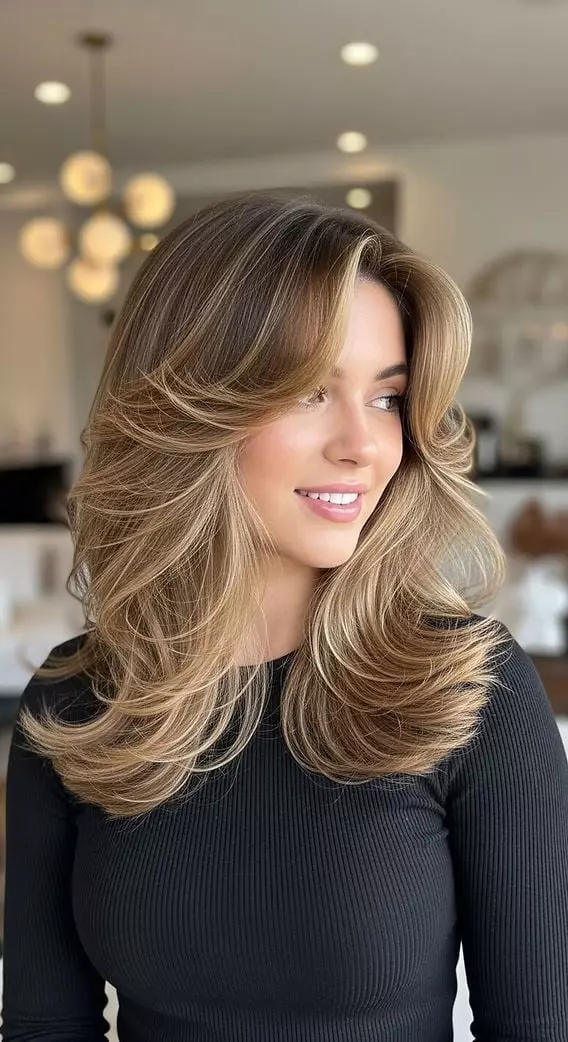
A shag this layered needs a blowout with volume to land correctly. The dark blonde base with honey highlights creates dimension that moves with the wavy thick texture, rather than sitting flat. Curtain bangs connect the front sections to the rest of the cut without a hard line. You need thick wavy hair at shoulder length to hold the shape. Skip it if you prefer blunt cuts or have very fine hair that won’t keep volume past an hour. The shag demands a trim every eight to ten weeks to keep the layers from growing into a shapeless blob.
Soft curtain bangs framing a dark brown blowout
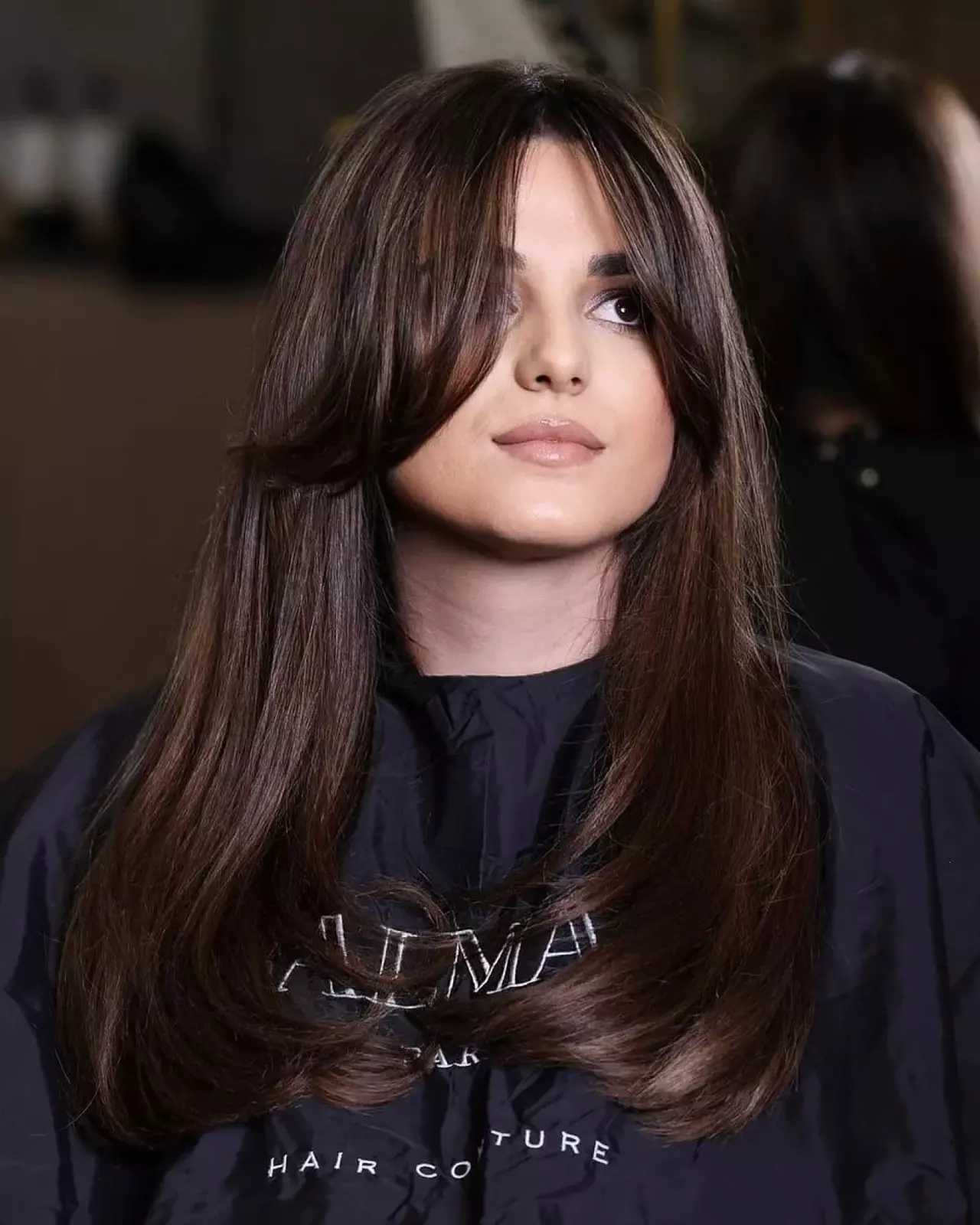
Compared to a blunt cut, the long layers here let the hair move without losing length. The dark brown shade has subtle auburn undertones that catch warm light. Soft curtain bangs sweep away from the face, so they work for most face shapes without committing to a full fringe. Fine to medium straight hair at collarbone length is the starting point. A large round brush builds the smooth finish.
Angled ash blonde bob with darker roots
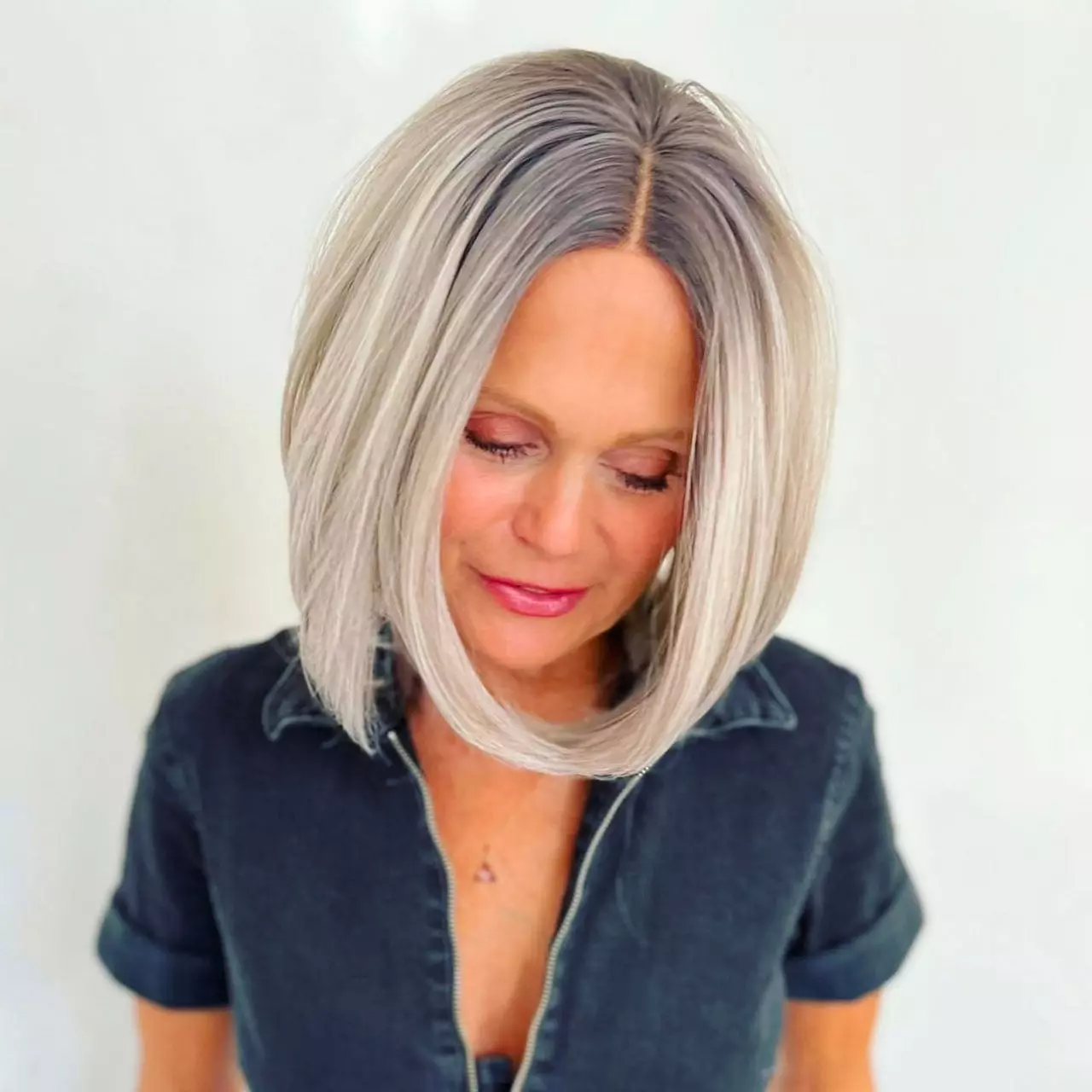
An angled bob is a geometry problem: shorter in the back, longer toward the chin, and a middle part that demands precision. The ash blonde with darker roots adds dimension without a full grow-out commitment. Fine straight hair at chin length suits this shape best. Not for thick and coarse hair; the angle tends to flip. Blowout is non-negotiable for the sleek finish.
Collarbone cut with face pieces and body
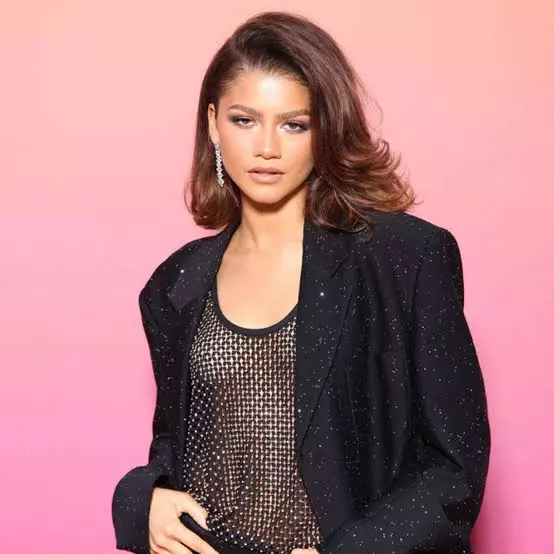
Middle part and a blowout that starts at the root. This collarbone cut is built on volume. The subtle face-framing pieces are cut shorter than the rest, so they curve forward rather than blending into the length. Not for very fine hair that flattens under a round brush; the shape depends on density.
Angled bob with natural curls and blonde highlights
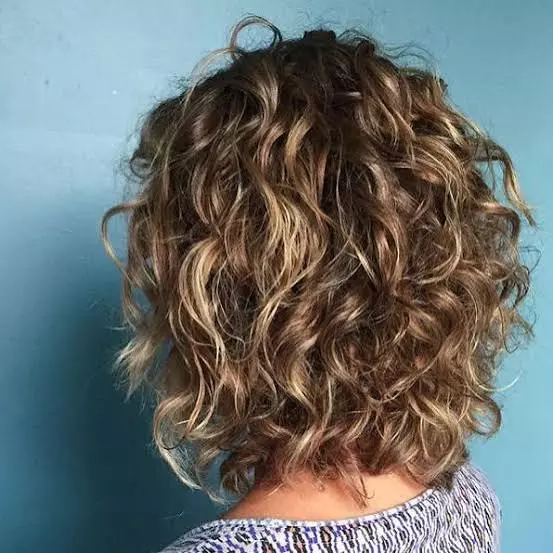
An angled bob that stacks shorter at the nape and lands just past the chin in front. The subtle layers are cut into dry curls, so the shape lands exactly where your natural pattern sits. Dark brown base with blonde highlights placed mostly around the crown and face. Not for wearing hair straight; the angle is designed for bounce, not a flat iron. The honest catch: curl definition fades faster on highlighted hair, so expect a rebook around week eight.
Face-framing highlights on a layered collarbone cut
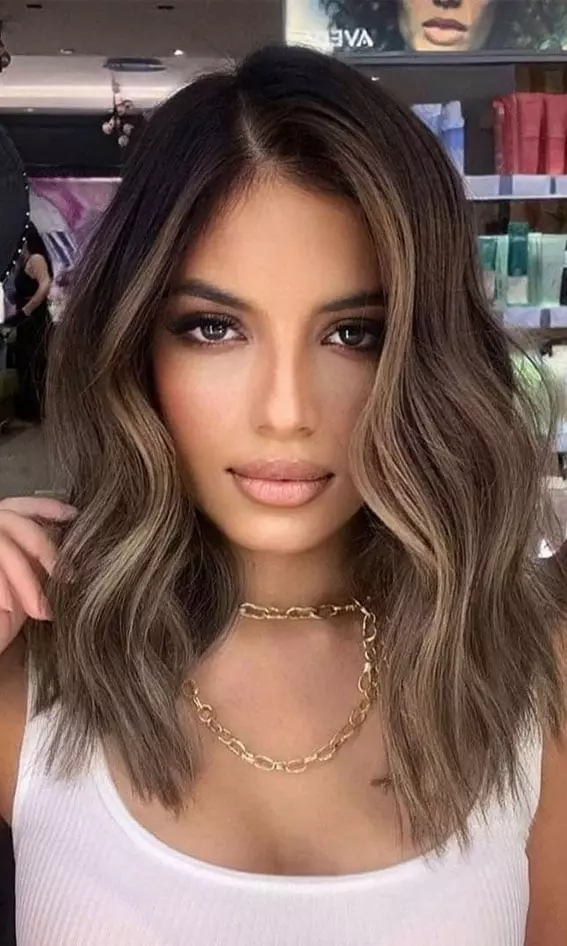
The highlights here are not scattered through the whole head. They are concentrated around the jaw and cheekbones, so the color lands exactly where the layers fall. Dark brown base with blonde pieces that start a few inches from the root, which keeps the contrast soft rather than stripey. The collarbone length with layers gives you enough weight to hold a wave and enough movement to tuck behind an ear.
The middle part is deliberate: it lets the face-framing pieces mirror each other. A wavy blowout with a large barrel curling iron takes about ten minutes.
Half-up half-down with a twisted braid detail
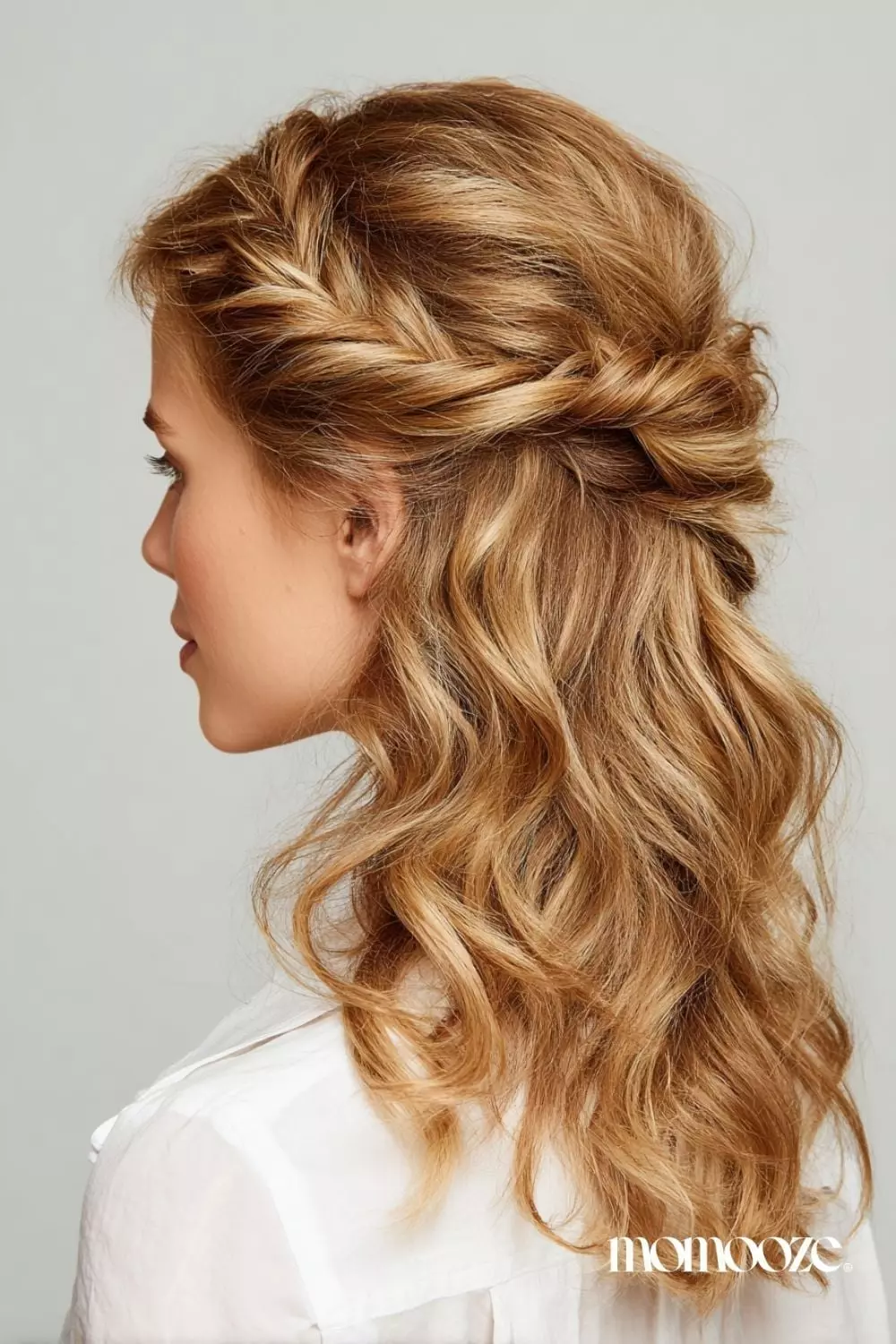
How do you keep a half-up style from looking like you gave up halfway? A twisted braid that starts at the temple and meets at the back. The honey blonde base with lighter highlights gives the braid enough contrast to look a detail rather than a mistake. You need shoulder-length hair at minimum; anything shorter and the braid will unravel before it reaches the center.
This works for a wedding, a party, or a day when you want hair off your face but not in a ponytail. The steps: pull the front sections back, twist each side toward the crown, pin at the back, then loosen a few face-framing strands. A touch-up on the highlights every six to eight weeks keeps the dimension visible in the braid.
Braided crown on honey blonde wavy hair
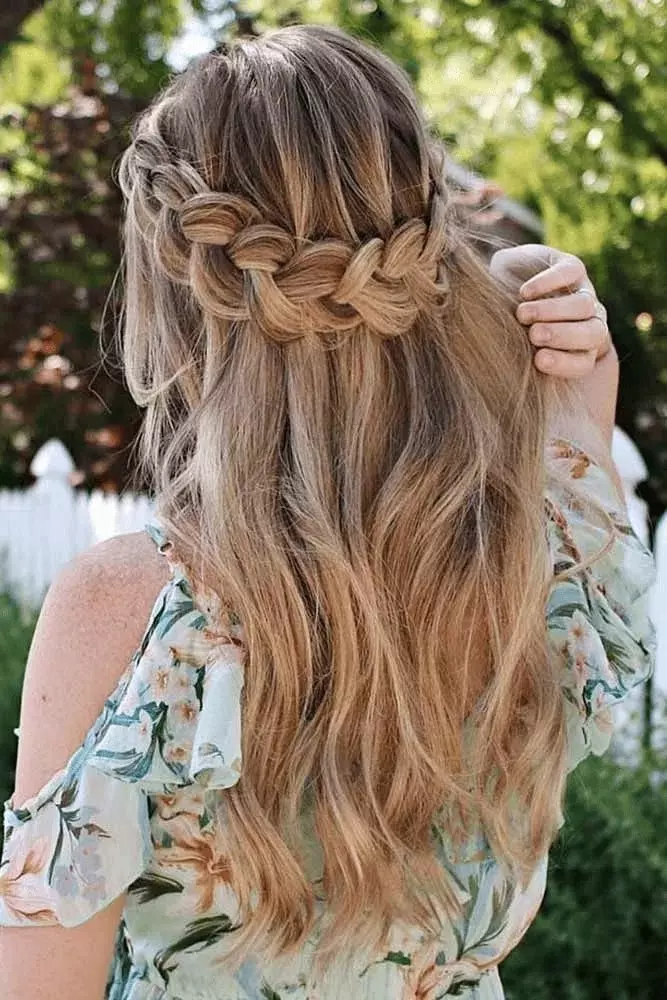
A braided crown that wraps from ear to ear, built on loose waves below. The honey blonde color with fine highlights keeps the braid from blending into a single blonde blob; you see the twist and the separate strands. Fine wavy hair actually holds this shape better than thick hair, because the braid lies flatter against the head and does not puff up.
The waves underneath are not curled with heat. They are set from damp hair in a loose braid overnight. The crown braid needs a few bobby pins and about five minutes of practice. Toning on the highlights every four to six weeks, because brass shows fastest around the face where the braid sits.
Caramel highlights on dark brown wavy hair
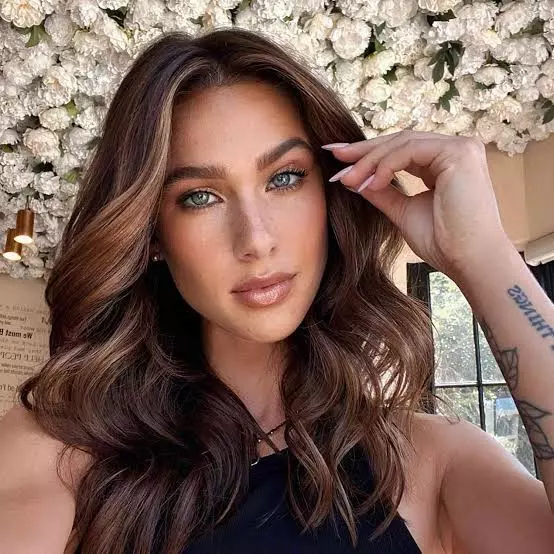
Caramel highlights on dark brown wavy hair versus honey highlights on the same base. The difference is warmth. Caramel reads richer and less golden, which suits thick wavy hair at collarbone length. The layers here are subtle, so the shape stays intact while the waves add movement. A middle parting keeps the highlights balanced on both sides. Not for cooler tones.
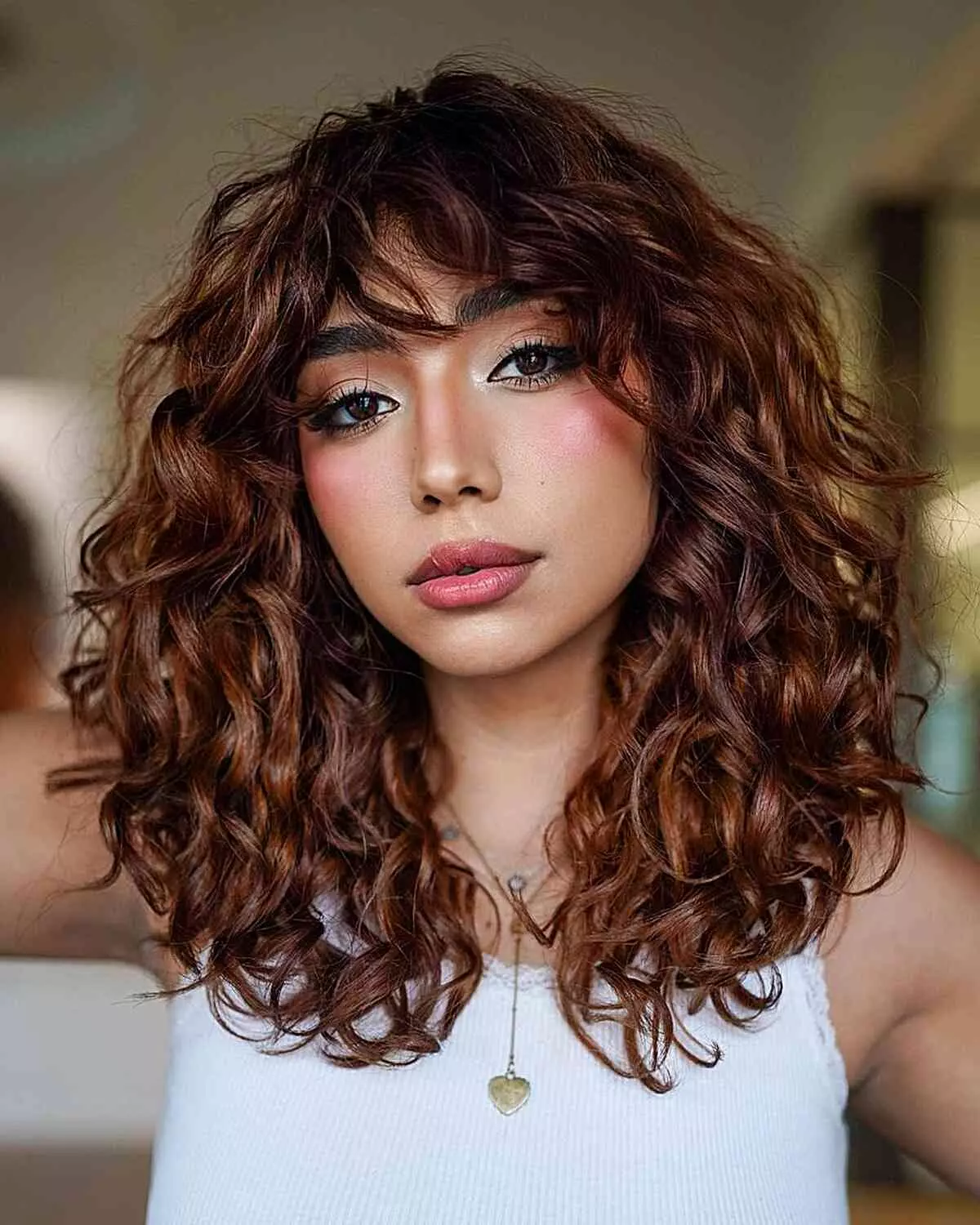
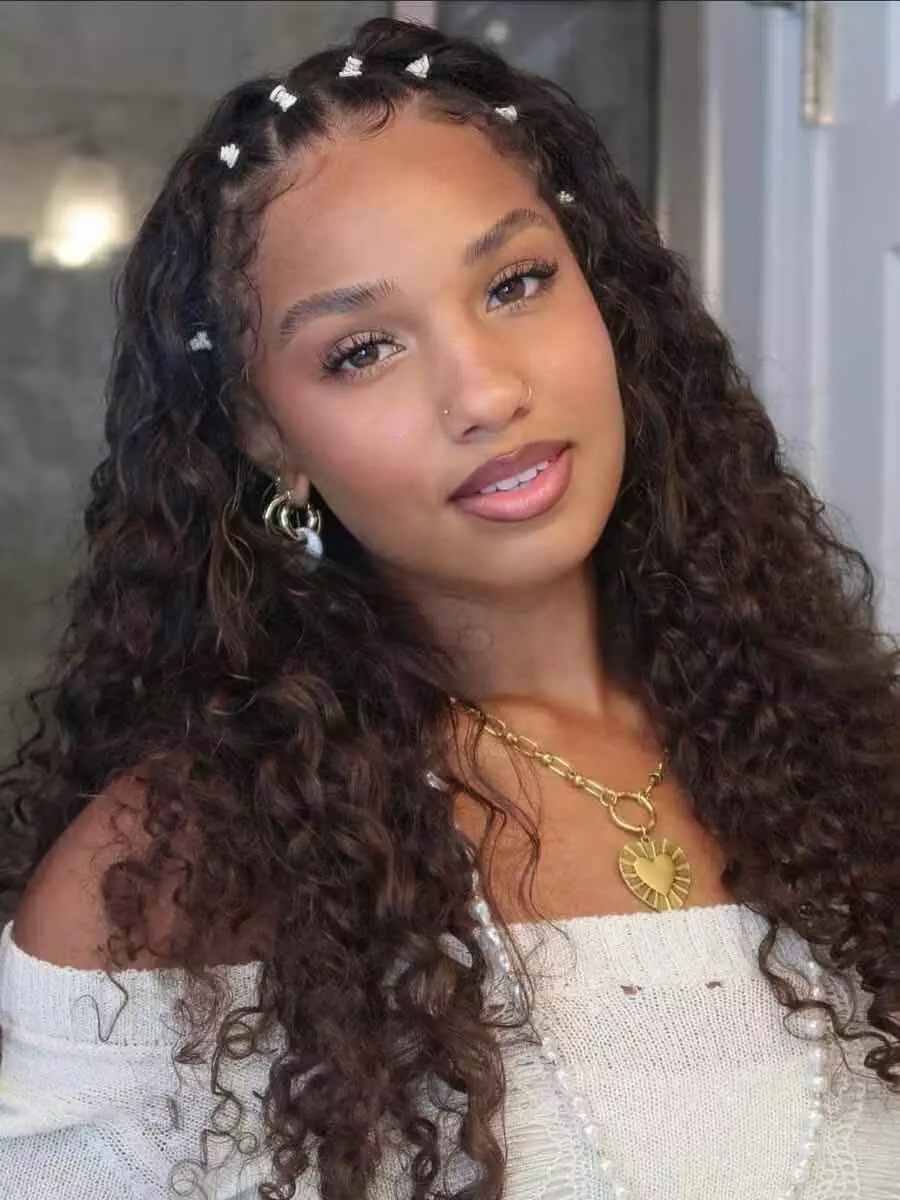
When you want natural curls without styling
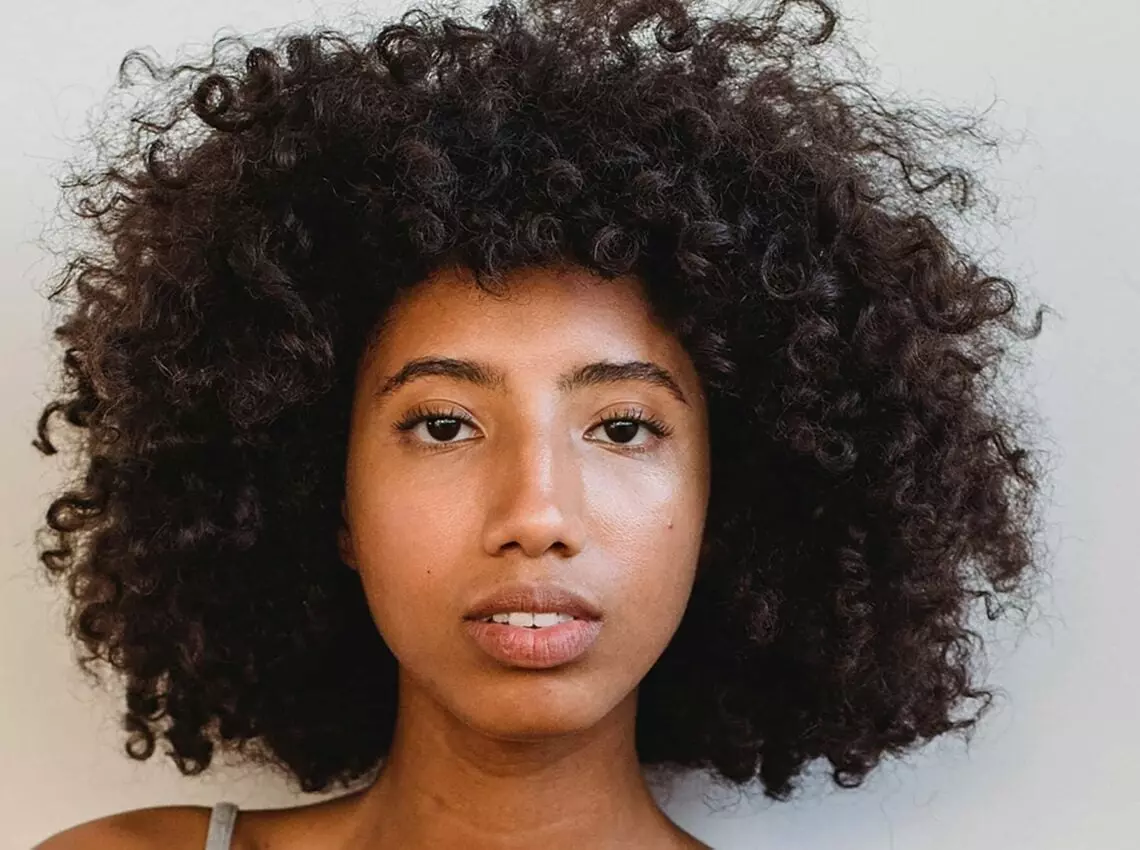
Voluminous dark brown curls that require zero heat are a specific kind of luck. The layered cut here shapes the curl pattern instead of fighting it, and the air-dried finish means no round brush, no diffuser, no wrist fatigue. The trade-off: curl uniformity. Some loops will spring tighter, others will stretch looser, and that variation is part of the look. Every curl does not match its neighbor. Oval and heart-shaped faces tend to carry the volume best because the fullness does not widen the jaw.
Face-framing curtain bangs on a layered dark brown style, straight
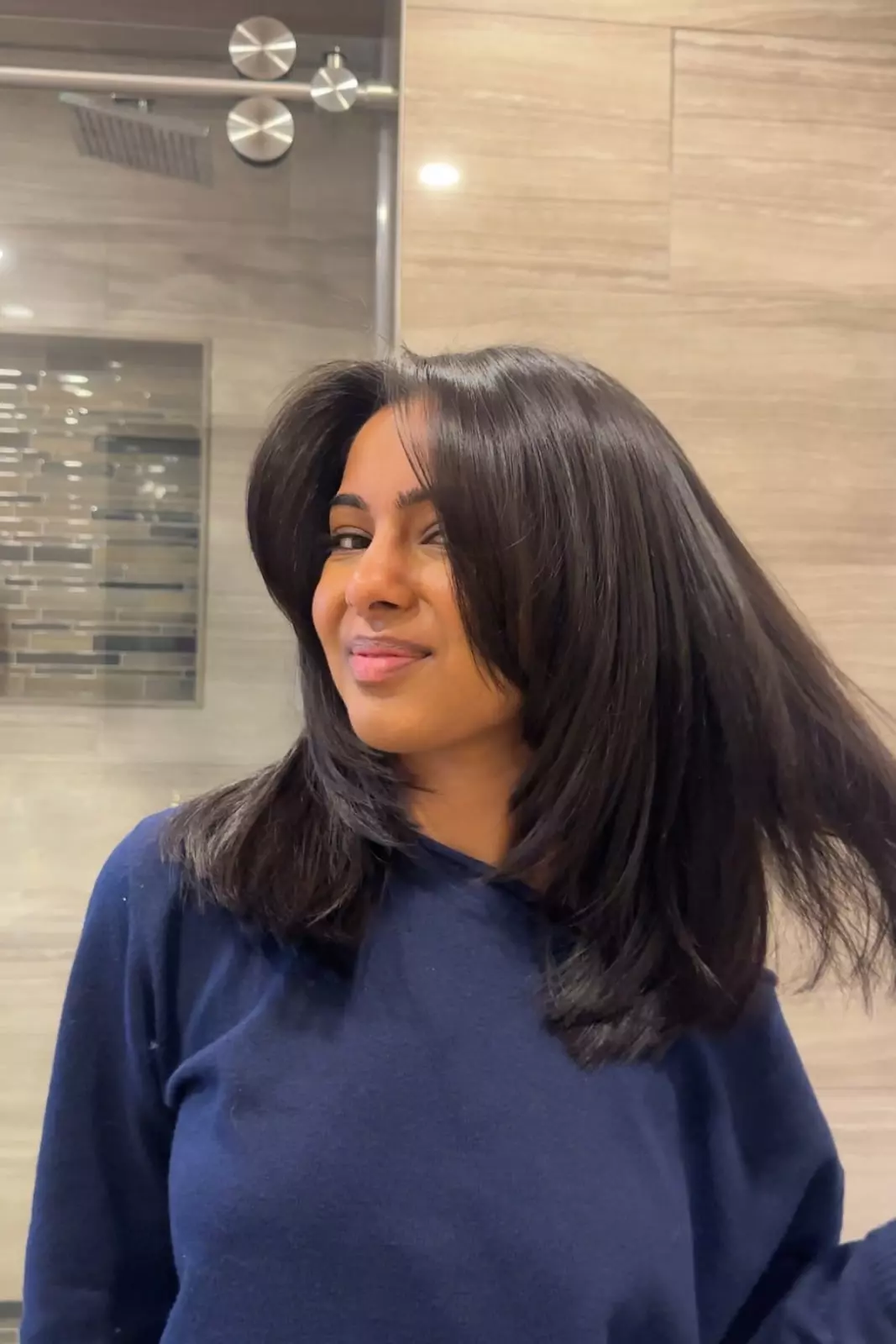
Curtain bangs on straight dark brown hair look deliberate polish. The layered cut lands at collarbone, and a round brush blowout stacks volume at the crown without puffing the sides. This shape works well for round and square faces because the curtain bangs cut across the widest part of the cheek rather than falling straight down.
Thick straight hair holds the blowout for a solid two days before the crown starts to soften. The real limitation: fine hair will struggle to keep the lift past lunch, and a middle part is required for the curtain effect to split correctly. For anyone who wants to pull their hair back often, the bangs will land at an awkward half-length during the grow-out.
Shag with fine waves framing face
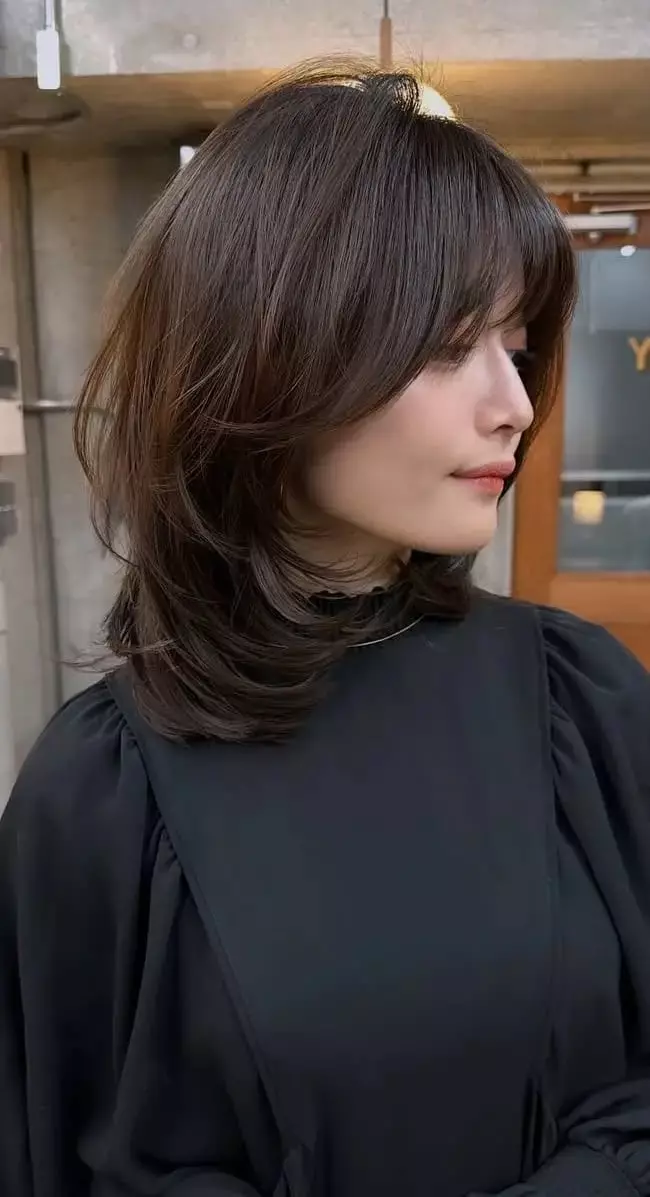
A shag on fine wavy hair trades density for texture, and that is exactly the point. The layered cut uses a middle part and soft curtain bangs that skim the cheekbone rather than hiding it. The gentle blowout coaxes a slight bend into each section without fighting the natural wave pattern. Technically, the fine texture means the layers stay visible rather than vanishing into bulk, which is why this cut works better on shoulder-length hair than shorter lengths. The shag shape opens up the face, which suits long or oval face shapes that need horizontal width at the jaw.
Curtain bangs on ash blonde layered hair
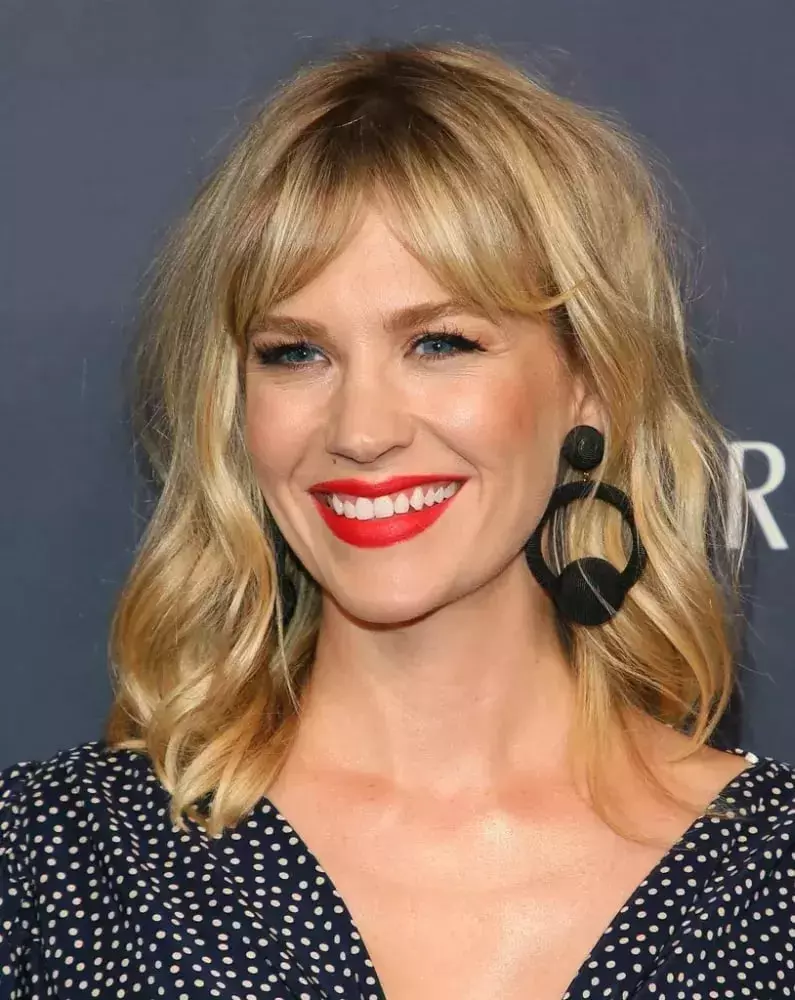
Ash blonde with fine highlights reads cooler than honey but warmer than silver, and the curtain bangs make it a practical choice rather than a decorative one. The collarbone-grazing layers are styled into loose waves that soften the ash tone; without the waves, the color can look flat under office lighting. Fine wavy hair holds these waves for about a day before they relax into a gentle S-shape. A texturizing spray on dry hair revives the bend without rewashing.
Vintage pin curl on dark brown waves
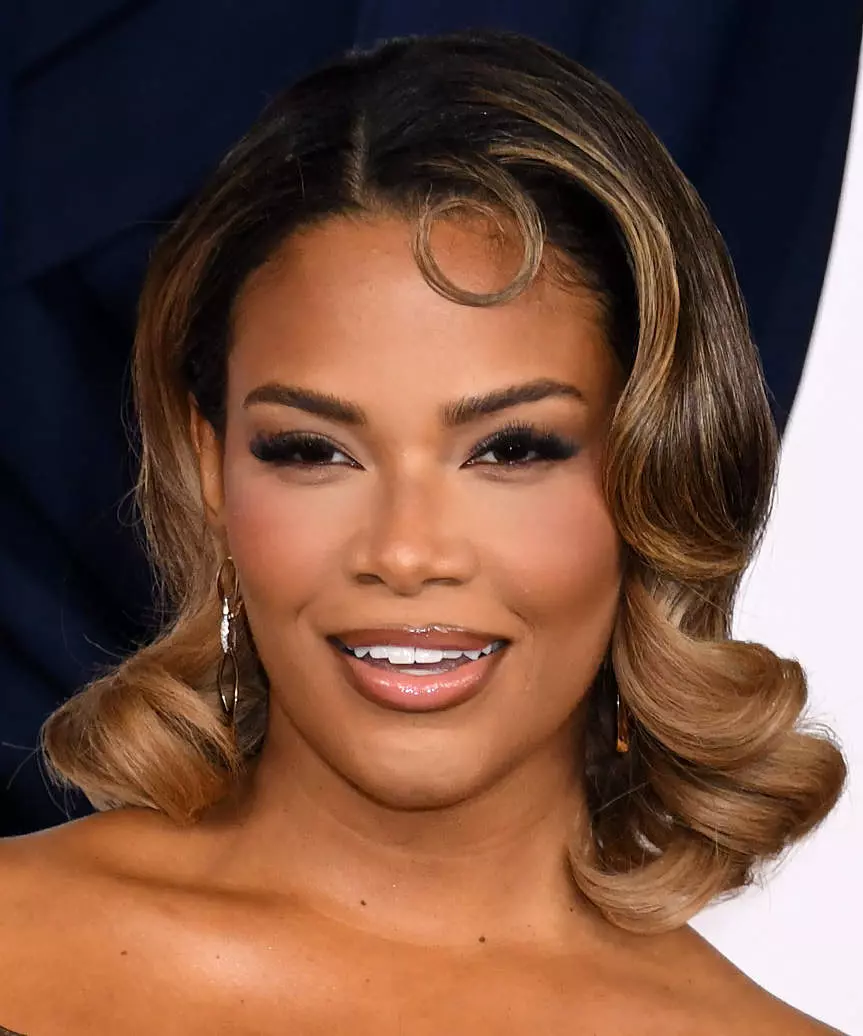
Collarbone-grazing layers meet neat waves, and then there is that one pin curl at the hairline. The technique is pure old Hollywood: a tight coil pinned flat, dried, then released into a smooth loop that sits against the wave pattern. It suits thick wavy hair at collarbone length and most face shapes, though the curl does require a setting spray and a few extra minutes in the styling routine. Ask your colorist for: collarbone-grazing layers, neat waves, vintage pin curl, dark brown with blonde highlights.
Wispy bangs on a dark brown shag
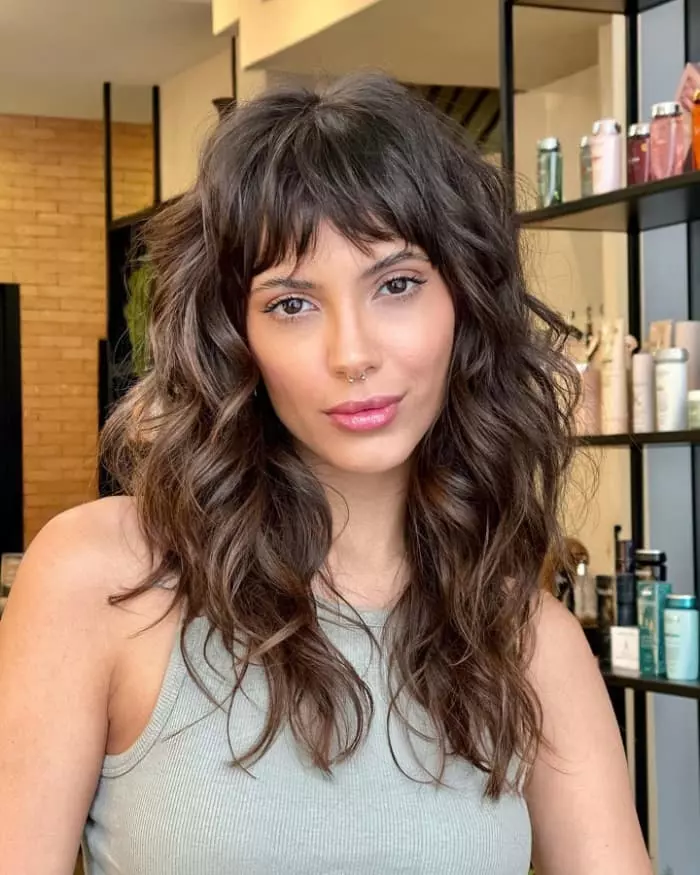
A shag with wispy bangs lands somewhere between a proper curtain fringe and feathery face pieces. Where a heavier blunt fringe demands daily flat-ironing, this version lets the bangs settle naturally into the wavy texture of the rest of the cut. Fine wavy hair at least shoulder length takes it best; oval and long faces get the most out of the soft framing around the cheekbones. Not for anyone who prefers a blunt line or has very thick hair that would bulk up the fine feathering. The shag itself is layered through the crown to build volume without weight, and the subtle highlights in the dark brown base keep the ends from looking flat.
Choppy layers and wispy bangs on a shag
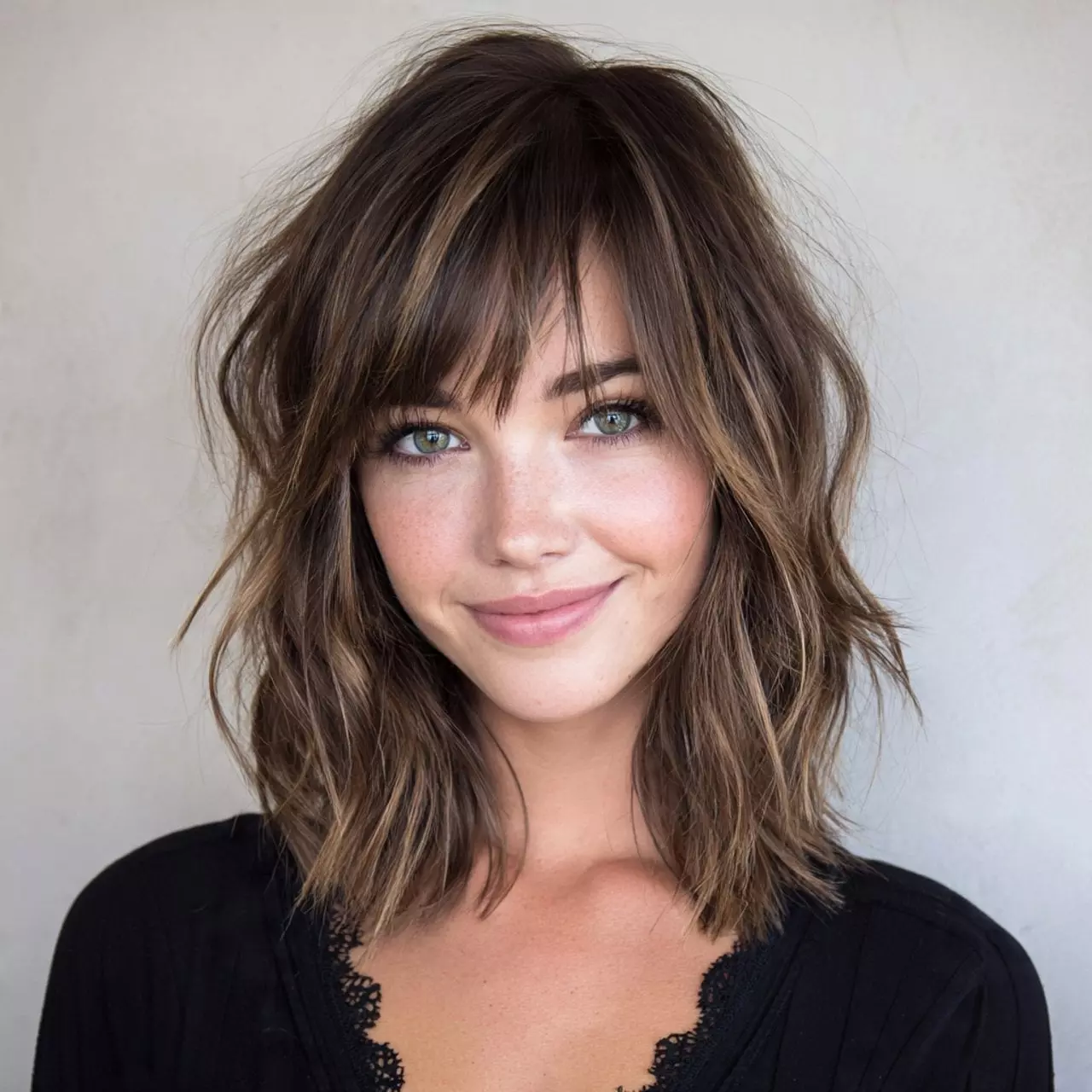
The choppy layers do exactly what the name promises: they cut through the length at uneven intervals, so the hair stacks and separates rather than lying smooth. Wispy bangs continue the same logic at the front, hitting just above the brows with a feathery edge. The air-dried finish is intentional, not a lazy day, the cut relies on the natural wave to show off the texture. Fine wavy hair at shoulder length is the sweet spot. The drawback: those uneven layers grow out fast, and by week eight the shape blurs into a generic shag instead of a precise one.
Wispy bangs on a layered bob
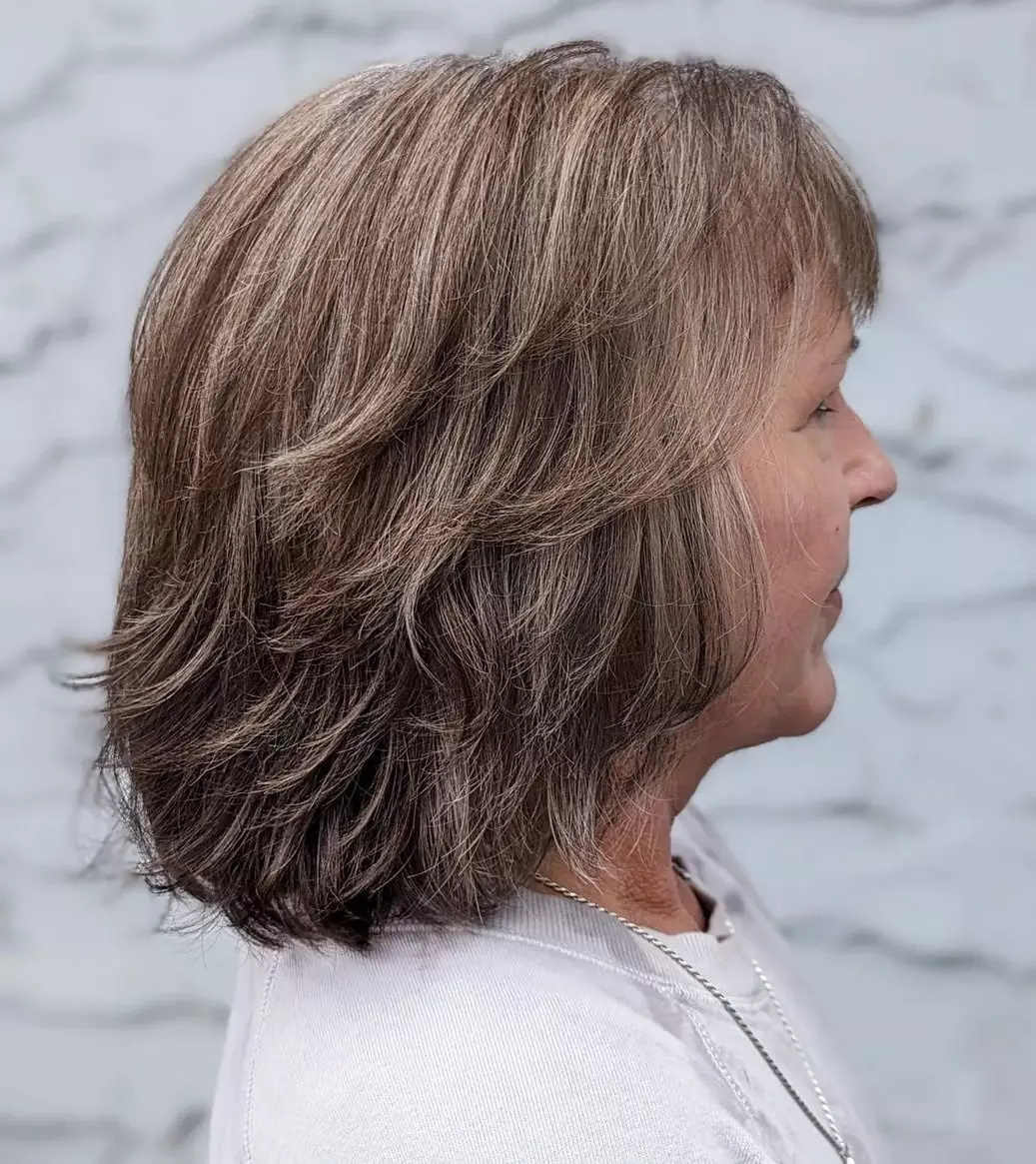
You want the softness of a bob without the hard line at the chin. This one delivers. The layered bob keeps the perimeter light, and the wispy bangs sit above the brows with a see-through quality that does not overwhelm a middle part. Fine wavy hair at chin length suits it best. The texture adds volume the layers already create. Brown and blonde highlights thread through the front sections, so the face-framing pieces catch more light than the rest. A blunt cut or very thick hair would make the wispy bangs feel heavy. A blowout with a round brush keeps the shape crisp for two to three days.
Face-framing layers on a layered bob
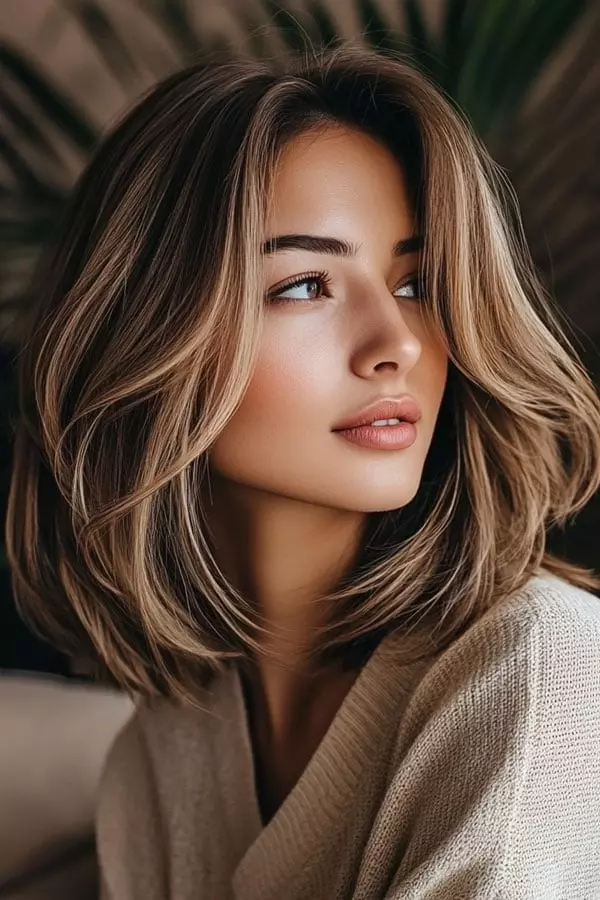
The bob stops at chin length, but the front sections are cut shorter, graduating toward the jaw. That is the technical trick of face-framing layers: they shorten the front without shortening the back. A middle part splits the difference, and the soft blowout gives the layers a gentle curve without a sharp angle. Fine wavy hair at chin length holds the shape best; the blonde highlights on the brunette base add dimension that keeps the shorter front pieces from looking a separate haircut. It works best with a uniform perimeter. Ask your colorist for: layered bob, shorter front sections, subtle blonde highlights, brunette base, soft blowout.
Face-framing curtain bangs on dark blonde hair
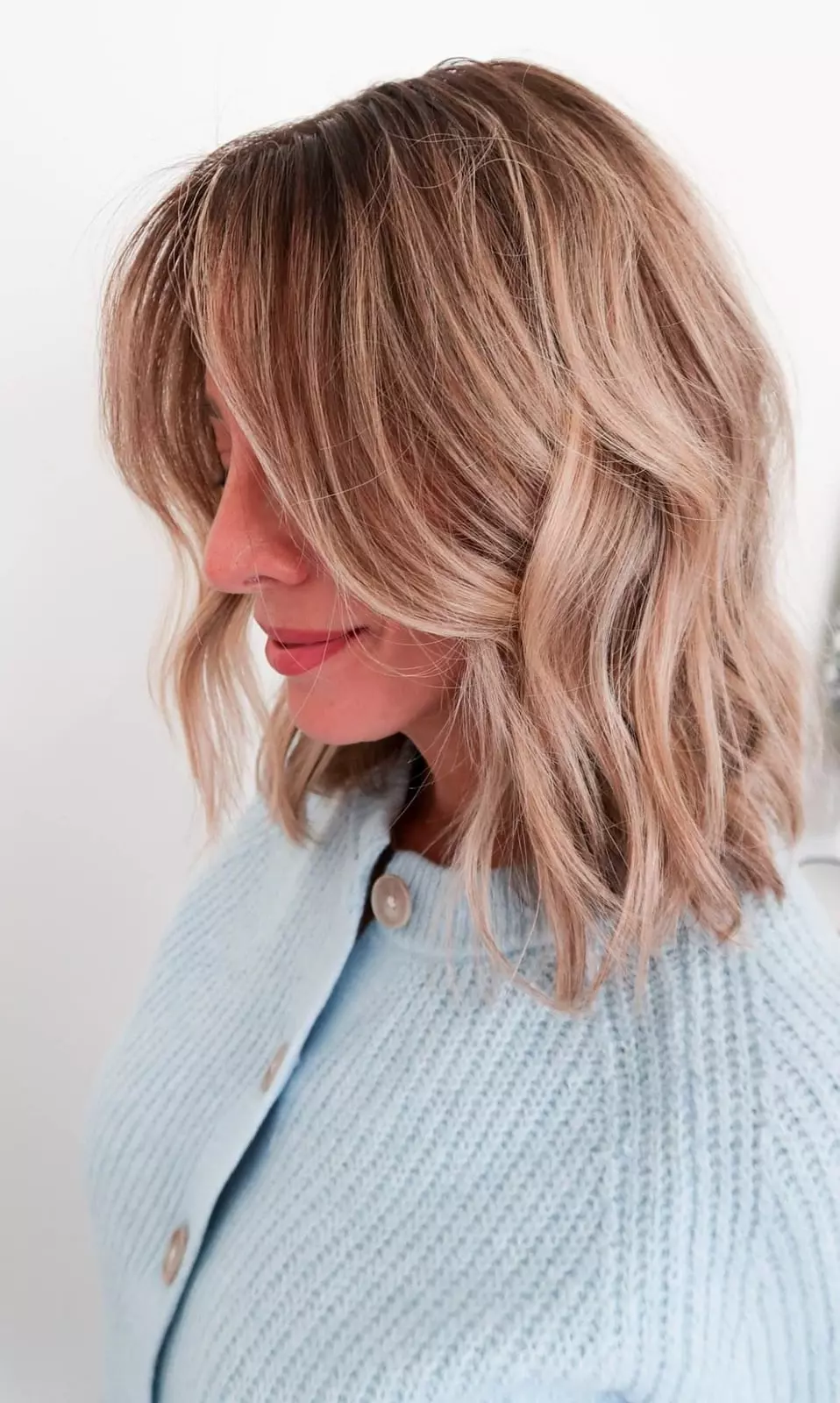
Where a blunt cut keeps everything contained, this one lets the air-dried texture do the talking. Layers throughout, with curtain bangs that start at the cheekbone and blend into the cut. The dark blonde base gets soft ash blonde highlights, so the dimension reads subtle rather than stripy. A centered parting keeps the face-framing even. Fine wavy hair at collarbone length is the sweet spot. Very thick hair may not achieve the same effect.
Face-framing curtain bangs with darker roots
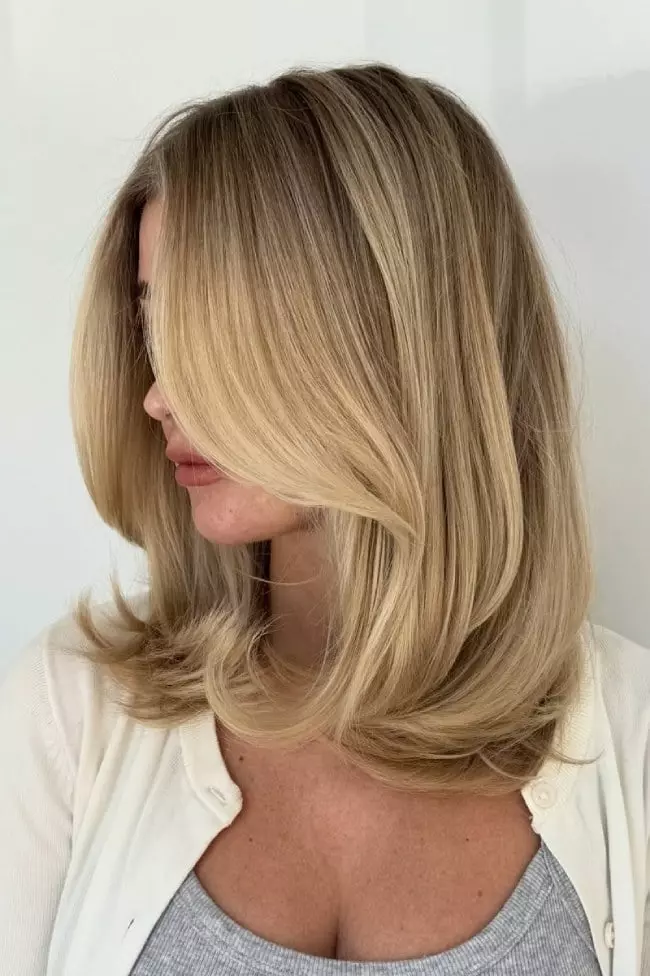
The design here is intentional: darker roots ground the ash blonde so the grow-out looks deliberate, not neglected. Soft curtain bangs and layers throughout, styled with a smooth blowout. A middle parting lets the face-framing sections fall evenly. Request from your stylist: layers, face-framing curtain bangs, middle parting, ash blonde with darker roots. The root shadow buys you an extra week or two between touch-ups.
Fine wavy texture frames the face
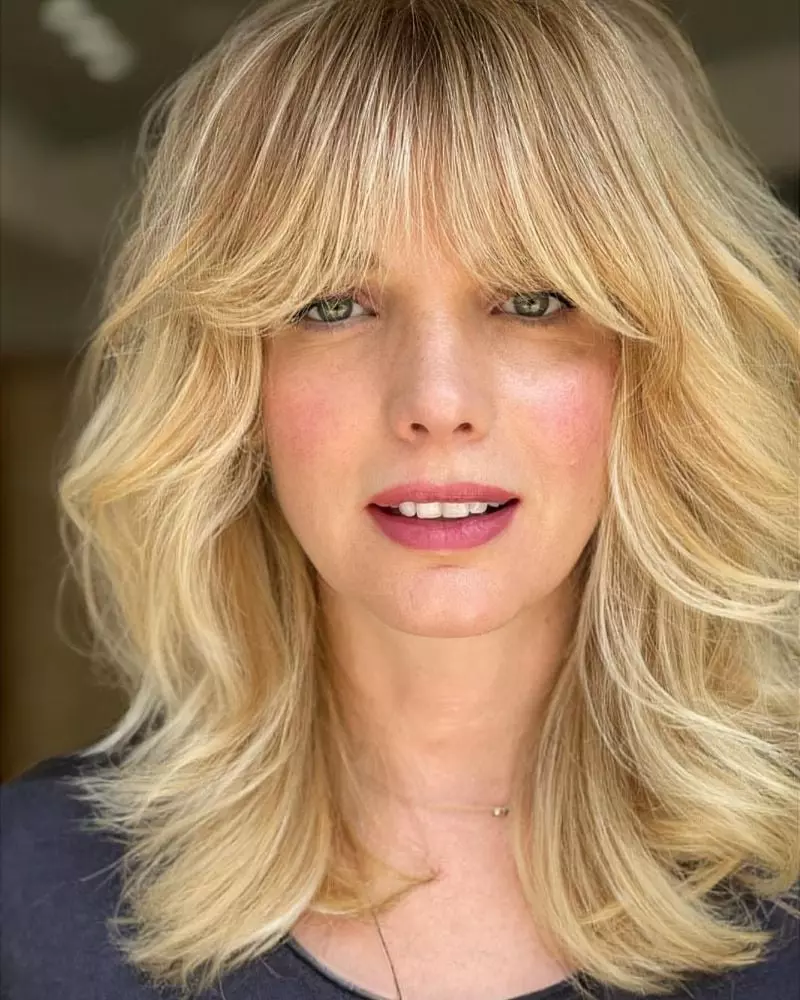
This one is for the fine-hair crowd who think they cannot get volume. The collarbone cut has shorter front sections that curve around the jaw, plus soft curtain bangs that connect the whole thing. Ash blonde with subtle lighter highlights keeps the color from reading flat. The catch: a voluminous blowout is non-negotiable. Without a round brush and some heat, those fine waves will sit flat by midday. A closer alternative is a one-length lob, but that cut lacks the face-framing lift this one gives. Fine wavy texture at collarbone length, styled with lift at the roots, is the formula.
Textured layers on a medium brown bob
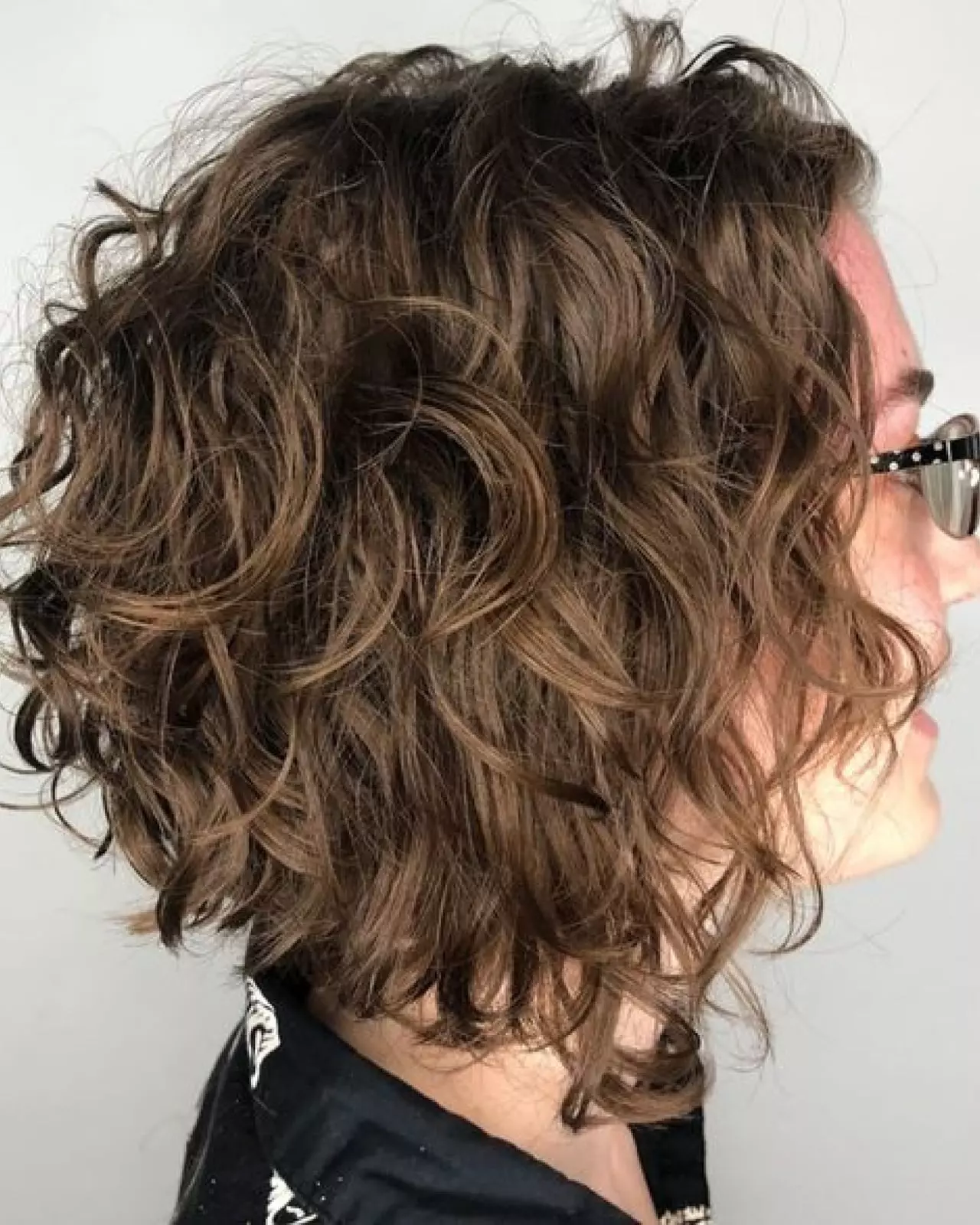
A layered bob that lands at chin length works best when you let the natural texture lead. Medium brown base with subtle lighter strands for depth, centered parting, air-dried finish. The wavy and curly texture does the heavy lifting here, no blowout required. The practical rule: this is a salon cut to get right, but a home wash-and-go routine to maintain. Not for straight, sleek styles or very thick hair that would puff up rather than settle into these fine layers. Thin lighter strands add just enough dimension without looking highlighted.
Honey highlights on a lob with subtle layers
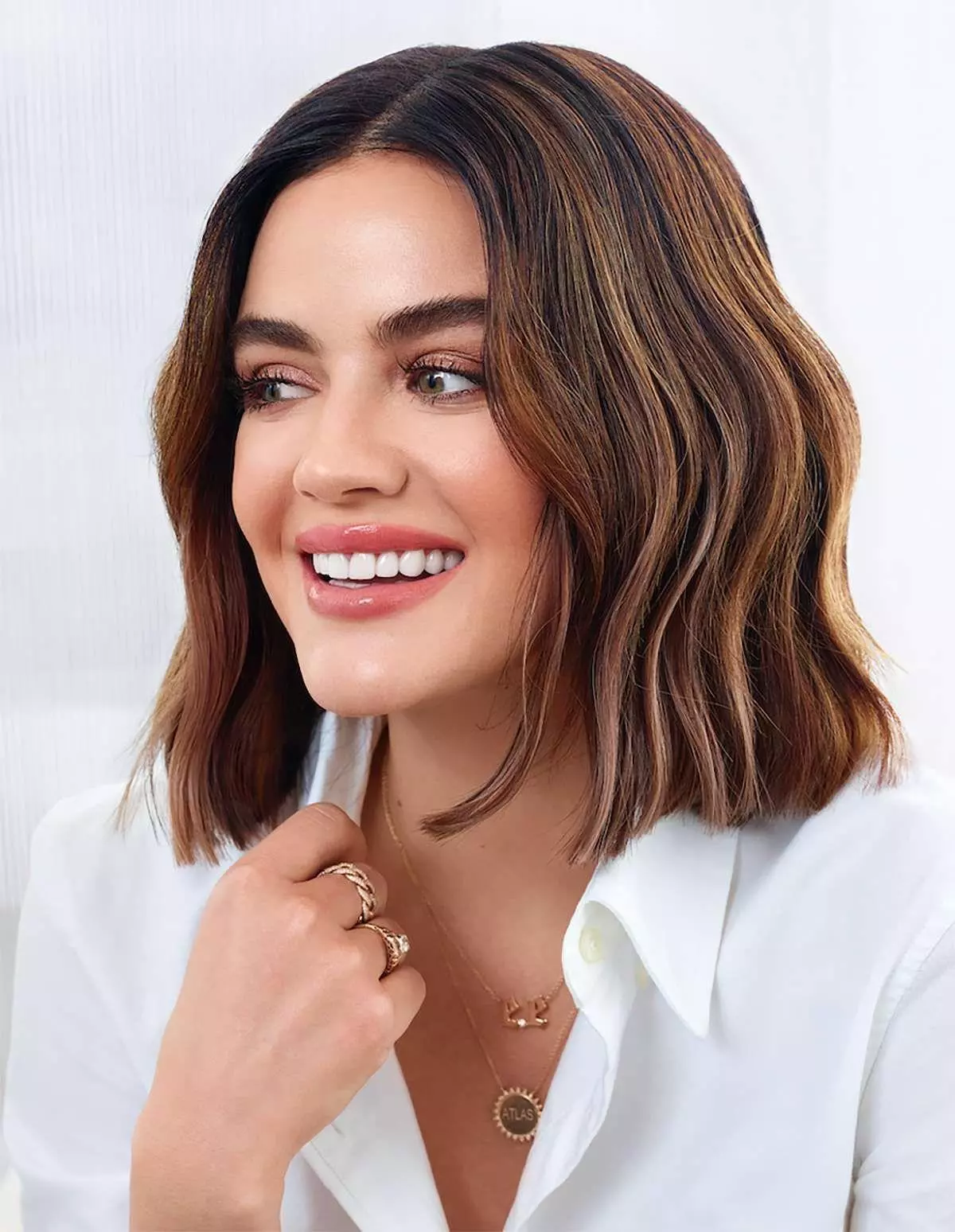
A lob with subtle layers versus a heavily layered shag. The difference is in the movement. This one keeps the shape intact while the layers add swing to loose waves. Dark brown base with honey highlights that sit mostly around the face and ends. A centered parting and fine texture keep it from looking heavy. Fine wavy hair at collarbone length is the target. Not for a dramatic shape change; this is a refinement, not a reinvention. The color needs a toning appointment every eight to ten weeks to keep the honey from turning brassy.
Dark blonde shag with honey highlights
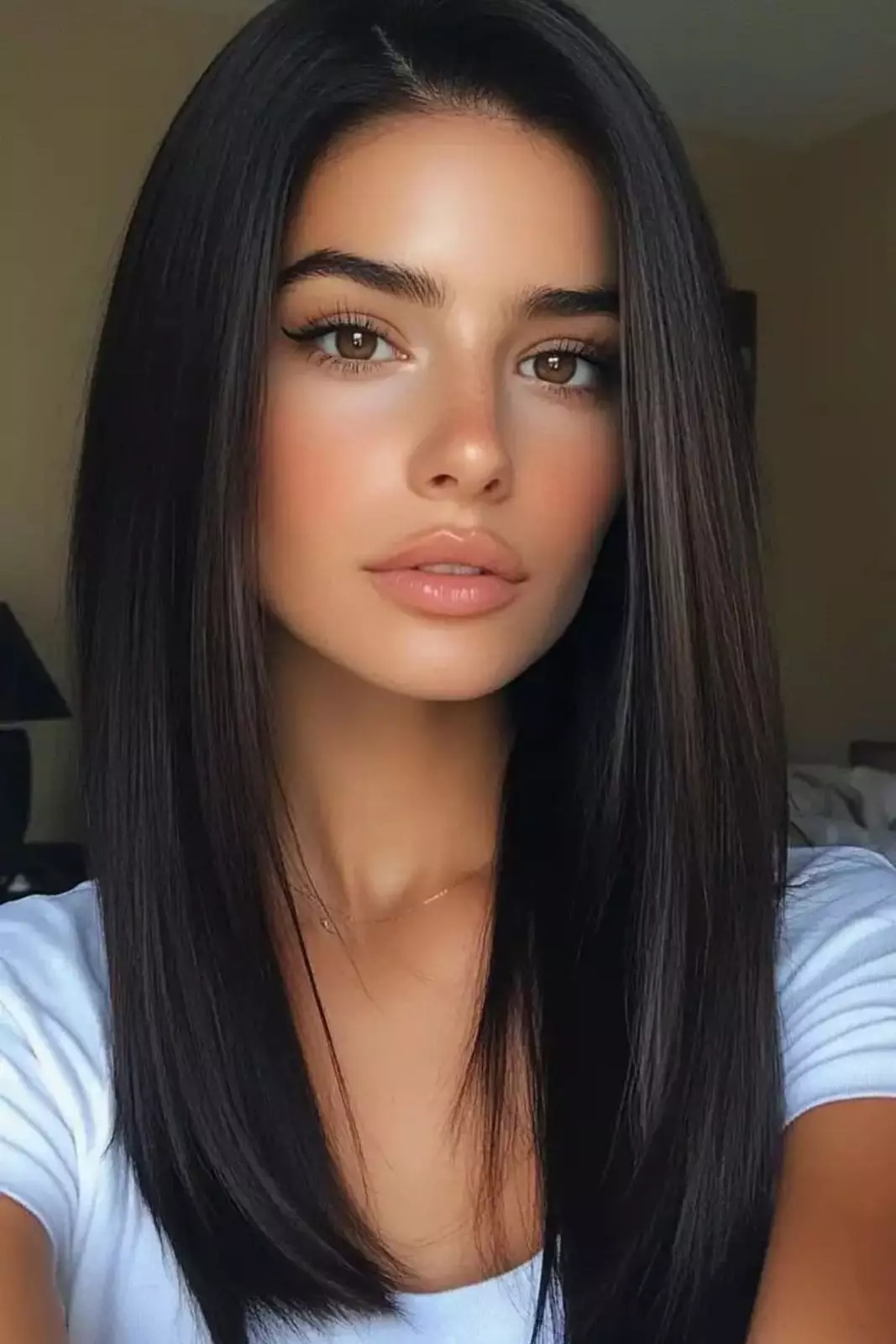
A shag needs texture to land right. This dark blonde version with honey highlights works best on thick wavy hair that starts at shoulder length. The cut uses long layers and face-framing pieces at the front, with a middle part that lets the shape breathe. Curtain bangs are part of the deal, softening the transition from the shortest layer to the hair beyond. Oval and long faces handle it best. Blunt cuts or very fine hair that won’t hold volume are not ideal for this style.
Ask your stylist for: layered shag cut, face-framing curtain bangs, dark blonde base with honey highlights. A blowout with volumizing spray gives the shape its lift.
Side part showcases face-framing layers
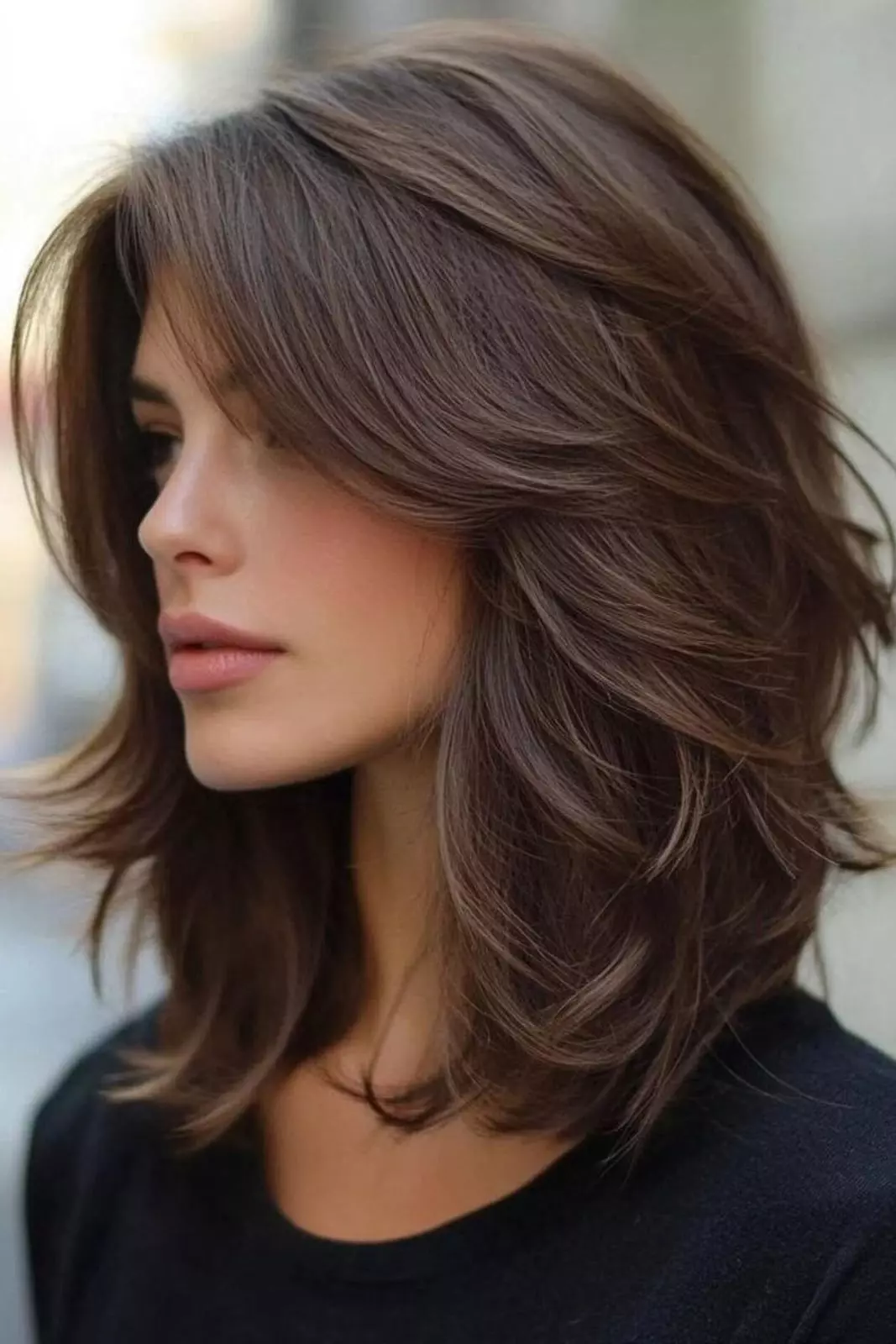
A side part changes everything compared to a middle one. On this layered lob at collarbone length, the side part lets the face-framing layers fall forward instead of flat against the cheeks. The dark brown hair carries subtle highlights that catch light differently on each side of the part. Side-swept bangs complete the asymmetry, sweeping across the forehead rather than splitting down the middle. Thick wavy hair holds the volume longest. A middle part or very fine hair that won’t hold volume are not ideal for this style. A blowout with a round brush keeps the shape alive.
Salon precision for dark brown hair
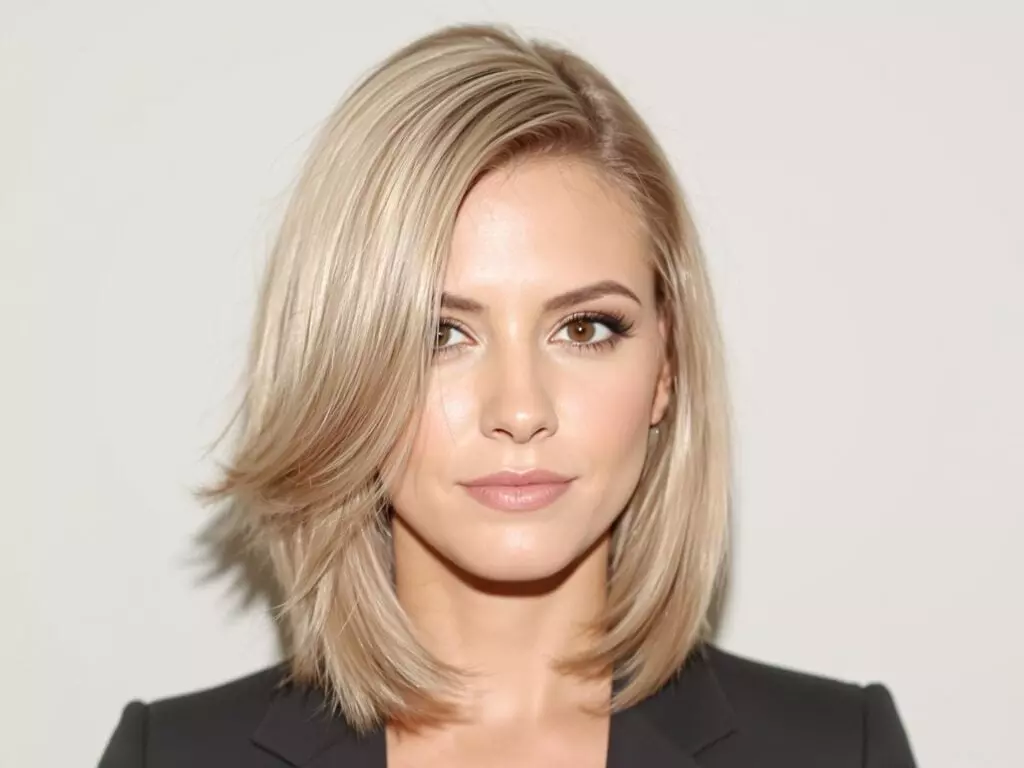
This cut is a salon job, not a bathroom-mirror project. The ash blonde color with subtle lighter highlights needs precision layering to keep the face-framing pieces from looking accidental. The side part and smooth blowout create a clean line that only a stylist’s scissors can achieve. Fine straight hair at collarbone length works best here. Request from your stylist: collarbone cut, subtle face-framing pieces, dark brown color, voluminous blowout finish. A round brush blowout gives maximum volume.
Dark brown bob with side-swept bangs
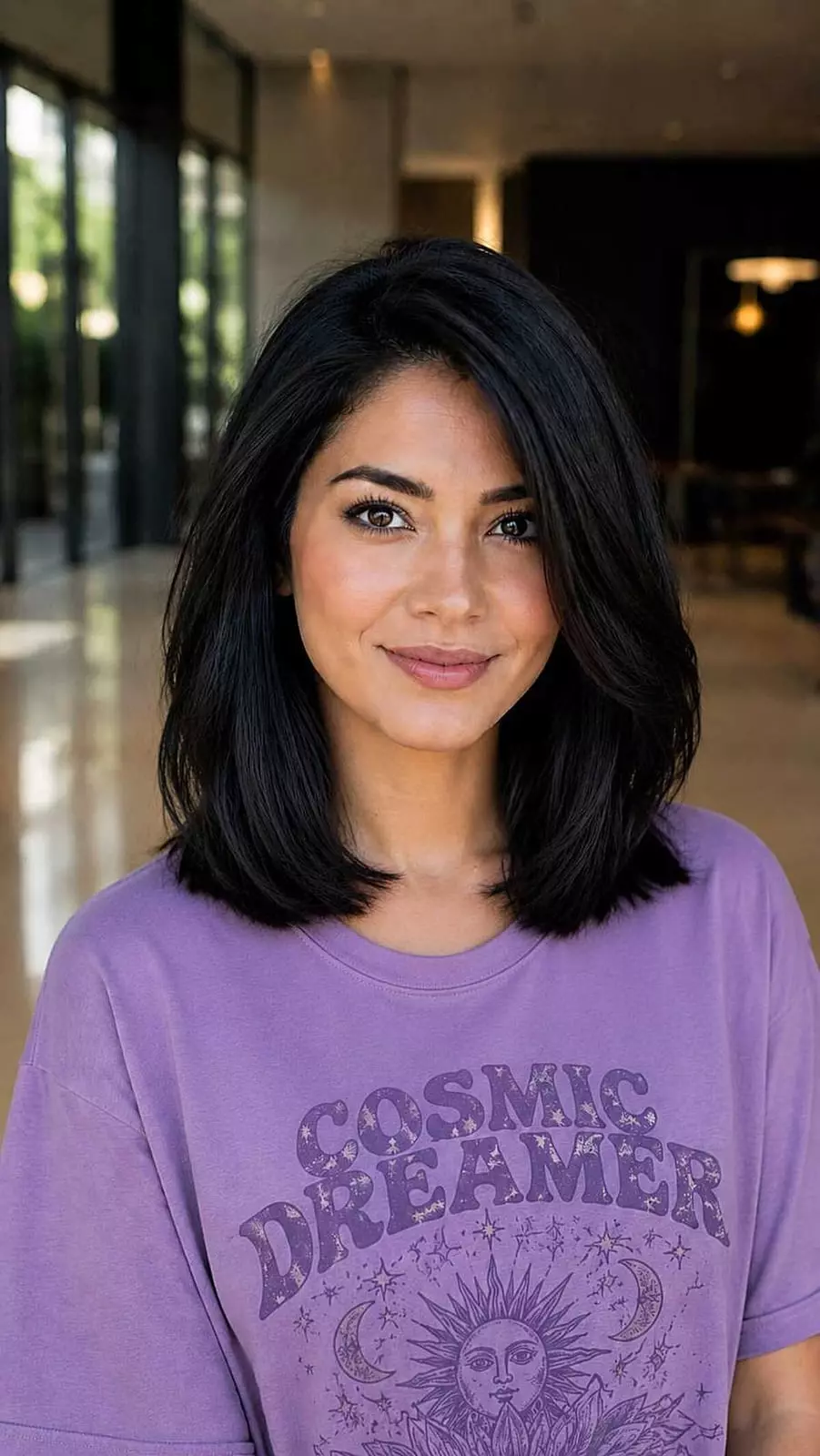
Compare this collarbone length bob with a blunt bob and the difference is clear. The shorter front sections and side-swept bangs create a soft diagonal line that rounds out a square jaw. Fine straight hair at least chin length holds the shape best. The dark brown color keeps it neat without needing frequent toning. A blunt cut or very curly hair would fight the clean line.
A round brush gives the soft waves their bend.
Lob with auburn highlights and face pieces
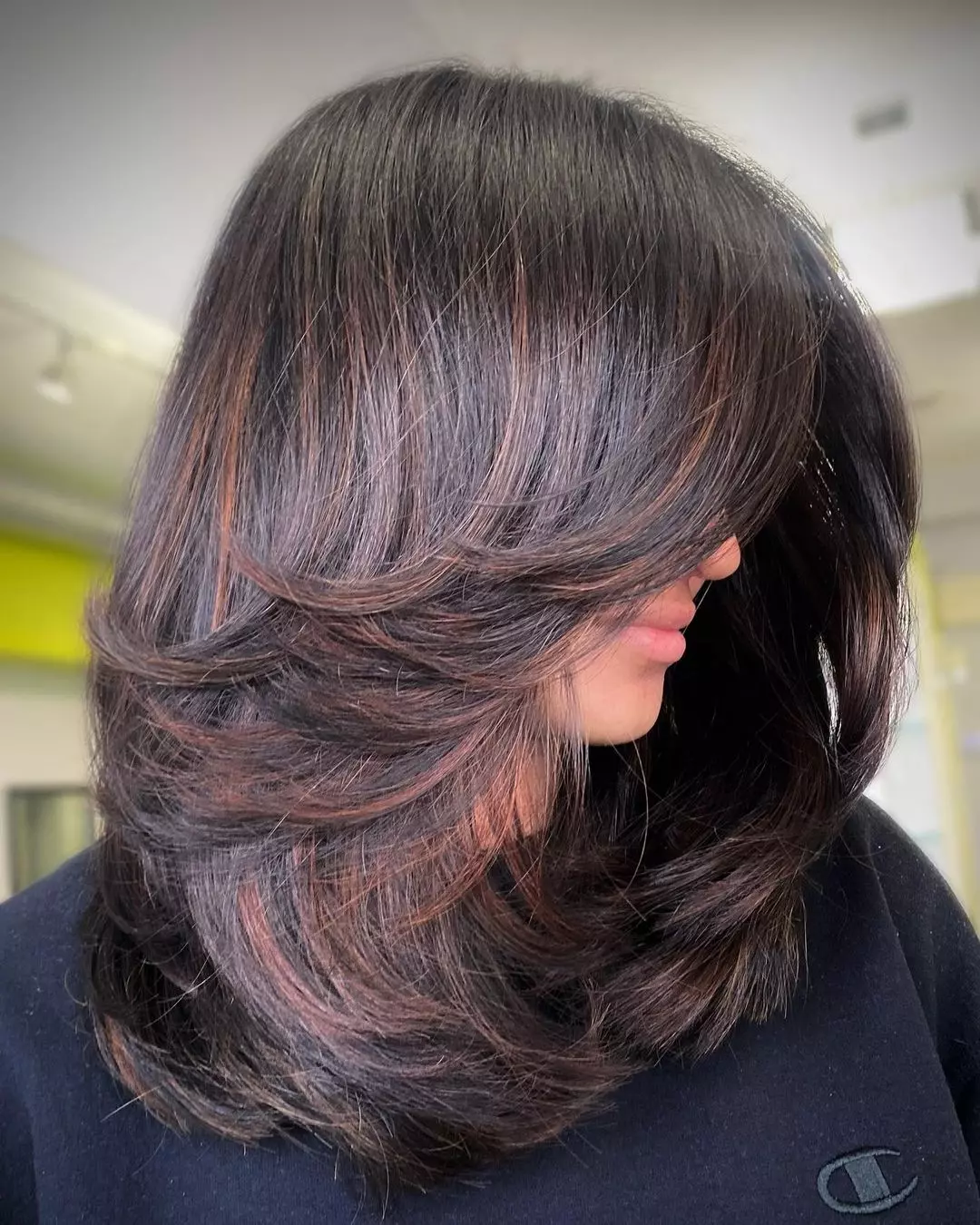
The trade-off with auburn highlights on dark brown hair is upkeep. The warm tones fade faster than the base, so you are looking at a toning appointment every six weeks to keep the copper from turning brassy. On this layered lob at collarbone length, the face-framing layers show the auburn highlights first, which is the point. Thick wavy hair holds the voluminous blowout longest. A middle part or very fine hair may not hold volume as well. Request from your stylist: layered lob, face-framing layers, side parting, dark brown with auburn highlights. The drawback: the highlights need regular maintenance, or they look faded.
Face-framing layers on dark blonde hair

Collarbone length is the minimum for layers that actually land where they should. The shorter front sections here cut in at the jawline, so the weight drops forward and does not pool at the ends. Dark blonde with lighter highlights keeps the dimension subtle, and a centered parting splits the difference between neat and relaxed. A blunt perimeter is not a good match because fine wavy hair does not hold a straight edge well. This cut relies on air-dried texture, not a round brush.
Subtle face-framing layers on fine dark brown hair
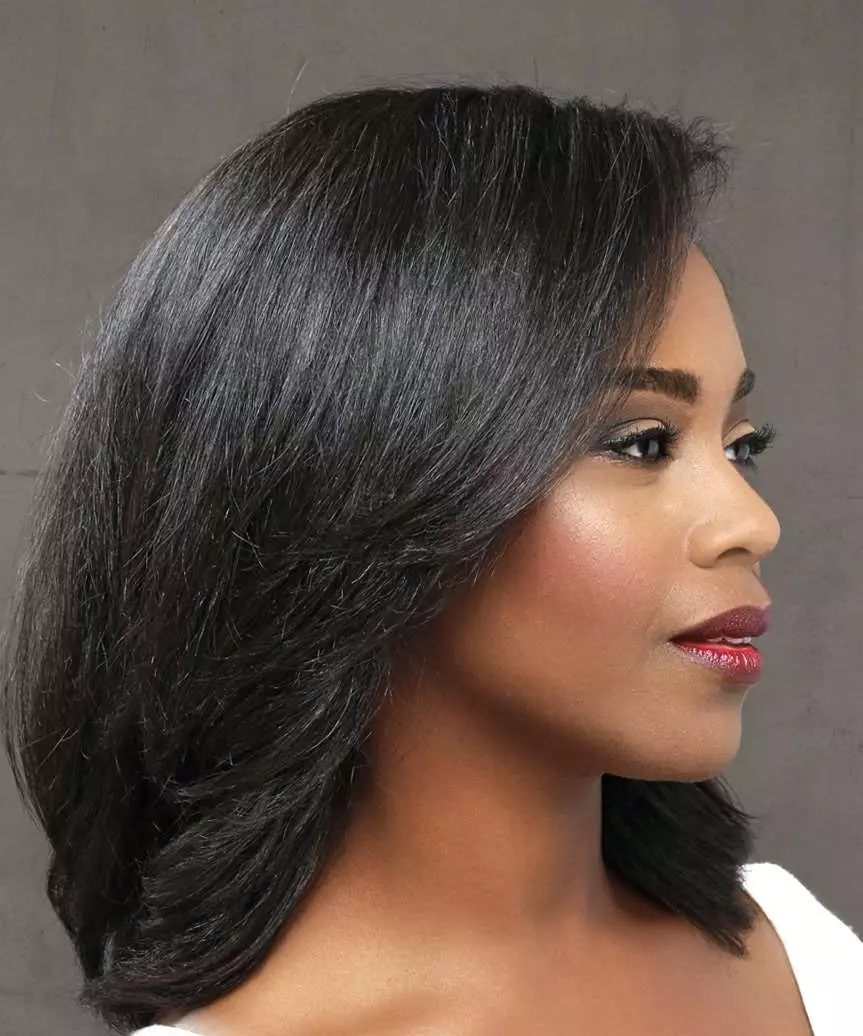
This is precision layering without the drama. The cut uses a middle parting and a smooth blowout to create a neat silhouette. Fine dark brown hair benefits from the internal weight removal, which stops the ends from looking stringy. The face-framing pieces start at the collarbone and graduate down, so they move with the head rather than sitting stiff.
You need a blow dryer with a round brush to get the finish right. The layers need trimming every eight to ten weeks, or the shape collapses. Not for very thick hair, because the subtle graduation will not be visible enough to justify the upkeep. Request from your stylist: layers, middle parting, dark brown color, smooth blowout finish.
Side-swept bangs on fine wavy dark brown hair, layers
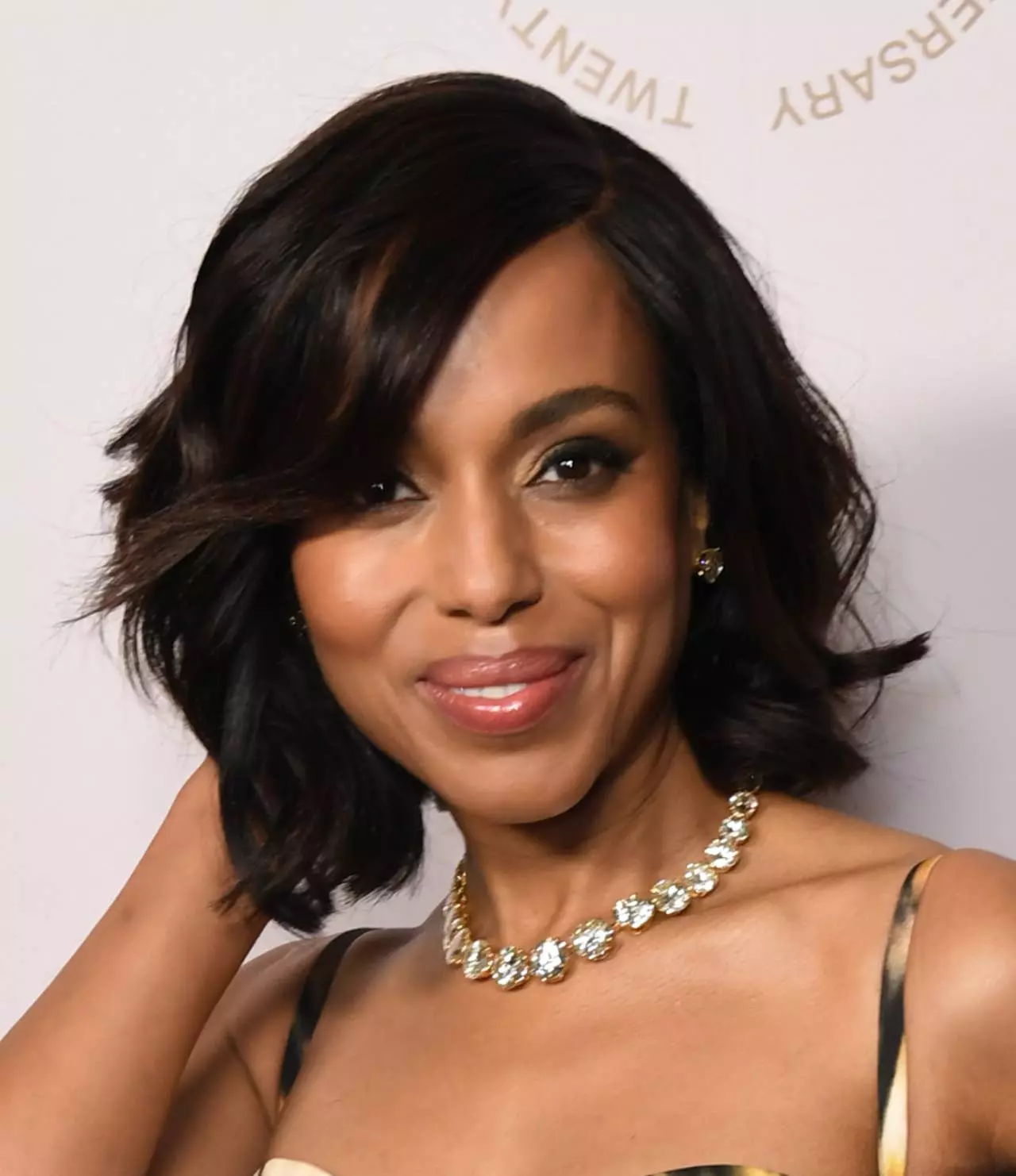
Side-swept bangs do the heavy lifting here. The soft layers across the body keep the fine wavy texture from falling flat, while the bang sweeps across the forehead and blends into the front sections. Dark brown with subtle auburn highlights adds warmth without needing a full color service. A gentle blowout sets the shape, but the waves will soften it within an hour. Not for brushing bangs into place every morning, because this cut requires a few seconds of direction each day.
Final Thoughts
Pick by how you live, not by how you wish you styled.
- Fine density: ask for blunt ends with soft internal layers.
- Ten minutes in the morning: curtain bangs and a lob.
- Cool base that pulls brassy: ash blonde with a violet toner every four weeks.
- Curly texture: an angled bob with carved layers, no heavy scissors.
Find the medium length cut that speaks to your style.