You have a salon appointment booked and a phone full of saved photos, but none of them feel quite right. That is the moment when a clear, practical idea matters more than another scroll through the same images.
Lovely Hair Color Ideas 2027 fill so many saved boards because the shift is toward shades that work with your natural base and grow out gracefully. 27 real looks from honey blonde to copper to ash balayage give you a decision framework, not just pretty pictures. The struggle is picking one that fits your texture, your schedule, and your comfort level.
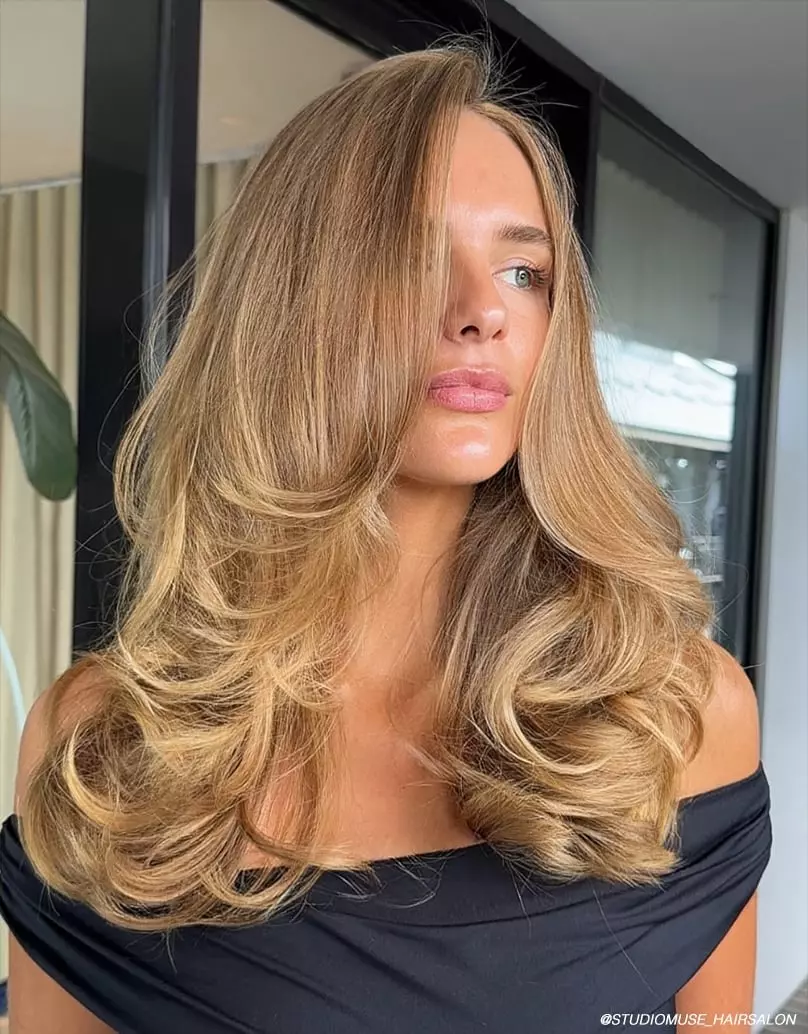
Honey blonde with subtle highlights and voluminous curls
Layers cut to stack through the ends give a honey blonde base something to bounce off. Subtle highlights, painted through the mid-lengths, keep the color from falling flat once the curl pattern relaxes. The side parting angles the volume so the shape reads deliberate rather than accidental. Thick, wavy hair holds a blowout like this with minimal prodding. Ask your colorist for: honey blonde base with subtle highlights. The catch: fine hair lacks the density to support these curls past lunch. A texturizing spray rescues the volume about halfway through the day.
Dark brown base with smooth caramel balayage for warmth
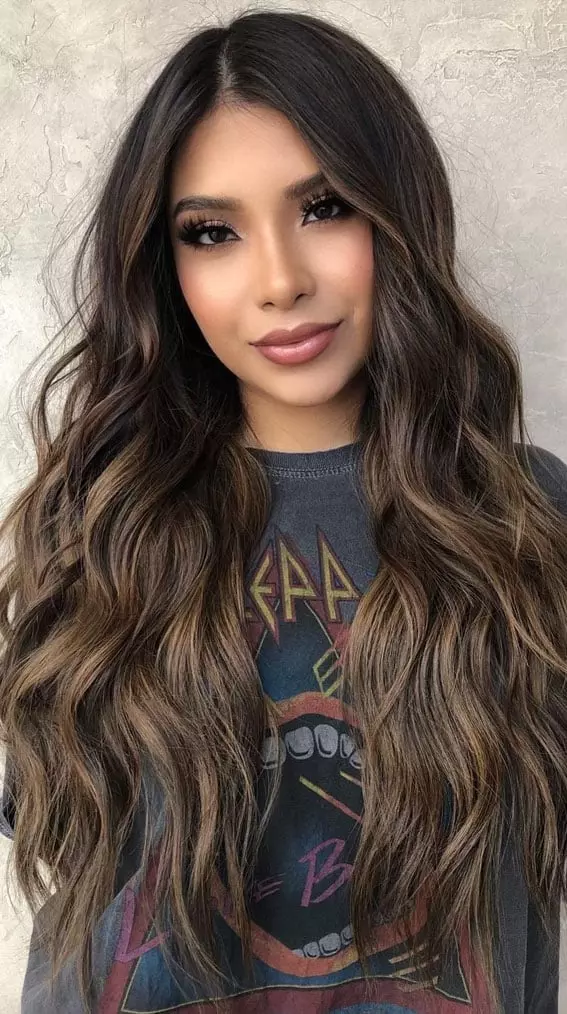
Wondering how to get warmth without committing to a full color change? Caramel balayage on a dark brown base is the answer. The smooth transition keeps the root line soft, so grow-out is low maintenance. Loose waves let the caramel strands show dimension at different angles. Thick, wavy hair shows the dimension best. It works best for those who want contrast between the dark base and lighter pieces.
Vibrant copper red with subtle blonde highlights
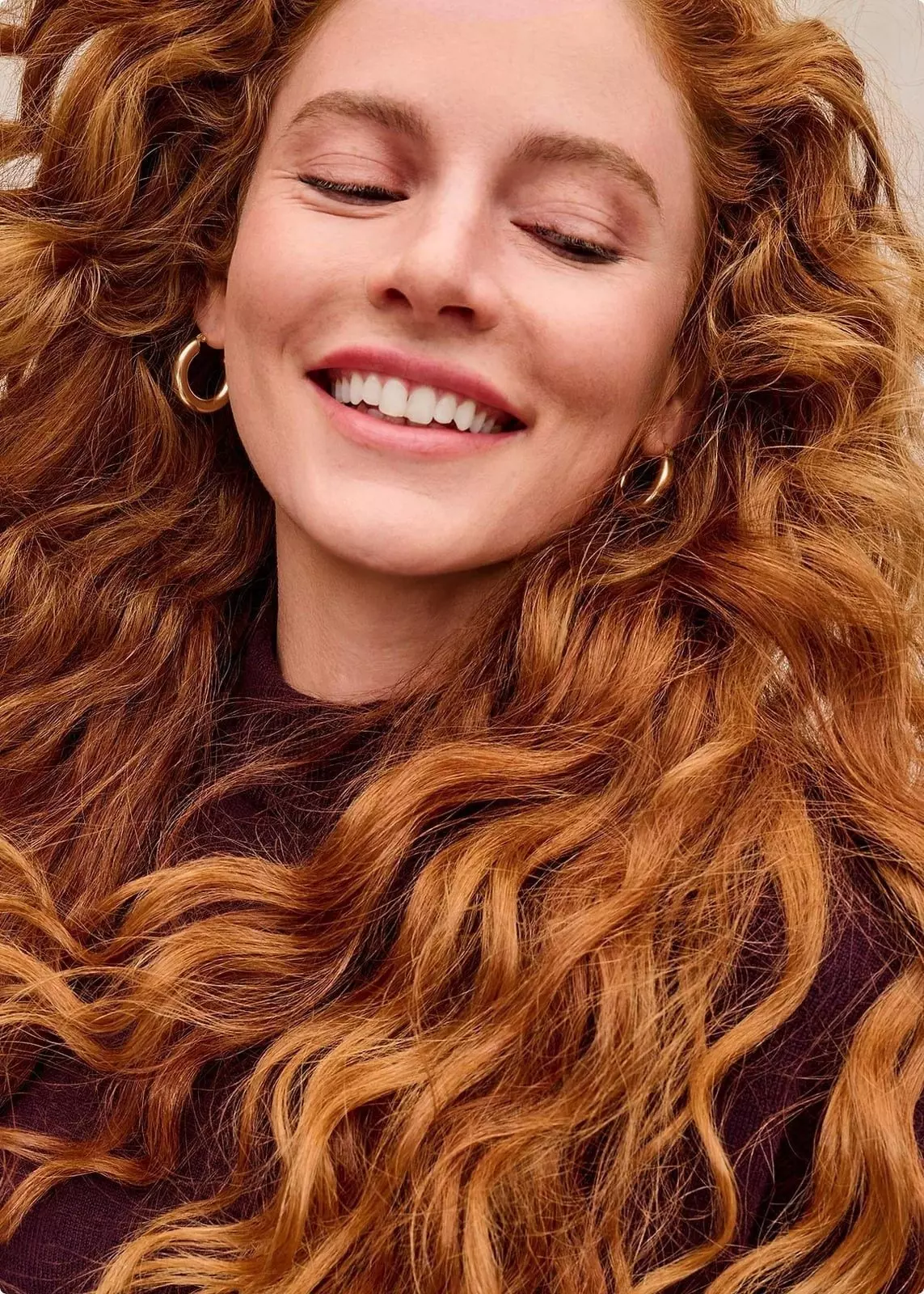
A true copper red versus a strawberry blonde: the difference is intensity. This shade lands on the side of bold, not shy. Subtle blonde highlights break up the solid pigment so the color reads dimensional, not flat. Wavy, dense hair gives the strands room to catch light naturally. The words for the chair: vibrant copper red with subtle blonde highlights. Skip it if your hair is already processed to a pale blonde. The red grabs hard and stays.
Golden highlights on dark blonde base for sophistication
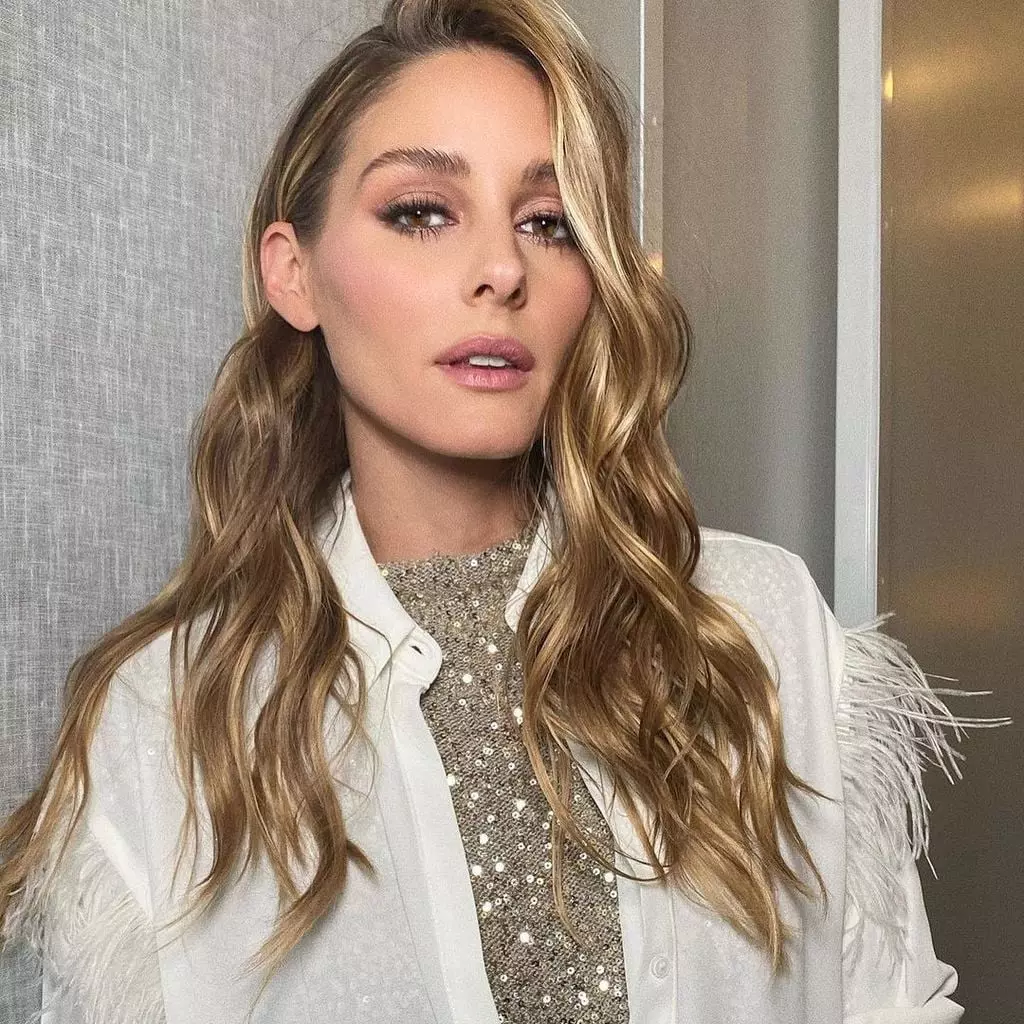
Soft waves and a side parting create the kind of shape that looks good without constant tucking. A dark blonde base keeps the overall tone grounded, while golden highlights add the lift. Fine hair benefits from the layers. They create the illusion of density. Ask your colorist for: dark blonde base with subtle golden highlights. The catch: if your natural base is very dark, the lightening required is significant. A trim every eight weeks keeps the ends from splitting.
Medium brown with subtle auburn undertones
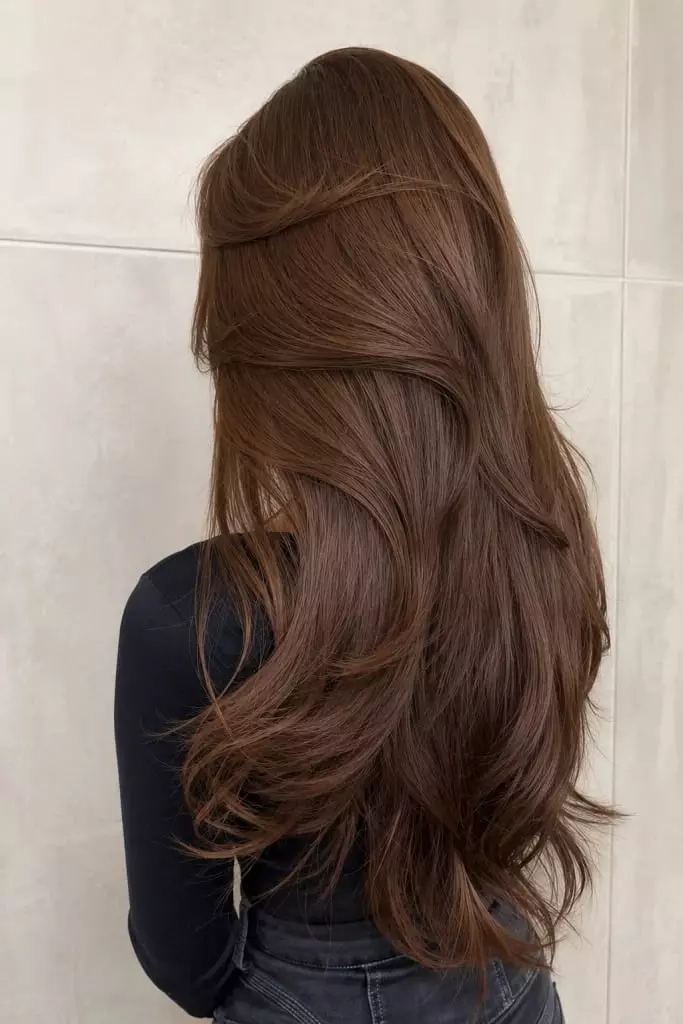
A medium brown base with auburn undertones looks rich, not red. The undertone catches warm light without screaming for attention. Layered waves encourage the color to shift across the surface. Thick hair holds the depth well.
A color-safe shampoo keeps the warmth from turning brassy. Trim every eight weeks. One more thing: this shade pulls more red on very light hair, so the starting depth matters.
Smooth blonde balayage on dark brown base with creating a natural
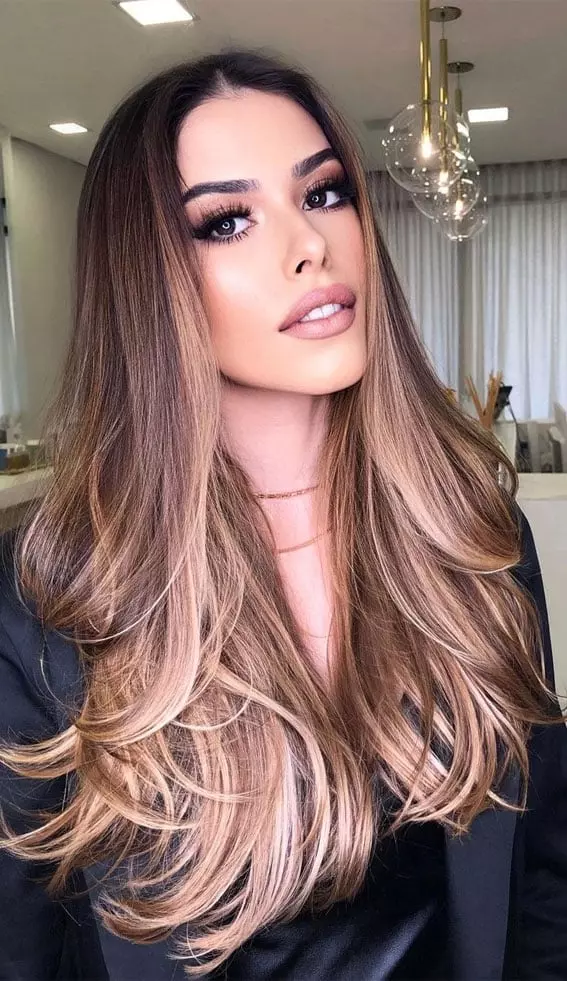
Balayage that starts below the surface keeps the dark brown base intact while the blonde lightens toward the ends. A middle part and a blowout show off the smooth transition best. Wavy, dense hair holds the shape without curling. Request a dark brown base with smooth blonde balayage. Toning every eight weeks prevents the blonde from shifting brassy.
Warm copper with blonde highlights and straight texture
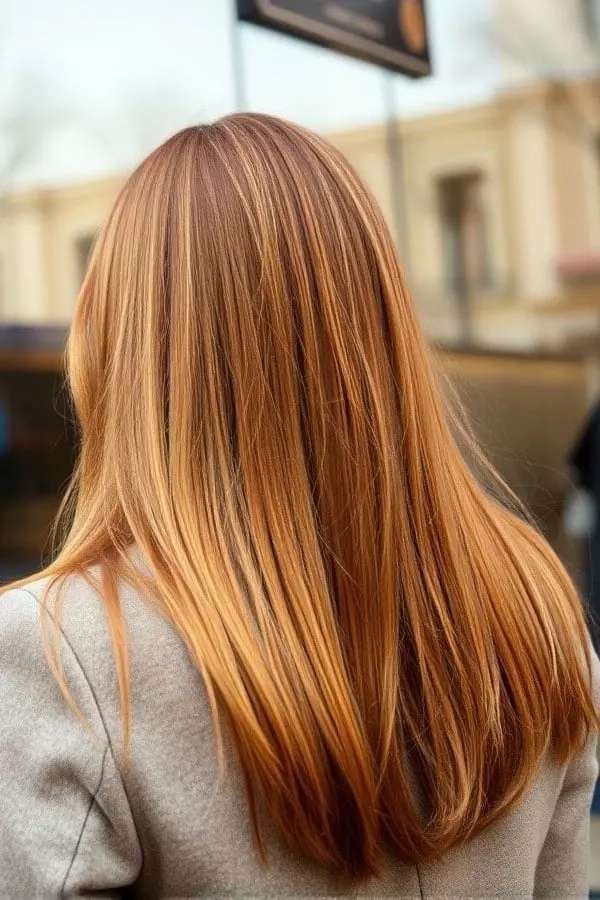
Copper with blonde highlights is the alternative when a full copper feels too heavy. The warm copper base carries the heat; the blonde pieces keep it light. Straight, fine texture air-dries quickly, which is the point for warm weather. Request a warm copper base with subtle blonde highlights. Skip it if you prefer cool tones or have thick hair that may not show the subtle placement.
Deep red with subtle lighter red highlights
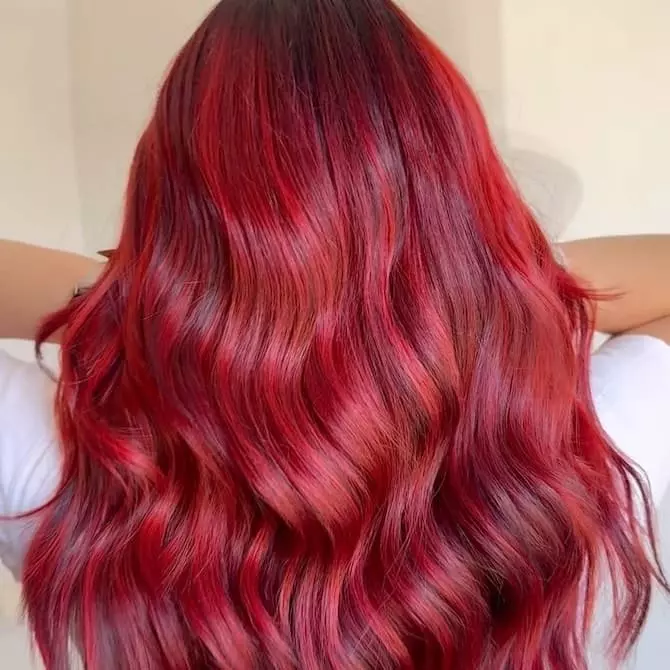
Lighter red highlights on a deep red base create a two-tone effect that looks one color in low light and two in direct sun. Wavy, dense texture adds the movement that makes the separation visible. The catch: red fades faster than most shades, so a color-depositing conditioner becomes part of the routine. Request a deep red base with subtle lighter red highlights.
Warm brown with subtle golden highlights
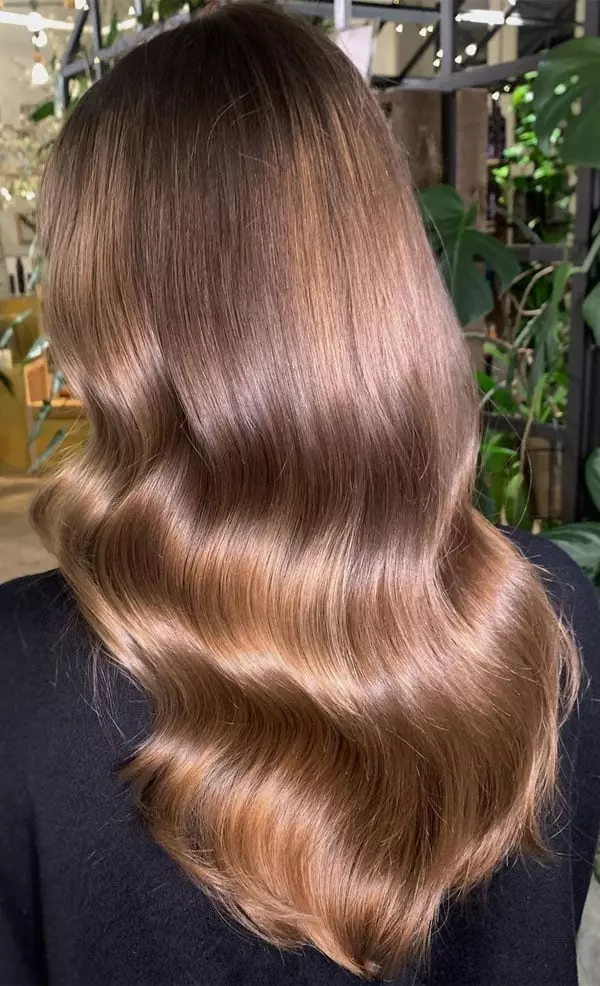
Golden highlights on a warm brown base work because the base and the highlight share the same undertone. Wavy, dense hair styled in a blowout shows the golden tones along each wave. A gloss every six weeks keeps the warmth from turning brassy. Request a warm brown base with subtle golden highlights. This look leans warm, not cool.
Subtle copper highlights on dark brown base
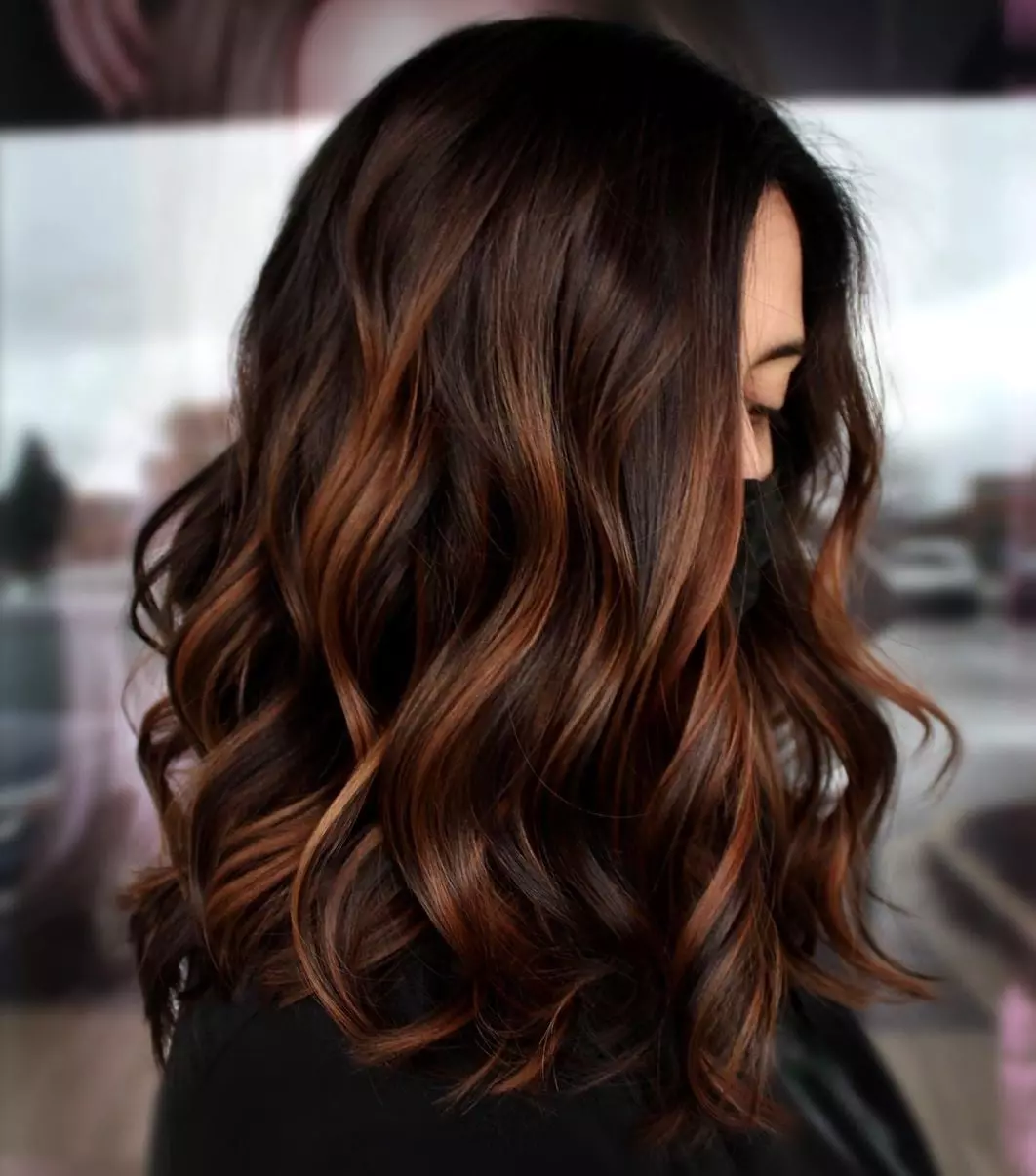
The answer is copper highlights on dark brown. Balayage places the copper through the mid-lengths and ends, leaving the root untouched. Wavy layers let the copper peek through without overwhelming the base. Request a dark brown base with subtle copper highlights via balayage. Toning every eight to ten weeks keeps the copper from fading to orange.
Copper balayage highlights on dark brown base with wavy blowout
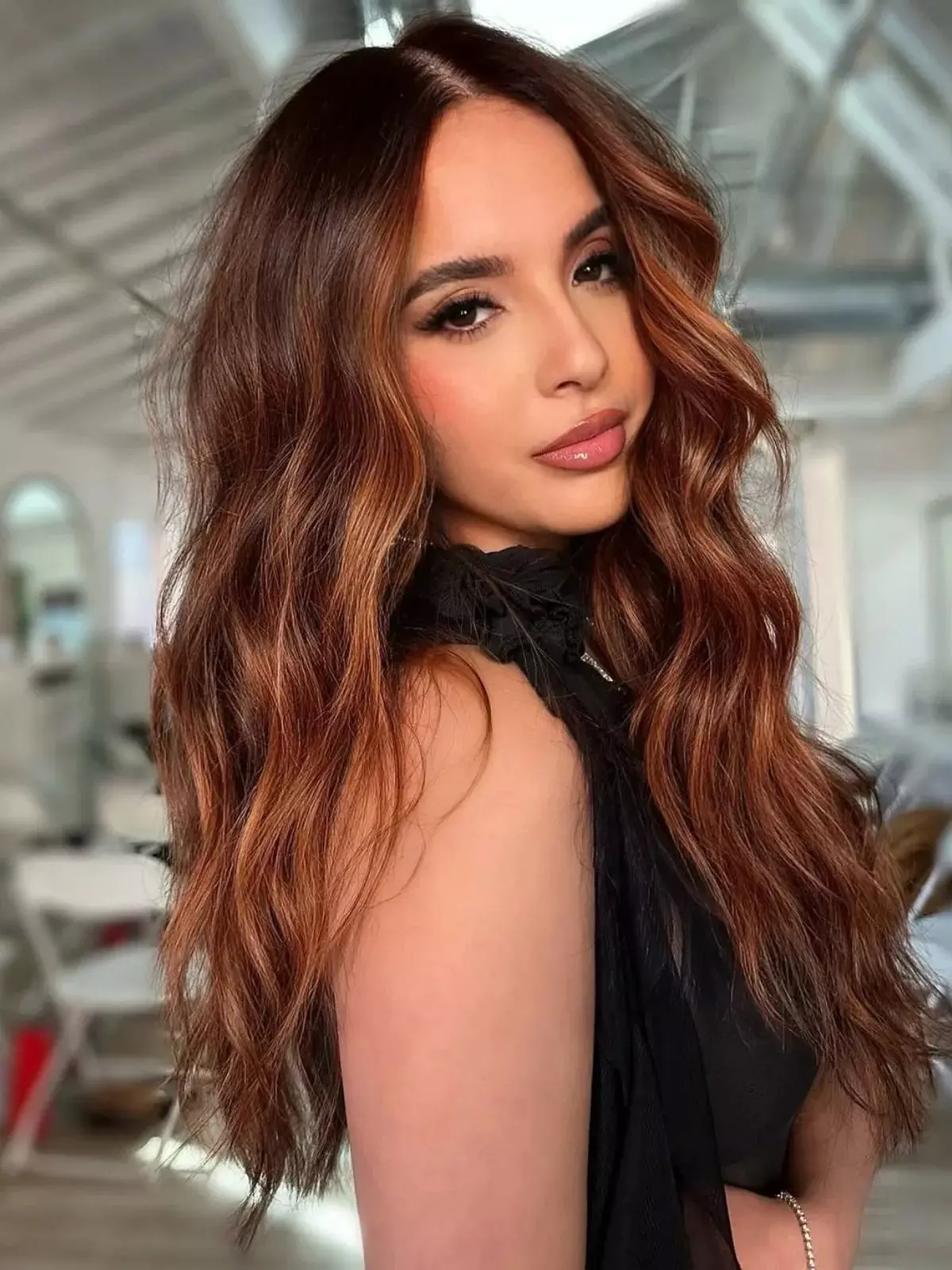
Copper balayage on a dark brown base works because the placement is deliberate, not random. The lighter pieces land where the wave bends, so the copper catches on the curve and the dark stays heavy underneath. You are looking at thick, wavy hair with a middle part and a layered cut. The tone sits somewhere between warm copper and amber, never brassy. Tell your colorist: dark brown base, subtle copper balayage highlights, layered cut. Fine hair may not provide enough density for the contrast to show dimension rather than a few scattered strands.
Caramel highlights on dark brown base for transformation
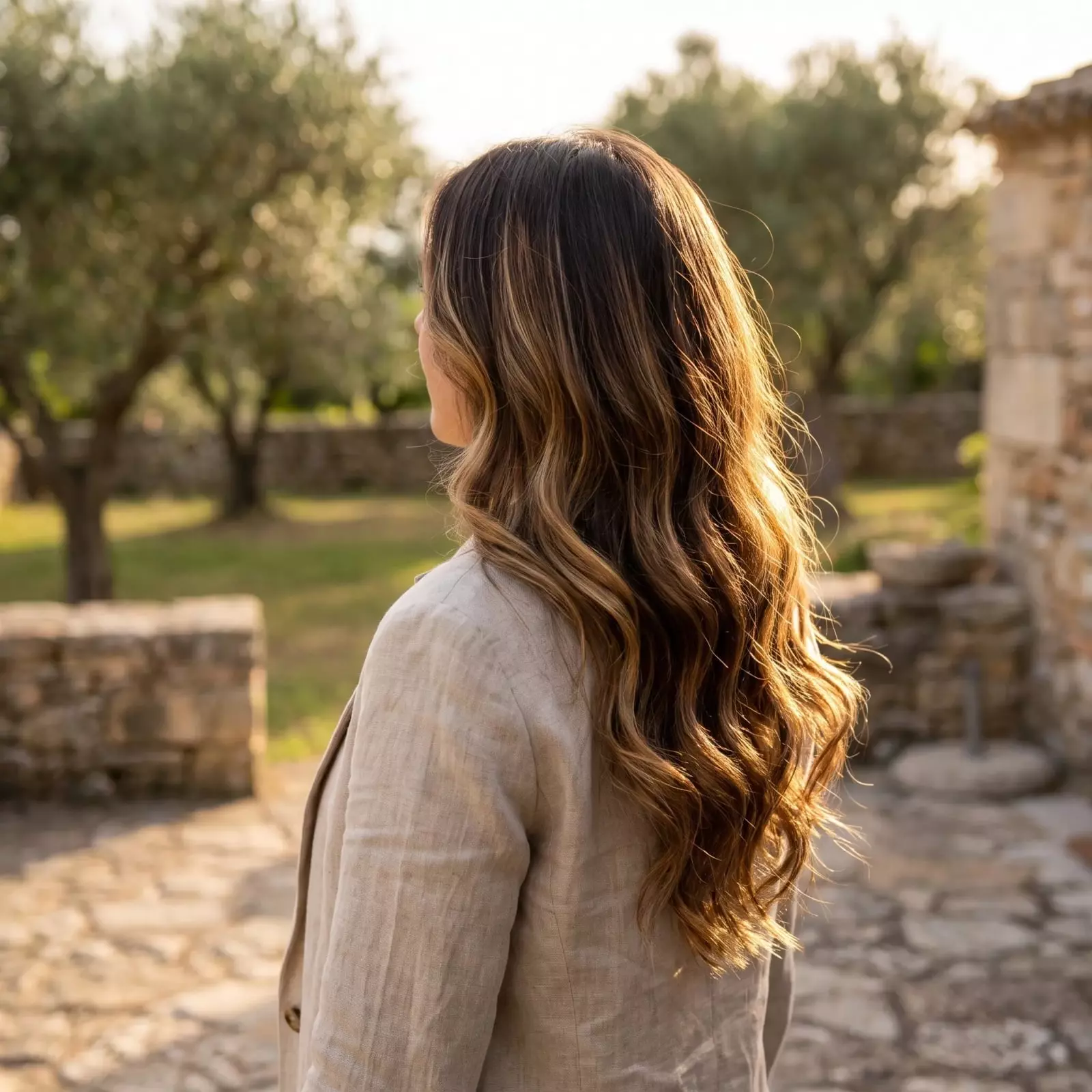
Balayage caramel highlights read softer than foiled ones because the saturation is lower at the root. This version keeps the dark brown base dominant and lets the caramel live in the air-dried wave. The tone is warm, but not golden enough to fight a cool skin tone. Wavy, dense hair is the natural home for this finish. A texturizing spray after the shower keeps the wave pattern intact. You arrive at the salon with a photo and leave with a color that fades gracefully.
Dark brown base with subtle caramel highlights woven throughout
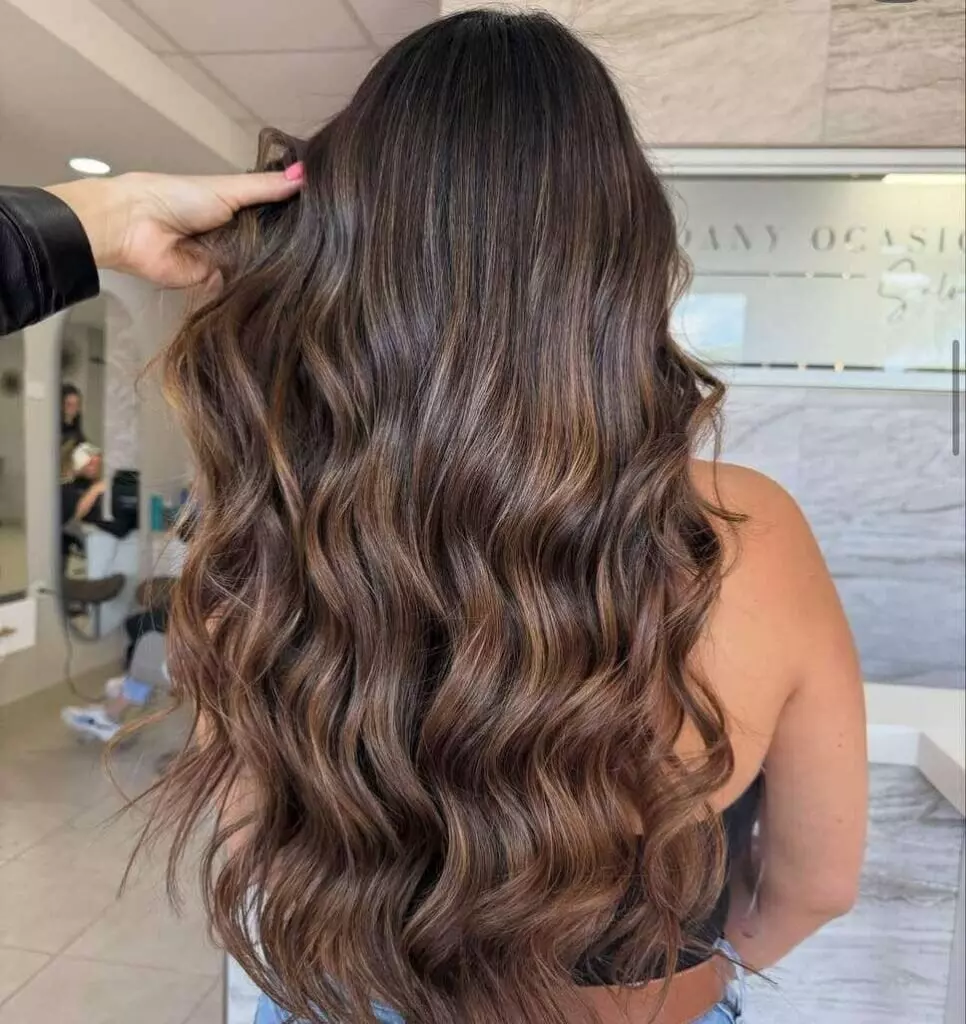
Subtle caramel highlights woven through a dark brown base mean the color grows out without a harsh line. The technique is balayage, but the artist painted fine sections instead of broad sweeps. The result is a warm brown tone with a flash of caramel at the bend of the wave. Wavy, dense hair lets each highlight sit visible without looking sparse. The catch: fine hair will show the weaving less, so the effect lands closer to all-over brown.
Dark brown base with caramel balayage and wavy blowout, close-up take
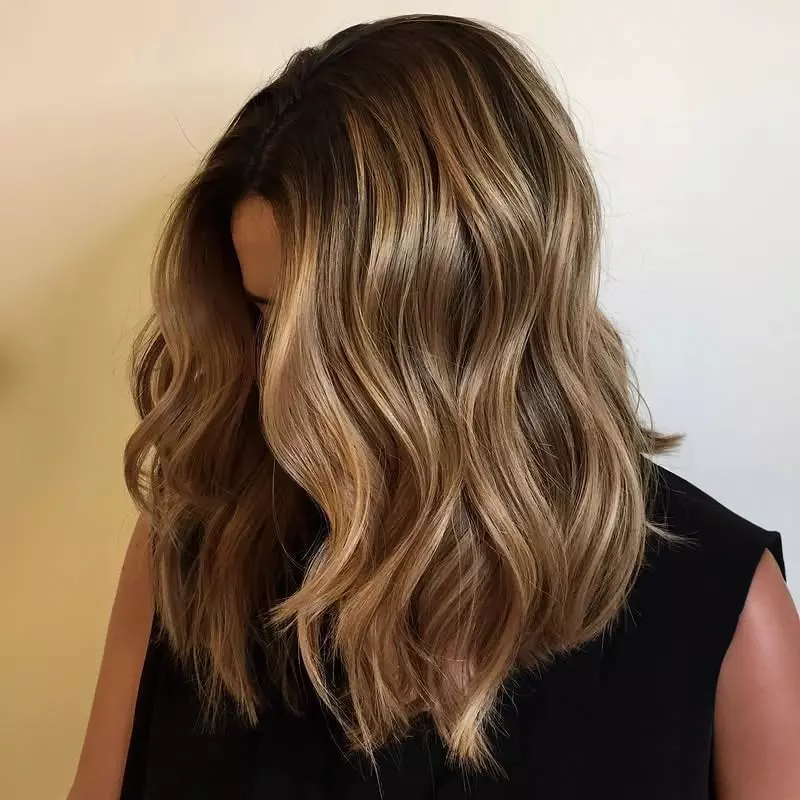
A dark brown base with caramel balayage and a side part creates asymmetry that the wave can follow. The layers here are cut to stack the wave instead of falling straight, so the caramel lands on alternating sections of the curve. The tone is warm caramel, not honey or gold. Wavy, dense hair holds the blowout shape without product. Tell your colorist: dark brown base, caramel balayage, layered cut, wavy blowout. The side part is the detail that makes the color feel directional.
Dark brown with subtle caramel highlights for a multidimensional
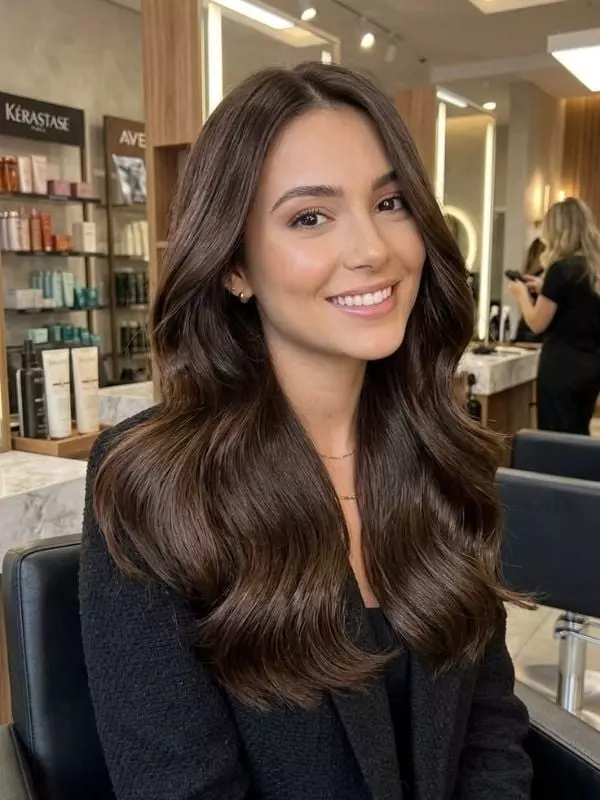
Book it as: dark brown base, subtle caramel highlights, neat blowout. The tone is warm caramel, not honey or copper, and the placement is fine enough that the dark base still looks the primary color. The middle part lets the highlights fall evenly on both sides. Wavy, dense hair holds the neat shape for two days before the wave relaxes. Pass when you want a cooler brown. This one leans warm by design. The blowout is the finishing step that seals the color as intentional.
Dark brown with caramel highlights blended through ends
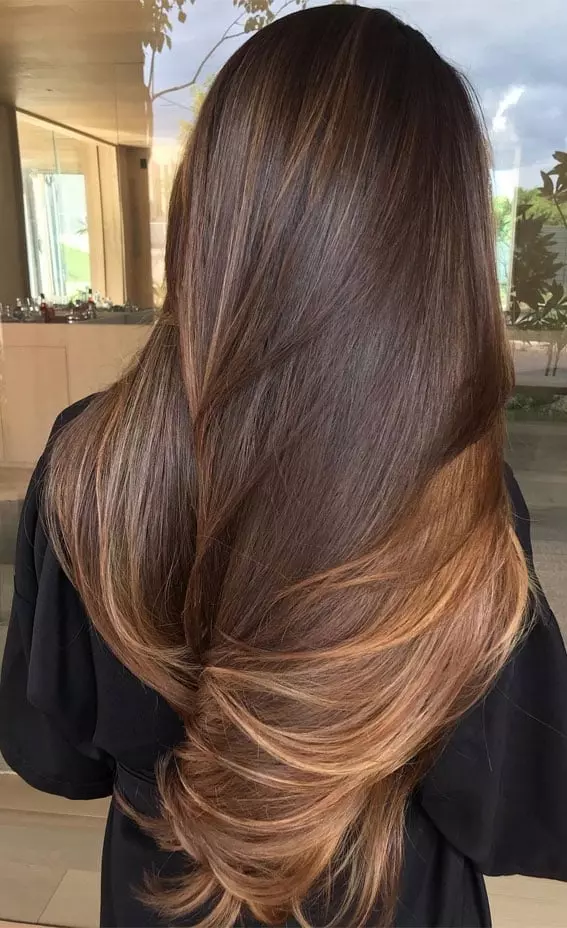
Balayage starts where the root shadow ends. Here the dark brown base holds the scalp, and caramel highlights enter around the ear, thickening through the mid-lengths and ends. The technique avoids a hard line, so the grow-out lands soft. Wavy, dense texture carries the warmth best; the color is a slow fade without a stripe. Skip if you prefer cool tones or fine hair that may not show the subtle highlights. The cut uses layers to keep the ends from feeling heavy.
Striking blonde highlights on dark brown base
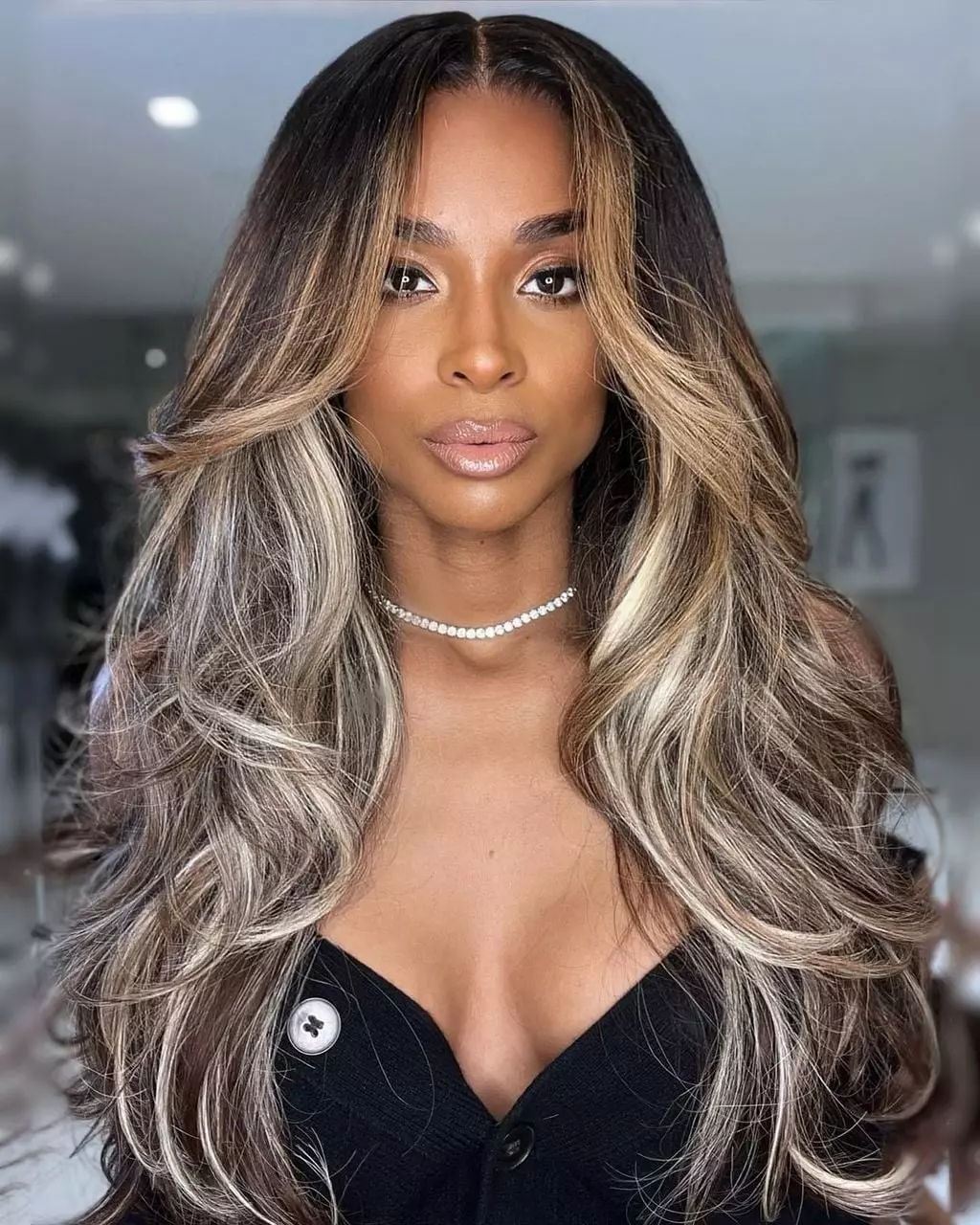
Subtle balayage blends. Striking balayage announces itself. This version places blonde pieces against a dark brown base with enough separation that each strand stands out. The contrast works best on wavy, dense texture that can hold the separation. A middle part keeps the look balanced. Skip this style if you prefer a lived-in fade or have fine hair that may not hold the contrast well. The contrast makes the blonde pop, but it also means the root line shows sooner. Plan for a tone refresh every six to eight weeks to keep the blonde from tipping warm.
Dark blonde base with caramel highlights and air-dried texture
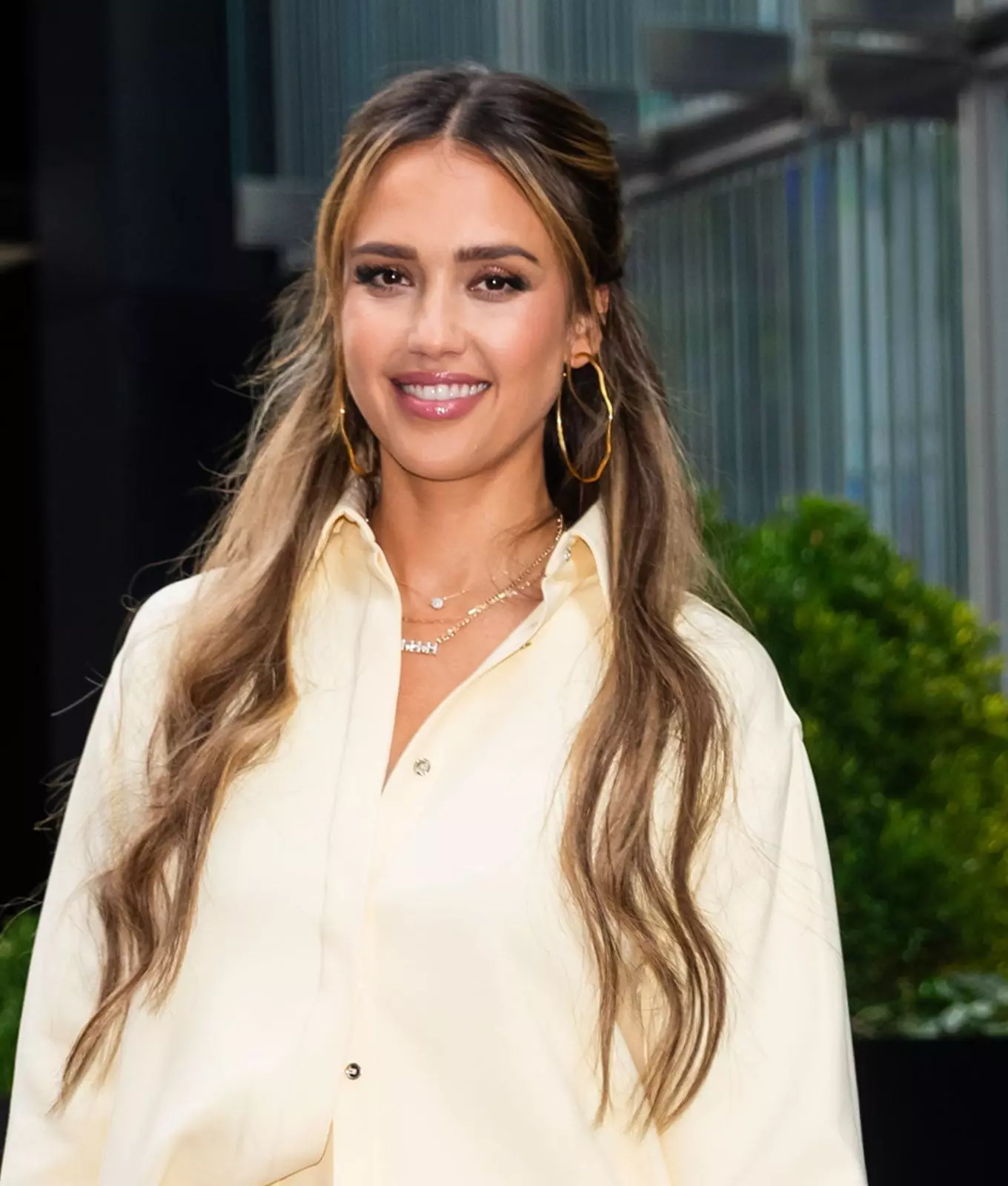
A dark blonde base with caramel highlights gives a sun-warmed look. The lighter pieces are placed subtly through the mid-lengths, so the overall effect stays warm. Wavy, dense texture benefits most; the air-dried finish relies on the wave pattern to break up the color. It suits warm skin tones or those who want a low-maintenance look. The cut uses layers to encourage the wave. Request a dark blonde base with caramel highlights via balayage and layered cut.
Face-framing highlights on dark blonde balayage
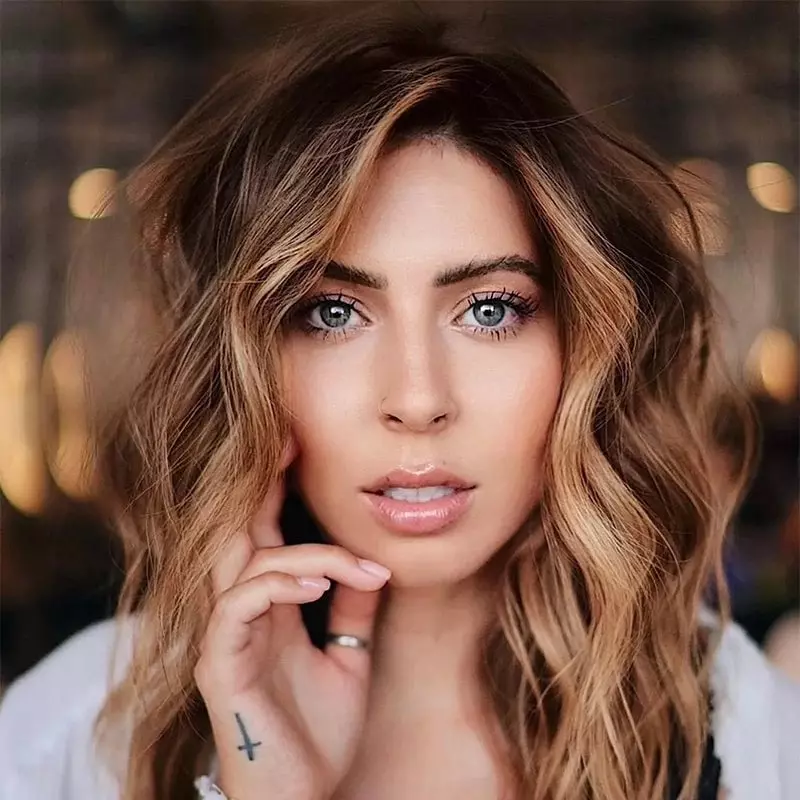
Face-framing highlights pull the eye upward. The lighter strands start at the cheekbone and widen through the ends, while the rest of the hair stays a dark blonde balayage. Wavy, dense texture gives the highlights room to sit without looking sparse.
The wear reality: the face-framing pieces lighten first. A toner appointment every eight weeks keeps them from turning brassy against the darker base. The soft layers help the transition blend. A uniform color or fine hair may not show the dimension. Request a dark blonde balayage with face-framing highlights and soft layers.
Dark brown with ash undertones and loose waves
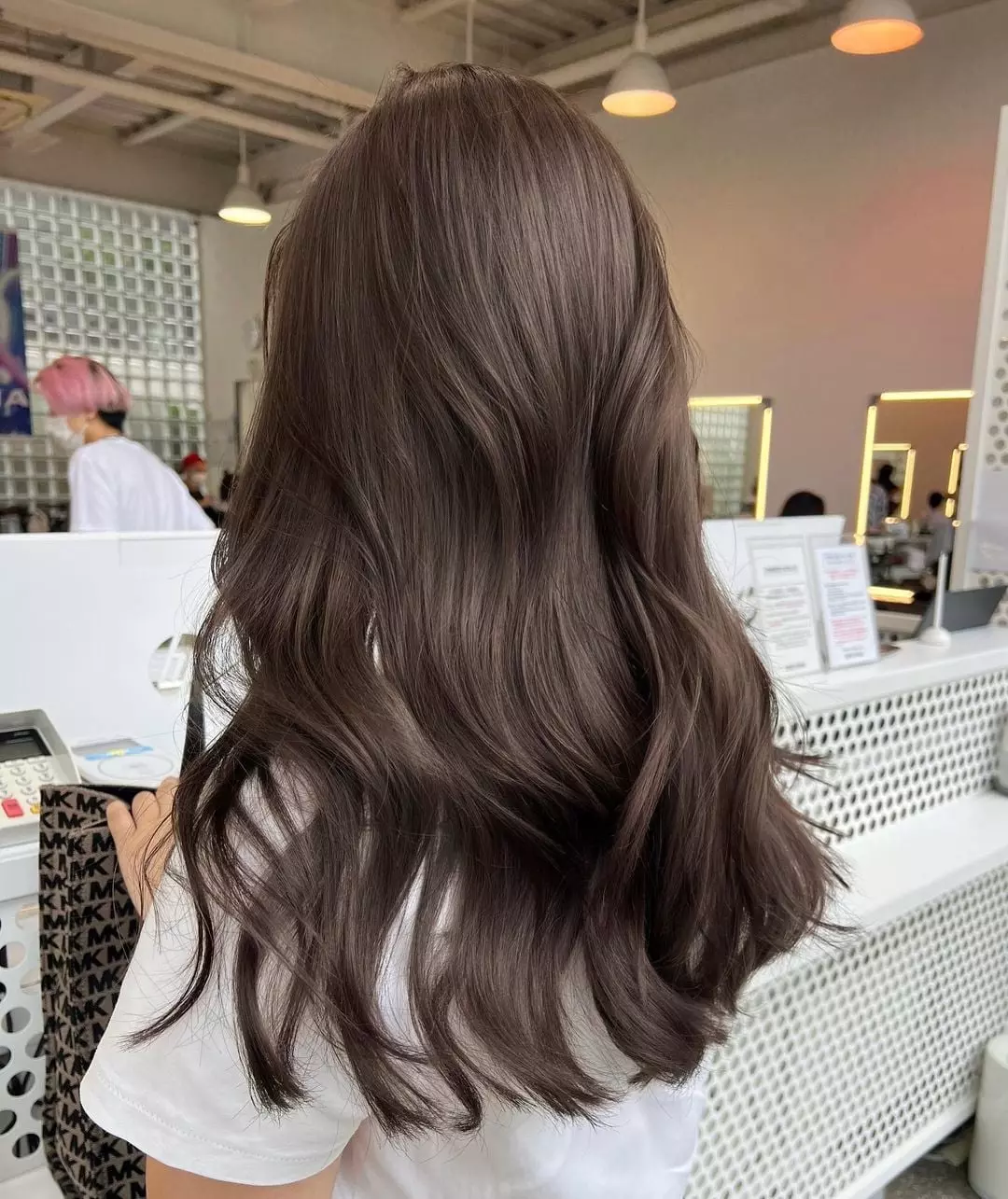
Ash undertones sit cooler than a neutral brown but warmer than charcoal. The dark brown base carries a muted, smoky finish that flattens the warmth. Loose waves help the tone catch light at different angles, which keeps the color from reading flat. Wavy, dense texture holds the wave pattern easily. Skip if you prefer warm tones or have fine hair that may not hold the loose waves. The ash tone requires a purple or blue shampoo at home to keep the cool cast from fading warm.
Rich, dark brown with subtle red undertones and long layers
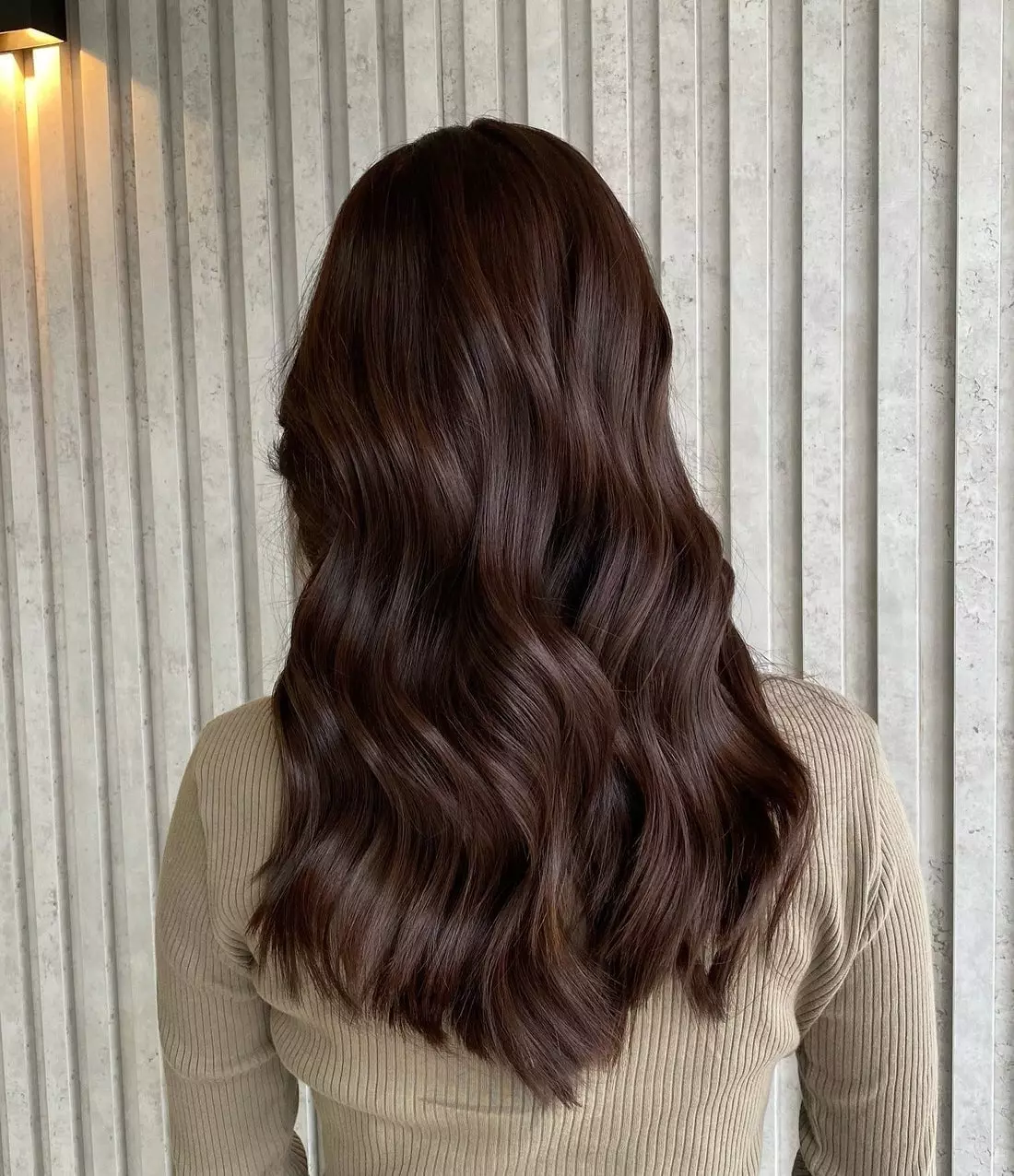
You might call it brown and call it done. One glance in sunlight and you see the difference. A dark brown base with subtle red undertones that look depth, not flash. The long layers keep the weight, the wavy thick texture holds the shape. A middle parting lets the color fall open on each side. It works best with cool ash tones or finer hair. Those soft layers can collapse. Request a dark brown base with subtle red undertones and long layers.
Dark brown base with ash blonde balayage and curtain bangs
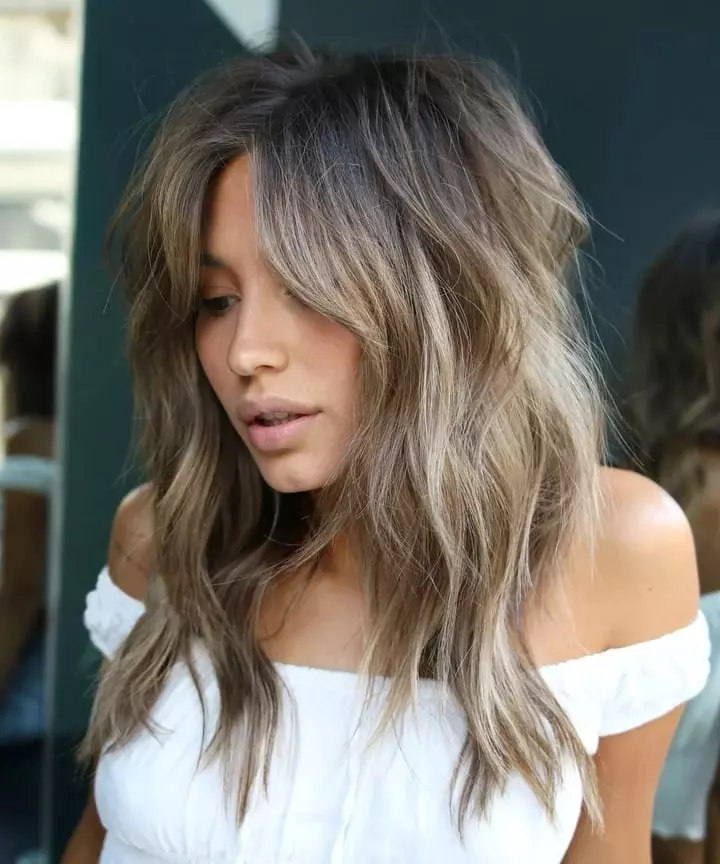
This one earns its keep through contrast. A dark brown base paired with ash blonde balayage. The blonde sits cooler, the brown stays rich. Curtain bangs soften the front and let the lighter pieces frame the face. The middle parting and wavy, thick texture give the blend somewhere to land. Not for anyone who runs warm with their color choices; ash can read flat on a warm base. Request a dark brown base with ash blonde balayage and curtain bangs. Air dry with a texture spray and you are out the door.
Rose gold highlights on warm brown base
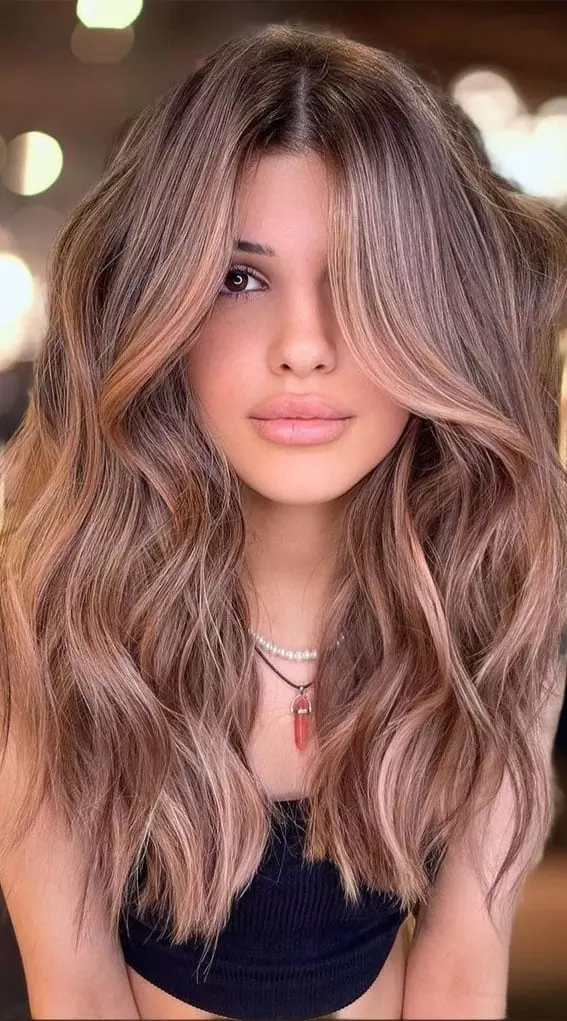
Rose gold reads pink in some light, copper in others. On a warm brown base the effect is subtle, no neon, just a lifted shimmer through the mid-lengths. Soft layers and curtain bangs keep the color moving. The wavy thick texture wraps the rose gold around each bend. Pass when you want a cooler blonde or a pure copper; this sits in between. Request a warm brown base with rose gold highlights and curtain bangs. A toning session at week six keeps the pink from fading brassy.
Shag haircut with blunt bangs and lavender hue, close-up take
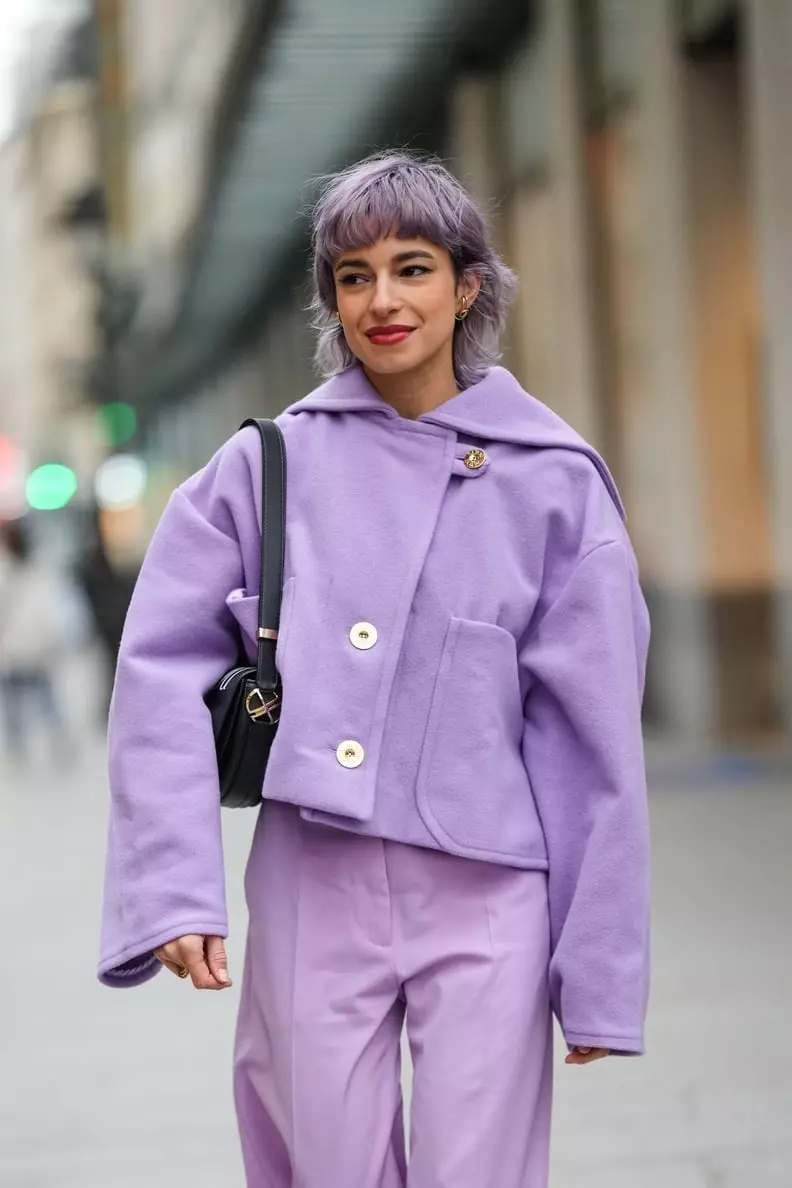
Lavender is a commitment, not a suggestion. The shag haircut with blunt bangs and wavy fine texture gives the color a shape that moves, so the lavender looks deliberate. The subtle darker roots anchor the look and stretch the time between touch-ups. It suits fine hair of any length. The catch: achieving an even tone requires salon expertise, and the color fades faster than natural shades. A color-depositing shampoo every third wash keeps the lavender from turning silver.
Shag haircut with blunt bangs and two-tone color split
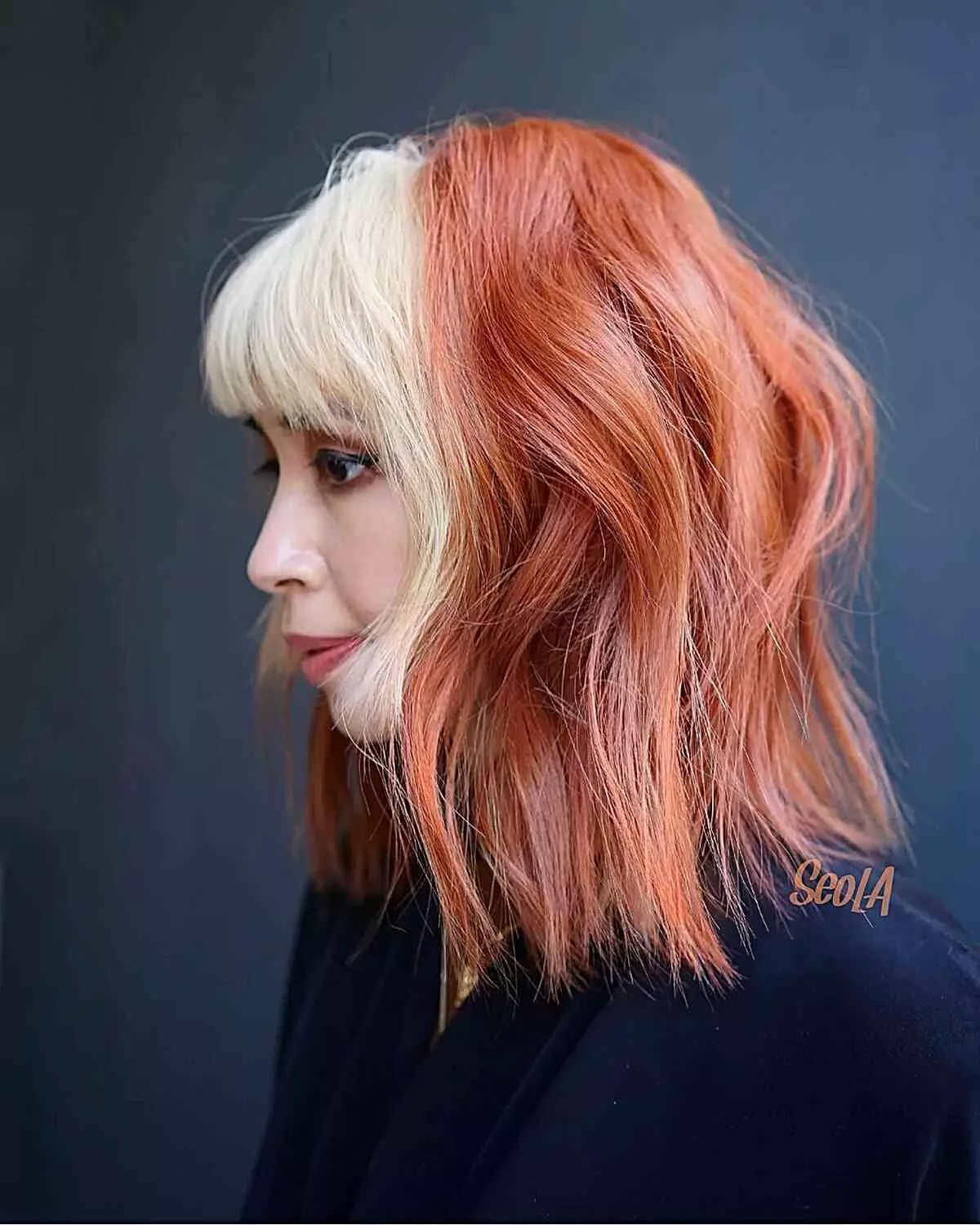
Two colors, one cut, no blending. A shag haircut with blunt bangs and a two-tone split, platinum blonde on one side, vibrant copper on the other. The air-dried wavy fine texture keeps it from looking stiff. A middle parting makes the divide deliberate, not accidental. Skip it if you prefer low-maintenance color; two tones mean two upkeep schedules. Request a shag haircut with blunt bangs and a two-tone color split of platinum blonde and copper.
Split dye creating a peachy blonde and vibrant red combination
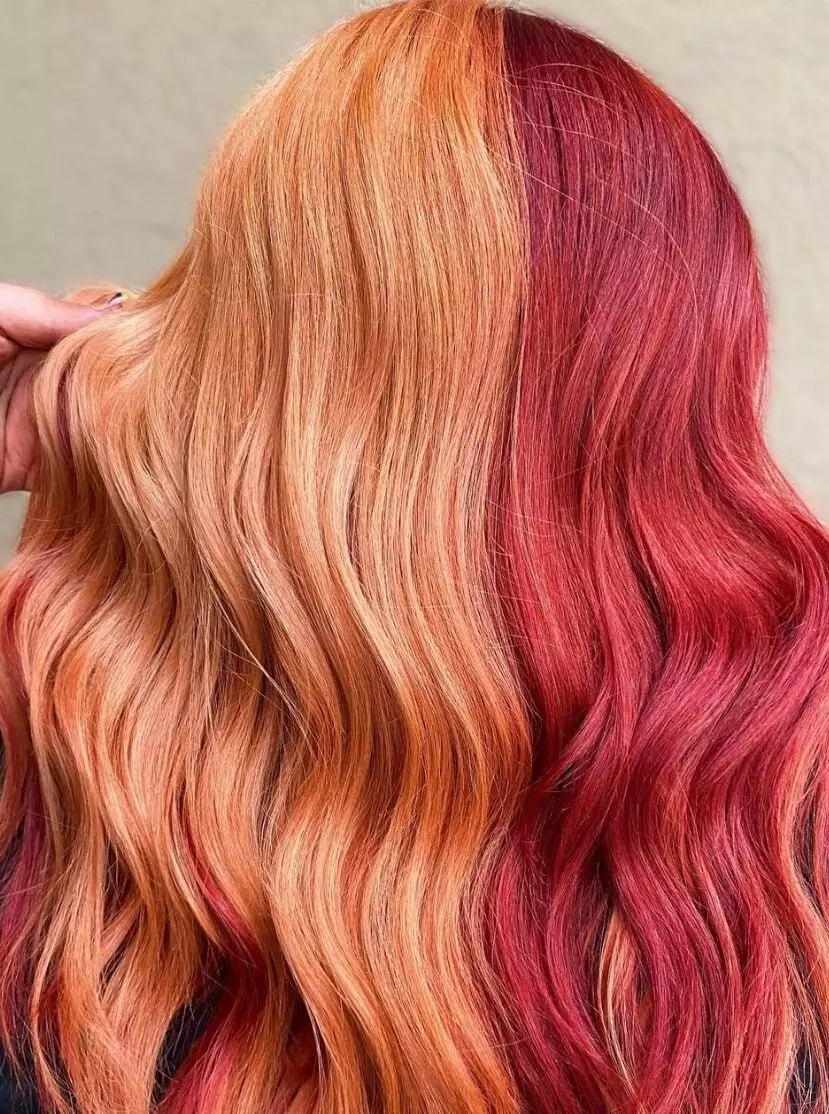
Split dye is a yes-or-no decision, and this one commits. Peachy blonde on one side, vibrant red on the other, both meeting at a center part on thick, wavy hair. The catch: you will have two entirely different fade schedules to manage. One side warms up while the other cools down, and a single purple shampoo cannot fix both. Tell your colorist: split dye, peachy blonde, vibrant red. This look requires commitment to upkeep and a preference for high contrast over blended color.
Ash blonde balayage creating dimension with lighter strands
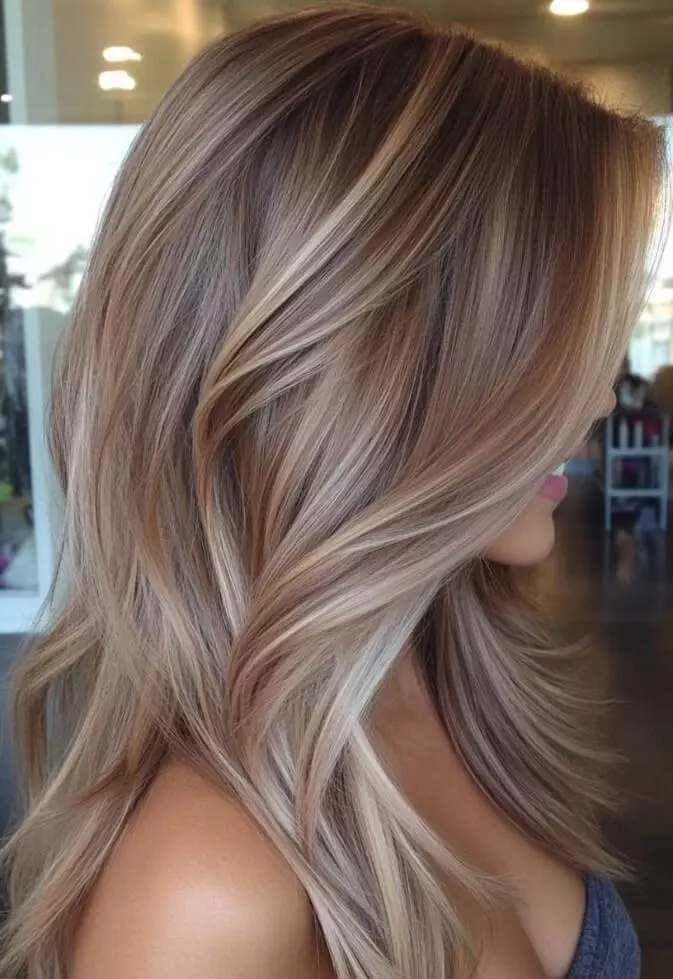
Balayage demands a steady hand, and ash blonde balayage demands patience. Fine, wavy hair with a side part and soft blowout shows every lighter strand as deliberate contrast against the darker base. The cool tone fights brassiness for about six weeks before needing a purple shampoo reset. Request an ash blonde balayage with layers and soft blowout.
Final Thoughts
Pick the color that matches your real morning, not your aspirational one.
- Fine hair: ask for fine-weave highlights to avoid a stripe.
- Ten minutes in the morning: choose a root-stretching balayage.
- Cool base that pulls brassy: book a toner every six weeks.
- Grow-out averse: stick to your natural root with soft face-framing.
Choose a color that makes you feel confident and suits your lifestyle.