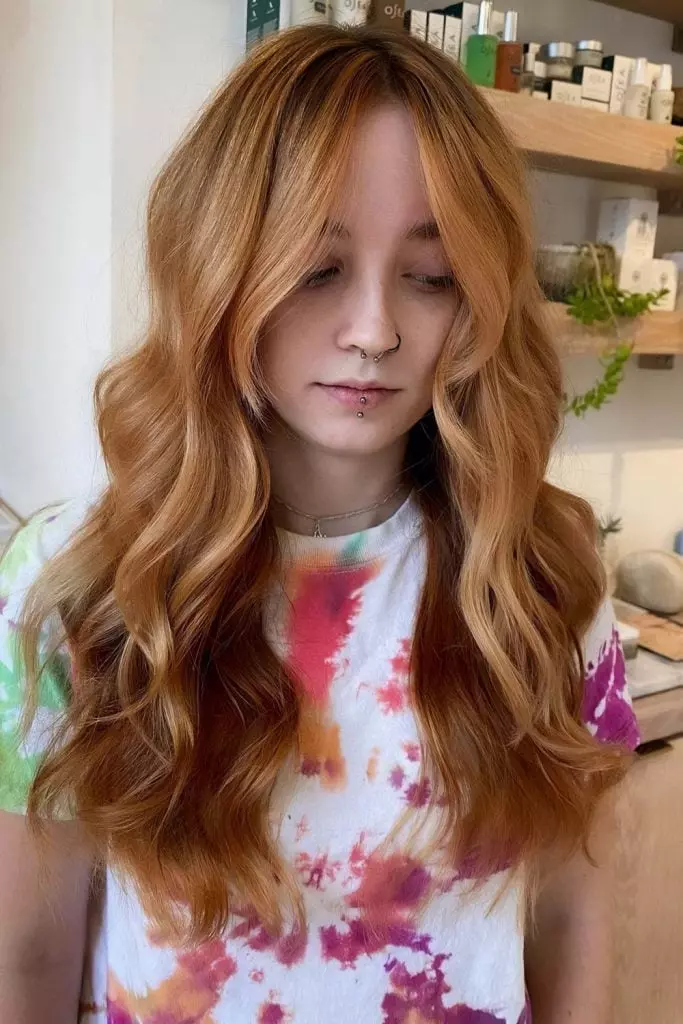
You sit down in the chair, ready to talk about the grow-out line. Ombre in 2027 means a soft transition, not a hard stripe, which is why it keeps showing up on salon boards and saved folders.
This collection gives you 26 ways to approach the look, from low-upkeep blends to bolder color shifts. Whether your hair is fine or thick, straight or wavy, there is a version that fits your schedule and your stylist’s chair time. Stylish Ombre Hair 2027 fill so many saved boards because they solve the problem of wanting dimension without constant root touch-ups.
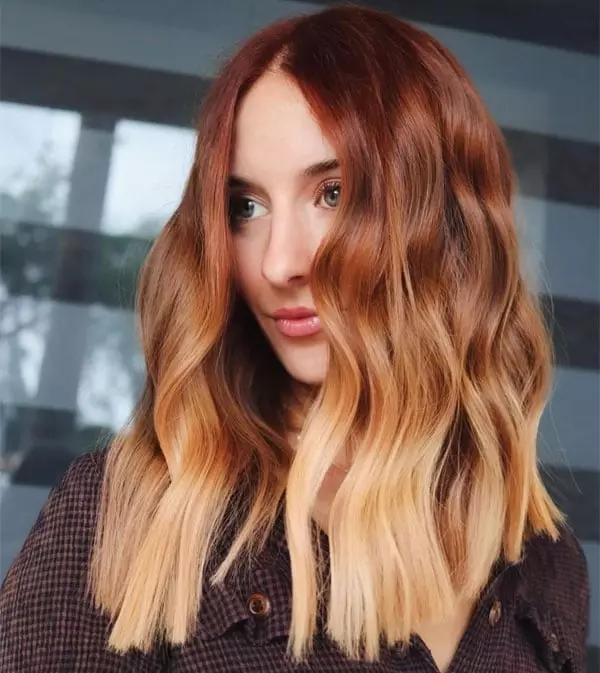
Red base transitioning to bright blonde in a blunt bob
Two distinct colors on a single blunt bob is a design choice, not an accident. The rich red base sits at the roots, then shifts to bright blonde at the ends. Fine, wavy texture holds the middle part and the wavy blowout without falling flat. A round or heart face gains softness from the length that hits just below the jawline. Tell your colorist: red to bright blonde ombre, blunt bob, wavy blowout. The catch: you need a trim every six to eight weeks for that blunt edge to stay sharp. It works best with low-maintenance color and medium to fine hair.
Dark brown to honey blonde Ombre lob for thick hair
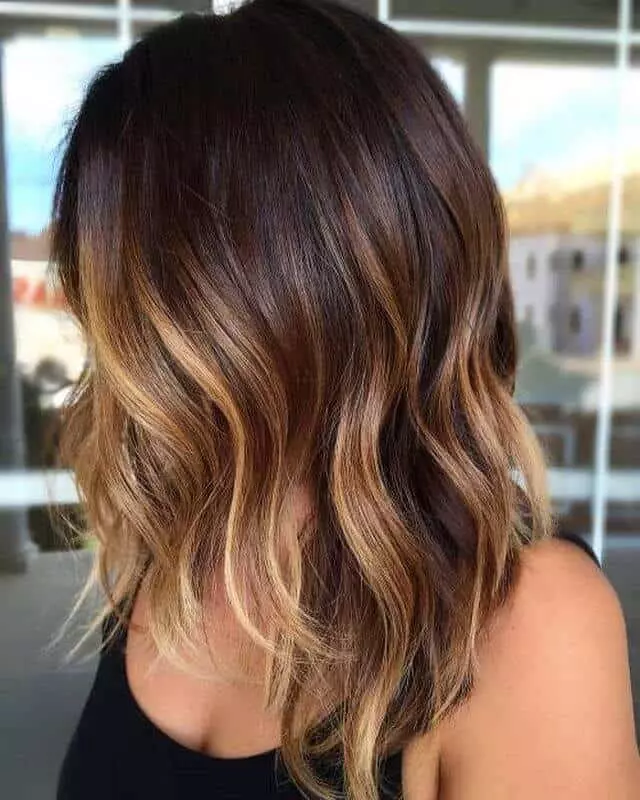
Wondering if a lob can handle a warm ombre without looking heavy? Thick hair is exactly what this needs. The dark brown base anchors the style, while the honey blonde ends lift the whole shape. A wavy blowout on thick, wavy texture creates volume that lasts. This lob suits most face shapes, especially when it starts at the collarbone. Plan for a trim every eight weeks. Pass when you have fine hair that needs volume assistance.
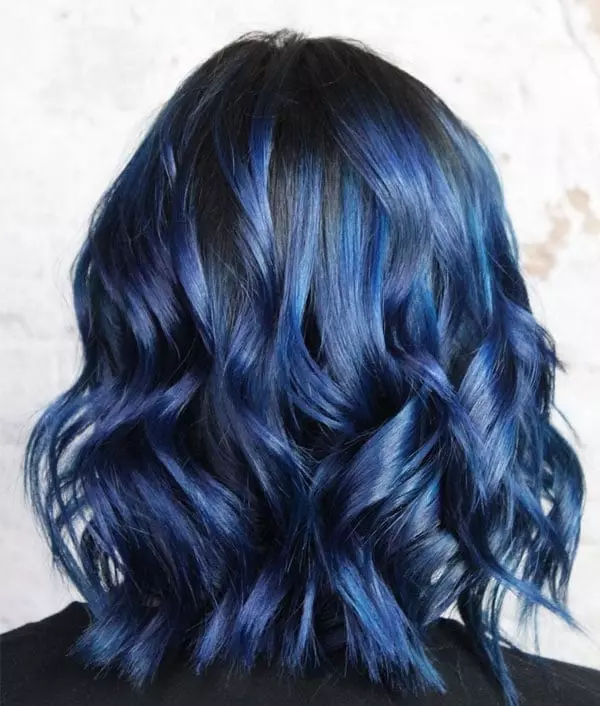
Black to bright blue Ombre for a striking contrast
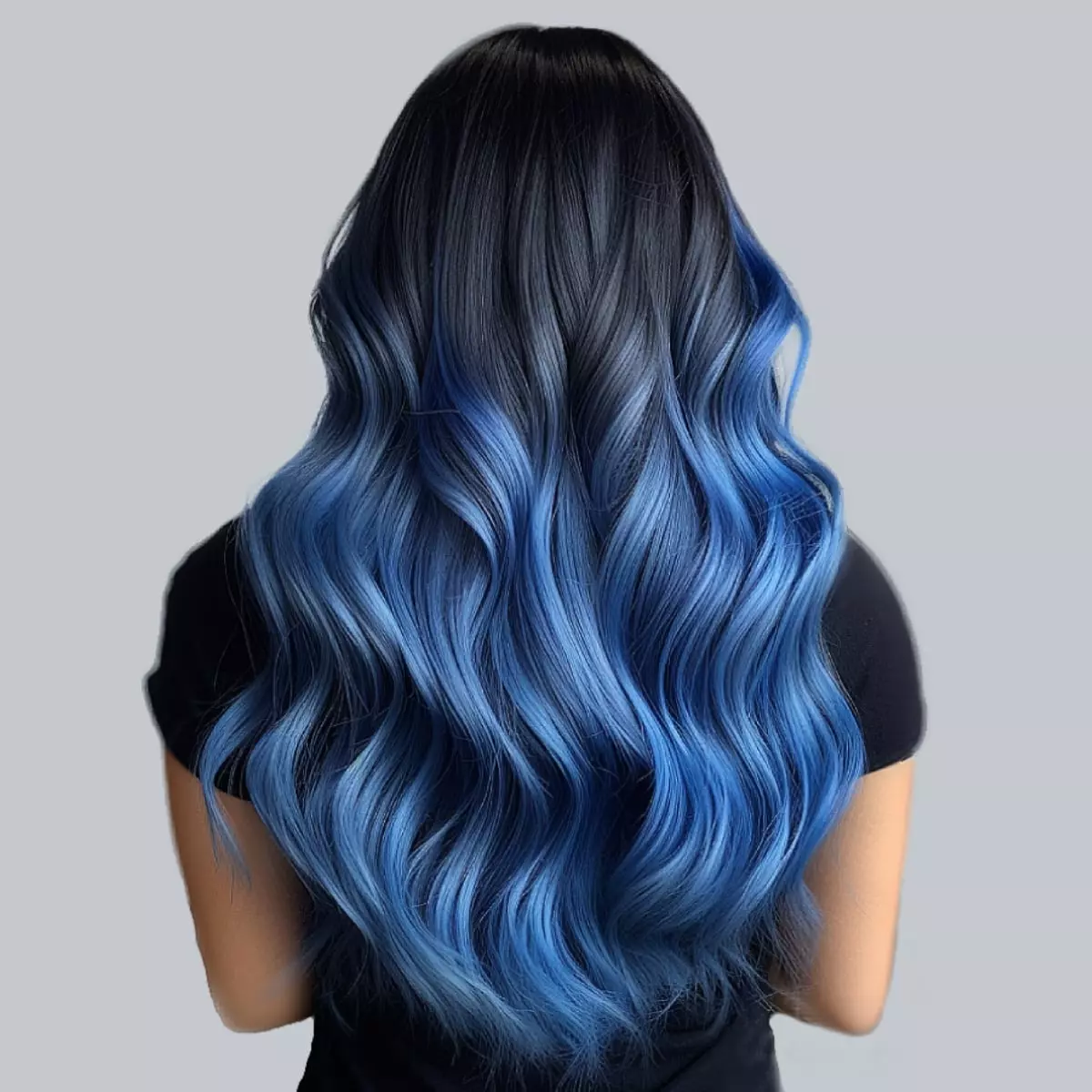
A DIY box dye will not get you this deep black to bright blue transition. The roots stay natural black, then the color shifts to a vivid blue at the ends. Loose, flowing waves on thick, wavy texture show off the gradient. Professional bleaching is required to lift the ends enough for that blue to register. A square or oval face softens with the movement. Mention to your colorist: black to bright blue ombre, loose waves. Natural hair colors or very fine hair are not ideal for this look.
Gray base to deep blue for a modern look
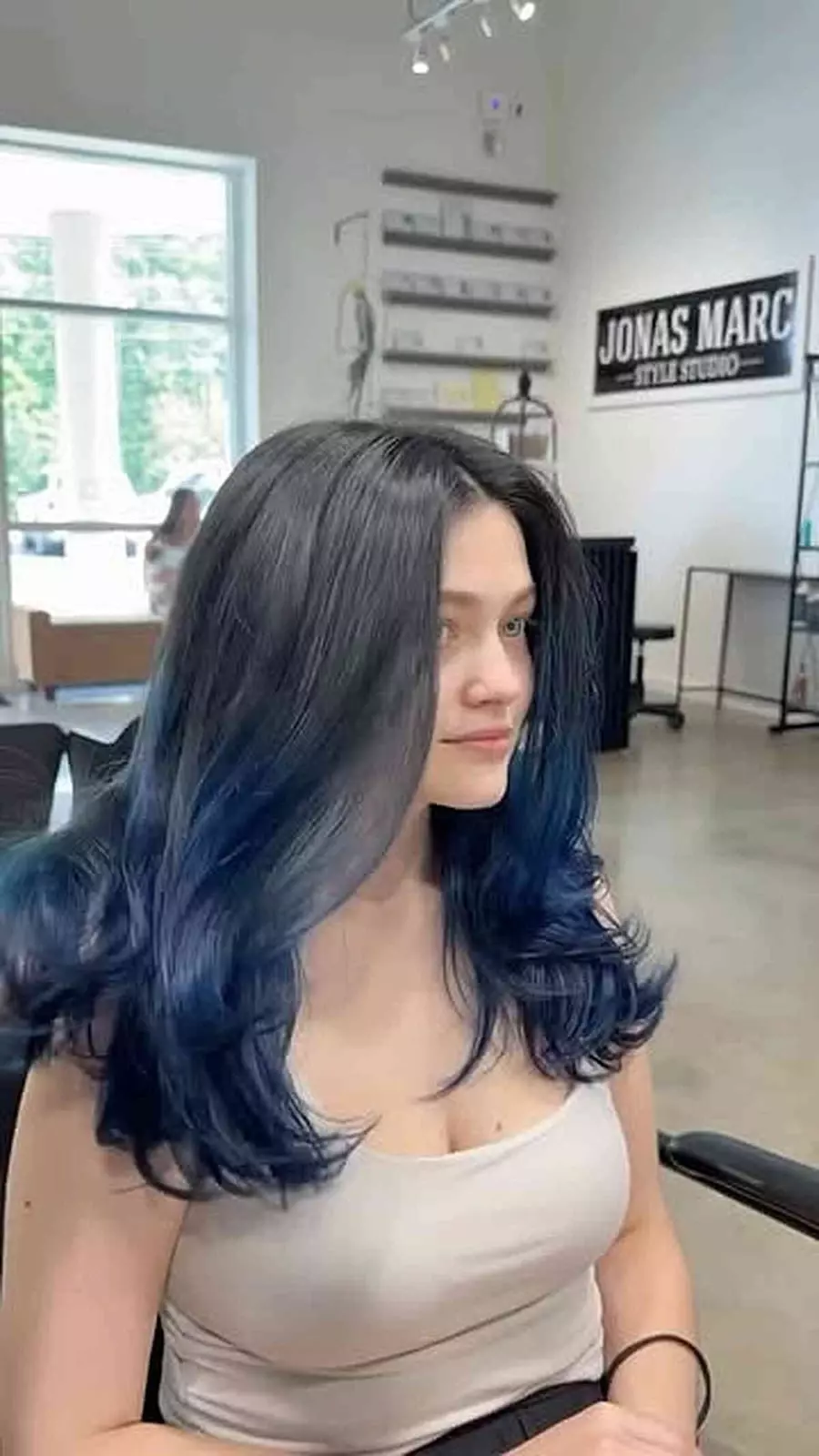
A soft blowout on wavy, thick texture keeps the shape from feeling harsh. The middle part lets both tones sit equally visible. Tell your colorist: dark gray to deep blue ombre, layered cut, blowout. The catch: fine hair may not hold the volume this look depends on.
Dark brown to honey blonde Ombre with loose waves
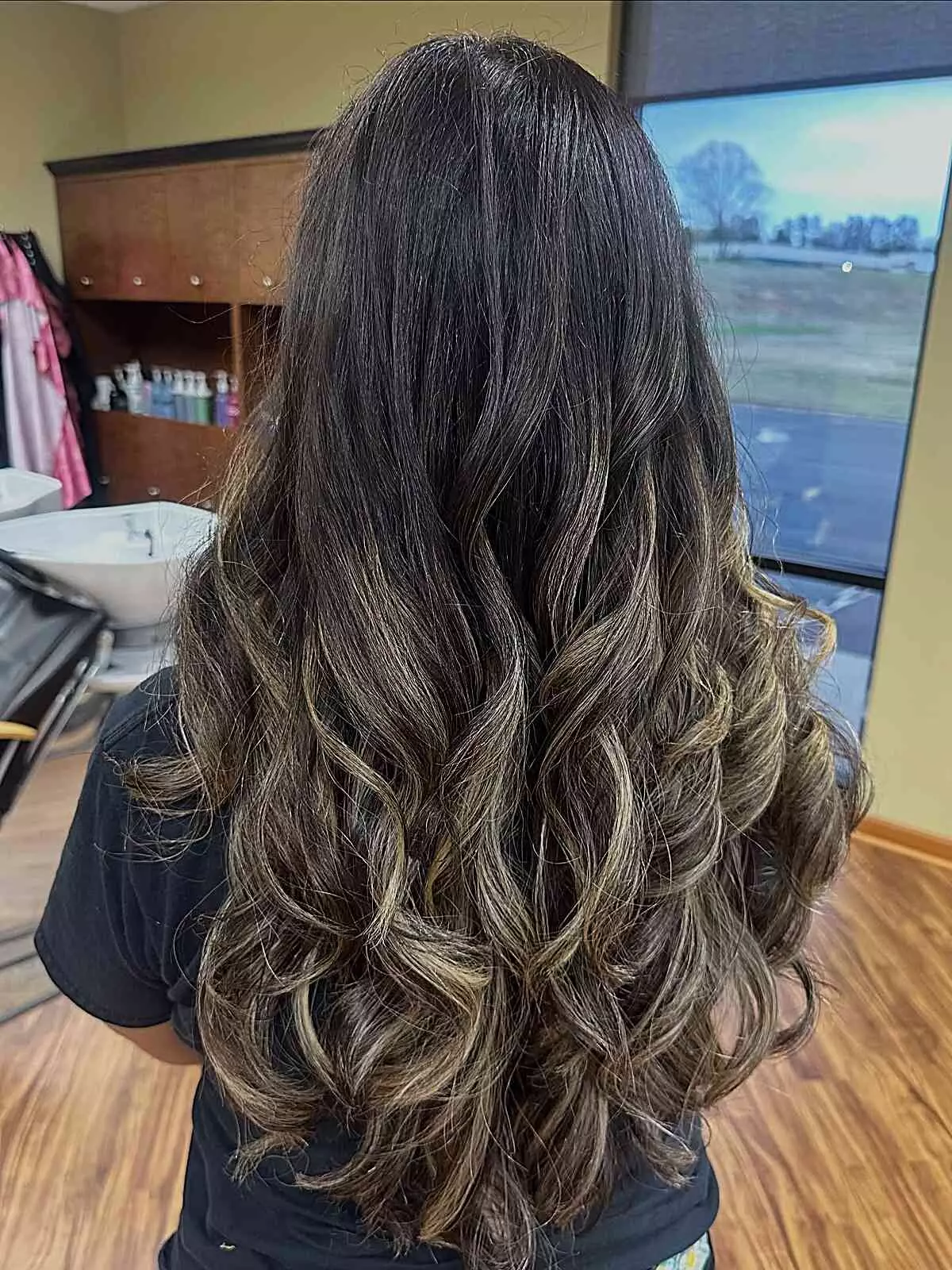
The common mistake with this ombre is letting the transition start too low. A deep dark brown base that shifts to honey blonde ends needs the color to begin above the ears for the gradient to look intentional. Loose, voluminous waves on thick, wavy texture spread the light across both tones. A large barrel curling iron creates the wave shape. It works best with straight or very fine hair.
Dark brown to ash blonde Ombre bob with waves
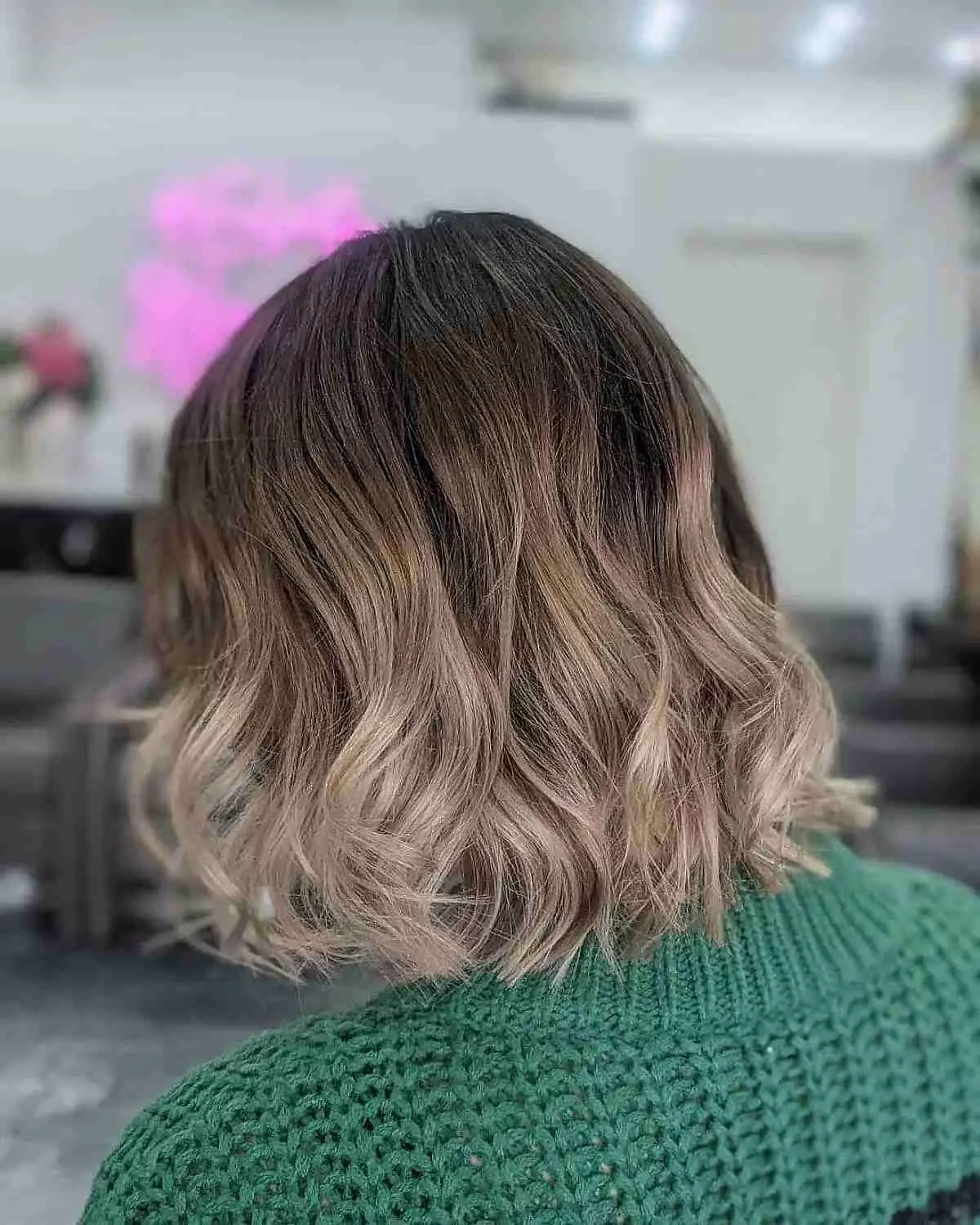
The words matter more than the inspiration photo here. Tell your colorist: dark brown to ash blonde ombre, bob, wavy blowout. That rich dark brown base against cool ash blonde ends creates a smooth transition. The bob cut lands at jaw length, which softens square faces when paired with medium density hair.
Dark brown to caramel Ombre with subtle layers and waves
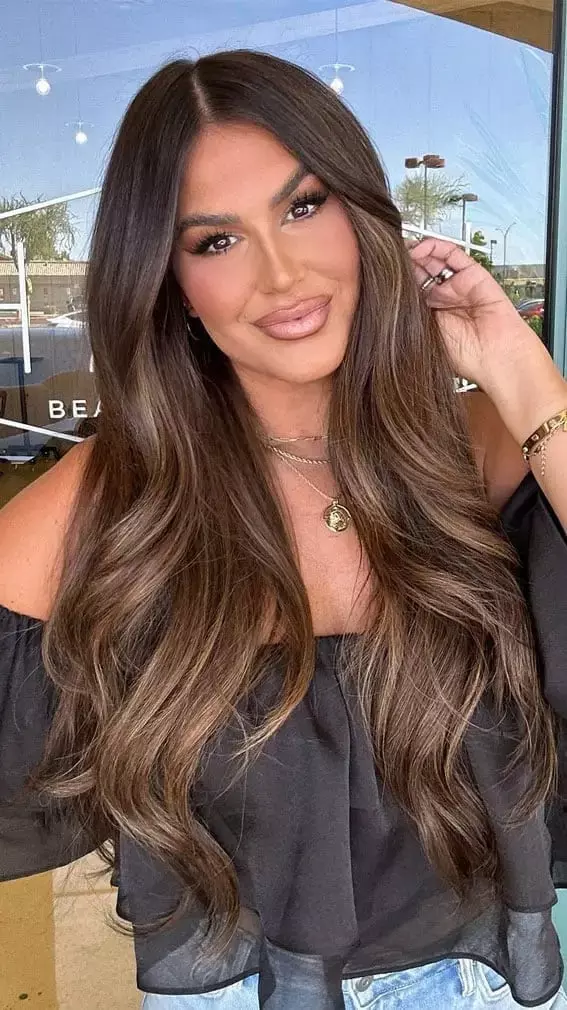
The transition from a rich dark brown base to lighter caramel tones sits high enough to catch light at the cheekbone. Subtle layers cut through thick hair keep the soft waves from falling flat. A middle part lets the gradient read clearly from root to end. Suits most face shapes because the caramel sits warm without overwhelming the darker top. A blunt cut with no graduation is an alternative. A texturizing spray after drying sets the wave pattern without weighing it down.
Dark brown to ash brown Ombre with layers and waves
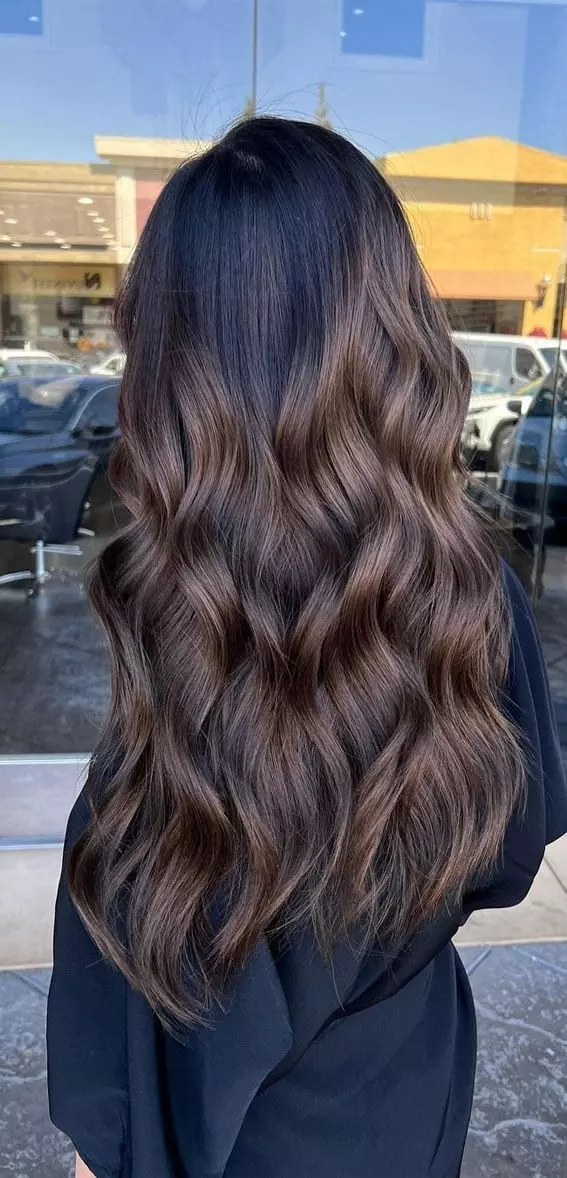
Not caramel, not blonde, ash brown sits in the cooler middle ground. A deep dark brown base shifts into a cooler ash brown tone through layers cut to release weight. Loose waves show the gradient without fighting the shape. This lands best in fall and winter, when warmer tones compete less with the cool finish. Thick hair holds the wave pattern well. Skip it if your fine hair needs help holding volume at the root.
Teal to white to orange Ombre with waves
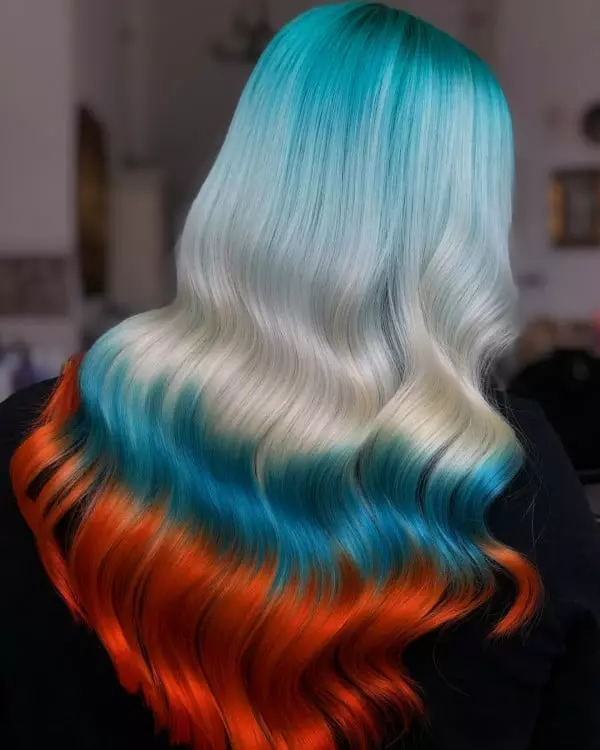
Three colors in one head: bright teal at the roots, white through the mid-section, vibrant orange at the ends. Thick wavy texture carries the gradient without the colors muddying into each other. The catch: this fade requires professional application and a willingness to wash less frequently. Color fades fastest on the orange ends. Subtle transitions or daily washing may not be ideal for this look. Any hair texture can wear the look, but the upkeep is real. Request from your colorist: teal to white to orange ombre, waves.
Dark brown to blonde Ombre with layers and waves, wavy
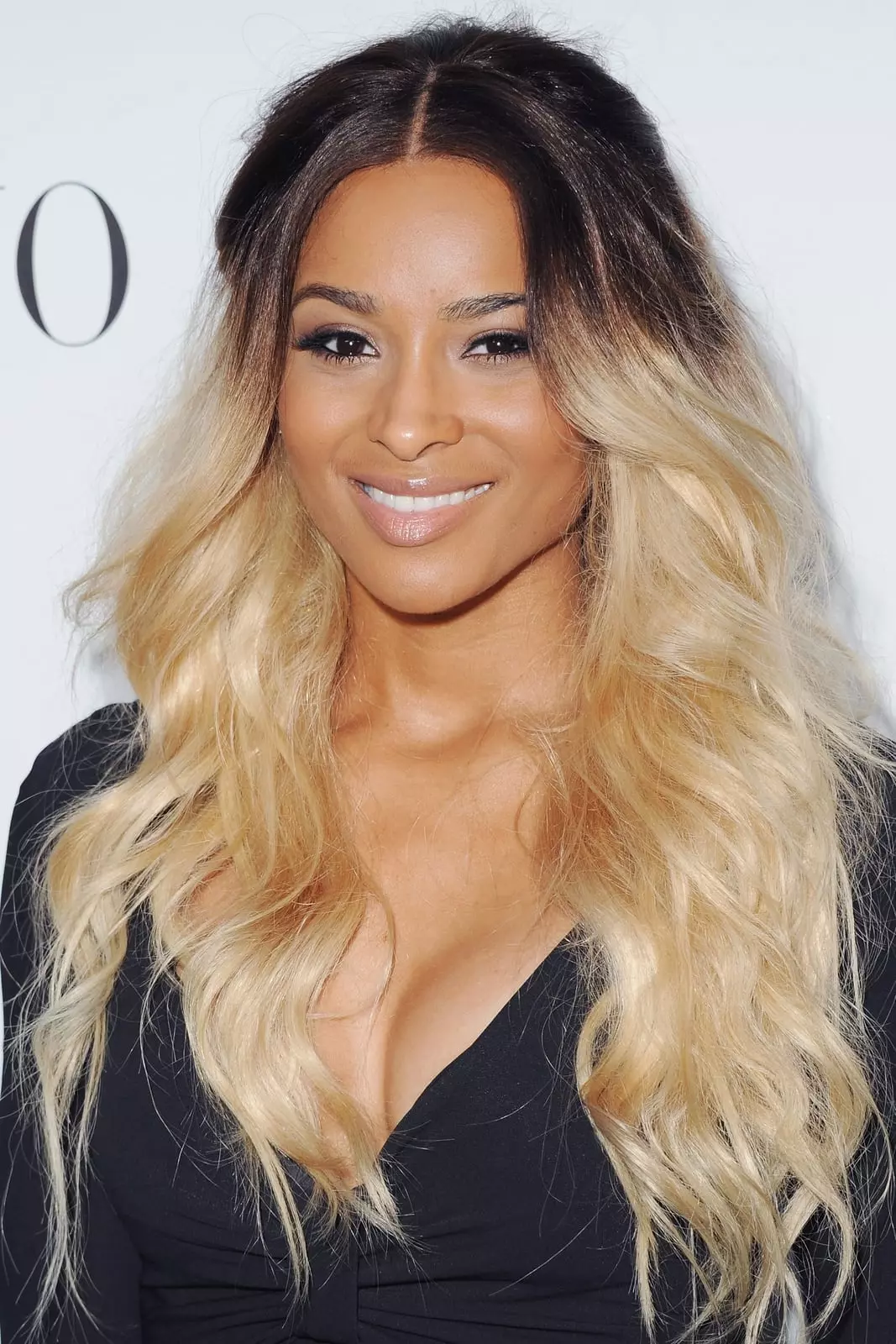
Dark brown roots drop into bright blonde ends through a middle part that shows the full gradient. Layers cut through thick hair prevent the transition from looking heavy. A blowout with soft waves adds volume at the sides, which suits most face shapes. The technique relies on a smooth blend, no harsh lines between the two shades. Use a texturizing spray to refresh the waves on day two. Skip it if fine hair struggles to hold volume through the midsection.
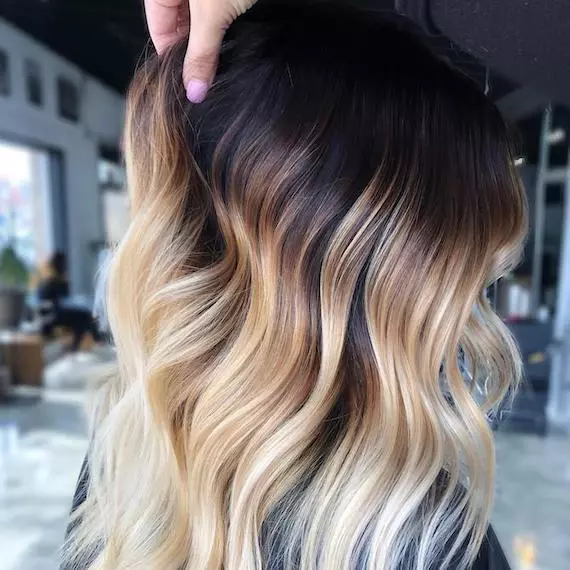
Dark brown to honey blonde Ombre with waves, close-up take
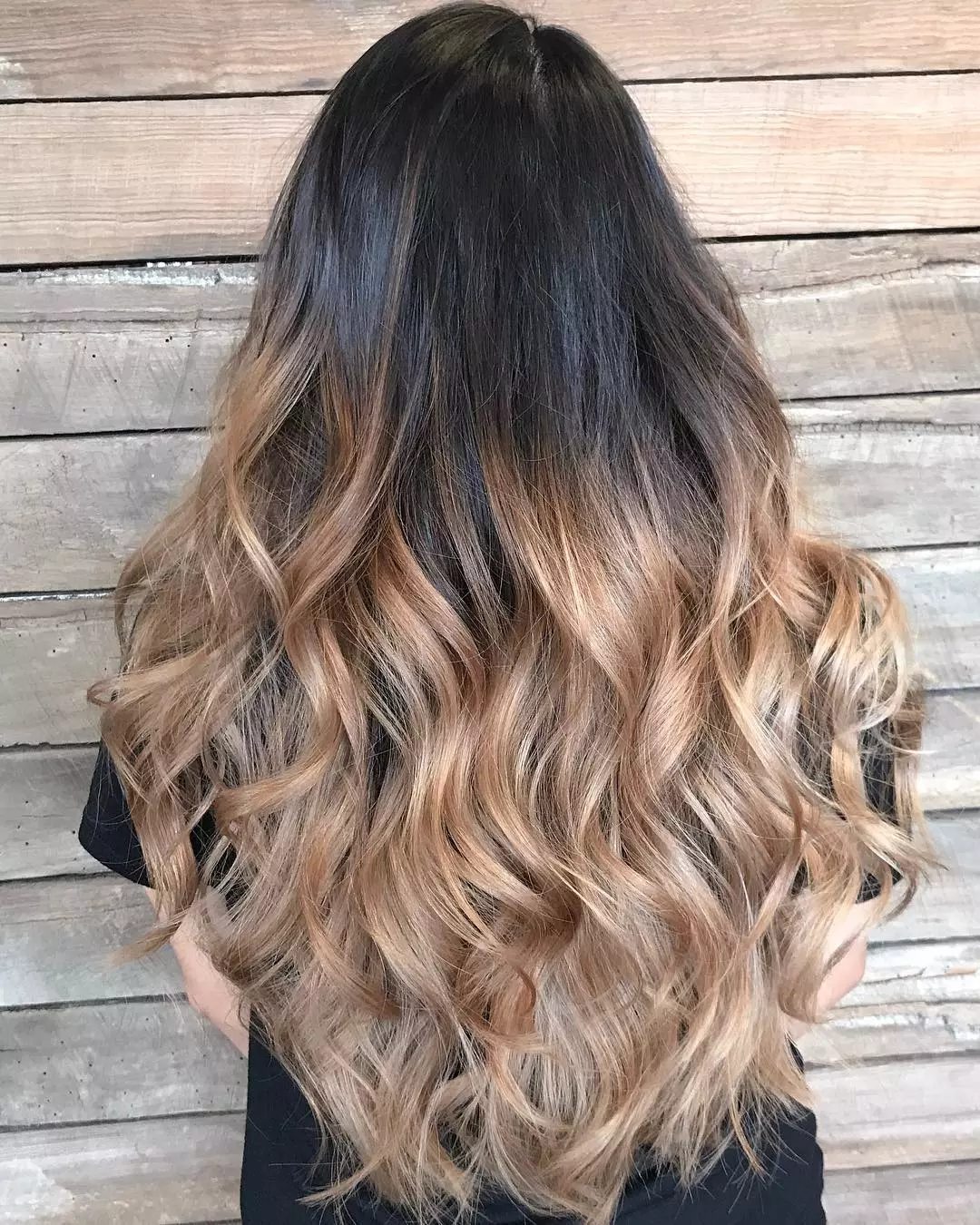
Thick hair holds this dark brown to honey blonde ombre best. The smooth transition from a deep base to warm ends creates a gradient that looks like grown-in sunlight, not a failed DIY. A middle parting and back view confirm the color work is even. Fine hair tends to go flat by midday, so this style works better with thick, wavy texture. The volume comes from the texture, not the technique. Mention to your colorist: dark brown to honey blonde ombre, loose waves. A large-barrel curling iron shapes the waves in about fifteen minutes.
Dark blonde to light blonde Ombre with layers and air-dried texture
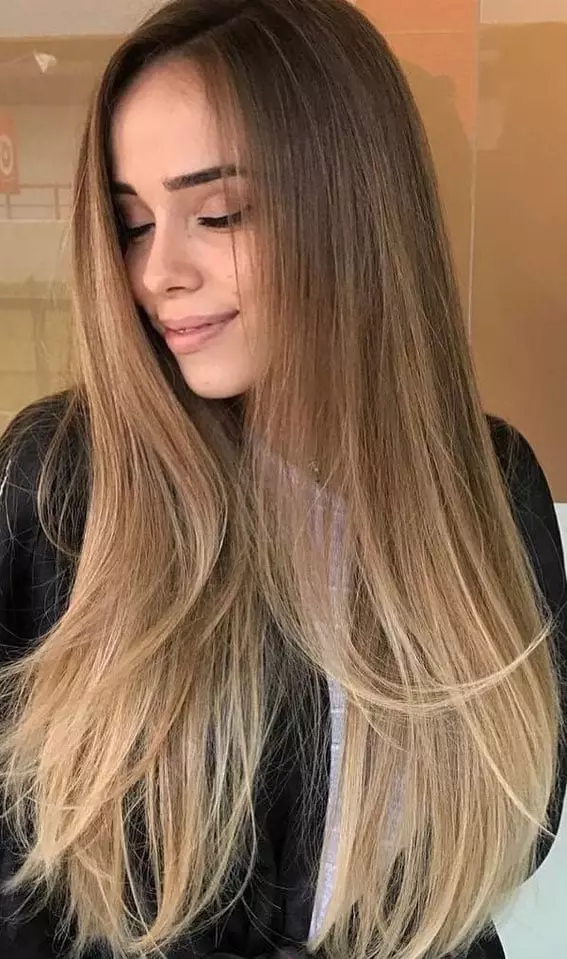
Two blonde tones, no bleach line visible. The dark blonde base fades into a lighter blonde at the ends, and the layers keep the transition from looking blocky. Air-dried texture works here because the cut does the shaping. This is a salon-only design; the blending requires a colorist who understands how fine hair lifts. A middle parting lets the lighter ends frame the face without extra styling. The finish holds best when you skip heat and let a leave-in conditioner define the wave.
Dark blonde to light blonde Ombre with natural waves
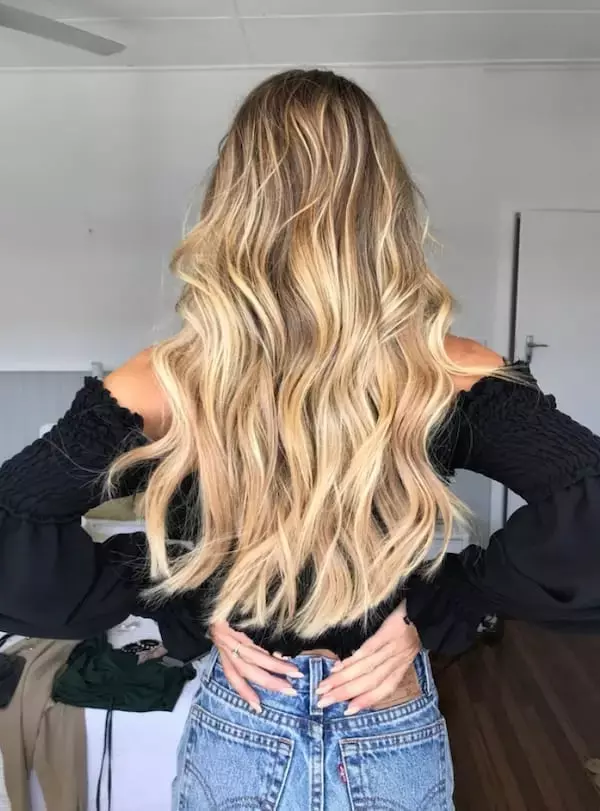
Bright light blonde ends against dark blonde roots create contrast without drama. The subtle layers allow the thick, wavy texture to move naturally, and the air-dried finish keeps the look low-effort. The catch: the lighter ends will show brassiness faster than a single-process blonde. A purple shampoo every other wash keeps the tone cool. A sea salt spray adds grip to the waves without weighing them down. The ombre itself requires a salon visit; the upkeep is a toner every six to eight weeks.
Dark brown to ash blonde Ombre with long layers and blowout
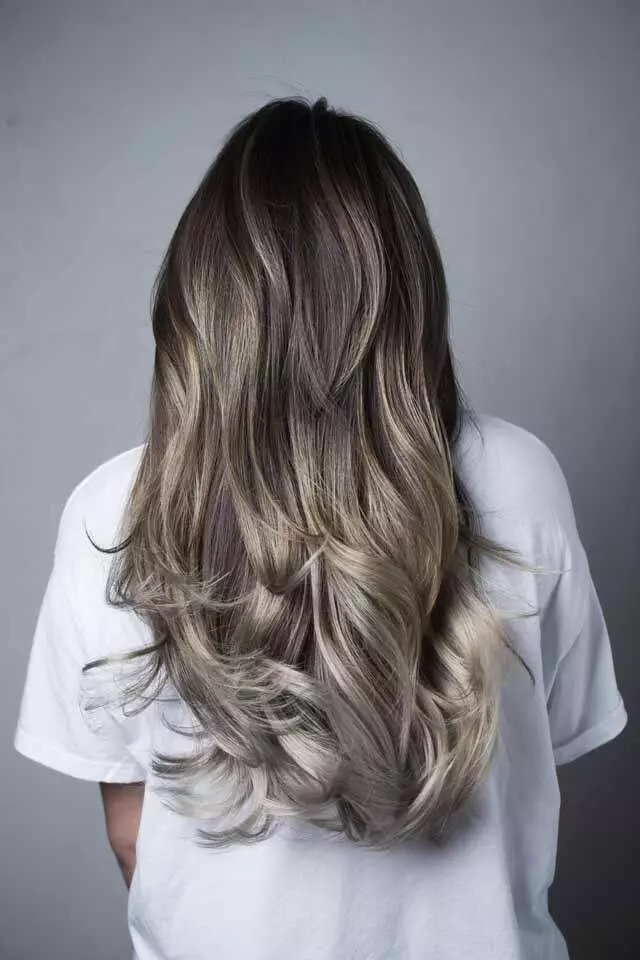
Long layers and a smooth blowout give this a finished, office-ready shape. Choose this over a warmer blonde when you want the contrast without the yellow. A middle parting and back view show the color gradient running evenly through the length. Mention to your colorist: dark brown to ash blonde ombre, long layers, blowout. A round brush and a nozzle attachment get the smooth finish at home.
Dark brown to caramel blonde Ombre with face-framing layers
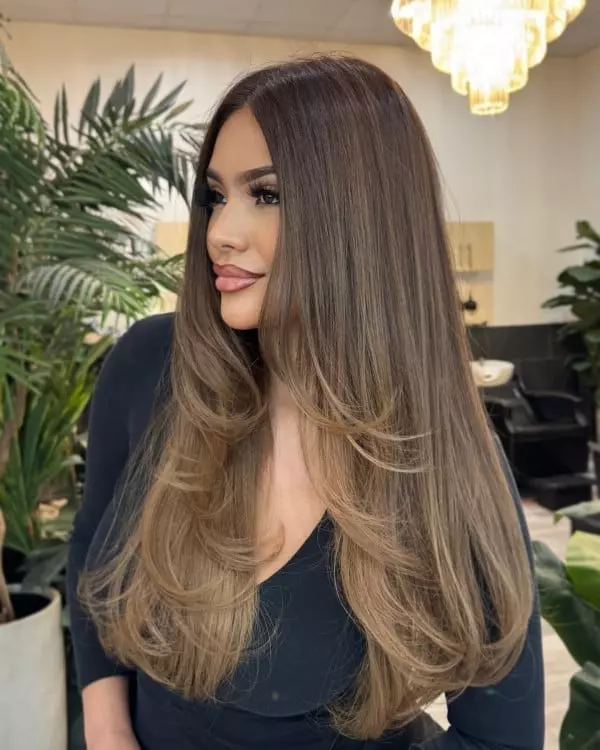
Book it as: dark brown to caramel blonde ombre, face-framing layers, blowout. The warm caramel ends sit against a rich dark brown base, and the face-framing layers pull the lighter color forward. This placement softens the jaw and cheekbone area without needing bangs. The front view shows how the layers add movement. The blowout finish keeps the look smooth, but the caramel tone may need a gloss refresh at week eight to maintain warmth.
Dark brown to ash blonde Ombre in a half-up bun
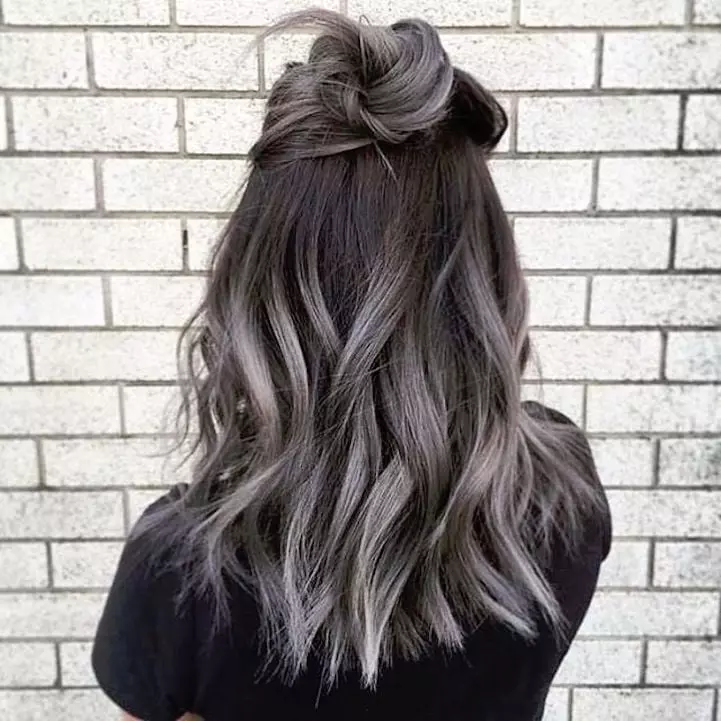
Wavy, thick texture makes the dark brown to ash blonde transition visible even from the back. The half-up bun pulls the lighter ends upward, so the gradient reads from root to gathered length rather than just tip to root. Middle part keeps the shape symmetrical. A center part and length below the chin elongate a round face. The bun needs density to hold the contrast. Mention to your colorist: dark brown to ash blonde ombre, half-up bun. Add texture spray before styling the bun for better grip.
Dark brown to blonde Ombre with layers and waves, office-safe version
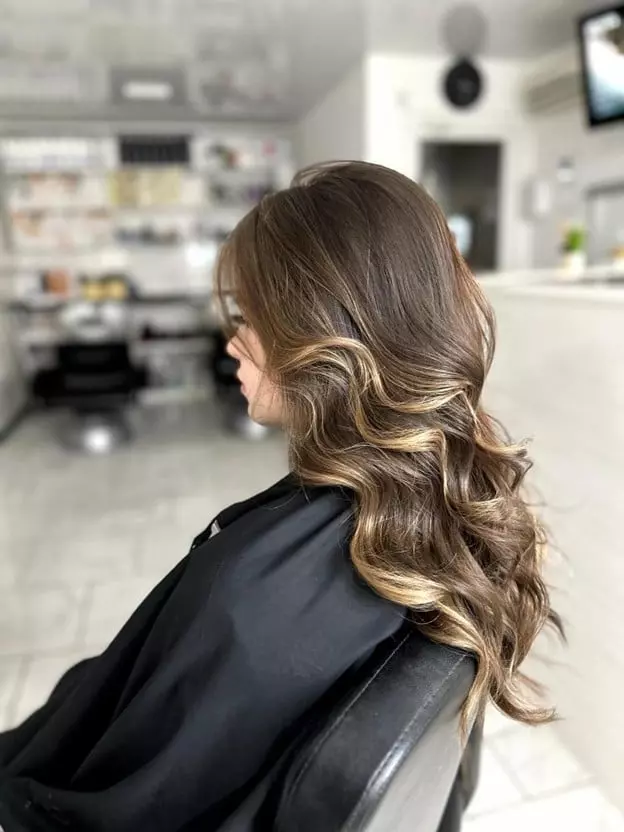
Layers cut through the thick texture so the dark brown base gives way to bright blonde in sections, not a solid block. The side view shows the wave pattern breaking the color line into smaller shifts. Blending this transition is salon work. The dark base needs a soft melt, not a hard lift. A texturizing spray on the mid-lengths helps the waves hold the separation between tones. The centered parting keeps the look balanced for an everyday schedule.
Dark blonde to platinum blonde Ombre with long layers
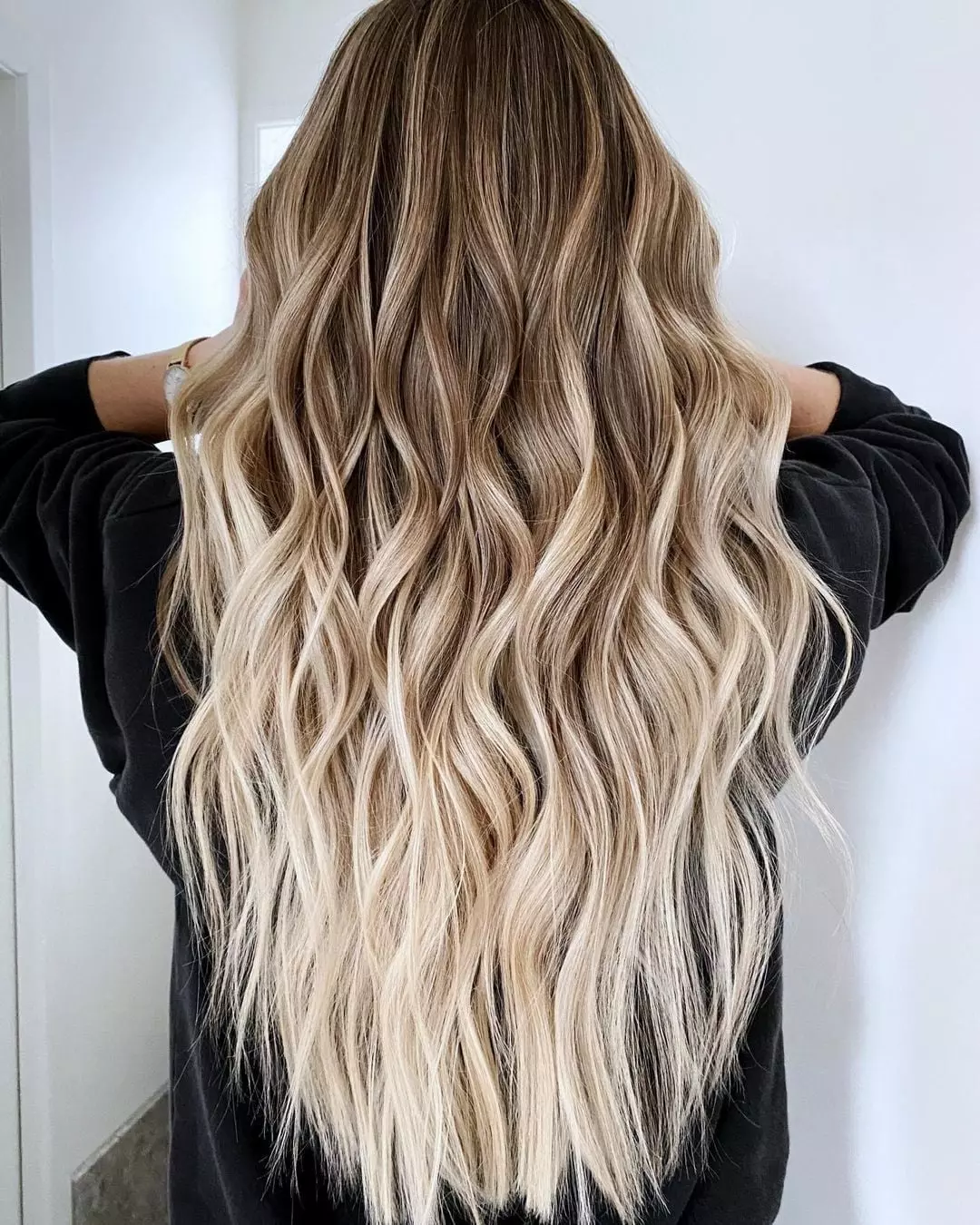
Works best on thick, wavy hair that can hold the long layers without collapsing. The dark blonde base keeps the root depth while the platinum ends add lift. Pass when you have fine hair that struggles to hold volume. The layers can thin the silhouette rather than build it. The wave pattern softens the transition, so the ombre looks a natural lightening effect. A middle part and length below the chin elongate a round face. This is a salon-only job due to the lift required.
Dark blonde to platinum blonde Ombre, straight and layered
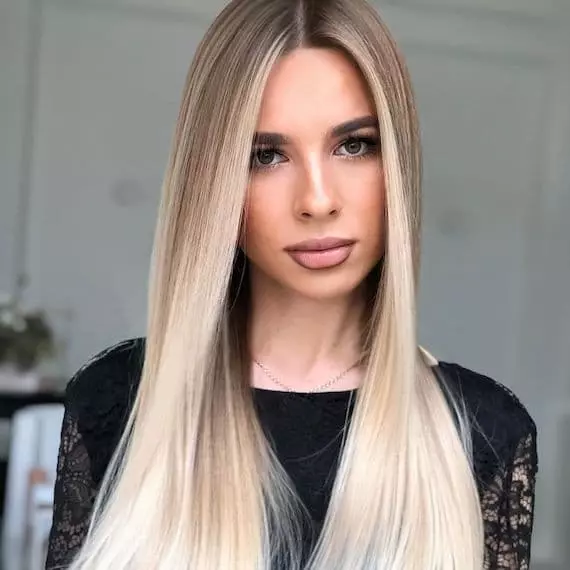
Fine, straight texture lets the dark blonde to platinum ombre show as a smooth, uninterrupted gradient. The layers keep the shape from falling flat. Each cut line reflects light differently. DIY is not an option here; the platinum lift and the smooth blend require a colorist. A flat iron finishes the sleek look, but a heat protectant is necessary. For a textured or wavy finish, this style is not ideal. The straight styling defines the look. The middle part keeps the symmetry clean.
Dark brown to blonde Ombre with long layers and waves, subtle twist
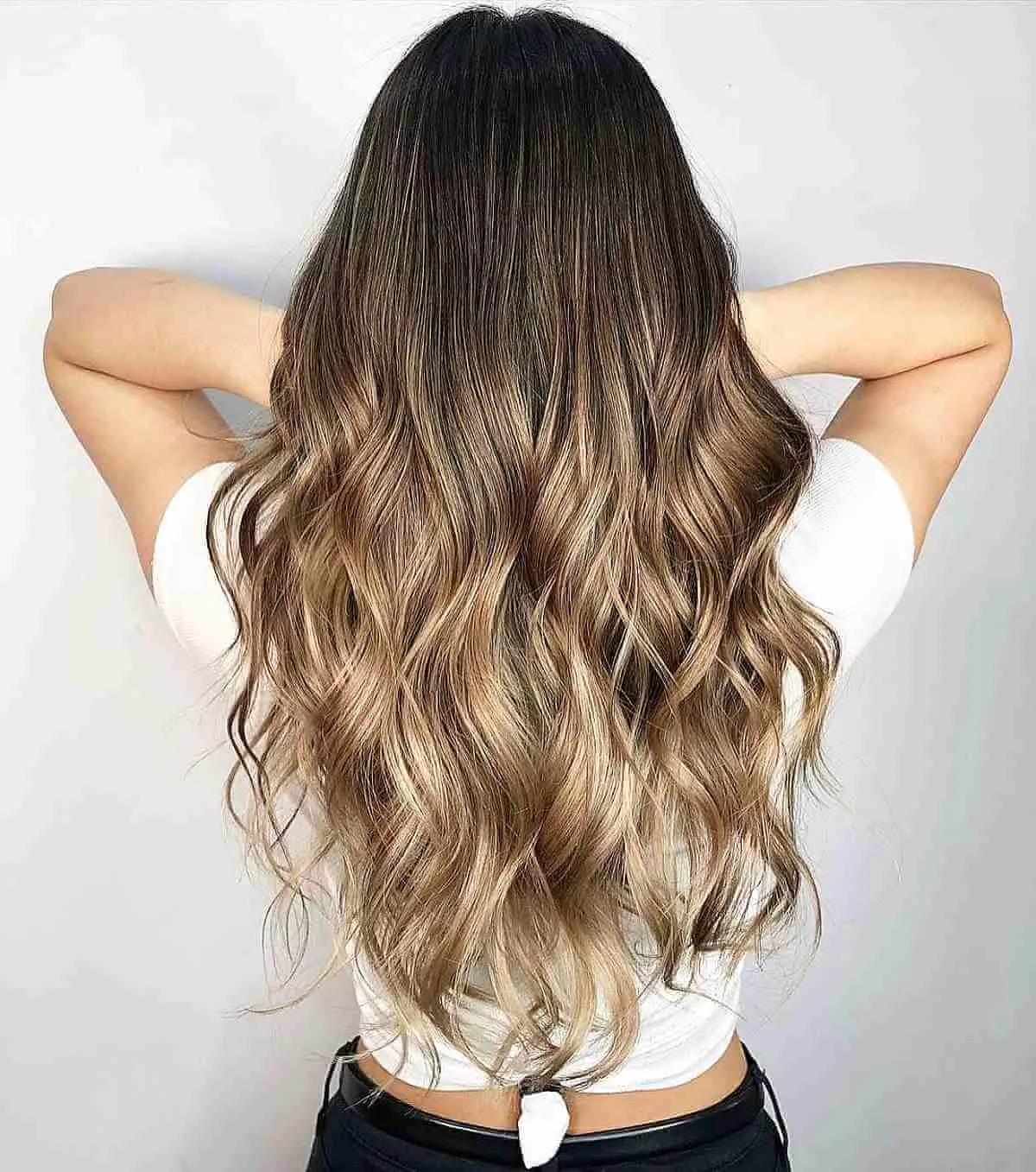
Compared to a shorter ombre, the long layers here spread the blonde over more surface area, so the transition is gradual. The catch: the dark brown root can feel heavy if the blonde does not reach far enough into the mid-lengths. Thick, wavy hair carries the volume better than fine textures. A middle part and length below the chin can create a lengthening effect for round face shapes. The waves keep the color from looking flat.
Dark brown to ash blonde Ombre, straight and layered
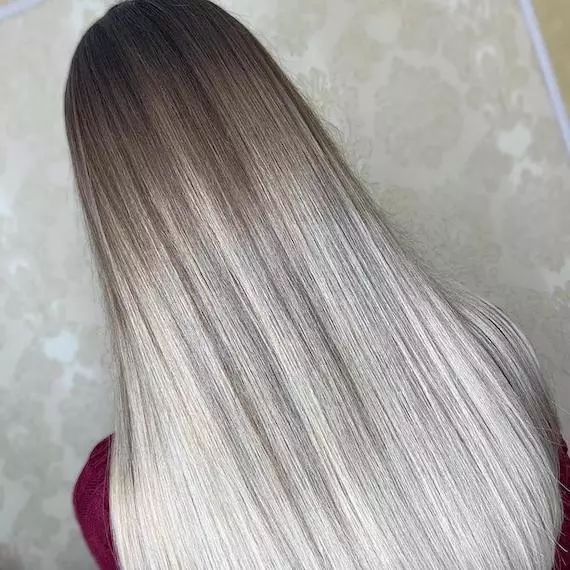
Fine hair needs a color transition that doesn’t overwhelm the strand. Dark brown to ash blonde ombre sits low at the roots then lifts into a cool, smoky end. The subtle layered cut keeps the shape light without losing density. Straight styling and a middle part let the blended color read cleanly, no waves to interrupt the line. Request from your colorist: dark brown to ash blonde ombre, subtle layers, straight style. A flat iron finishes the look in minutes.
Dark brown to warm auburn Ombre with waves
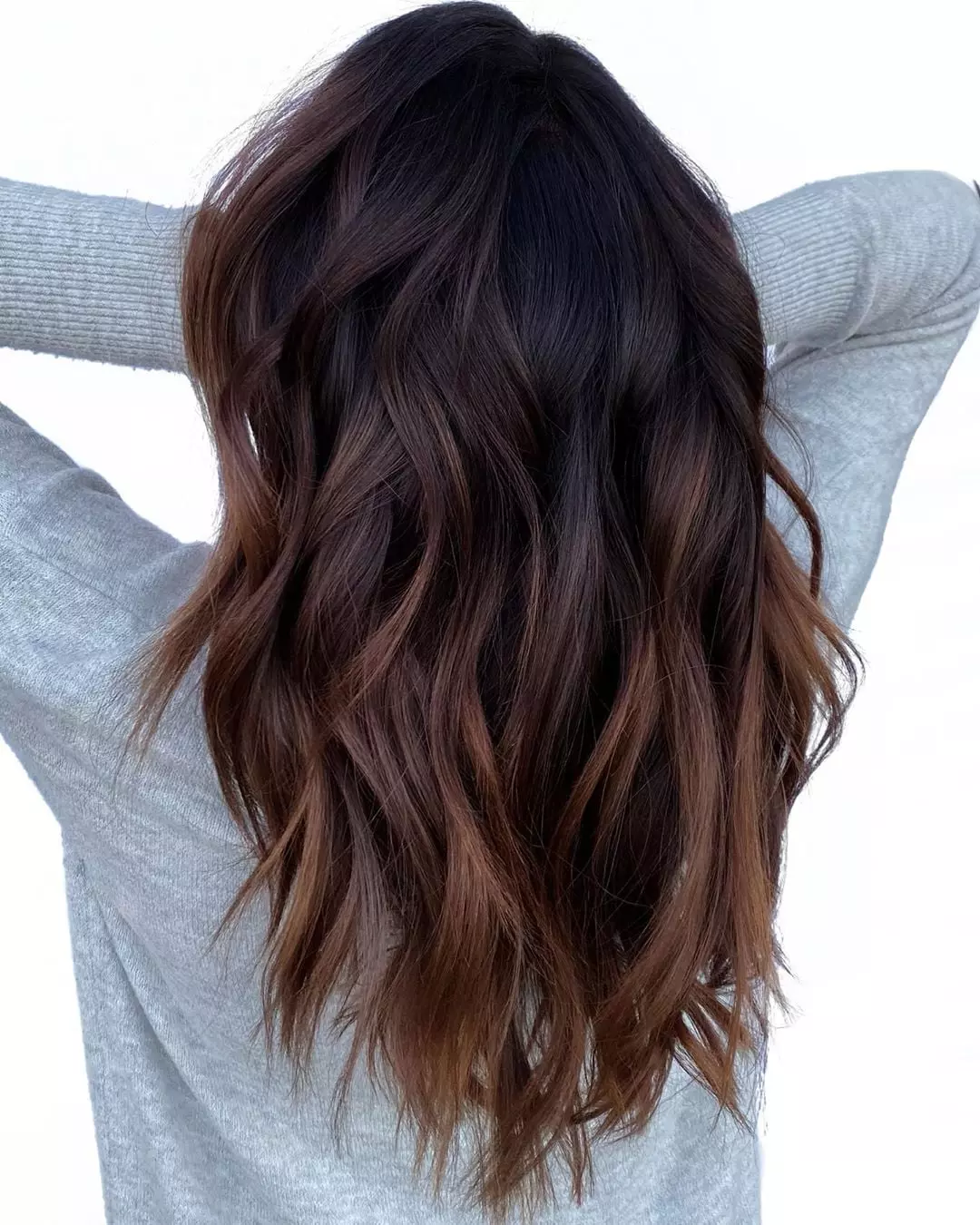
Thick hair often swallows subtle color shifts. This one does not. Dark brown at the base melts into warm auburn tones that catch light in the wave bends. The thick, wavy texture holds the ombre visible from every angle, not just the ends. A texturizing spray lifts the wave pattern and keeps the auburn from falling flat. Skip it if your hair is fine and struggles to hold volume. Salon blending is non-negotiable here.
Dark brown to copper red Ombre with waves
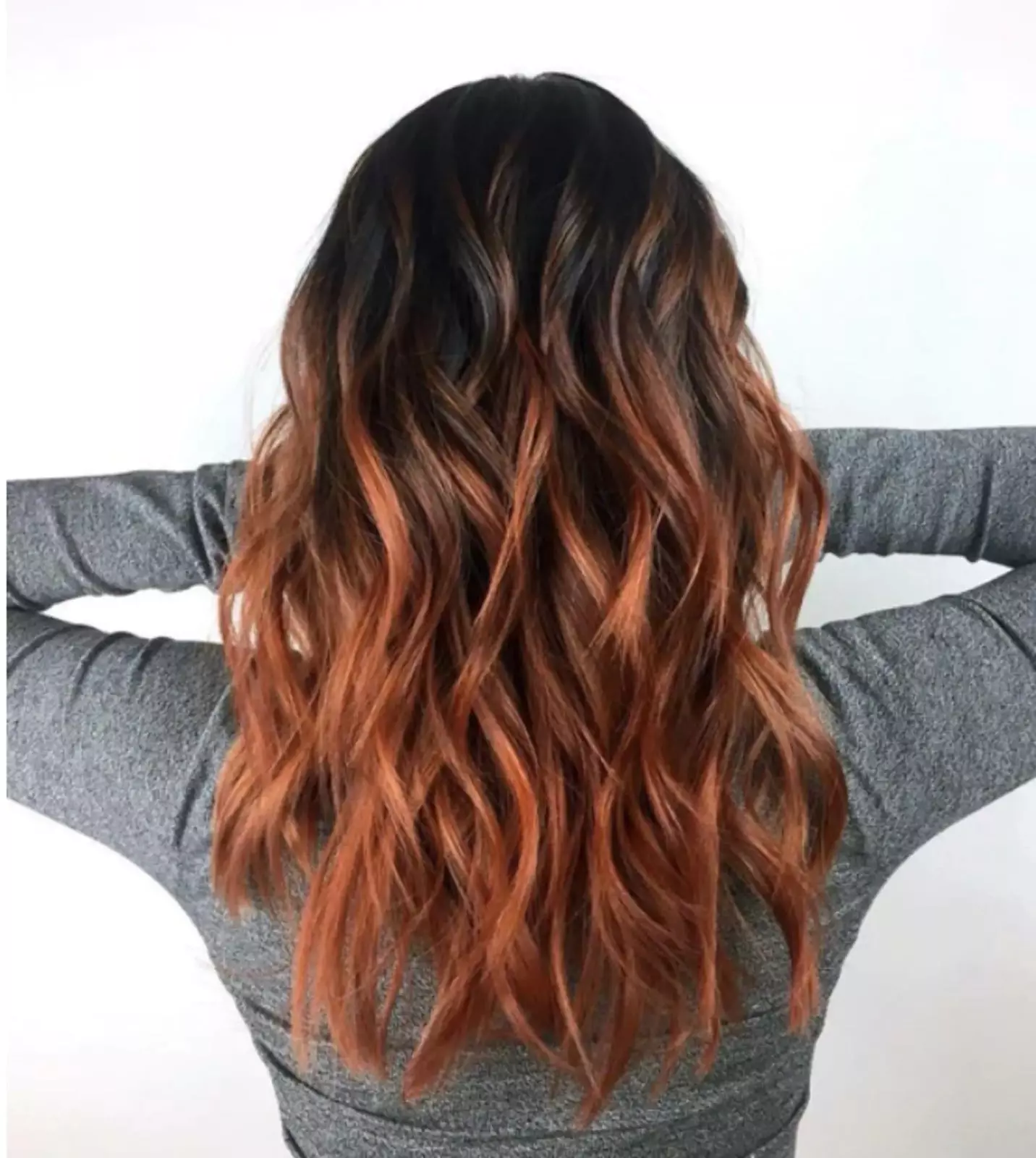
Copper red ends against dark brown roots create a deliberate high-contrast line. The technique uses a smooth blend so the shift looks one color moving into another, not two separate shades. Waves break up the transition zone, which helps hide any unevenness between appointments. The catch: copper fades fast. A color-depositing conditioner every other wash keeps the red from turning brassy. Request from your colorist: dark brown to copper red ombre, waves.
Dark brown to honey blonde Ombre with side-swept bangs
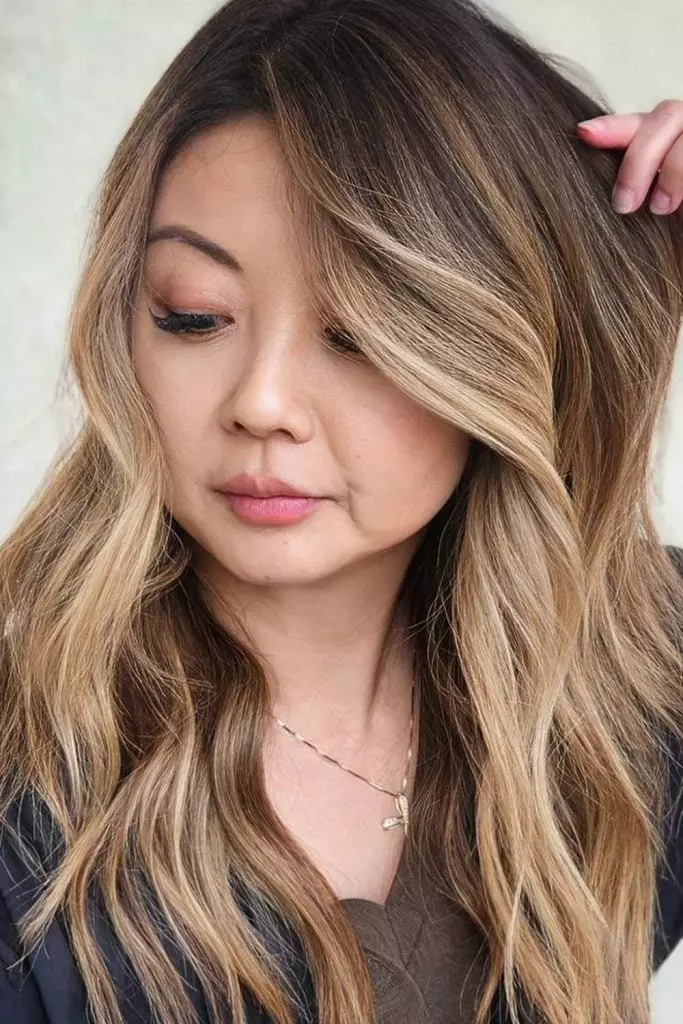
Side-swept bangs change the ombre equation. Dark brown roots and honey blonde ends look two separate zones, but the bangs pull the lighter tone forward, bridging the gap. The layered cut keeps the weight off the honey section so the ends stay bouncy. Soft waves and a side part suit round and oval faces by breaking up the horizontal line. A small round brush and a minute of heat shape the bangs daily.
Teal to blue to purple to black Ombre with layers
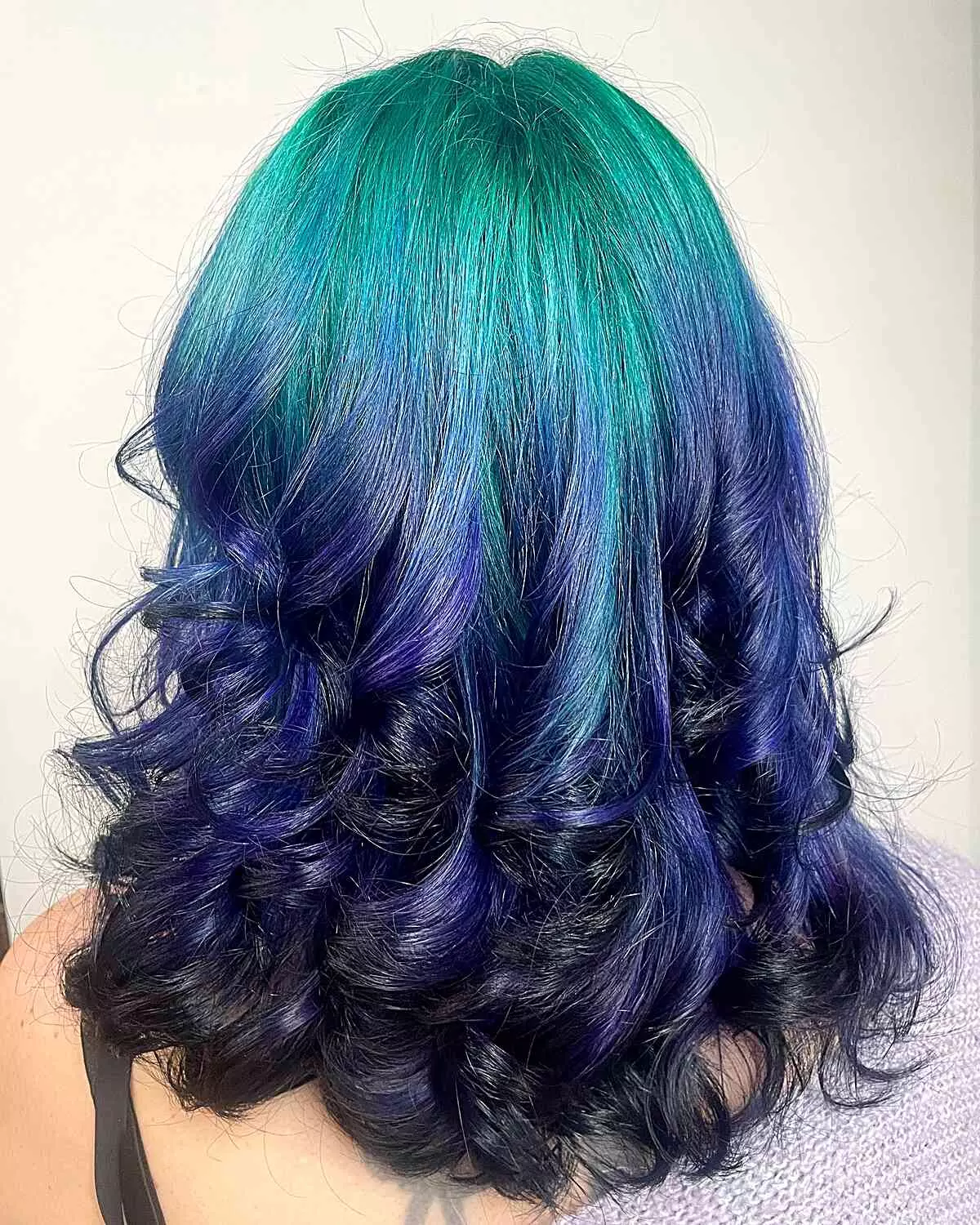
Four colors in one head sounds like a maintenance nightmare. This one works because the layers keep each shade contained. Vibrant teal roots drop into electric blue, then deep purple, then black ends. The loose waves let the colors overlap without muddying. Lighter tones sit on the surface of each wave; darker ones recede. Skip it if you prefer subtle transitions or wash your hair daily. Request from your colorist: teal to blue to purple to black ombre, layers, loose waves. Cold water only.
Dark brown to warm caramel Ombre with subtle layers, close-up take
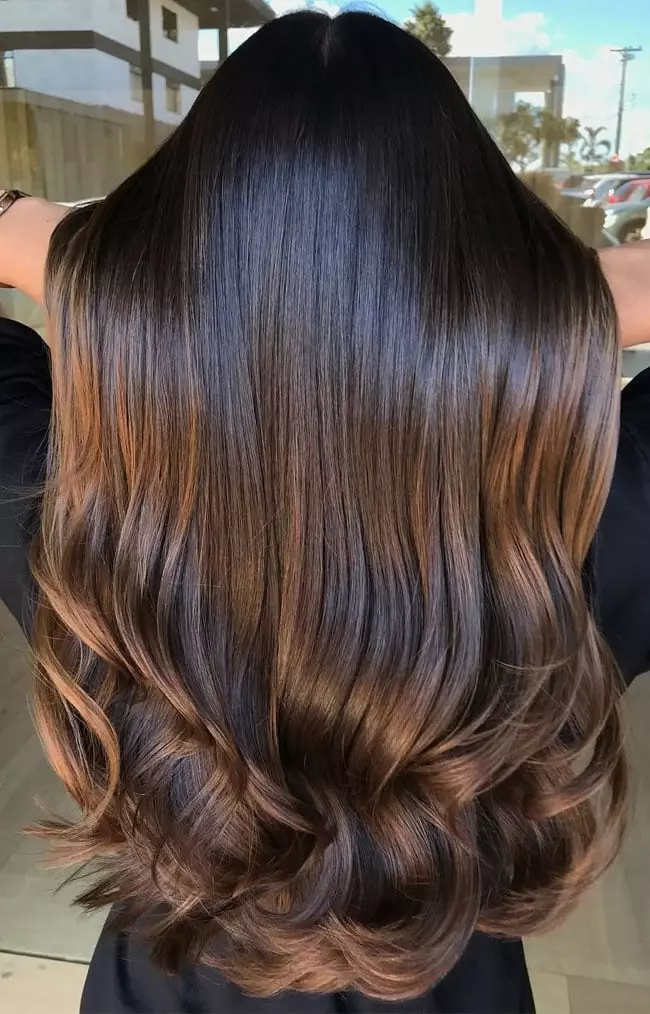
Two tones work best when one knows exactly where the other begins. A deep dark brown base lets warm caramel take over somewhere around the ears, and the subtle layers keep the transition from feeling like a hard line. Thick hair holds the wave pattern long enough to show off both colors. The catch: fine hair loses the volume needed to keep the caramel section from falling flat against the brown. A texturizing spray at the mid-lengths helps the lighter pieces catch the eye without extra effort.
Final Thoughts
Choose based on your desired maintenance level and how much time you have for styling.
- Fine hair: stick with subtle layers and a soft melt.
- Ten minutes in the morning: go for a low-contrast ombre that air-dries well.
- Cool base that pulls brassy: add a toning treatment every four weeks.
- Bold color shift: schedule salon touch-ups every eight weeks.
Find the ombre that suits your style and schedule.