You have the coils, you have the patience, and you have a folder of saved photos that all look like they took four hours and a second pair of hands. Bantu knots deliver on protective styling and visual impact, but the difference between a photo and your bathroom mirror is usually the parting, the tension, and the willingness to sit still.
Which is why Dreamy Bantu Knots 2027 fill so many saved boards, 26 variations that move from geometric precision to looser, softer finishes. They work for thick, coily hair that needs a break from daily manipulation, and the collection solves the problem of finding a style that looks intentional without requiring a salon visit every time.
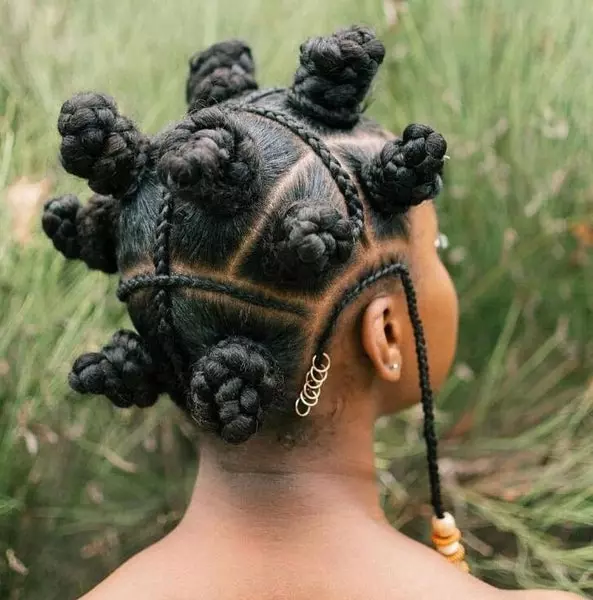
Geometric bantu knots with connecting braids
Tightly coiled knots form a precise geometric pattern across the crown. Braids connect each knot, turning the whole updo into one continuous design. Coily, thick hair holds the shape best. Skip it if you want something you can take down in five minutes. Tell your stylist: geometric bantu knots with connecting braids. The middle part keeps the symmetry clean. Black hair lets the braiding detail read clearly. No bangs here, nothing to hide behind.
Tightly coiled knots with zig-zag parting
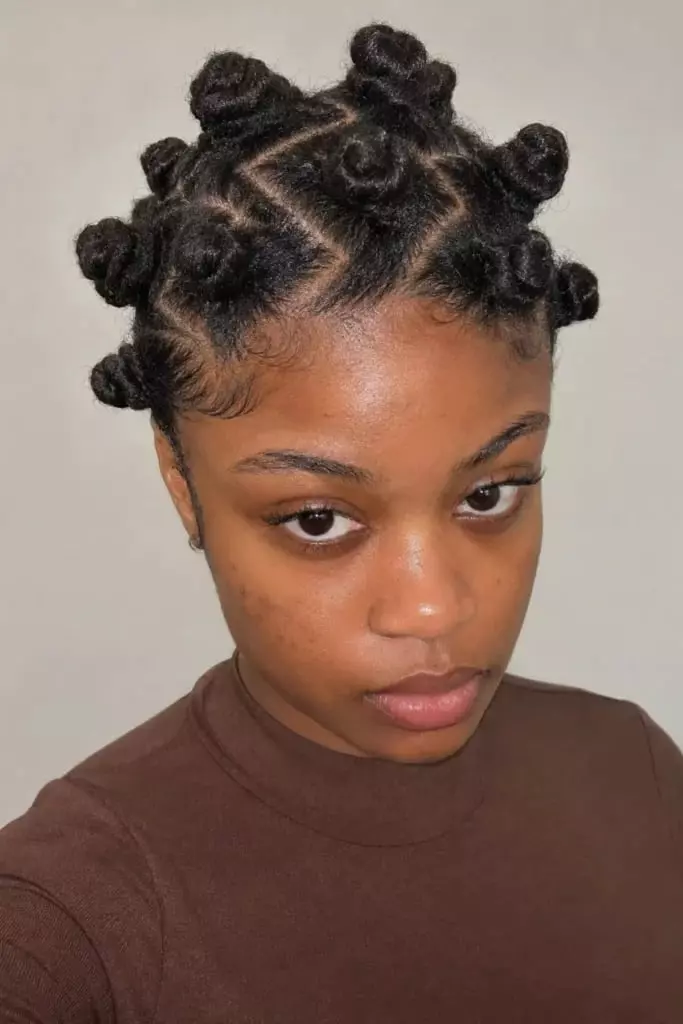
The zig-zag line is the whole point here. Each knot sits in its own triangular section, coily and thick, creating a neat updo. Black hair makes the pattern pop. No bangs, no distractions. The clean finish says you sat in the chair for a reason.
Bantu knots and braids with gold wire accents
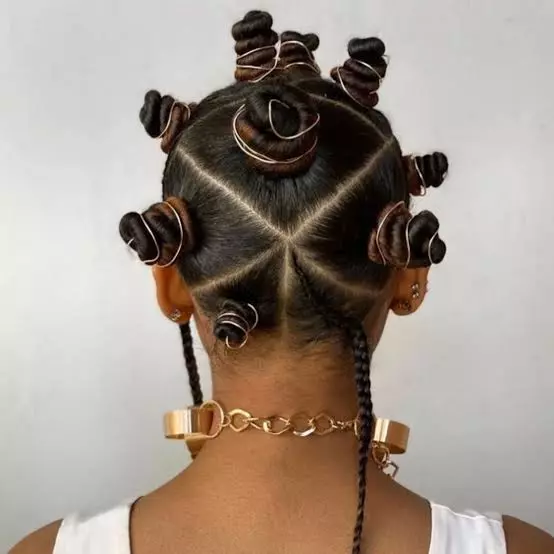
Gold wire wrapped around each knot separates this from a plain updo. The braids and knots work together, black with brown undertones adding depth. Coily, thick hair is the canvas. Tell your stylist: bantu knots and braids with gold wire. Pass when you hate anything that catches on your scarf. The zig-zag partings keep the layout precise.
Multiple small bantu knots with a middle part
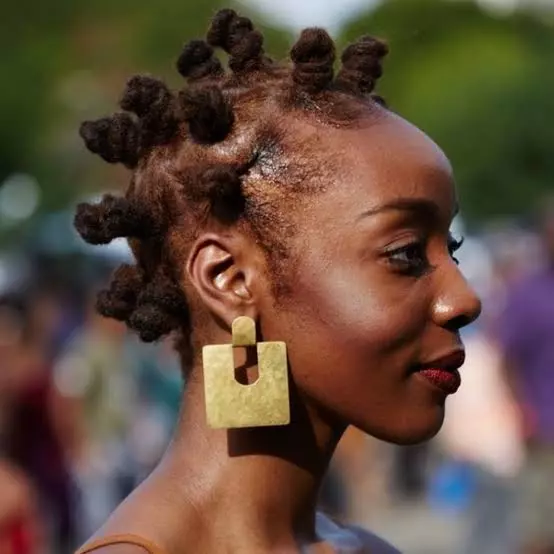
Small knots, many of them, marching from the hairline back. The middle part splits the crown into two even halves. Coily, thick hair is required; fine hair won’t hold the knot shape. Dark brown base, no bangs. This style works with a middle part and smaller sections. It is a salon look that demands precision.
Small bantu knots atop voluminous coily curls
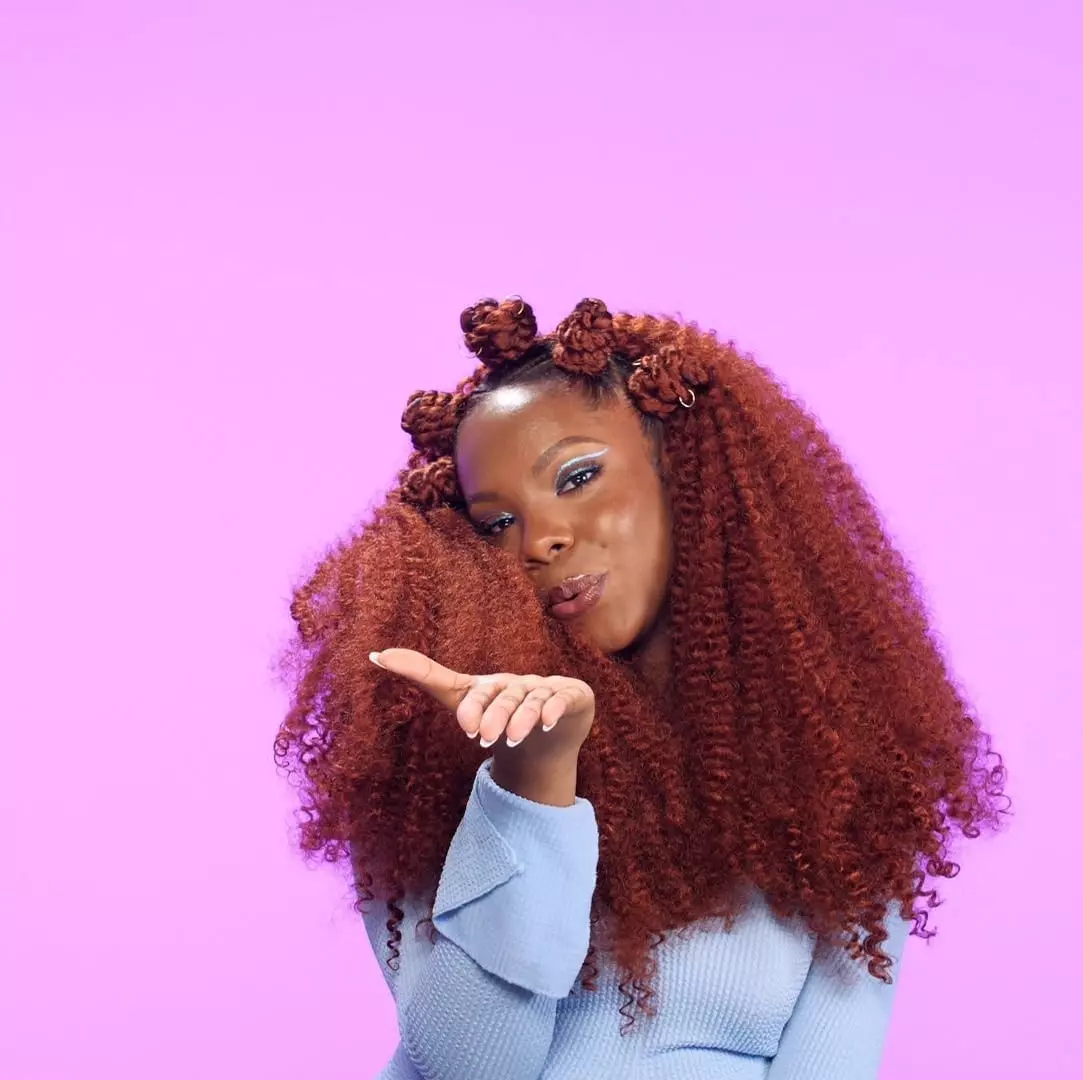
Knots on the crown, loose coily curls everywhere else. The reddish-brown hue shifts across the textured sections. A middle part keeps the two zones balanced. Coily, thick hair gives the loose curls their volume. A curl-defining cream on the bottom half keeps the definition for a day or two. This style leaves the hair partially down.
Sculpted knots upward and voluminous
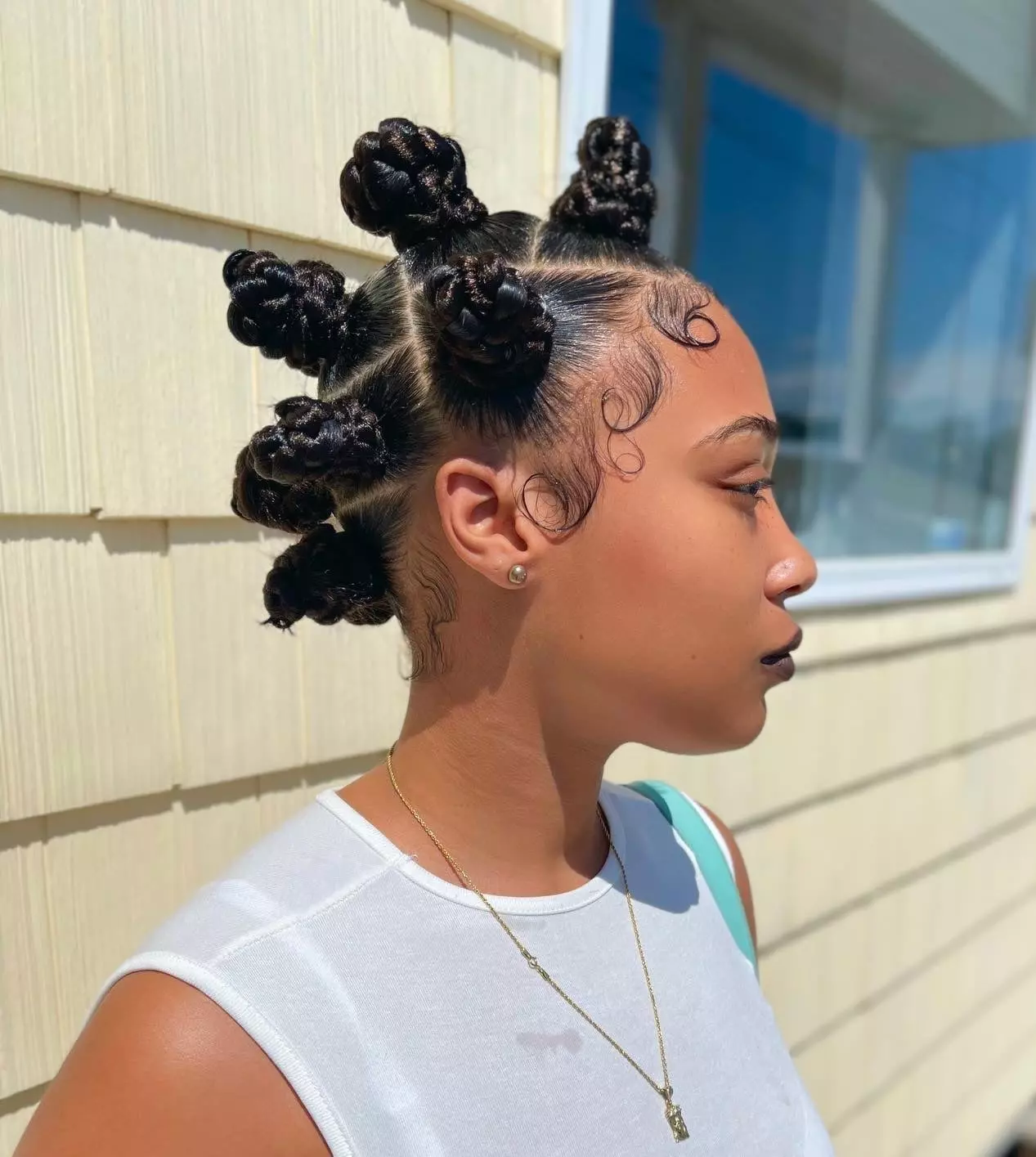
Sculpted bantu knots arranged upward with a centered parting and slicked edges require a stylist’s hand and a solid chunk of time in the chair. You need coily, thick hair that holds shape without fighting back. Ask your stylist for: sculpted bantu knots updo. It works best for those who want an updo, but fine hair may not support the height. Slick edges with gel or pomade for a neat finish that lasts all day.
Striking contrast with cropped sides and bantu knots
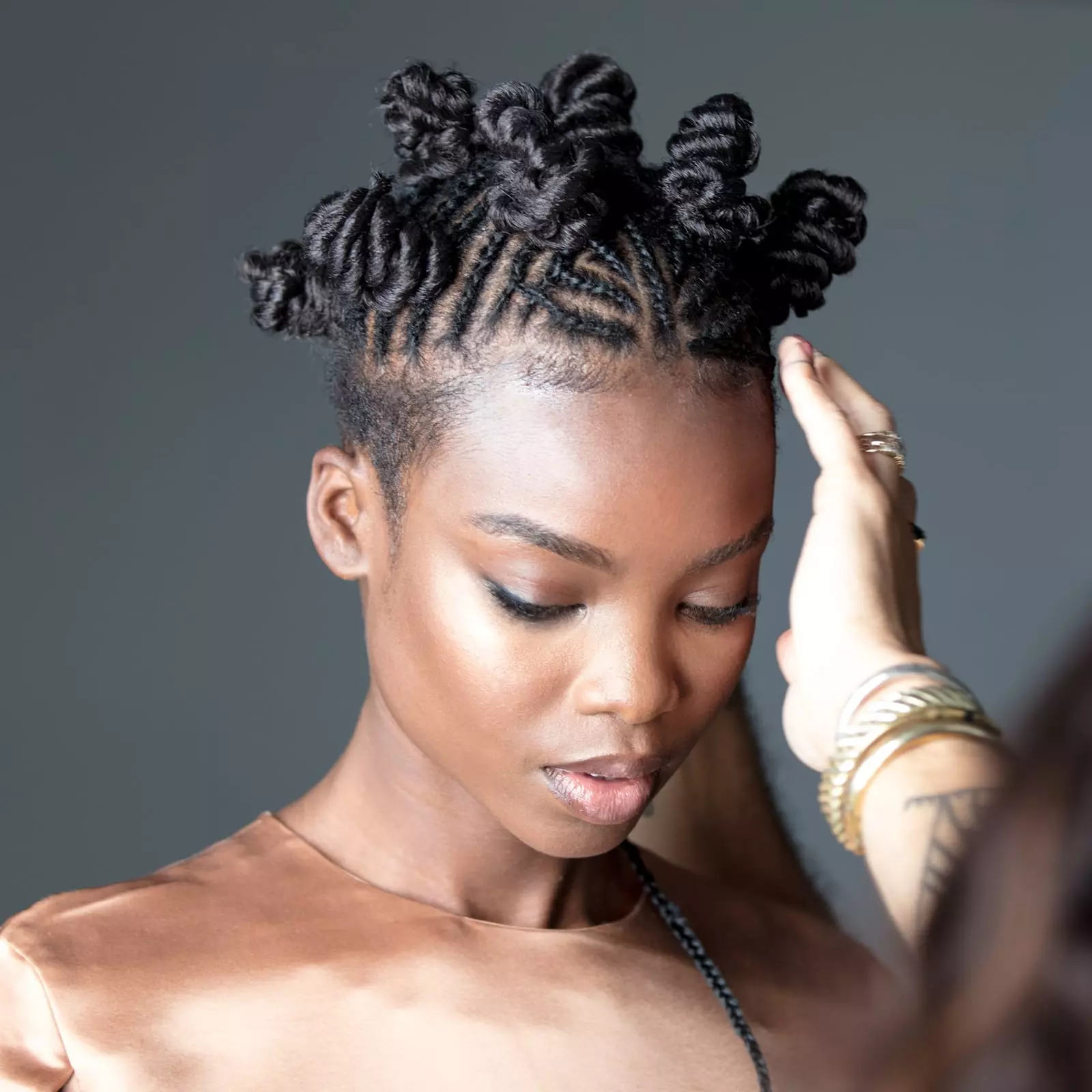
Full-coverage knots versus an undercut is a different conversation than a uniform set. The zig-zag braided pattern at the crown pulls the eye up, while the closely cropped sides keep the weight off. Coily, thick hair works best here. The catch: the cropped sides demand trims every four to six weeks to hold the contrast. It suits those who want a bold contrast rather than a uniform length. Fine hair may make the top look sparse.
Side part with gray streaks
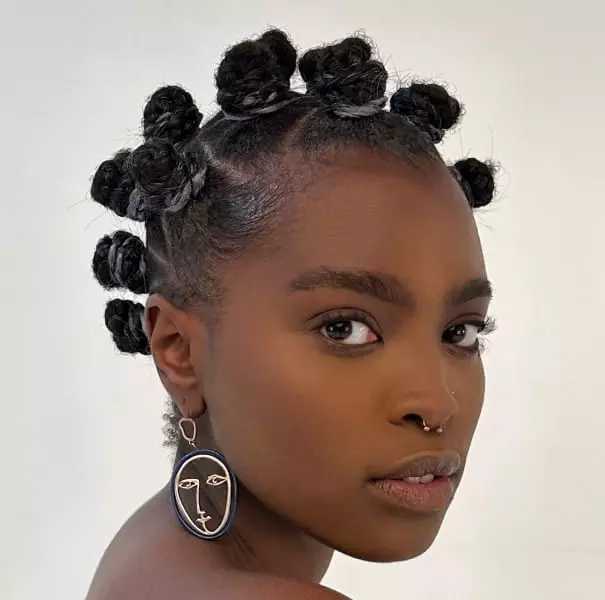
Gray streaks woven through multiple neat bantu knots shift the look from standard to deliberate. The side parting breaks the symmetry and lets the streaks look intentional rather than accidental. Coily, thick hair takes the color well. Upkeep is straightforward: a color-safe shampoo and conditioner keep the streaks from turning brassy. Not for anyone who prefers a solid color or has fine hair that would show every bit of root. Ask your colorist for: bantu knots with gray streaks.
Gold cuffs and wooden beads adorn knots
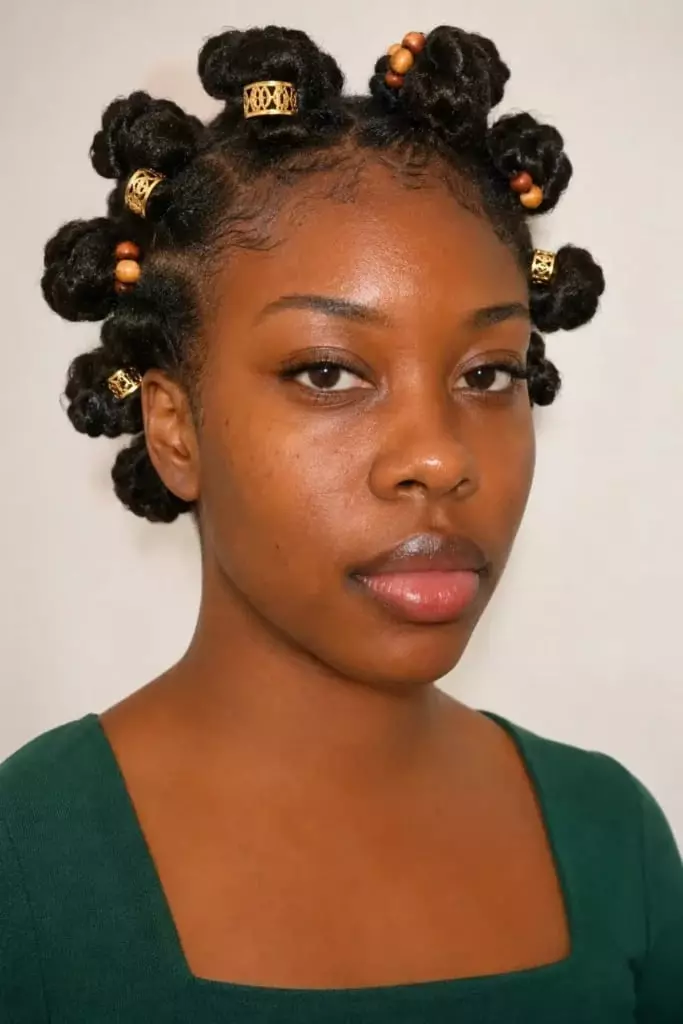
How do you make sure the cuffs stay put without sliding into the knot? The answer is placement during the set, not after. Gold cuffs and wooden beads on a middle-parted updo of bantu knots need to be threaded onto the section before it is twisted and coiled. Coily, thick hair holds the weight without slipping. Skip it if you prefer a minimalist look or have fine hair that would show the hardware’s bulk.
Blonde highlights blend with dark braids
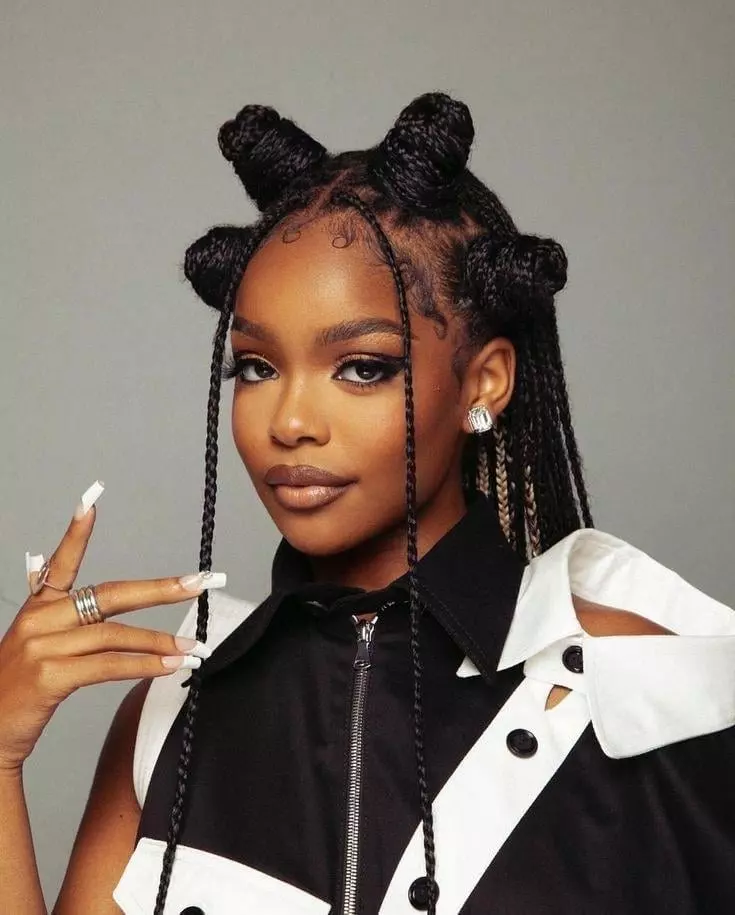
Multiple bantu knots at the crown and long braids falling past the shoulders is a two-part structure. The blonde highlights woven through the dark braids create contrast without the commitment of an all-over color. Baby hairs along the hairline keep the intricate set from looking severe. Coily, thick hair holds both the knots and the braid weight. Use a silk scarf at night to protect the braids and knots from frizz. Ask your colorist for: bantu knots with braids and blonde highlights.
Thick knots showcase intricate braiding
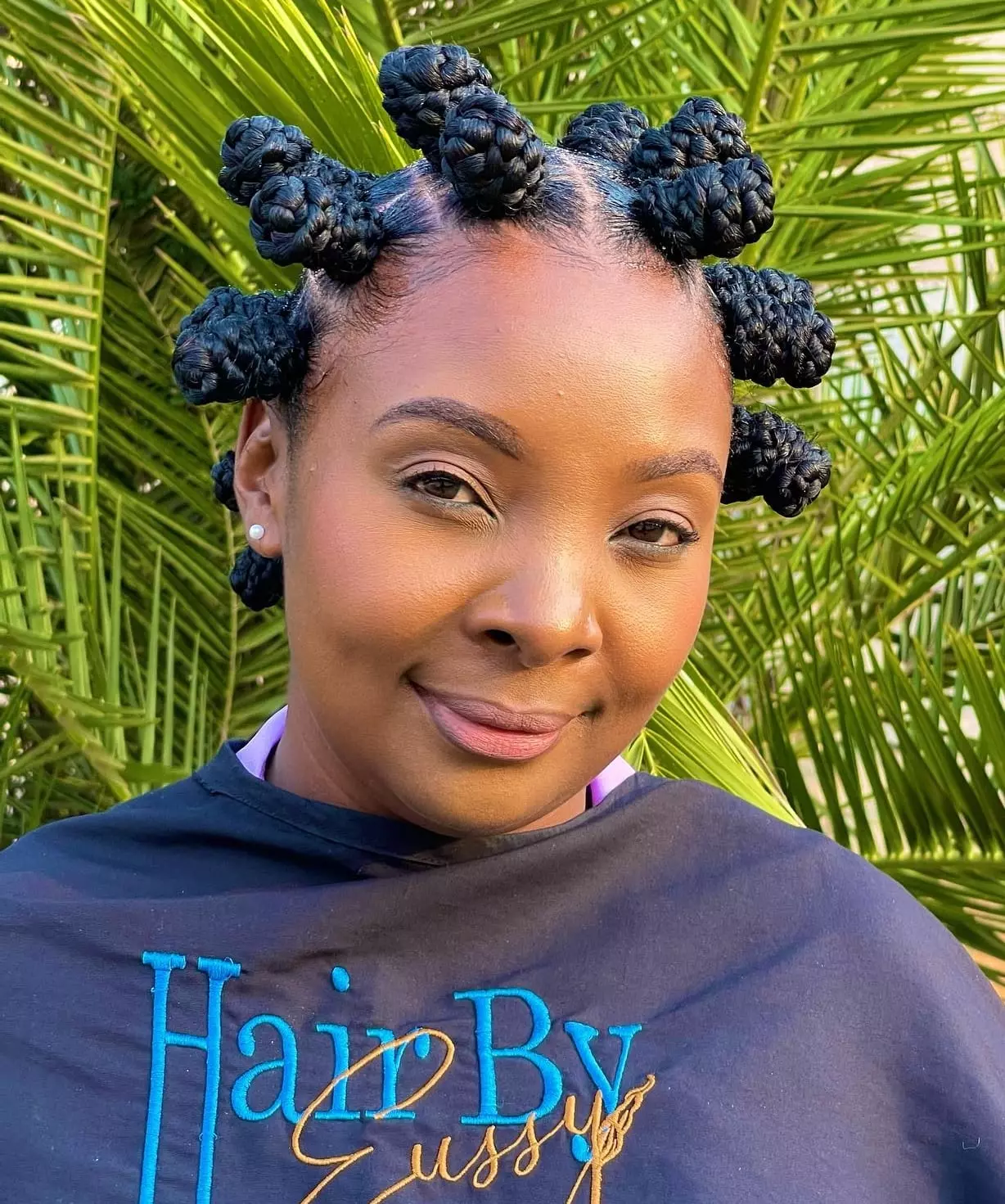
Voluminous bantu knots this dense require a salon chair and a patient stylist. The middle part and rounded shapes demand precision braiding that takes time. The trade-off is worth it for coily, thick hair that can support the volume. Ensure knots are fully dry before taking down or manipulating to avoid frizz.
Dark brown base with lighter highlights
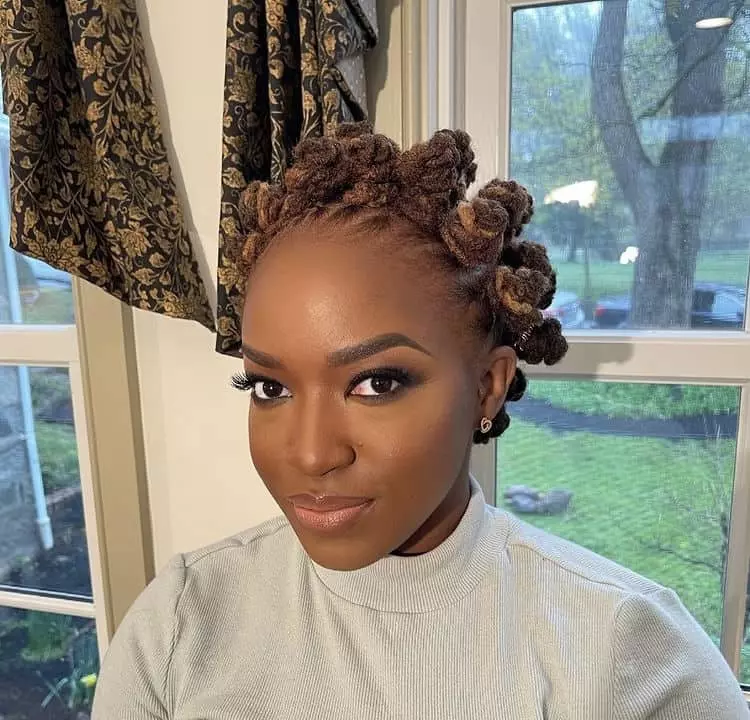
A centered parting anchors these sculpted bantu knots, with a rich dark brown base and subtle lighter brown highlights woven through. The dimensional effect comes from the highlights, not the shape. Use a color-safe shampoo and conditioner to preserve the lighter tones. Tell your stylist: sculpted bantu knots with dimensional highlights.
Small bantu knots with sculpted baby hairs
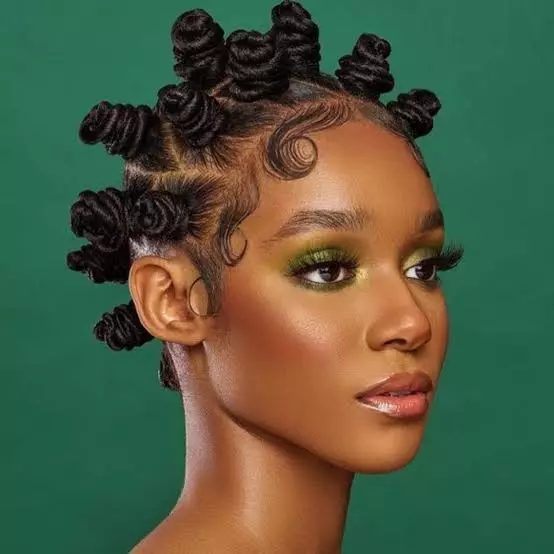
Small, tightly coiled bantu knots across the crown and sides create a neat updo with a middle parting. The sculpted baby hairs framing the face are the defining detail here. Skip it if you prefer not to style baby hairs or have fine hair that won’t hold the shape. Use a soft brush and a touch of gel to sculpt baby hairs for a neat finish.
Modern look with small bantu knots on straight hair
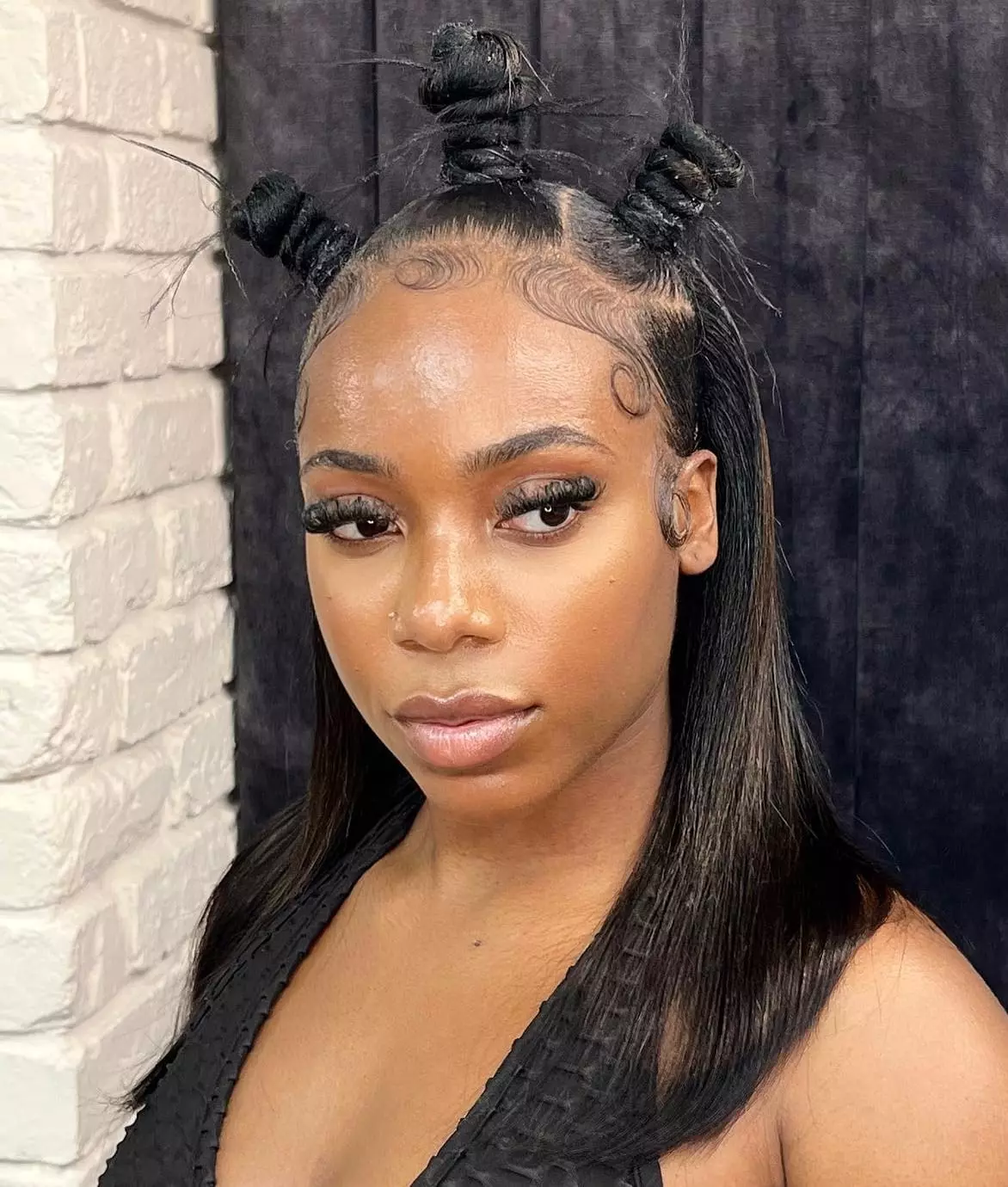
Multiple small bantu knots on top of a sleek, straight cut with a middle part and meticulously slicked edges. The contrast between the straight base and the coiled knots is the entire point. Skip it if you have coily or thick hair and want to replicate this exact look. A strong hold pomade is essential for keeping those edges flat against straight hair.
Bantu knots with gold rings accenting each knot
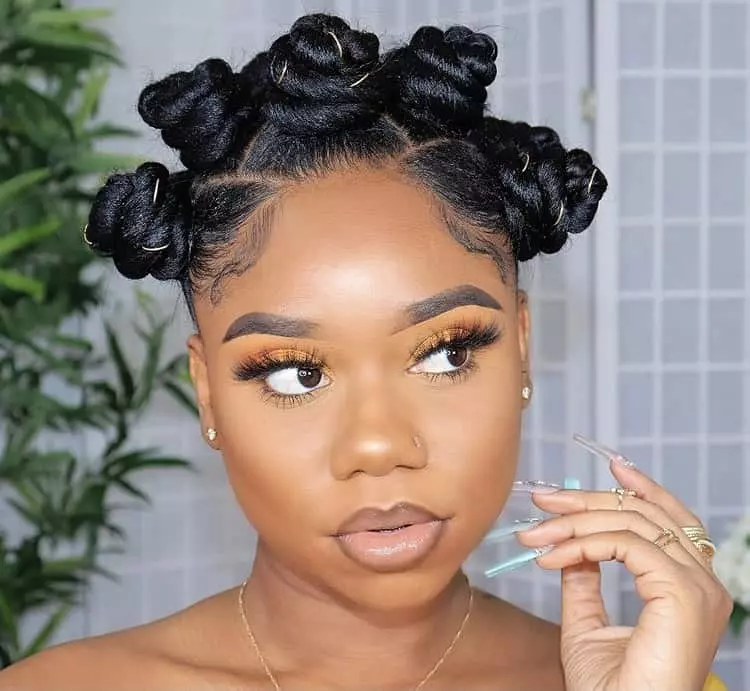
Multiple thick, coily bantu knots in an updo with a middle part, each one accented with a gold ring. The rings add weight and visual interest, but they also add time. It works best for thick, coily hair that can support the hardware. Ensure gold rings are securely fastened to prevent them from falling out.
Intricately sculpted bantu knots in a bold updo
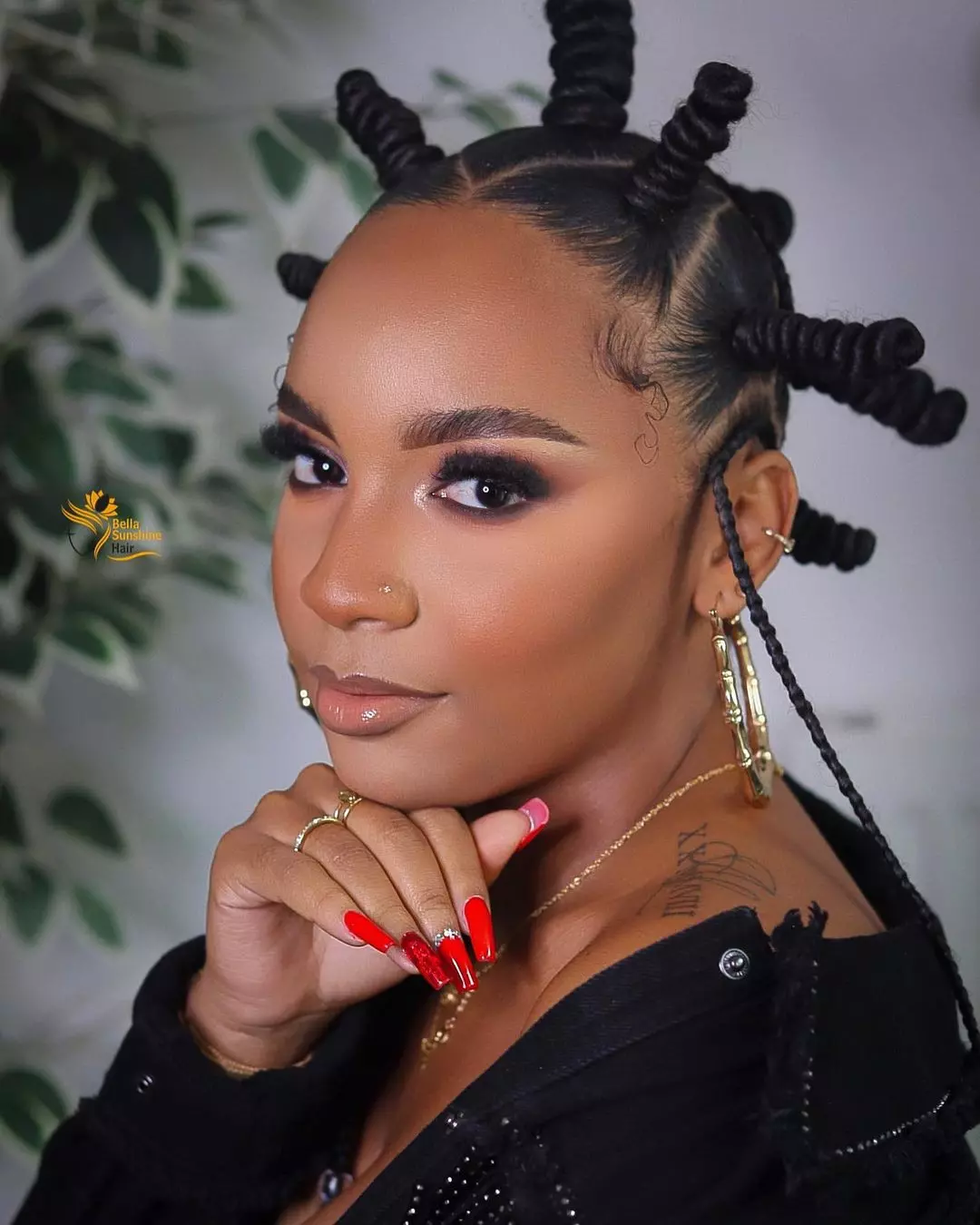
Centered parting lines each knot with precision. The thick, coily black hair is twisted into sculpted bantu knots that build a bold updo from the crown down. This cut relies on a middle part for symmetry and no bangs to keep the silhouette clean. Ask your stylist for: sculpted bantu knots updo. The structure needs density to hold.
Bantu knots accented with decorative gold cuffs
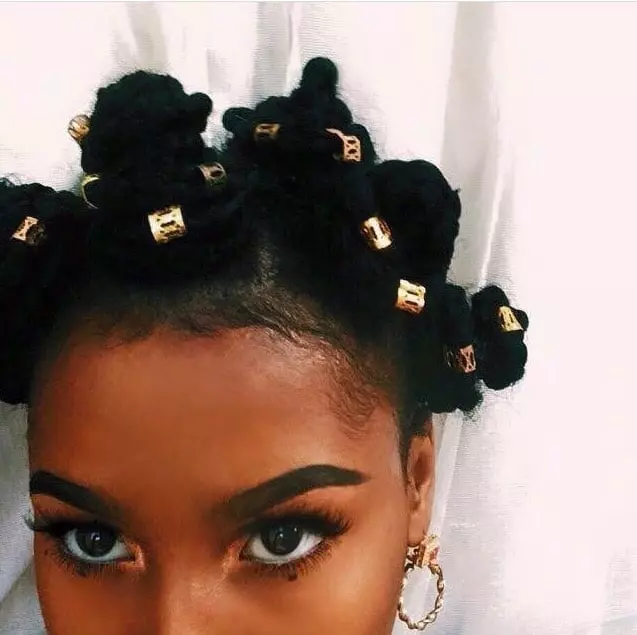
Gold cuffs add shine without effort. Thick, coily black hair is sectioned into multiple bantu knots, each wrapped with a decorative cuff near the base. The front view shows a clean silhouette with no bangs interrupting the line. Skip it if you avoid decorative accessories or have fine hair. The cuffs need weight to stay put. Choose cuffs that fit snugly to avoid snagging or pulling the hair.
Knots at crown, tendrils frame face
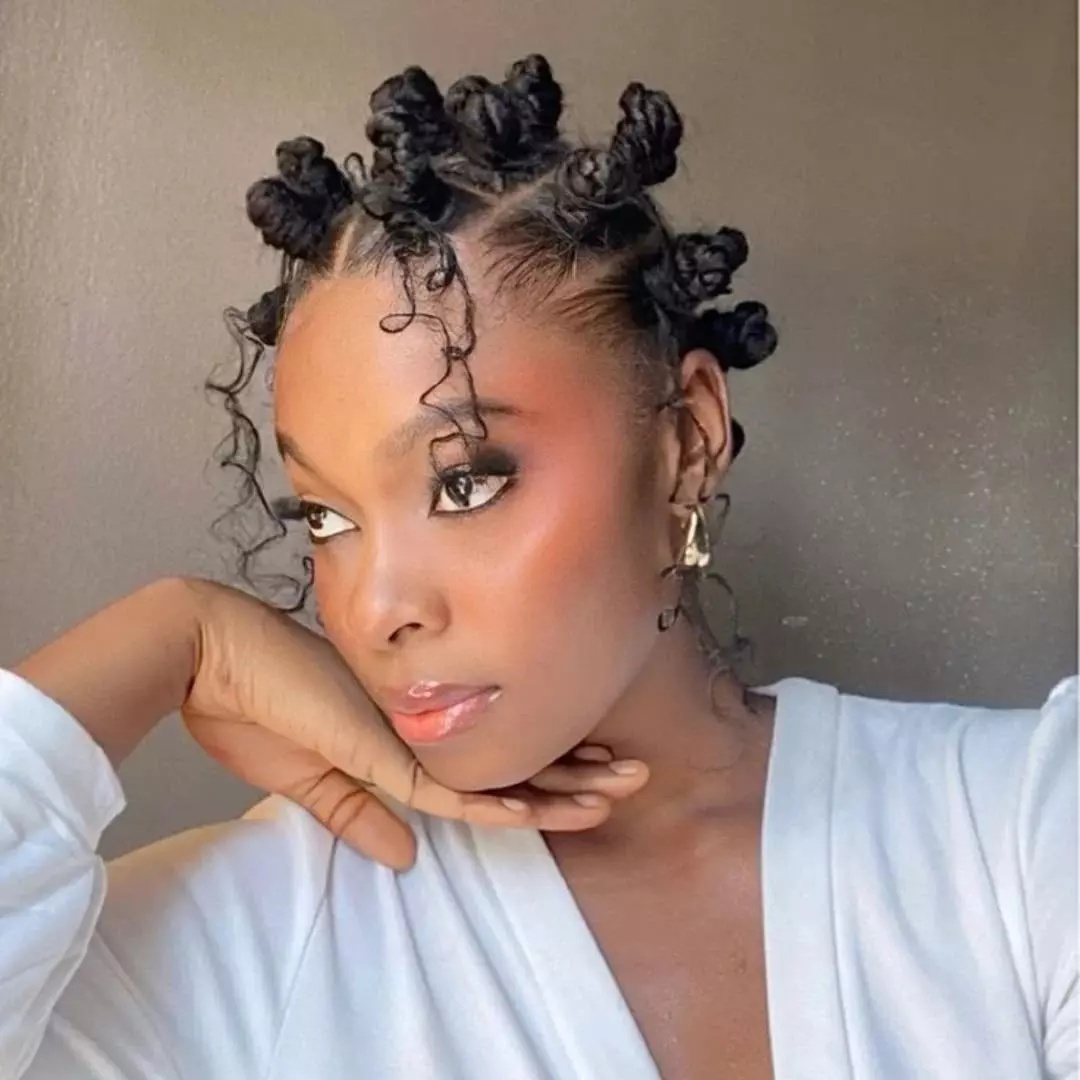
Numerous small bantu knots sit across the crown while loose, curly tendrils break the edge. The middle parting is clearly visible, leading into the updo. No bangs here. The tendrils do the softening. Ask your stylist for: small bantu knots with face-framing tendrils. Skip it if you prefer your hair fully up or have straight texture. Use a light hold styling cream to keep tendrils defined and frizz-free.
Top knots vary in size
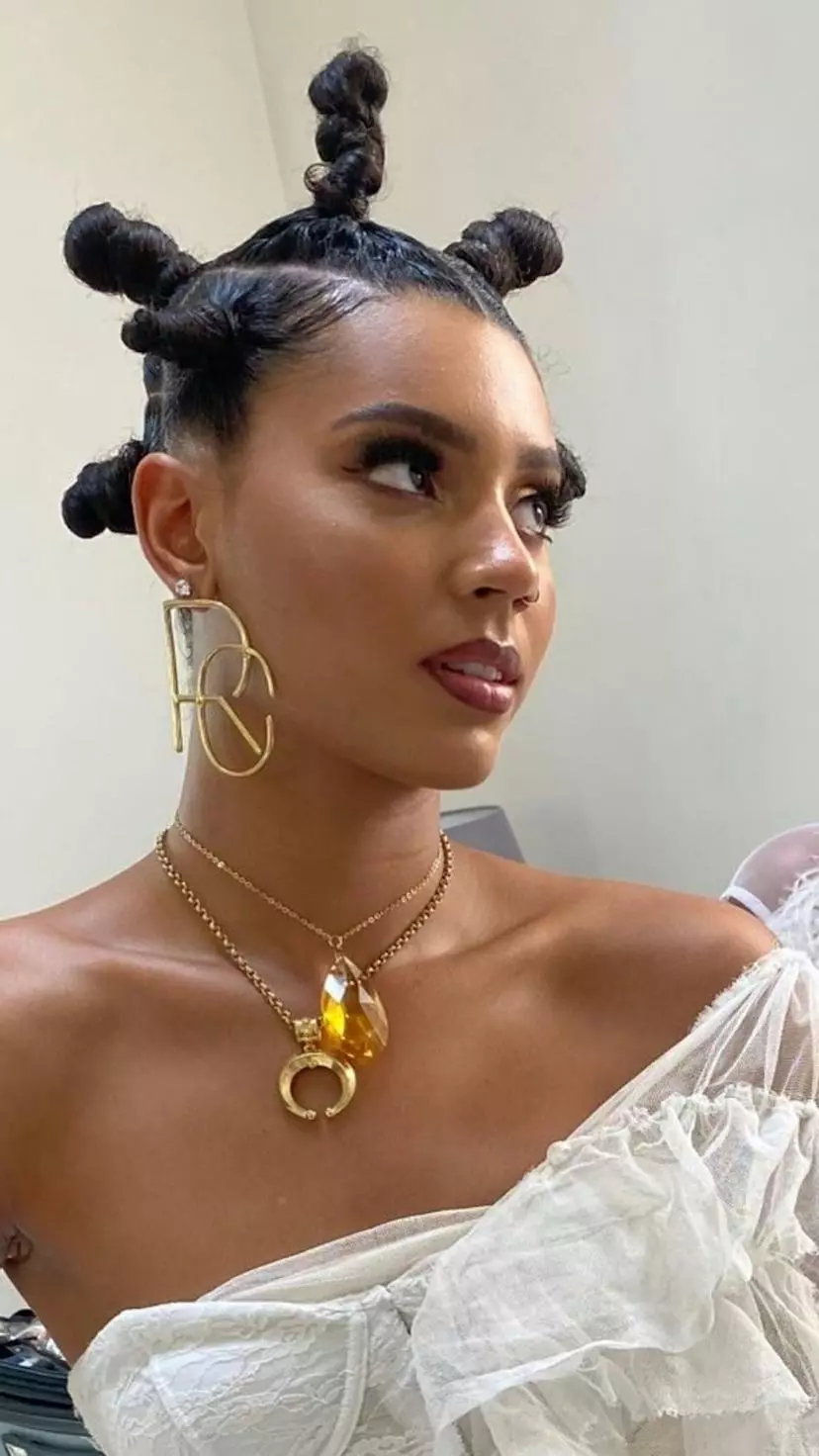
Uniformity is not the point. Multiple, tightly coiled bantu knots are positioned across the crown with a middle parting, but the knots vary slightly in size and placement. The black coily texture looks playful rather than rigid. No bangs here. The catch: consistent tension matters. If one knot is twisted tighter than its neighbor, the set looks uneven.
Single braid frames the face
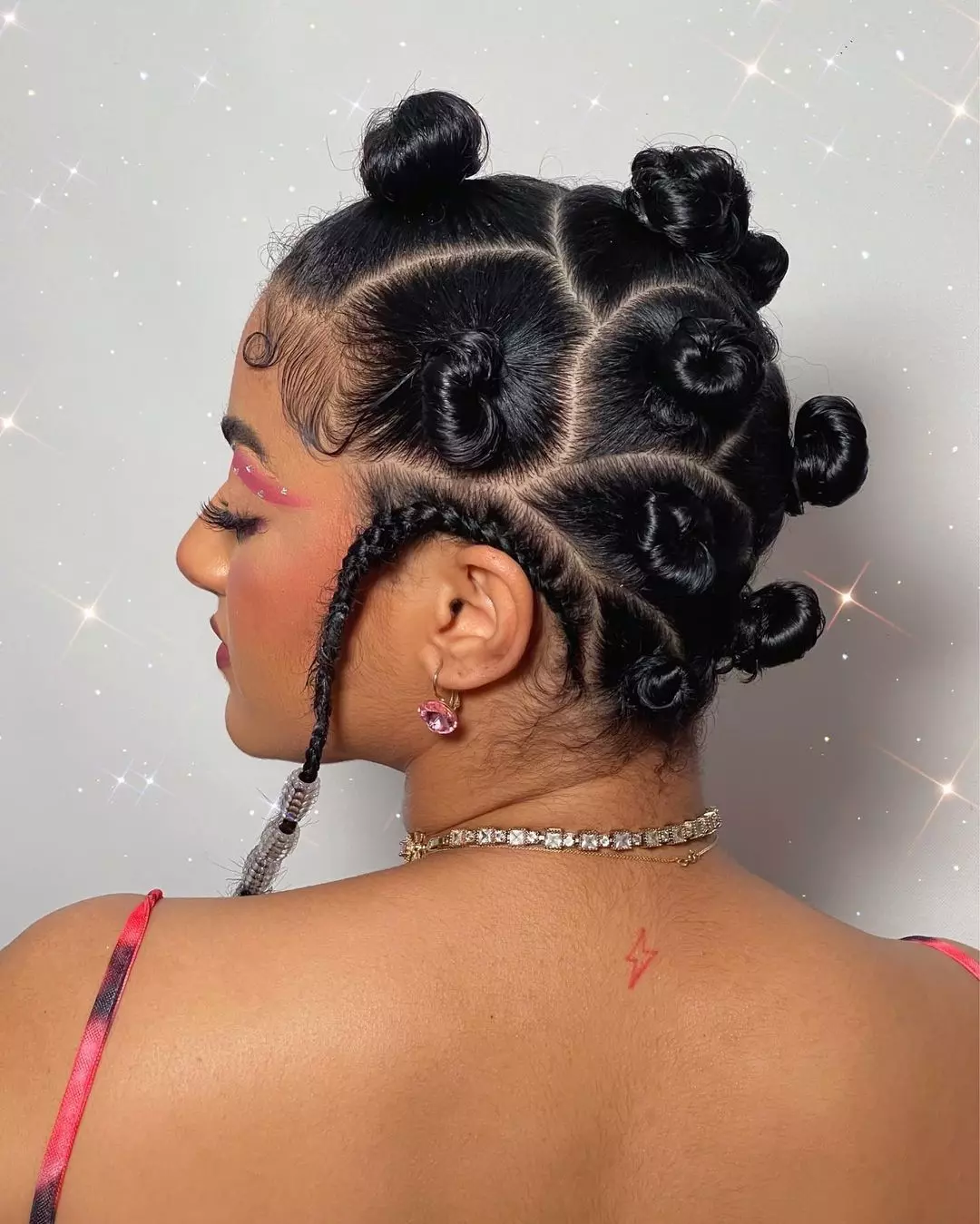
Geometric parting creates the foundation. Numerous small bantu knots are arranged across the scalp in precise sections, while a single braid with decorative beads hangs down the side. The black coily texture stays consistent throughout. No bangs, no extras. Ask your stylist for: geometric bantu knots with a side braid. Skip it if you prefer all knots or no braids. Keep the single braid neat and moisturized to prevent frizz.
Bantu knots atop neat box braids
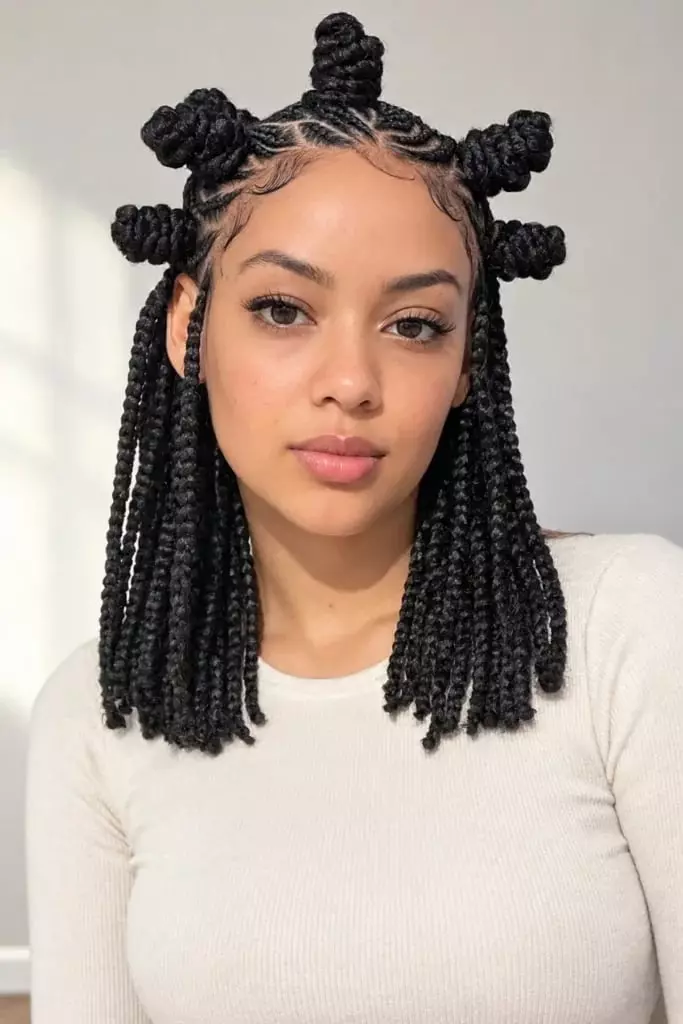
Two styles in one means double the chair time. The crown is covered in small bantu knots, while the rest falls into neat box braids with a middle part and sculpted baby hairs. Coily texture handles the knotting best; the braids need a smooth, consistent tension to match. A braid balm keeps the lower section from frizzing between washes. You get a protective style that looks a full look, not a half measure.
Numerous small bantu knots in dark brown
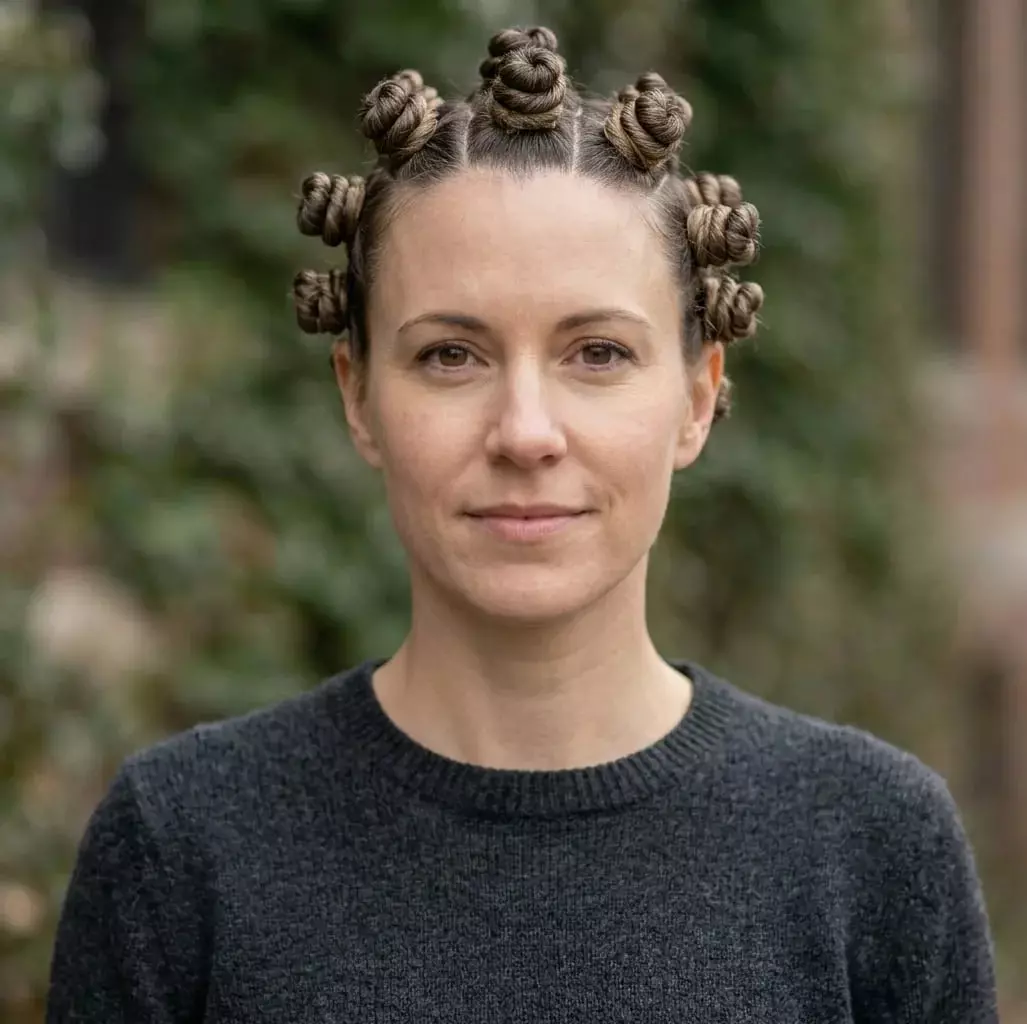
These small knots are wound tight and even, split by a clean middle part. Thick, coily hair holds the shape without slipping. The style requires three or more hours to complete. Each knot must match its neighbor in size, which means a stylist who does not rush. The result is a symmetrical scalp that looks finished from every angle. A satin scarf at night keeps the coils intact for a full week.
Two long braids frame face
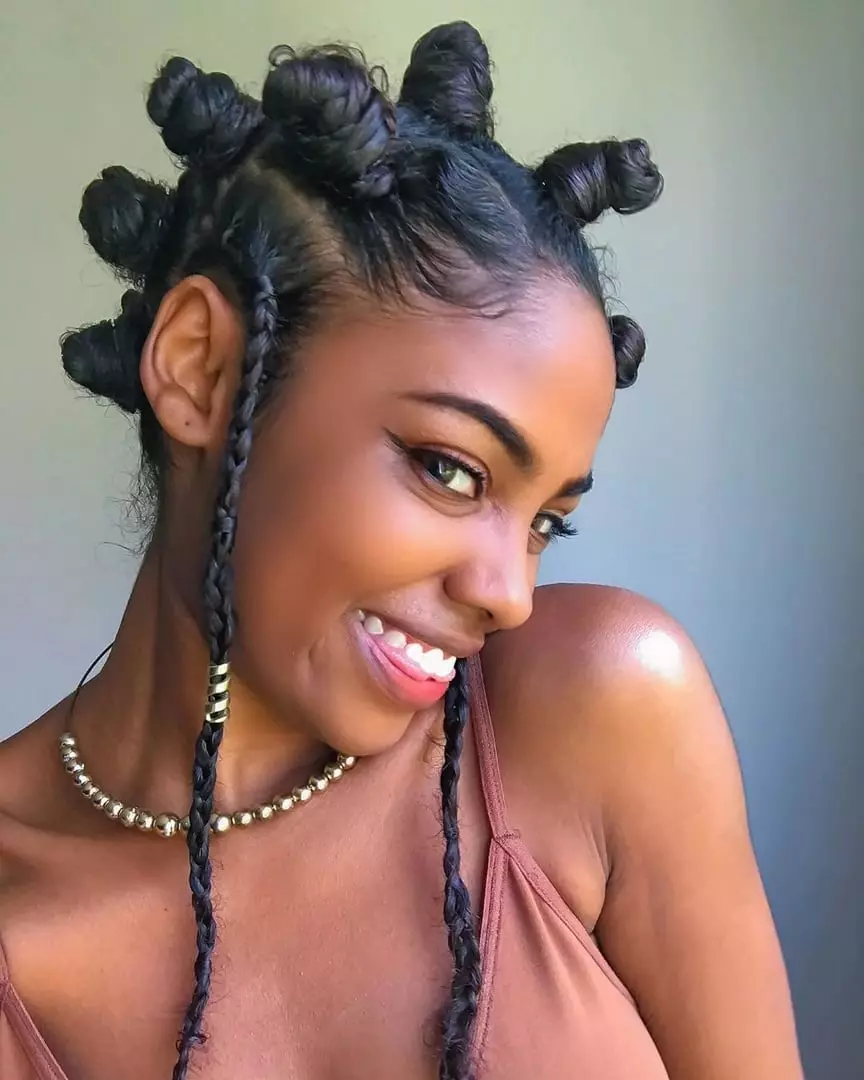
The crown is packed with small bantu knots, but the real move is the two long braids that drop down the front. Black, thick, coily hair gives both elements enough weight to sit right. The catch: those front braids need daily attention. They catch on collars, snag on bags, and the ends dry out faster than the knotted section. Keep a lightweight moisturizer at your desk. The rest of the style stays put for a week, but those two braids will tell you when they need a redo.
Defined edges highlight sculpted knots
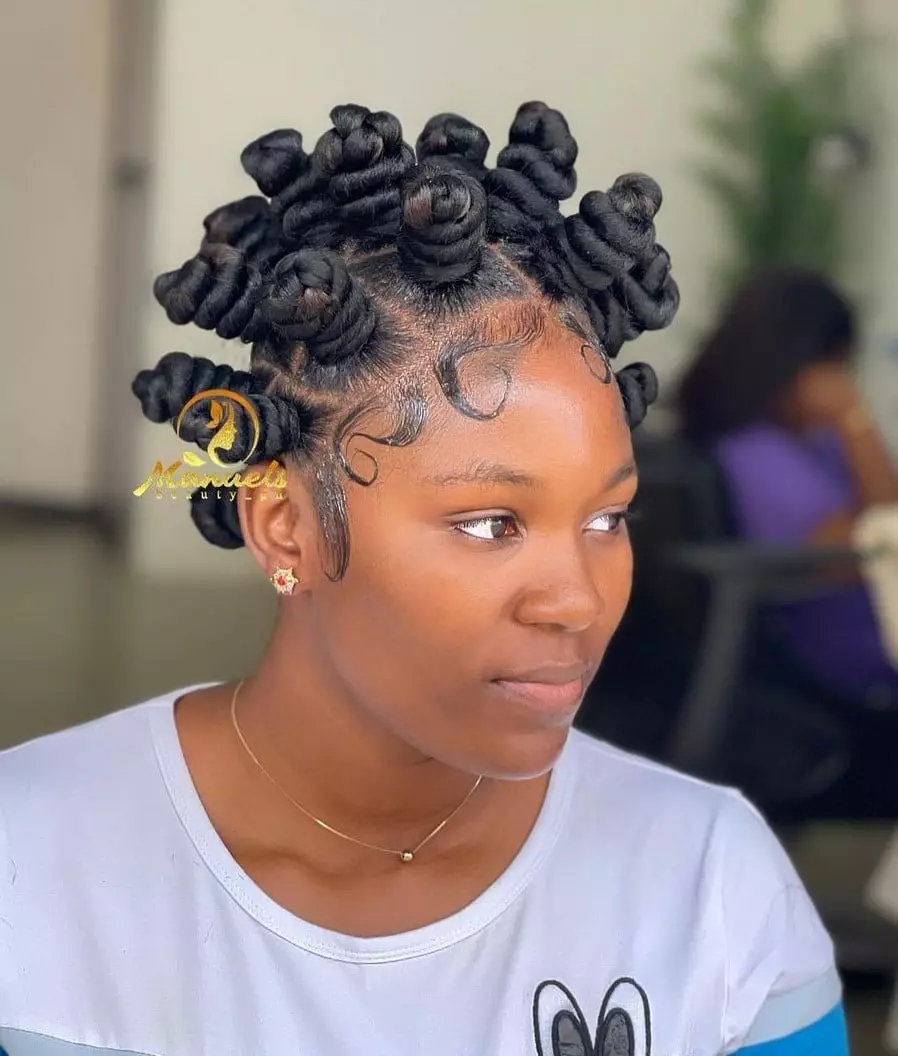
Sculpted knots and a neat updo rely on one thing: the hairline. The middle part runs clean, and every knot sits tight against the scalp. Thick, coily texture is required here. A strong edge control product keeps the baby hairs in place all day. A softer finish or fine hair that does not hold a defined line will not achieve this look. The smooth edges and coiled knots create the defining contrast.
Loose tendrils soften neat knots
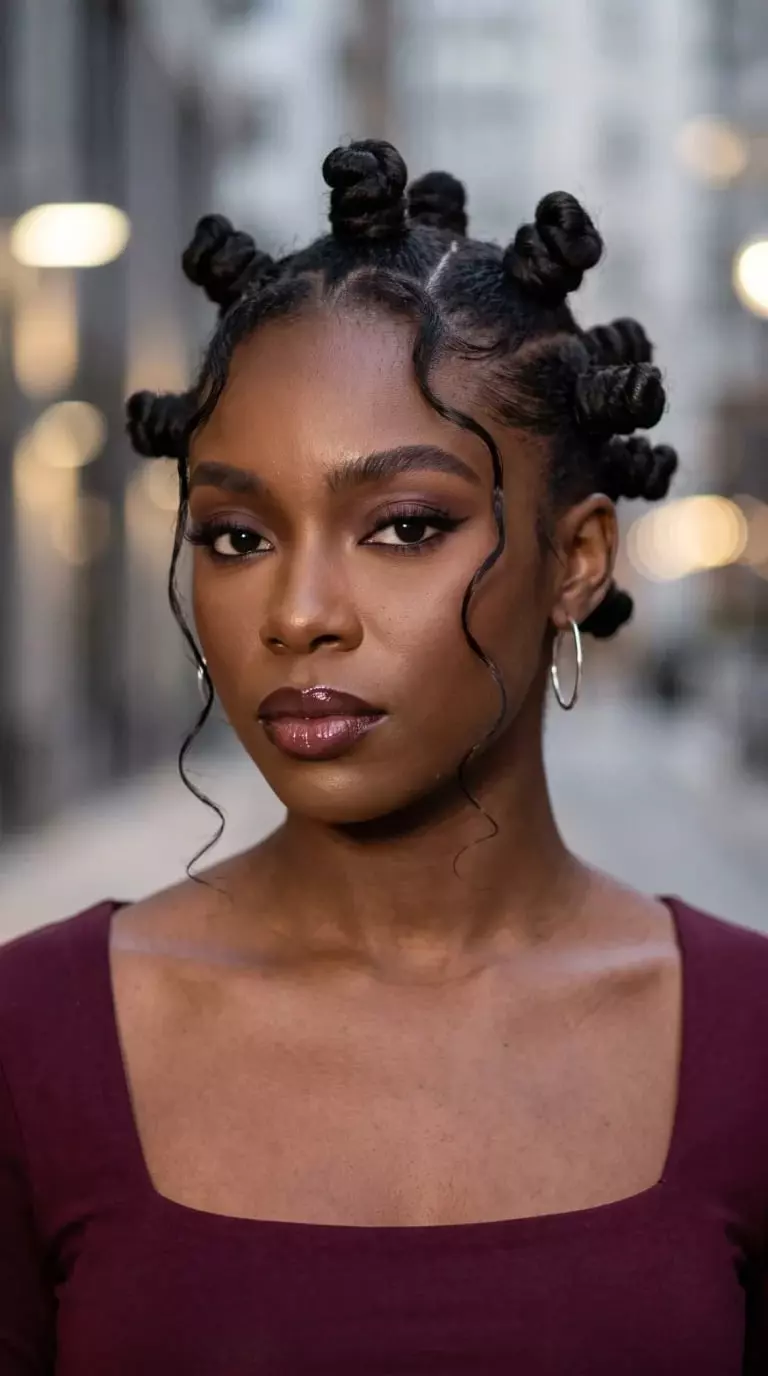
Neat knots can read severe; loose tendrils fix that. The deep black sections are coiled into small, even knots with a precise centered parting, but a few pieces are left out to fall around the face. Coily, thick hair gives the tendrils enough body to frame without looking limp. This is a salon-only ask. The tendrils need a light-hold hairspray to stay where you put them, and the knots need a satin wrap at night. You get structure without the helmet effect.
Neatly placed bantu knots in a neat updo
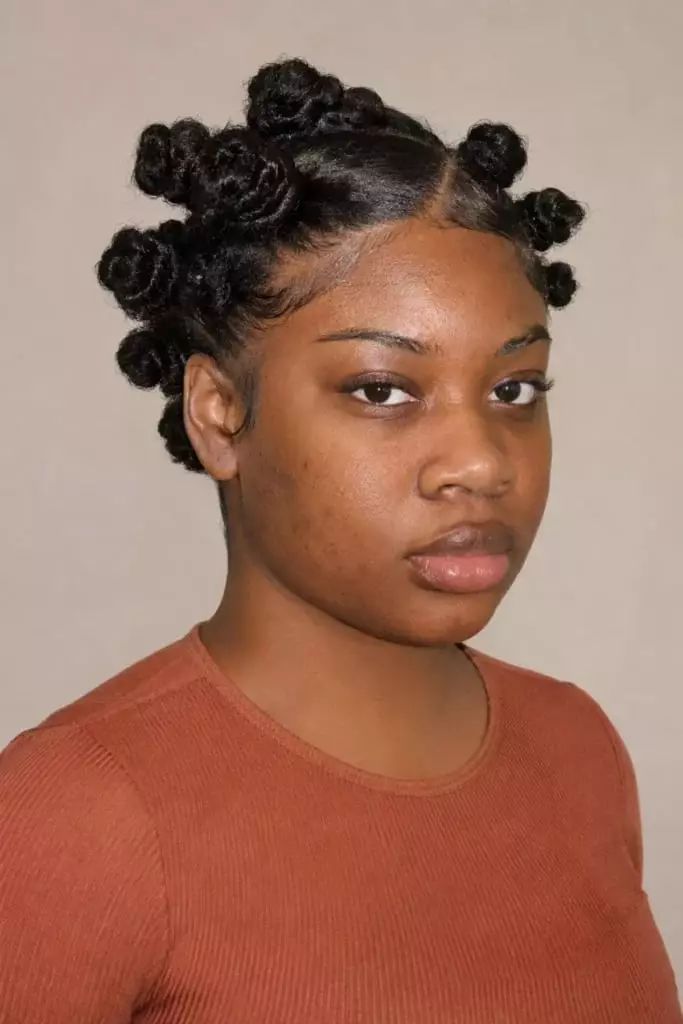
Middle parting, each knot sitting in its own tidy row, the whole thing gathered into a neat updo. You need coily, thick hair that holds a shape. This is not a style that works on fine or slippery strands. Skip it if you prefer larger knots or a less structured look; the appeal here is precision, every section wound the same size. Tell your stylist: neat bantu knots, neat updo. The chair time runs longer than you expect because each section gets wound individually, and the middle part has to stay straight.
Upkeep means maintaining neatness by gently pressing down any flyaways with a soft brush. No daily redoing, just a light smooth-over in the morning. A trim every eight weeks keeps the ends clean so the knots wrap without bulk. No bangs here, so the focus stays on the pattern of the knots themselves.
Final Thoughts
Pick your next set of Bantu knots by the time you have and the look you want.
- Ten minutes in the morning: small knots with a middle part and no added braiding.
- An afternoon to invest: sculpted updo with gold cuffs and defined edges.
- Fine or thin hair: stick to smaller knots and skip the heavy embellishments.
- Night routine: silk scarf or bonnet, and let knots air dry fully before any manipulation.
Bantu knots offer endless possibilities for textured hair.