You sit in the chair with a grow-out line that feels more like a statement than a mistake. A bob or a set of layers can turn that silver into a deliberate part of the cut, not something you hide. Striking Gray Blending 2027 fills so many saved boards for a reason: it works with your texture and your schedule, not against them.
Here are 28 haircuts and color approaches that range from a quick trim to a full restyle. Short to long, low upkeep to more involved, each one suits a different density and morning routine. The struggle this collection solves is the one where you want the gray to look like a choice, not a delay.
Gray bob with subtle silver highlights
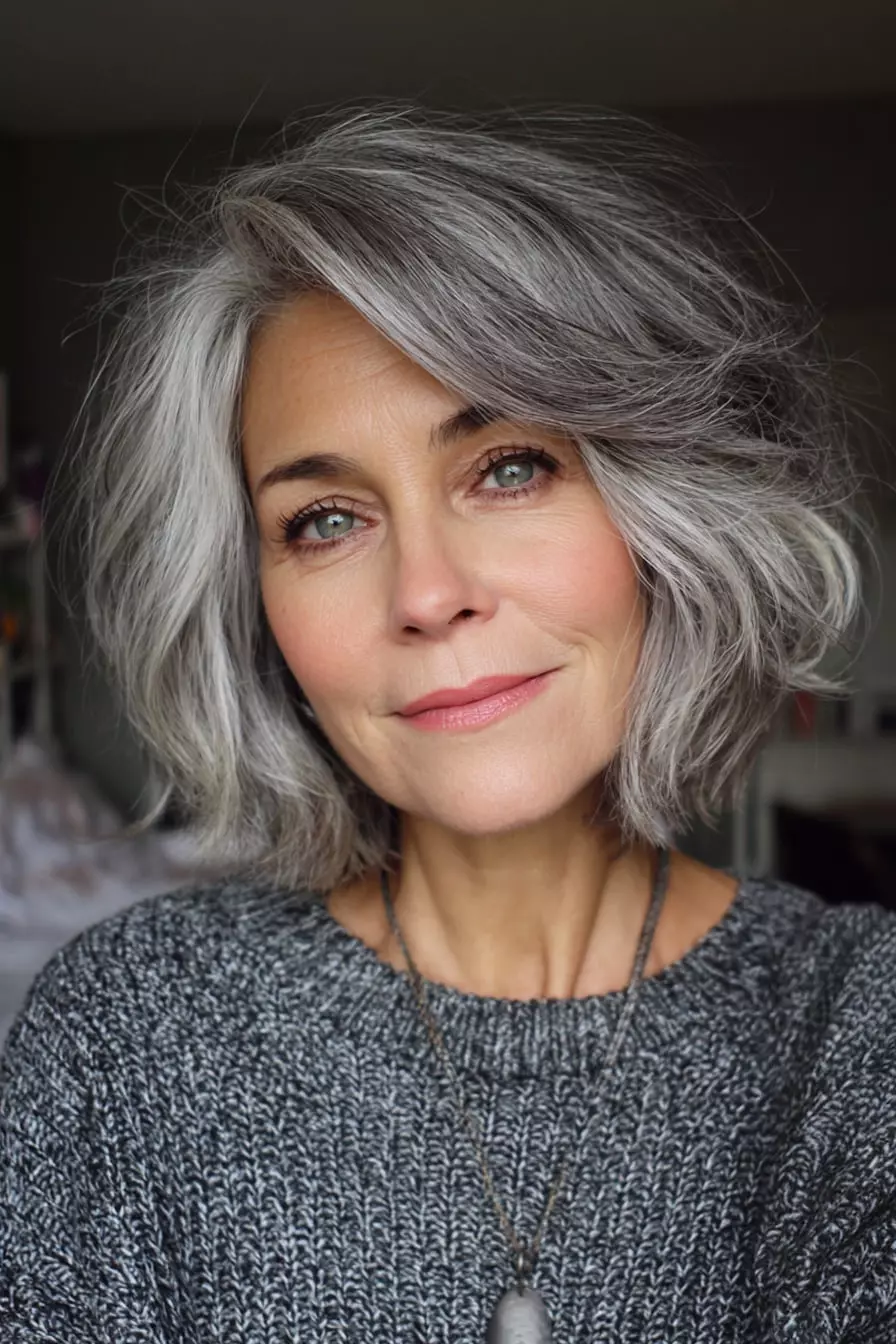
Soft waves on fine hair create a luminous finish with silver highlights. A side part opens up the front while the bob sits just above the jawline, making the gray look intentional. Ask your stylist for a bob with blended gray and silver highlights and a side parting. The air-dried finish keeps it low maintenance. This cut relies on the wavy texture to sell the blend.
Layered cut with blended gray and silver tones
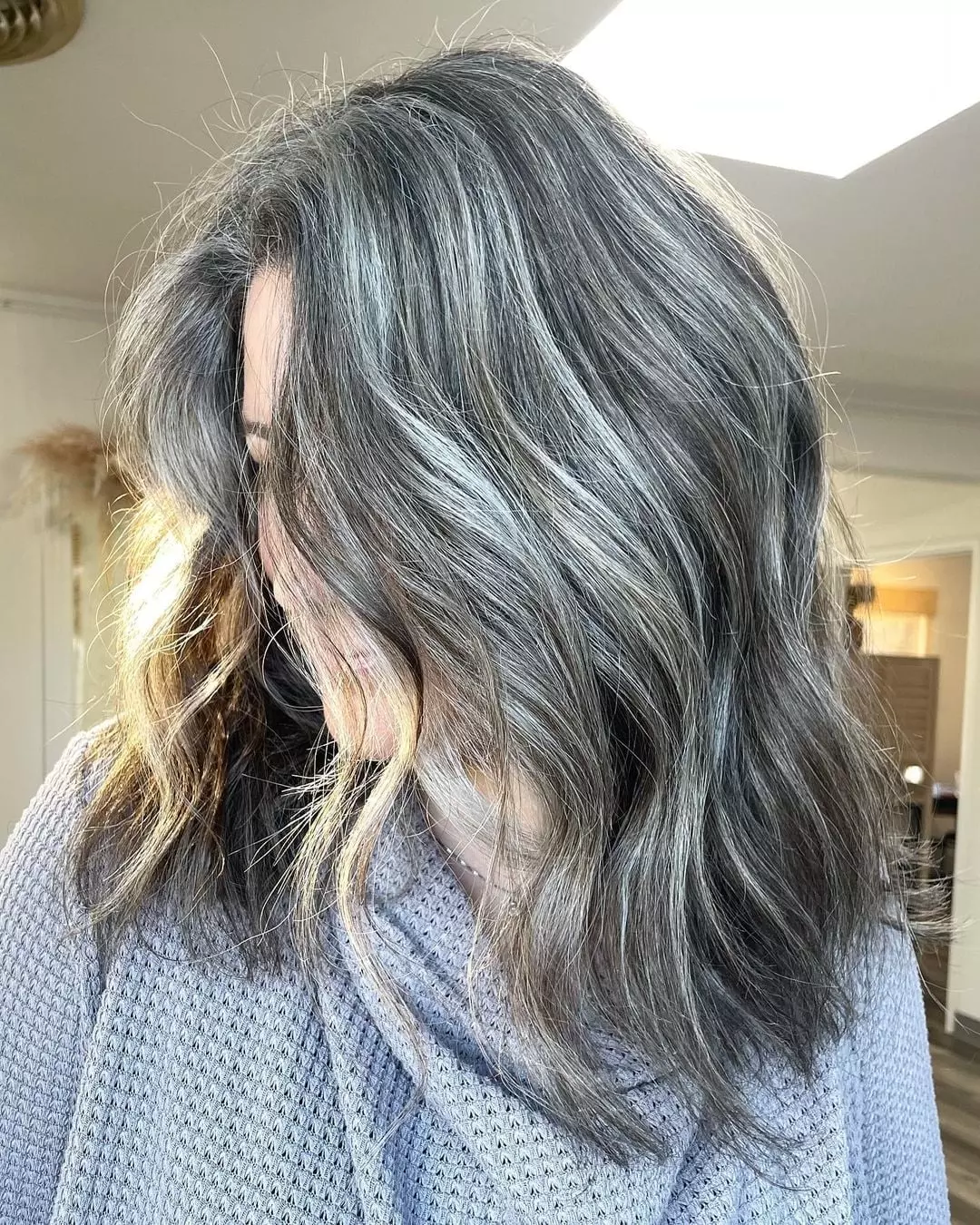
A layered cut differs from a one-length bob in one crucial way: it gives thick hair room to move. The middle part and subtle layers let the gray and silver tones fan out naturally rather than stacking in one block. Air drying keeps the texture soft. It suits those who prefer medium to longer lengths. The layers need enough length to separate. A trim every six to eight weeks will maintain the layers.
Ash blonde with dark roots for low-maintenance gray blending
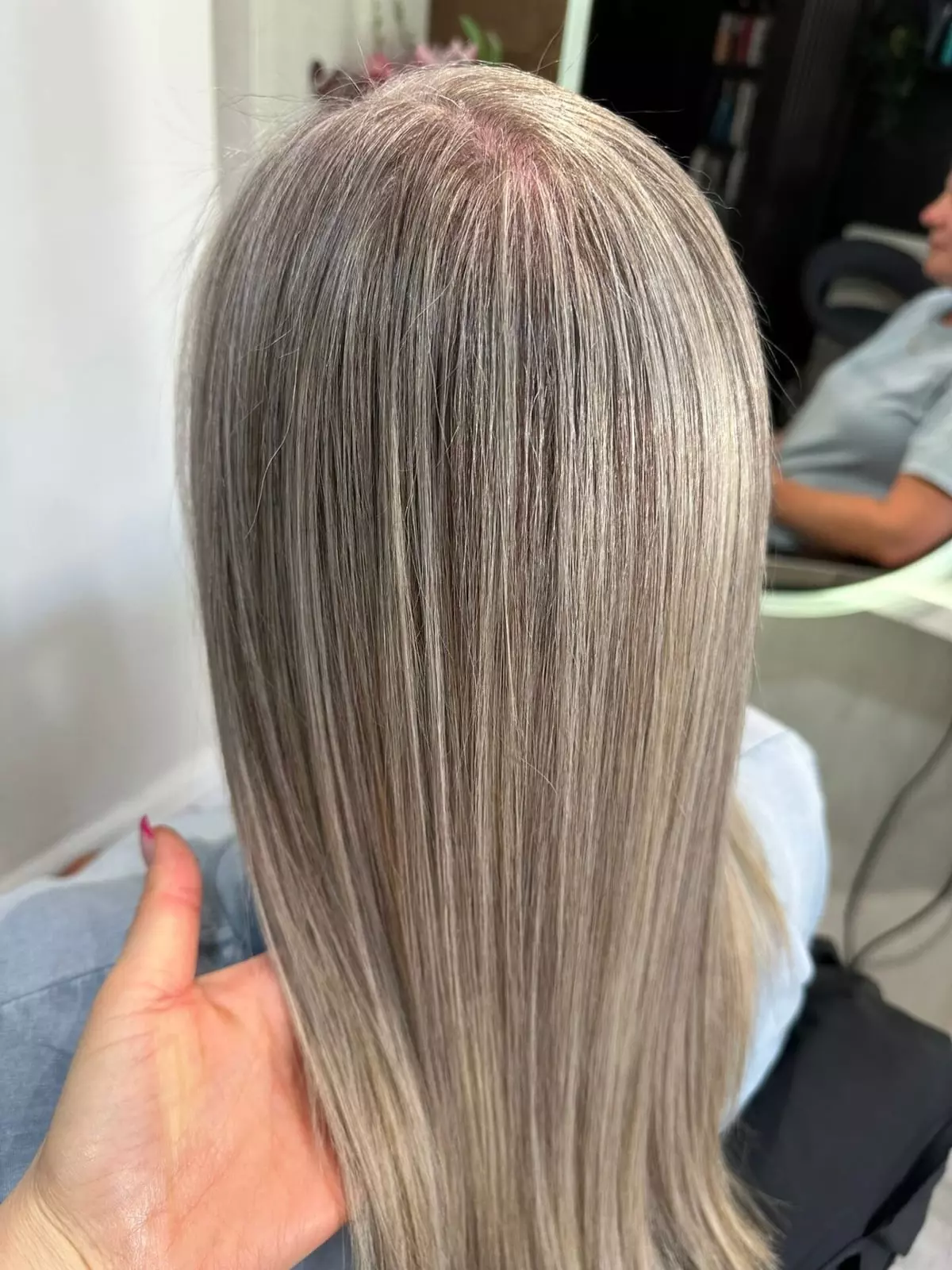
An ash blonde base with darker roots means the grow-out phase is already built in. Straight, fine hair takes the smooth gray blending well because there is no wave to interrupt the line. A middle part keeps the root shadow visible. A uniform color or lack of natural ash blonde tones makes this look harder to pull off. Ask your colorist for ash blonde with darker roots and smooth gray blending. Toning every eight to ten weeks will keep the ash from turning brassy.
Blunt cut bob with dark brown and gray highlights
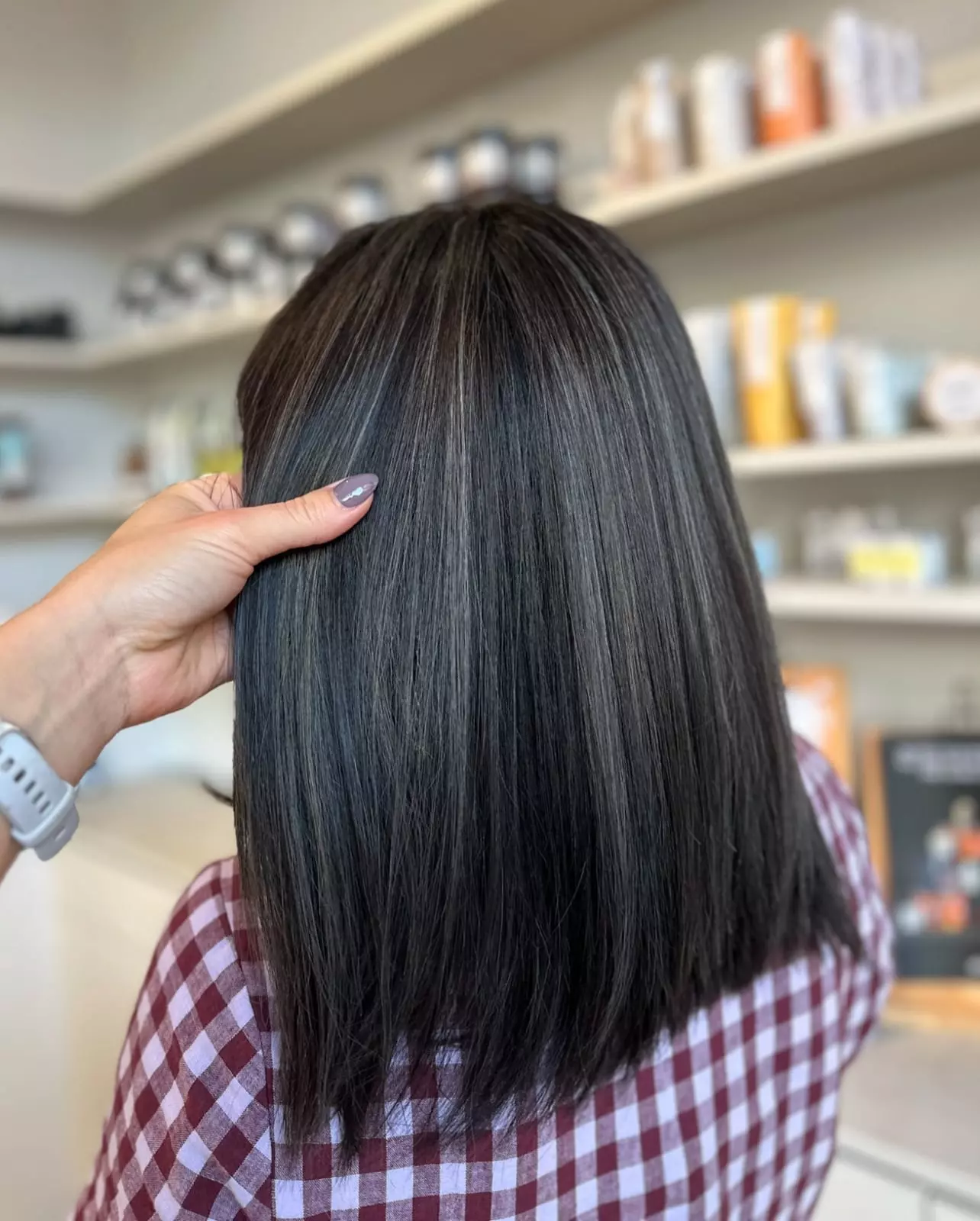
How do you make gray highlights look modern without streaks? Keep the cut blunt and the base dark. A straight, fine texture at jaw length gives the gray pieces a clean edge to play against. The air-dried finish keeps it from feeling stiff. Thick hair or a layered cut may not suit this style. The blunt line works best with moderate density.
Bob with gray strands and dark roots
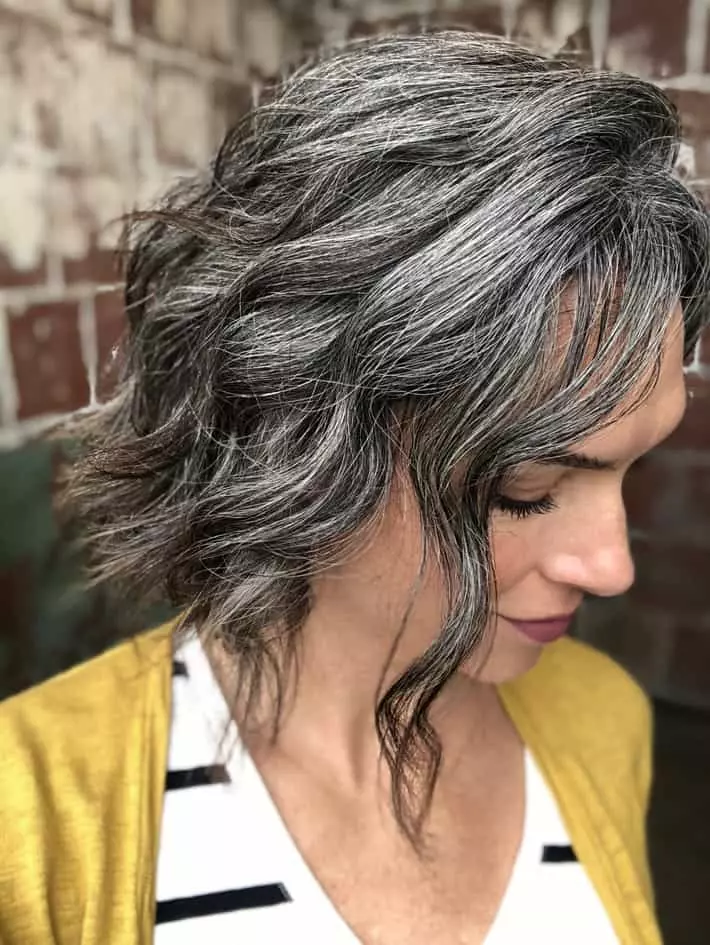
A side part and subtle waves give fine hair the illusion of more movement than it actually has. The dark roots anchor the look while the gray strands drift through the midsection, so the grow-out is part of the design. Air drying preserves the soft texture. Ask your stylist for a bob with gray strands and dark roots and an air-dried finish. A trim every six to eight weeks keeps the shape clean.
Sharp inverted bob with gray and blonde highlights
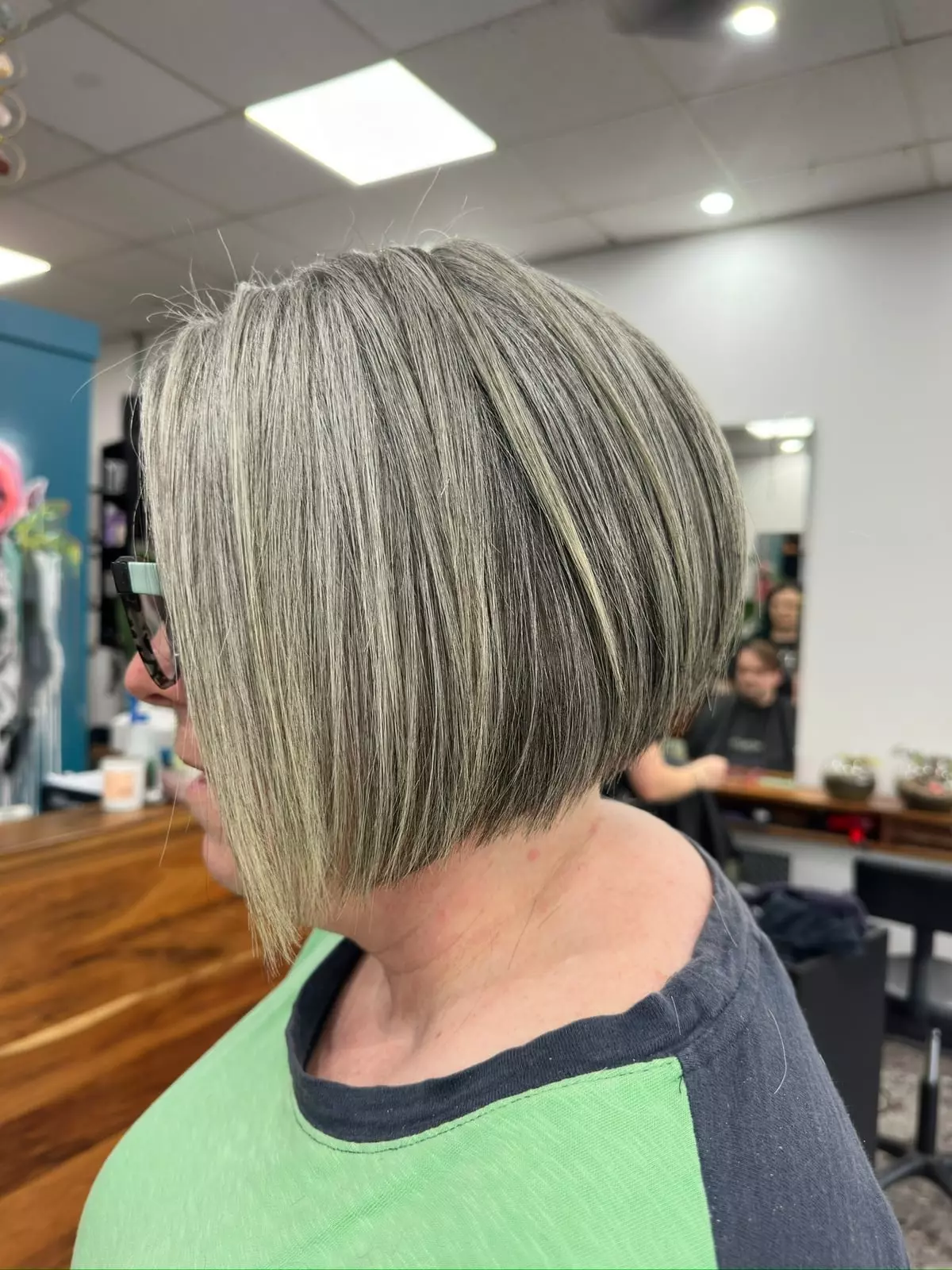
A sharp inverted bob relies on geometry, not guesswork. The back stacks shorter while the front angles down past the jaw, creating that crisp diagonal line you see here. Fine, straight texture makes the precision cut read clearly, no waves to soften the edge. Gray and blonde highlights add contrast without bulk. This is a salon-only shape: the angle requires a stylist who understands weight distribution. Skip it if you prefer softer lines or a visible root line.
Soft waves enhance gray and blonde tones
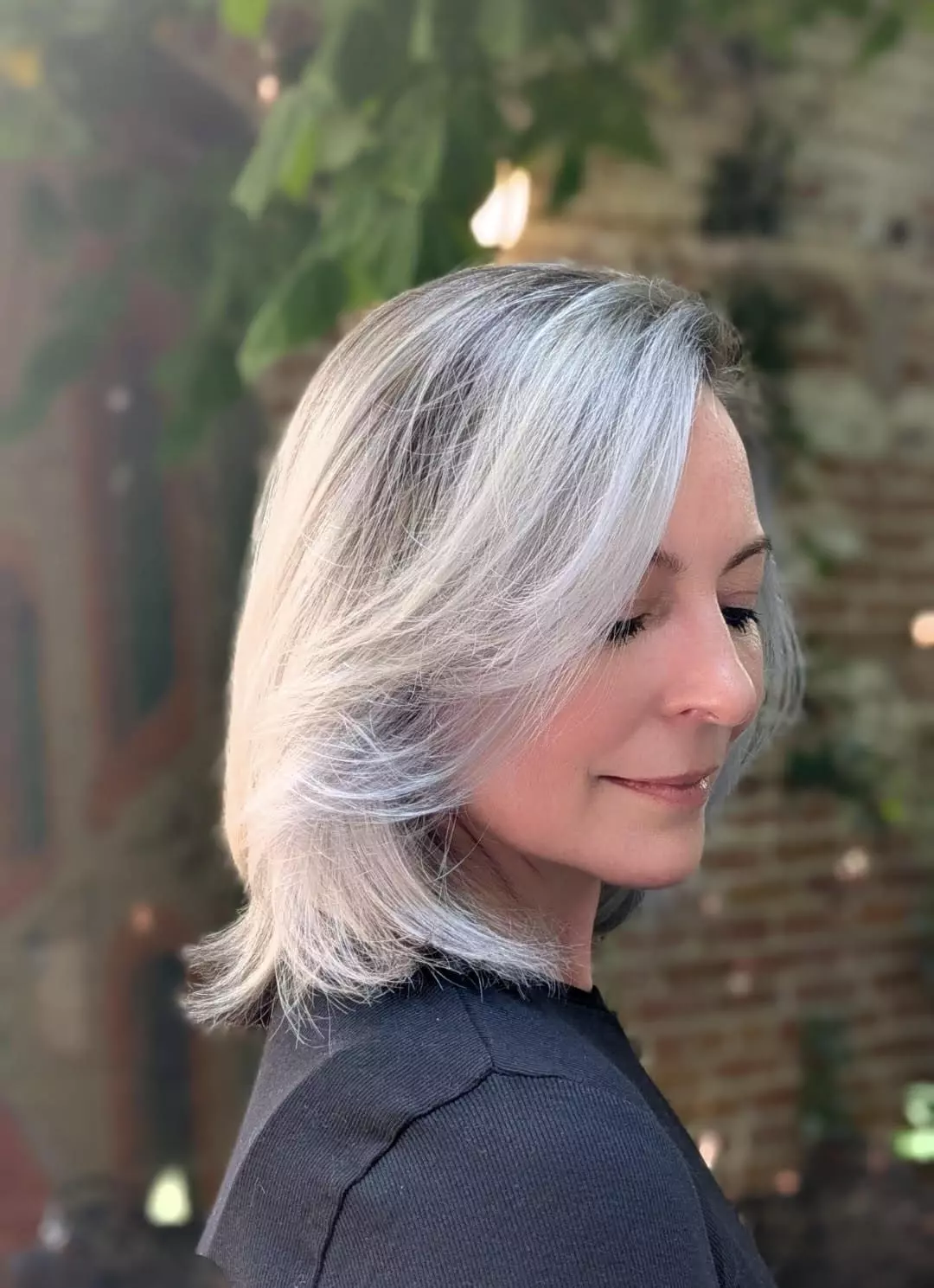
A layered bob with soft waves reads differently than a straight blunt cut. The difference is the finish. Fine waves break up the solid color, letting gray and blonde tones shift across each section. The side part opens the face without needing bangs. You get movement without losing the bob shape. Ask your stylist for: layered bob, gray and blonde tones, soft blowout.
Stacked layers add volume with gray and silver
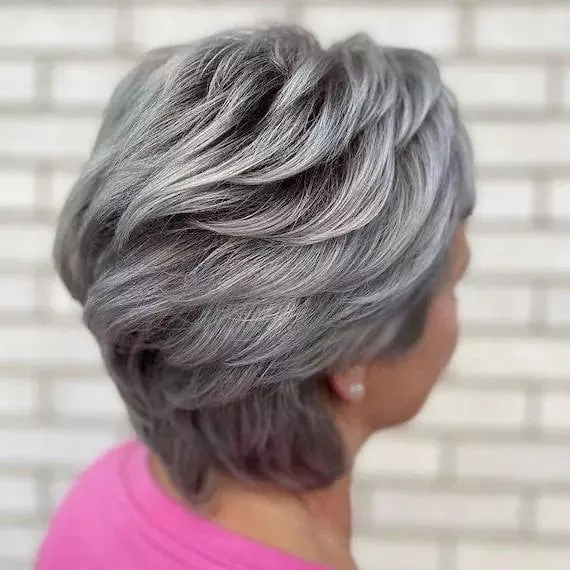
Stacked layers build volume from the inside out. The back is cut shorter, graduating upward, which lifts thick, wavy texture at the crown. Gray and silver tones sit in the mid-lengths and ends, so the lighter color moves with the layers. The drawback: stacked cuts grow out fast. That precise graduation blurs after week six, and the shape loses its lift.
Angled bob with side-swept bangs and gray blonde tones
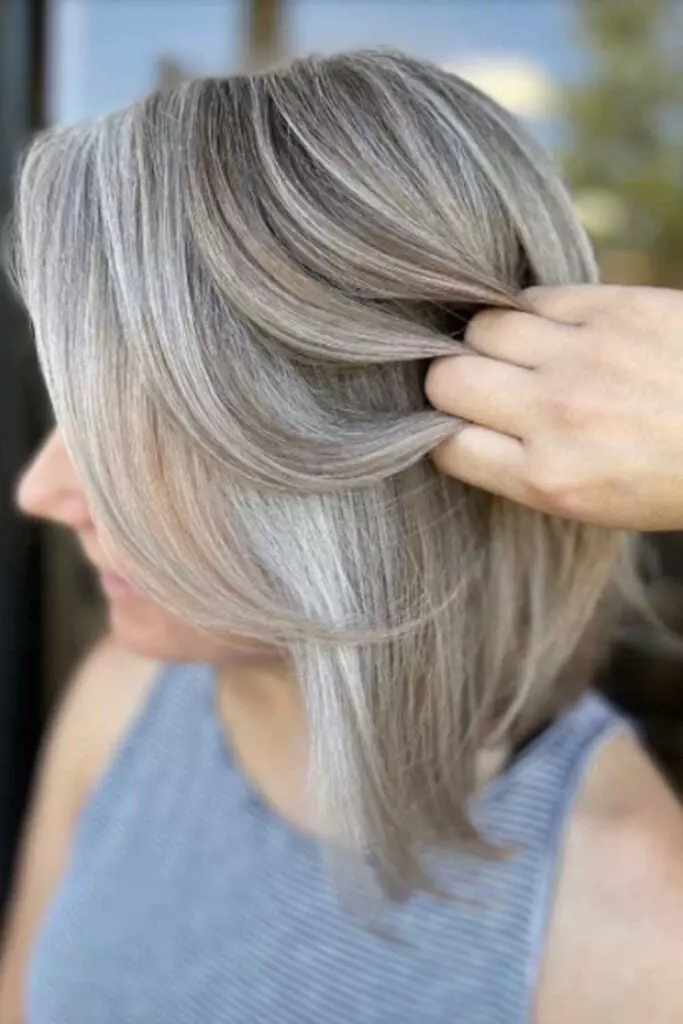
Want side-swept bangs without the daily round-brush commitment? This angled bob is air-dried, not blown out. The fine, straight texture falls into place, and the bangs sweep across without fighting a cowlick. Gray and blonde tones are blended through the length, so the bangs don’t look a separate color block. Pass when you prefer no bangs or a blunt cut. Ask your stylist for: angled bob, side-swept bangs, gray and blonde blend.
Long layers with curtain bangs and dark brown to ash blonde blend
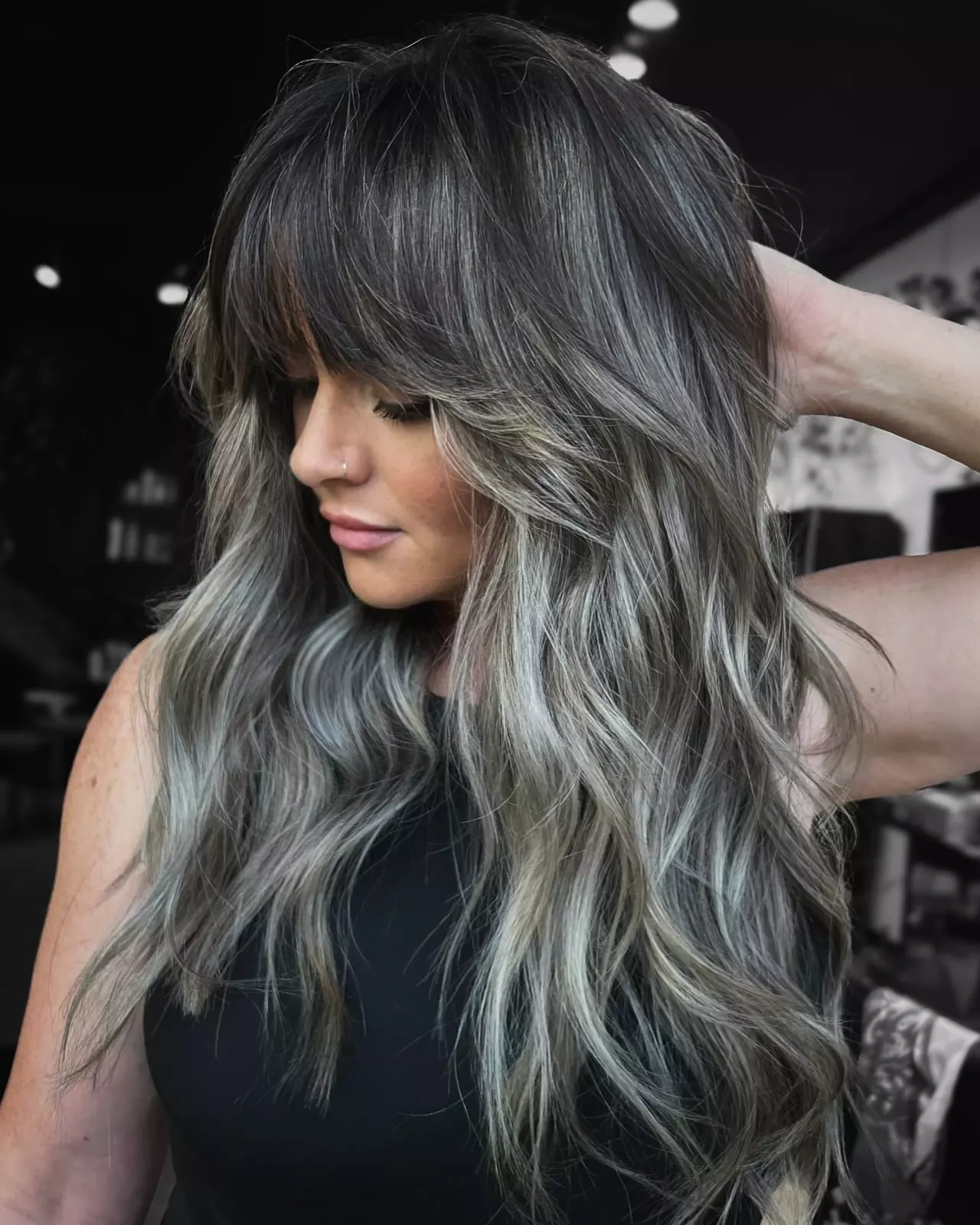
Long layers and curtain bangs need a trim rhythm. The layers frame the face, and the bangs part at the center, sweeping to each side. Thick, wavy texture holds the shape without product. The dark brown base transitions into ash blonde highlights, which mimics natural gray growth without the grow-out line.
Here is the reality: curtain bangs require a quick dry every morning. A diffuser on low heat sets the wave without flattening the bangs. Skip it if you prefer short hair or no bangs.
Updo with gray blending and blonde highlights
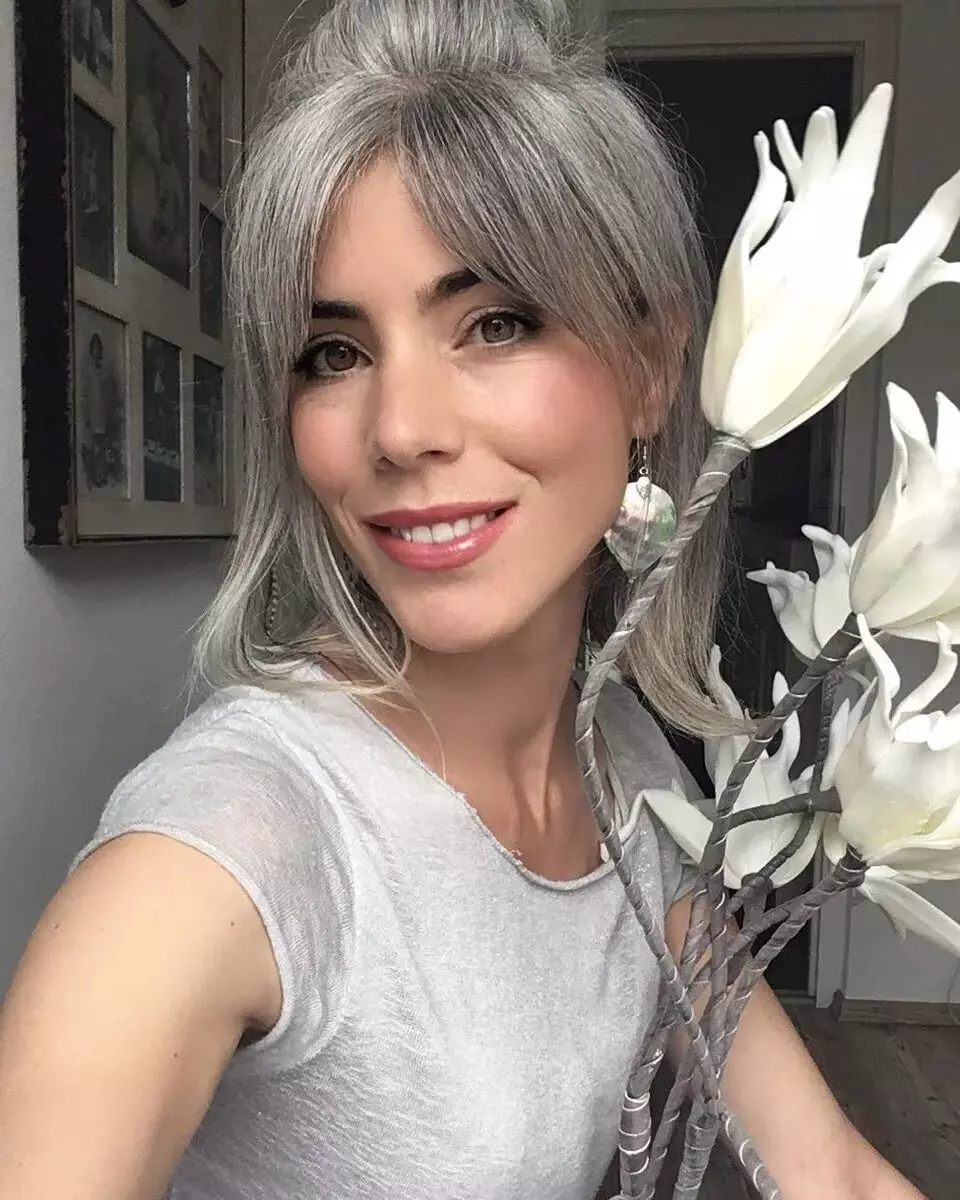
Curtain bangs frame the face while the rest of the hair twists into a structured updo. Layers keep the shape from looking heavy, and the wavy texture adds grip for pinning. Ask your stylist for: updo with gray and blonde highlights, textured finish. This works best on hair that reaches at least the collarbone. A texturizing spray before styling gives the pins something to hold.
Layers with side-swept bangs and dark brown to ash, close-up take
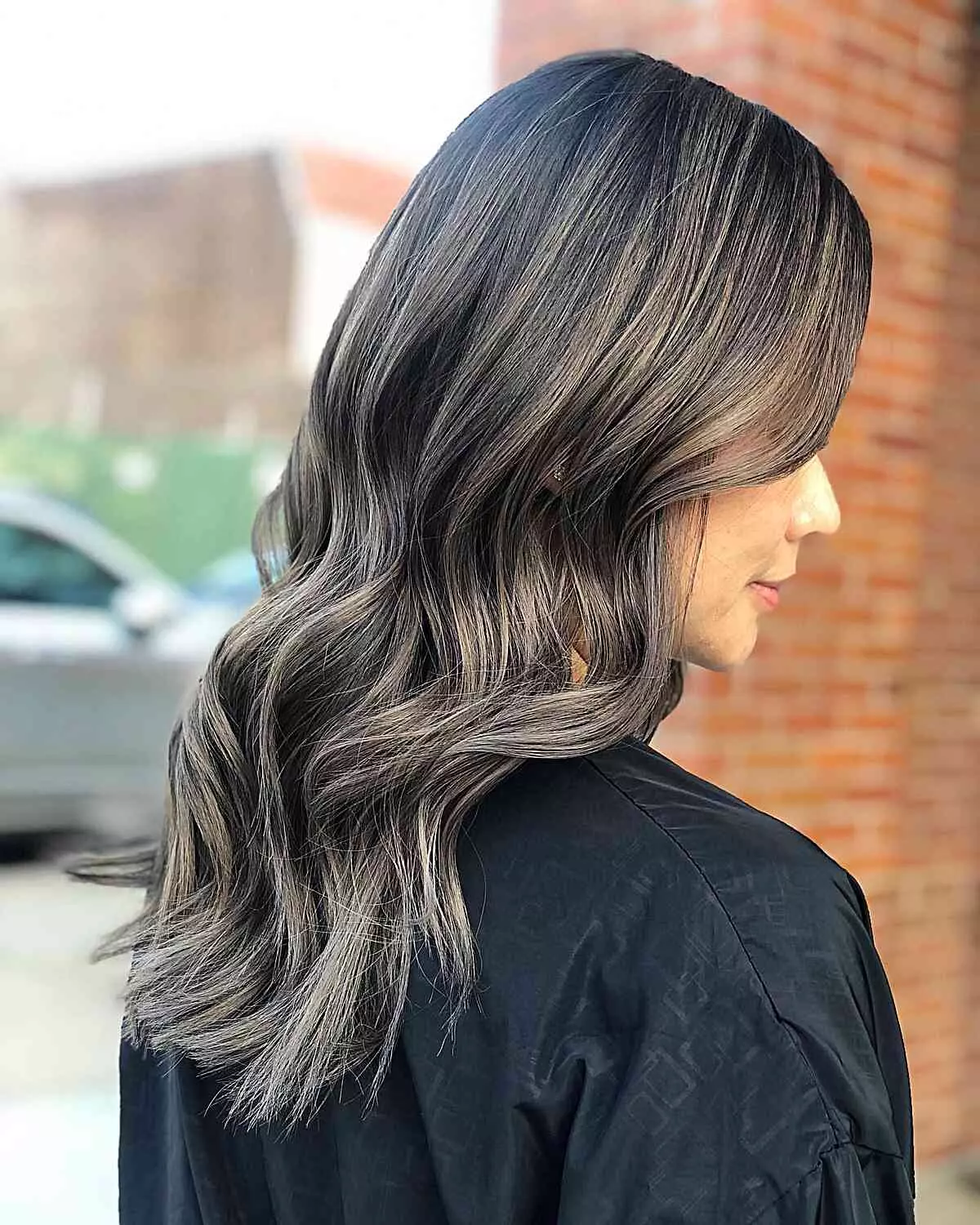
Side-swept bangs change the whole feel compared to a middle part. Here, fine hair gets a boost from layers cut through the length, and the dark brown base shifts to ash blonde highlights near the ends. The wavy blowout keeps the blend soft. It suits oval and heart face shapes best.
Face-framing pieces soften gray and black blend
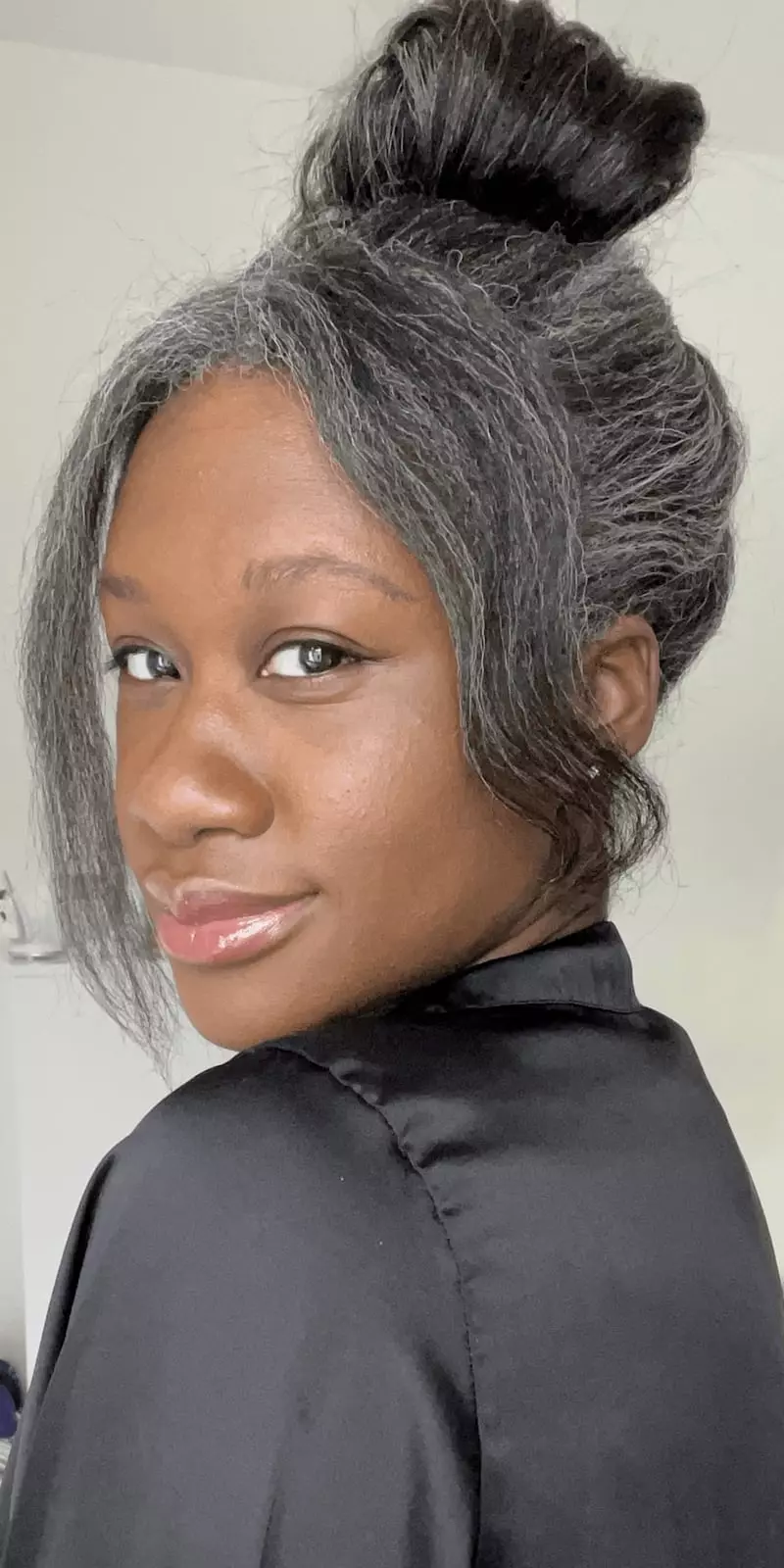
An updo with face-framing pieces left out does two things at once. It keeps the gray and black blend visible while softening the line around the jaw. Ask your stylist for: updo with gray and black blend, face-framing pieces. Thick, wavy texture holds the shape well. The catch: this style needs enough length to pull up, so hair below the collarbone is ideal.
Waves with brown and gray highlights
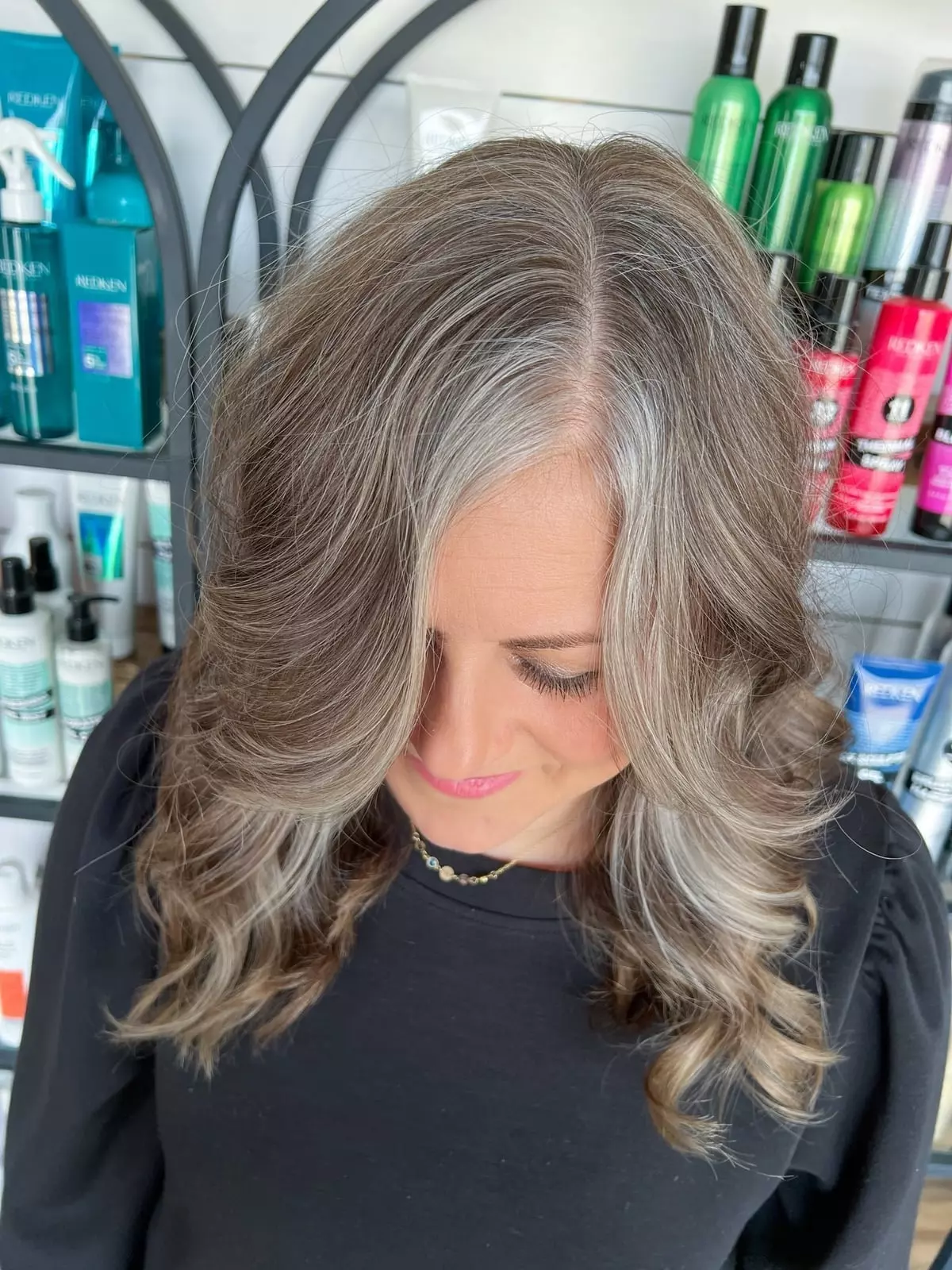
Brown hair with gray highlights looks intentional when the base is warm enough to contrast. Fine, wavy texture carries the blend well, and a middle part shows both tones evenly. The layers prevent the fine hair from falling flat. A curling iron or diffuser sets the wave pattern.
Air-dried waves with gray and blonde highlights
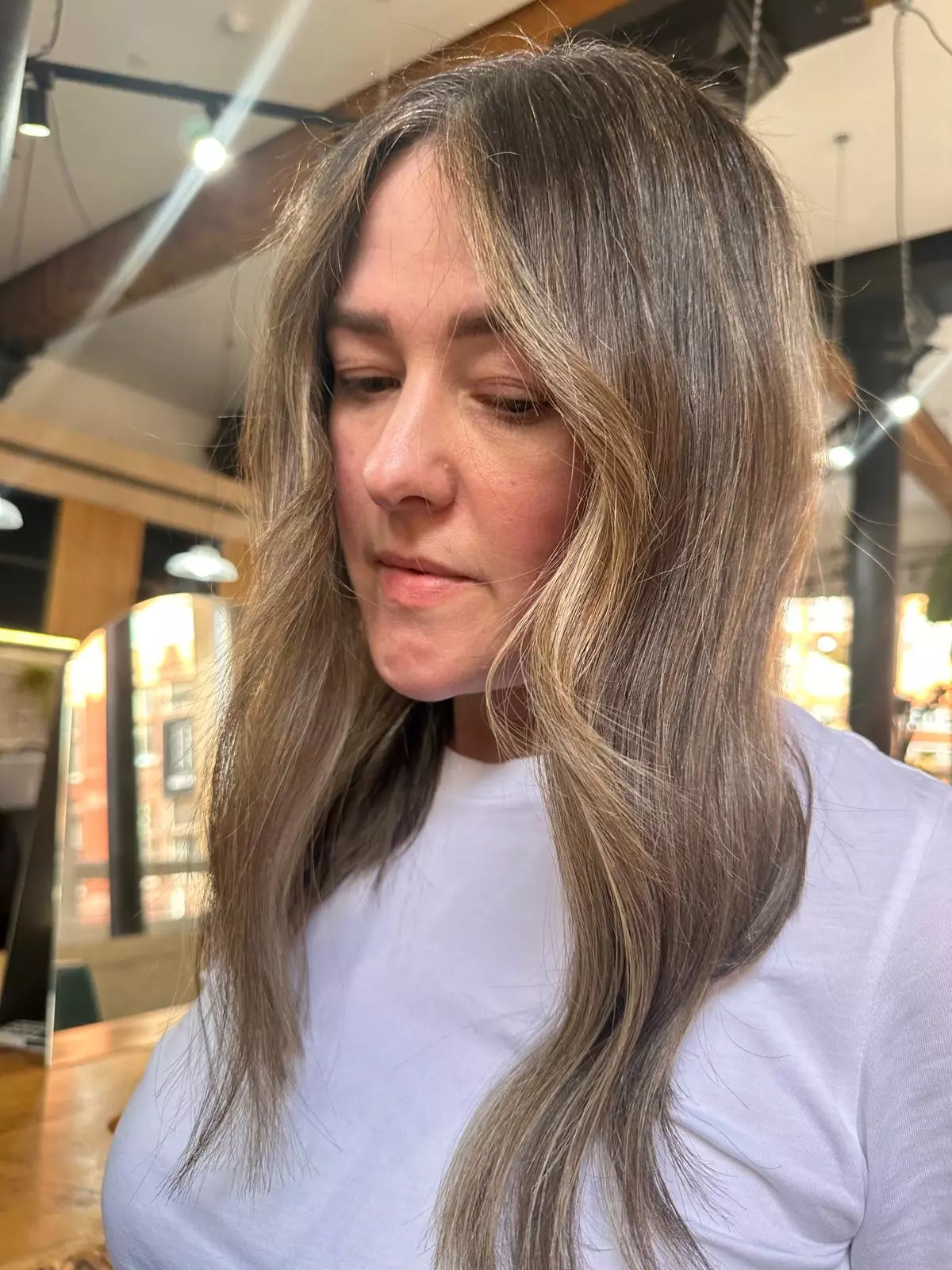
Air-dried waves skip the heat and still show off the gray and blonde mix. A side part adds asymmetry, and the fine texture dries faster than thick hair. Ask your colorist for: air-dried waves with gray and blonde highlights, side part. A texturizing cream or spray encourages the wave without crunch.
Smooth gray blending with blonde base and highlights
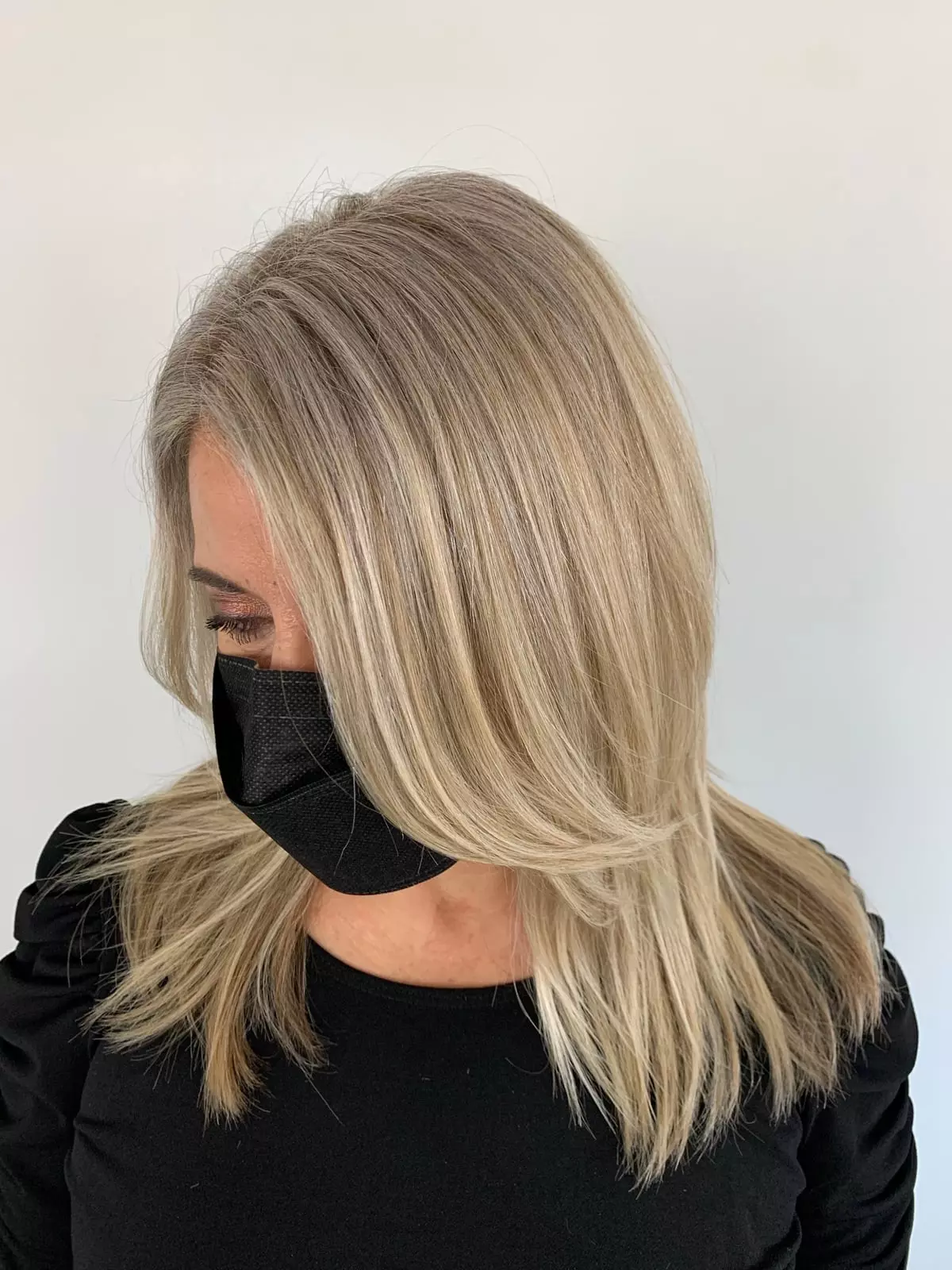
Fine, wavy hair needs a cut that works with its natural texture. Subtle layers give the shape some movement while keeping the length intact, and the side part adds volume. The smooth blend of gray tones into a blonde base with highlights makes this design look neat.
Easy ash blonde with gray highlights
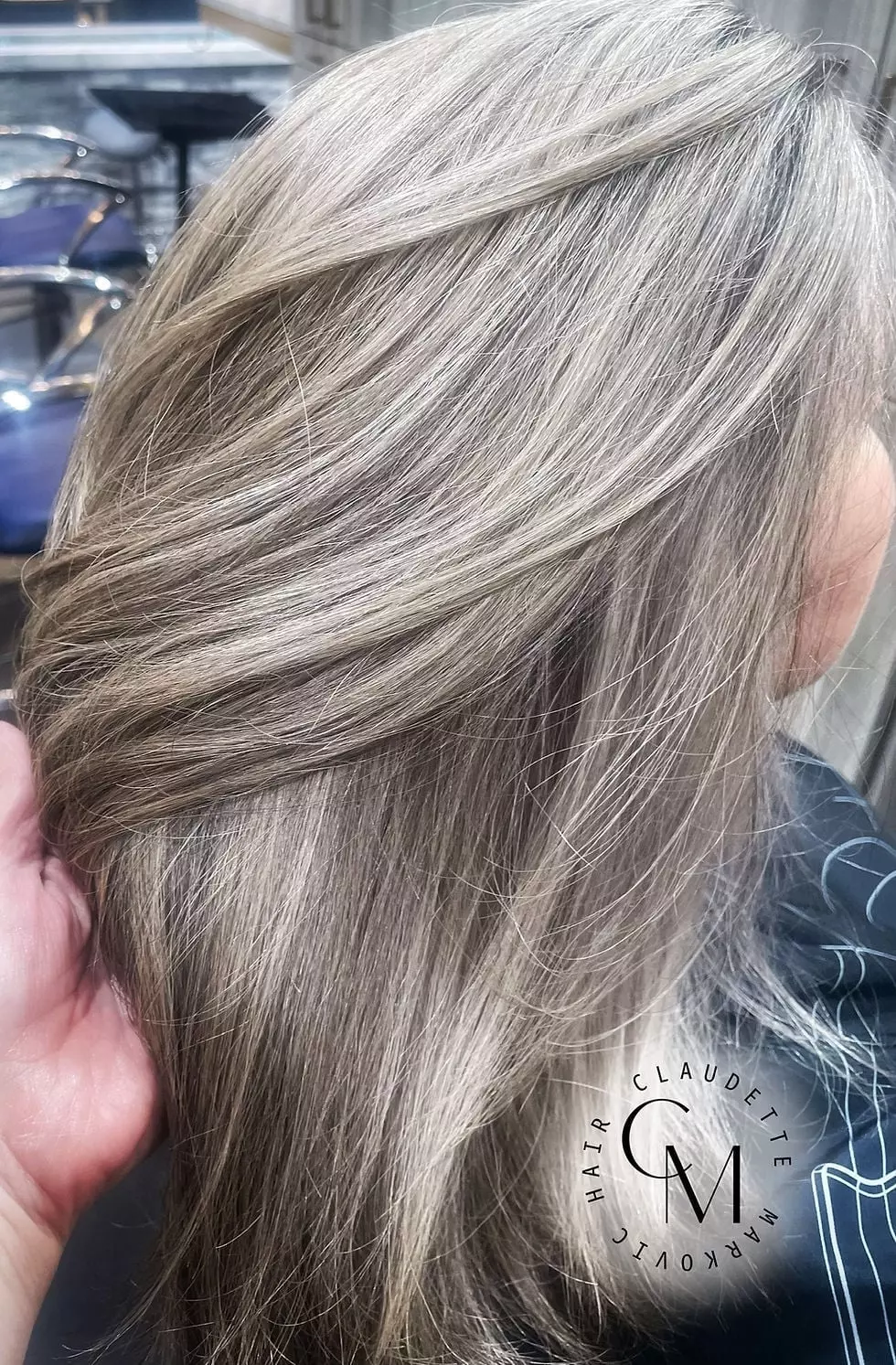
This is not a platinum situation. The ash blonde base keeps things cool-toned, while the gray highlights look grown-in rather than applied. Fine, wavy hair benefits from the soft layers that prevent the shape from falling flat, and the side part breaks up the symmetry. Air drying is the move here. A blowout would make it too neat.
A salon visit is the right call for this one. Getting the gray highlights to sit naturally within an ash blonde base requires a colorist who understands tone placement. The layers are straightforward enough for any stylist, but the color blending is where the skill shows.
Side parting frames face with gray blonde highlights
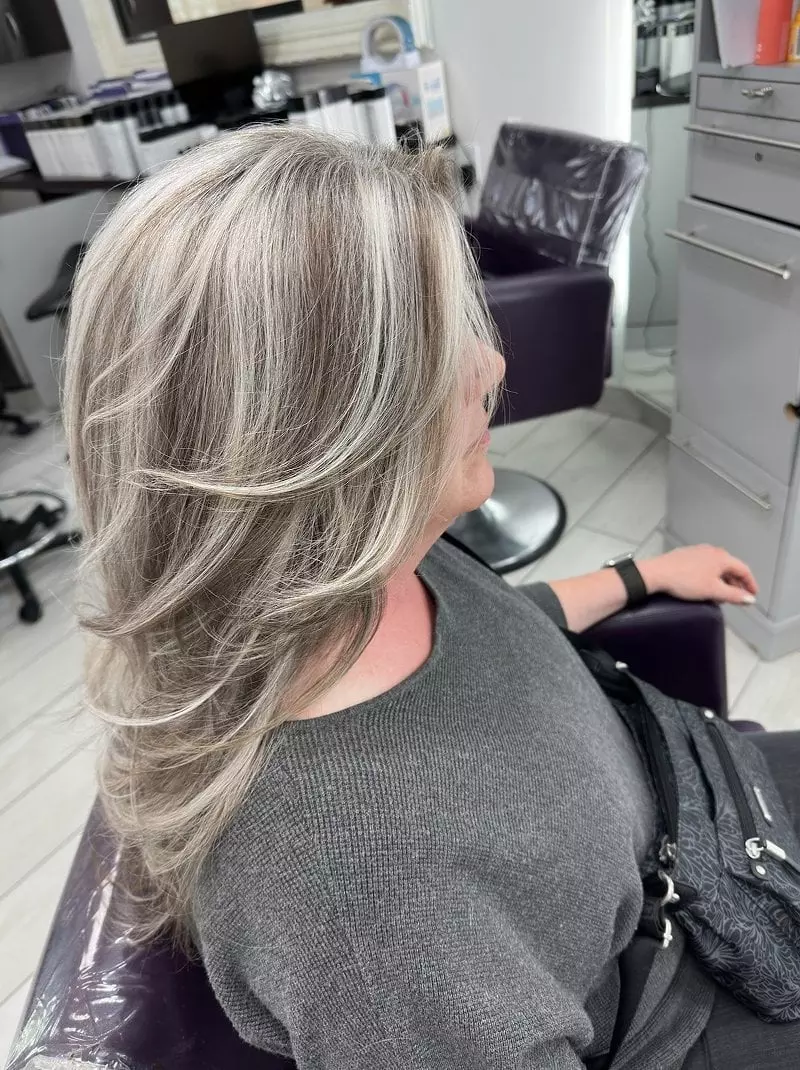
This cut creates softness around the jaw without losing length. The layered cut creates face-framing pieces that blend gray and blonde highlights into a cohesive finish. A smooth blowout adds polish, making it suitable for work or events. A blunt cut is not the goal here. The layers define the look. Oval and heart face shapes benefit from the side parting and the way the pieces fall forward.
Layers with ash brown base and ash blonde highlights
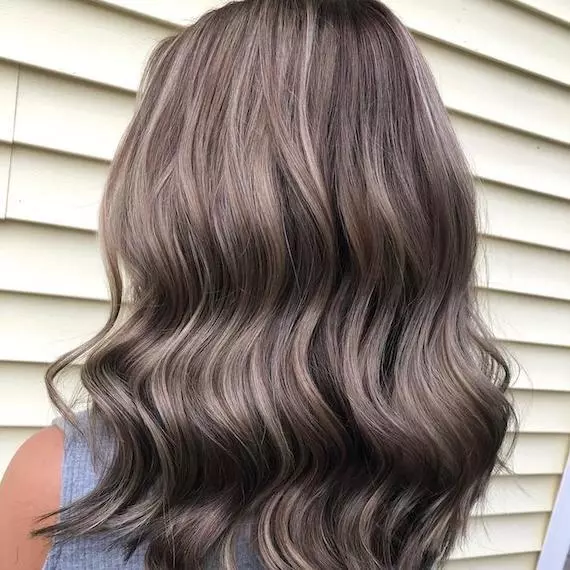
Thick, wavy hair is the ideal starting point for this design. The ash brown base grounds the color, while ash blonde highlights are woven through the layers to create contrast without a harsh line. The middle part keeps the shape balanced. The drawback: thick hair with layers can feel heavy if the stylist takes too much weight out. Ask your stylist for: layers, ash brown base with ash blonde highlights.
Dark blonde with ash blonde highlights, wavy
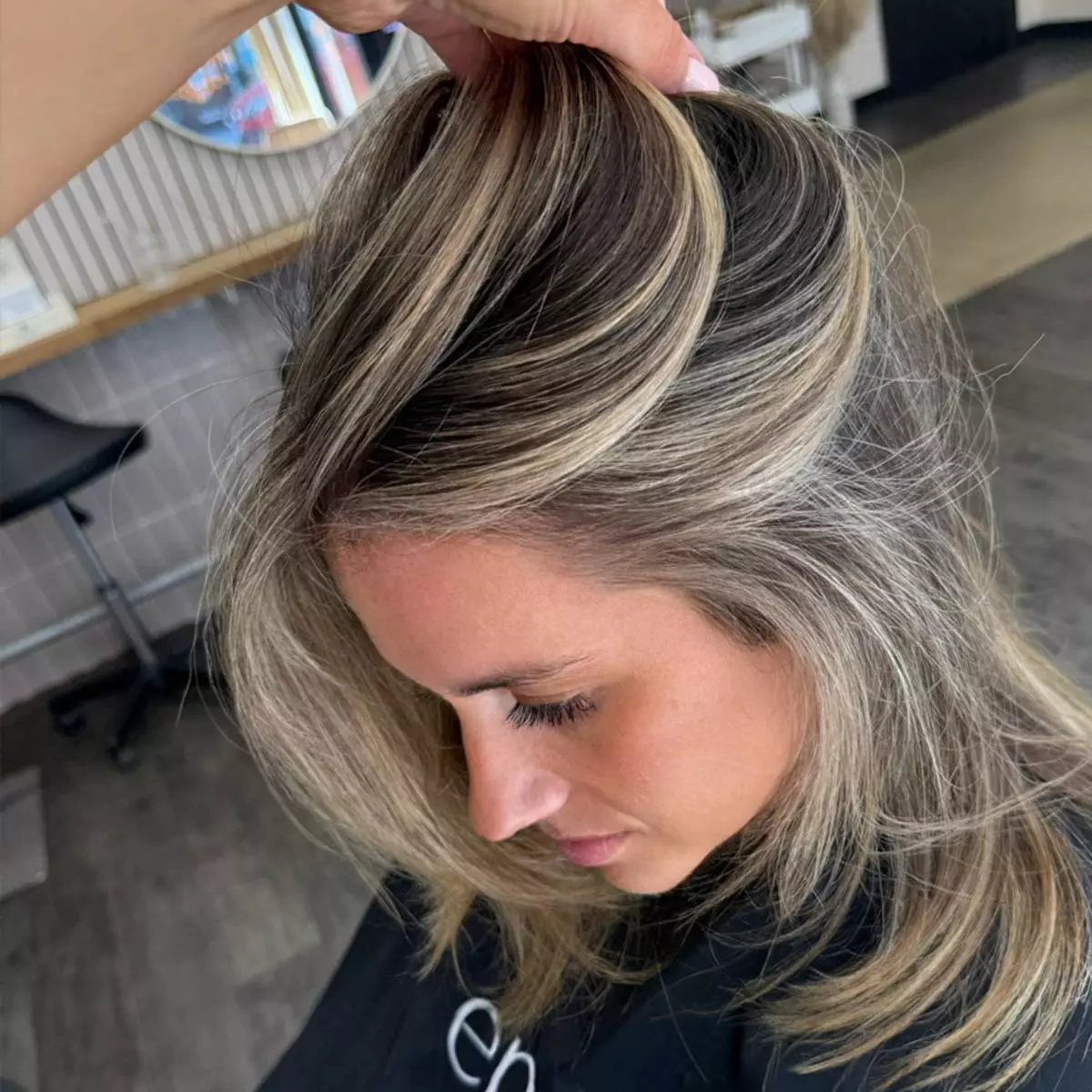
Air-dried texture and fine, wavy hair pair naturally. The dark blonde base gives the color depth, while ash blonde highlights keep it from looking flat. A side parting adds lift at the root. This kind of blended color wears well because the highlights are not chunky. They fade into the base gradually. The catch: fine hair can look stringy if the layers are cut too aggressively, so ask for soft, subtle layers.
Long layers with dark brown and ash blonde highlights, thick
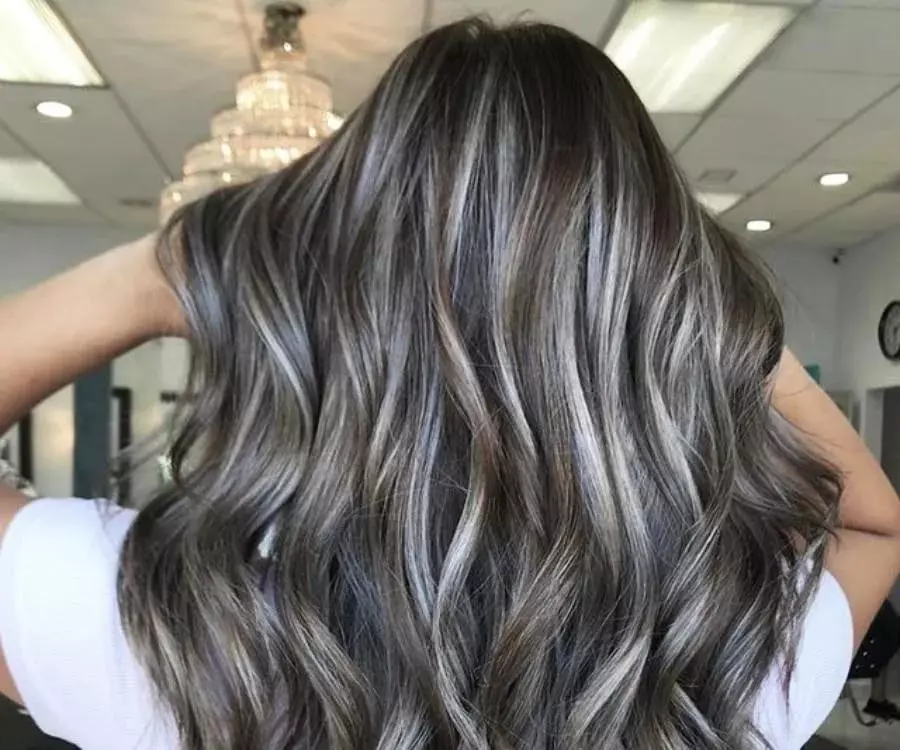
Another long layered cut works differently when the base is this dark. The dark brown base runs through the mid-back length, with ash blonde highlights woven in for contrast. No bangs here, just layers that start below the jaw and stack through the ends. The texture is thick, so the loose waves hold shape without product fighting gravity. This is a salon finish that asks for a curling iron at home.
Long layers ash blonde highlights read best on hair that starts at the collarbone. Oval and long face shapes get the elongation they need from the length. Skip it if your hair is very fine. The weight of thick hair carries this cut, and fine strands may not fill the layers the same way.
Middle part shows dark gray silver highlight blend
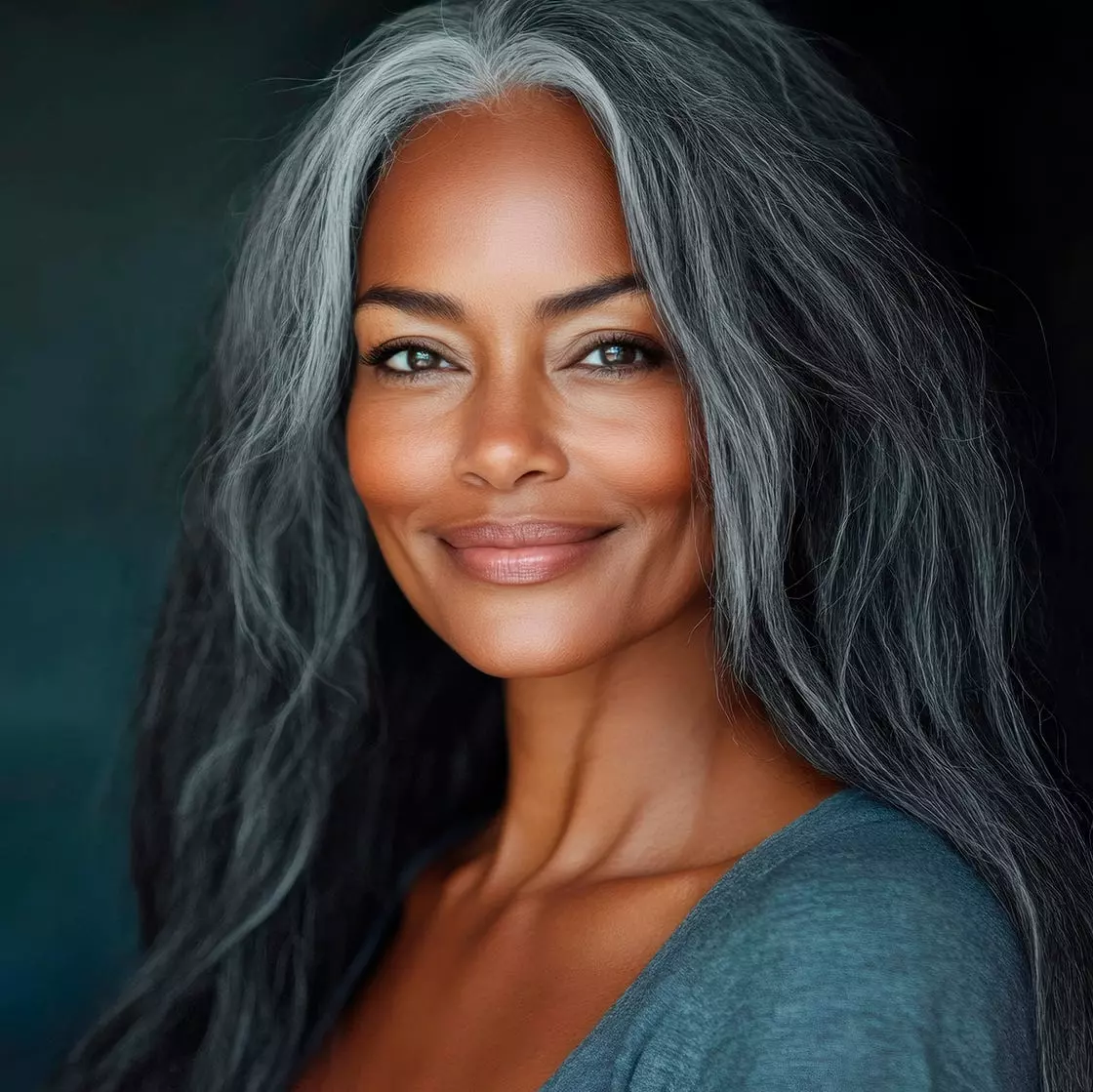
A practical rule for gray blending: a middle part only works when the color is balanced on both sides. Here, the dark gray base meets silver highlights that run through long layers at mid-back length. The texture is wavy and thick, air-dried for a finish that looks untouched. No bangs, so the parting lands cleanly at the center of the forehead. The silver streaks are what catch the eye. They sit against the dark gray without harsh lines. This is a salon-leaning color job that requires a skilled hand to place the highlights evenly. Oval and long face shapes suit the symmetry of the part.
Long thick hair with dark gray to silver balayage
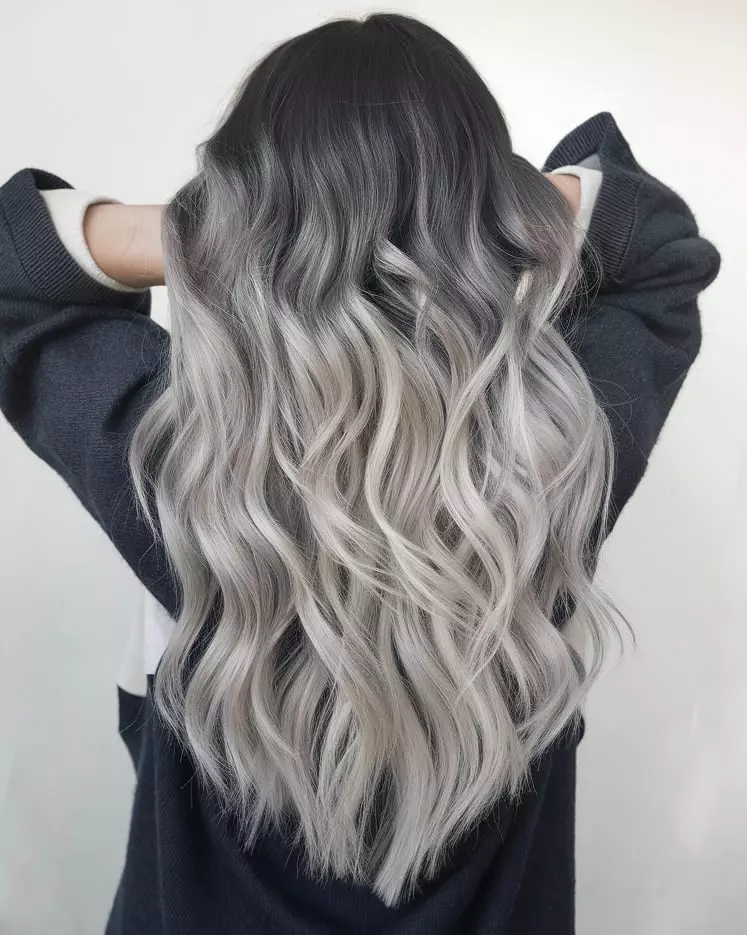
This one is a commitment. The dark gray to silver balayage runs from root to tip on long, thick hair at mid-back length. Layers cut through the density, letting the wave pattern show without bulk. The texture is wavy and thick, air-dried for a relaxed finish. No bangs, so the face is open. This works well with oval and long face shapes. The length pulls the eye down. A uniform color is not the goal here. The drawback: the silver ends need regular toning to stay bright. The grow-out is forgiving since the dark gray root is part of the design.
Waves with dark gray to silver balayage
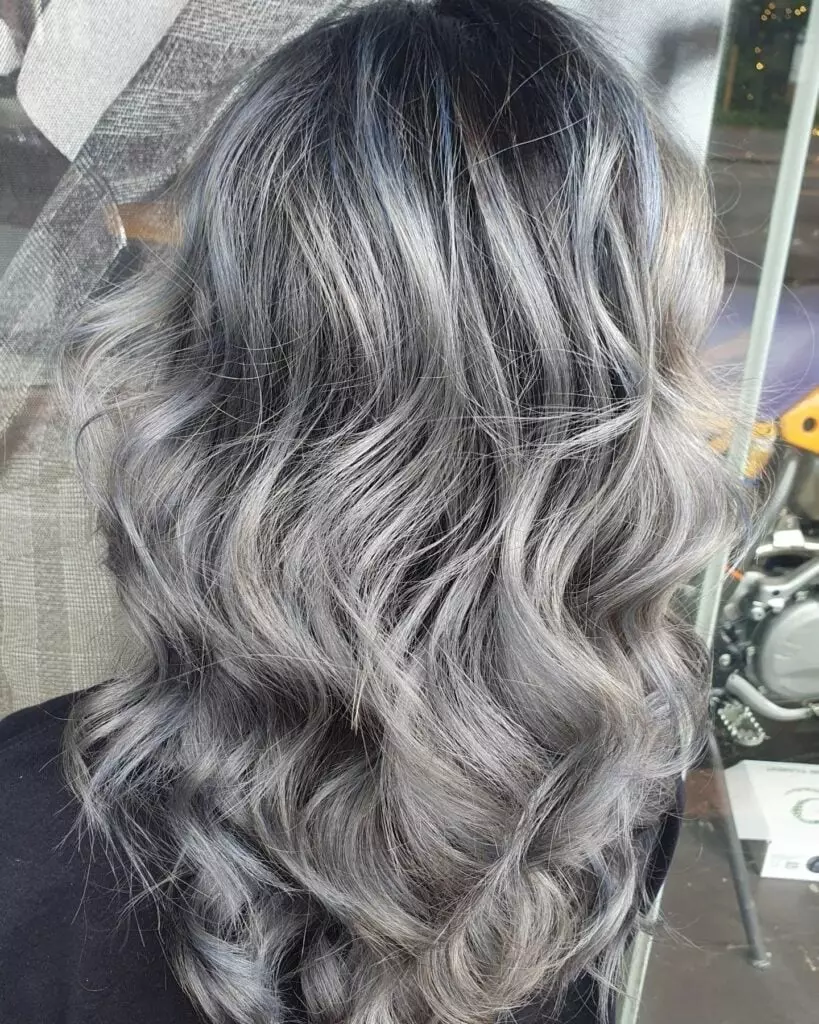
Tell your colorist: layers with dark gray to silver balayage. The dark gray roots transition into silver ends through a series of soft waves. The texture is wavy and fine, so the balayage reads clearly without being weighed down. No bangs, and the middle part lets the color fall evenly on both sides. This is a salon-leaning look that needs a curling iron to recreate the wave pattern at home. Oval and long face shapes benefit from the length and the vertical lines the waves create. The layers are essential to the effect.
Layers with dark brown base and ash blonde, everyday version
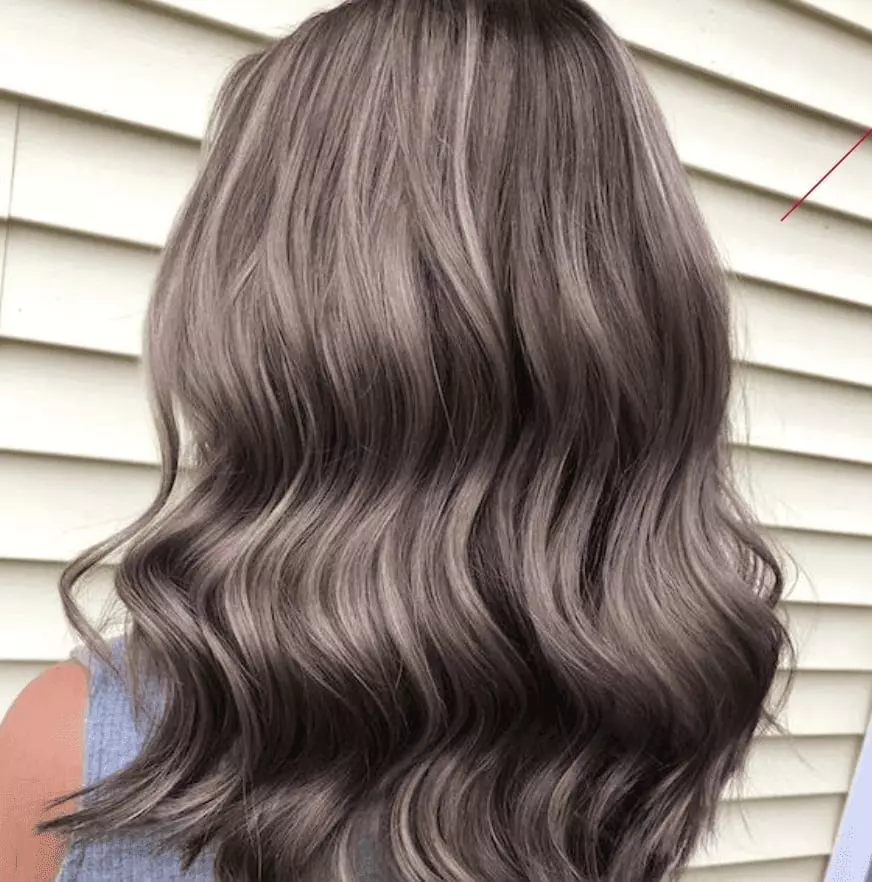
This is the everyday version of the dark brown and ash blonde combination. The layers cut through thick hair, creating movement without losing density. No bangs, so the face is clear. The ash blonde highlights sit against the dark brown base, giving contrast that reads even in low light. The texture is thick, styled with a round brush and blow dryer for soft waves that hold through the day. Oval and long face shapes suit the length and the vertical fall of the waves. It works best with a dark brown base as the anchor.
Wavy fine hair with gray and blonde highlights
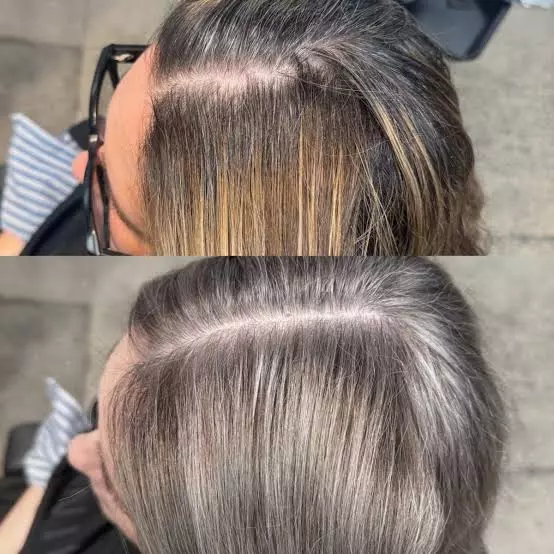
Fine, wavy hair needs a cut that does not weigh it down. Layers give the shape lift without losing length. A middle parting keeps the face open and the blended color visible. Tell your stylist: layered cut, gray and blonde highlights, air-dried finish. The gray with blonde highlights runs through the layers, so each wave catches a different tone. Air drying works best here. A texturizing spray adds grip without heat. Skip it if you prefer straight hair or very thick hair. The fine texture makes the color shift read clearly, not muddy.
Wavy blowout with blended gray tones and silver highlights
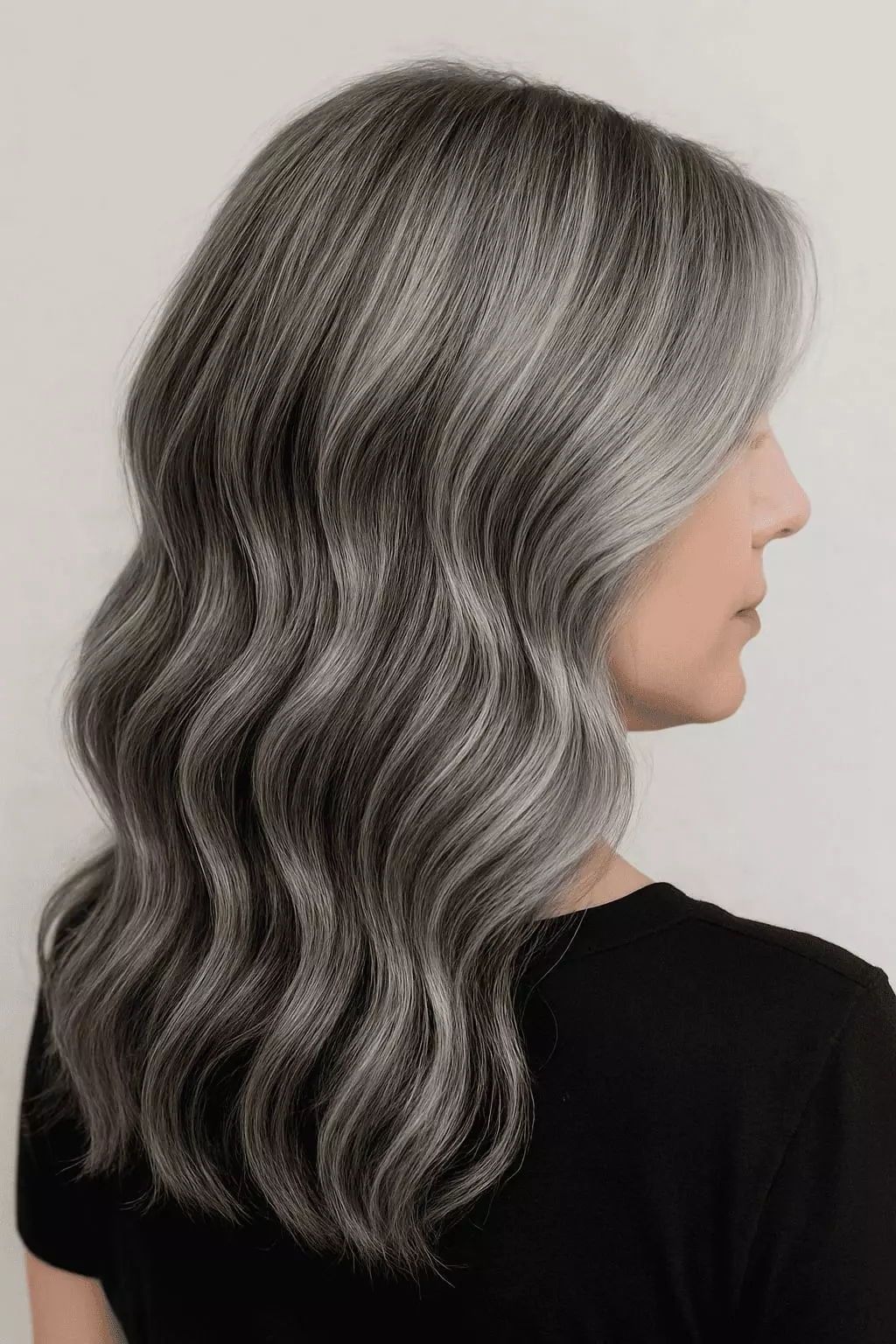
A wavy blowout gives gray blending a neat edge. The layers are cut to hold a soft wave, and the side parting directs the silver highlights forward where they catch the light. Fine hair benefits from the volume a round brush and blow dryer create. The blended gray tones look intentional, not accidental. The silver highlights stay subtle. They lift the gray without turning it metallic.
Loose waves with dark gray and silver highlights
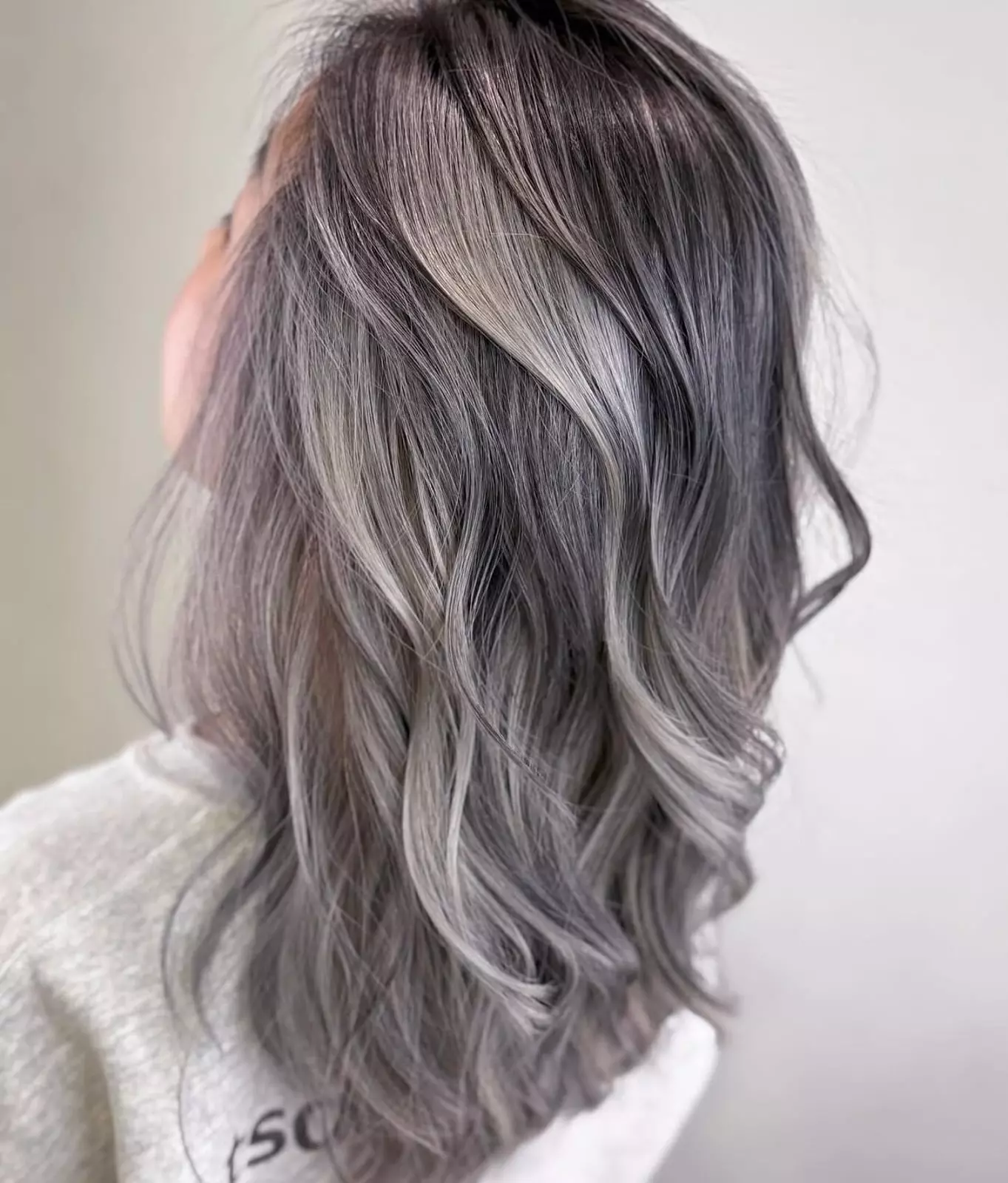
Loose waves soften the contrast between dark gray and silver highlights. The middle parting lets the color transition show evenly on both sides. Fine hair needs those soft layers to keep the wave pattern from falling flat. Ask your stylist for: soft layers, dark gray with silver highlights, loose waves. The dark gray base grounds the silver so the blend looks depth, not just streaks. The catch: this length and texture need a curling iron or wand to hold the wave. Skip it if you prefer short hair or a blunt cut.
Final Thoughts
Pick the style that matches your mirror time and your patience for toner.
- Fine hair: stacked layers or a blunt bob add density.
- Ten minutes in the morning: air-dried waves with a side part.
- Cool base that pulls brassy: purple shampoo once a week.
- Salon every eight weeks: a gloss keeps the blend smooth.
Embrace your gray with a cut that makes it look intentional.