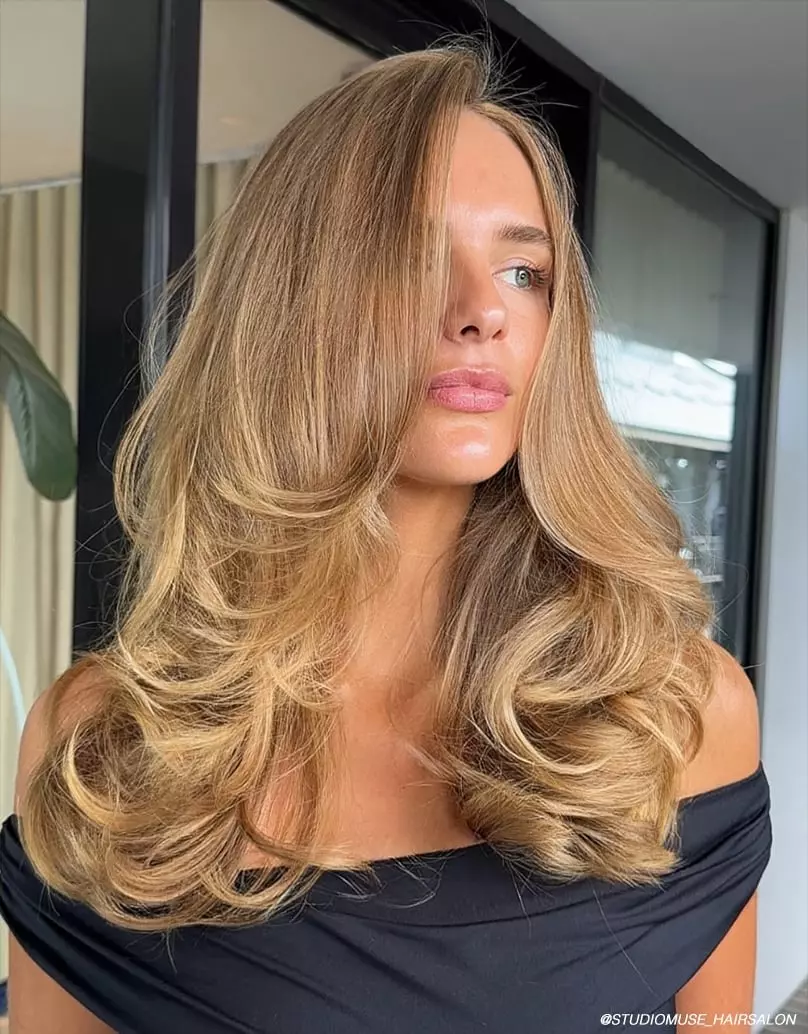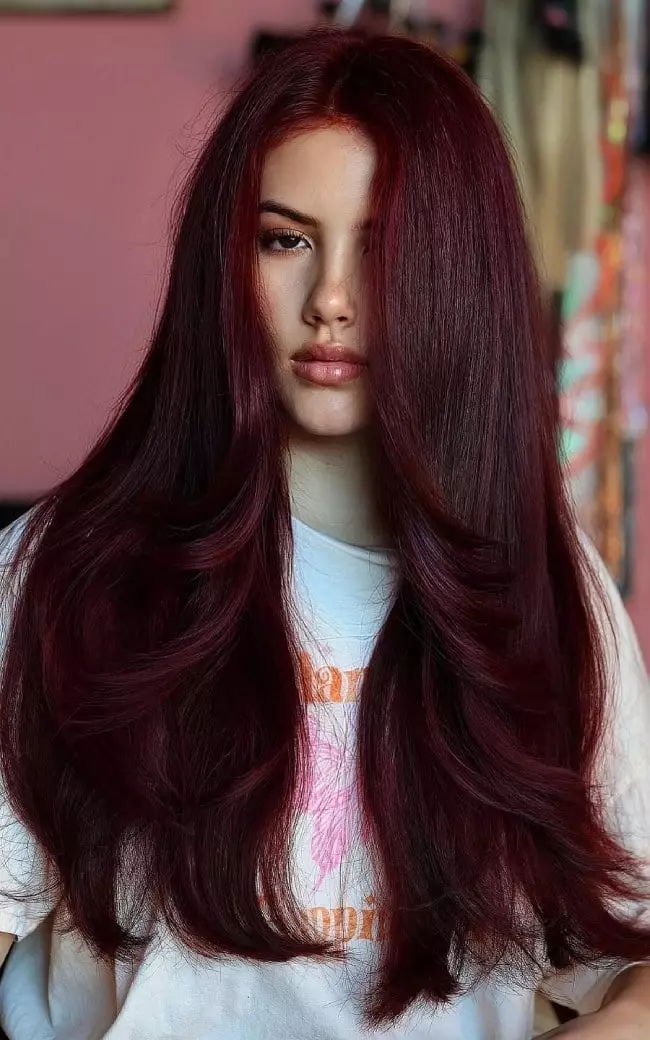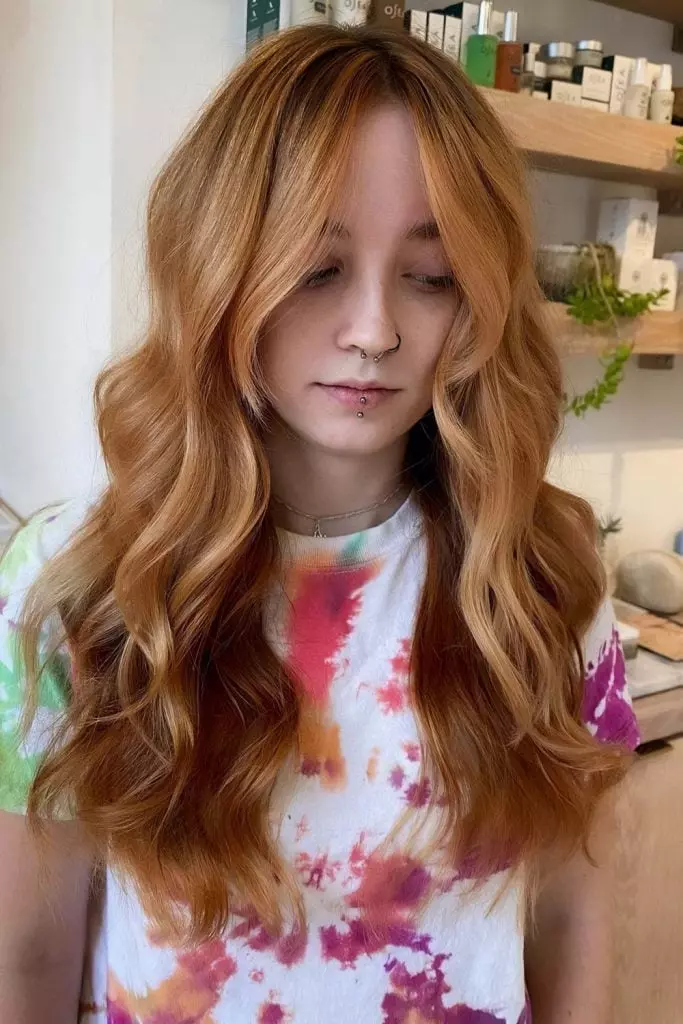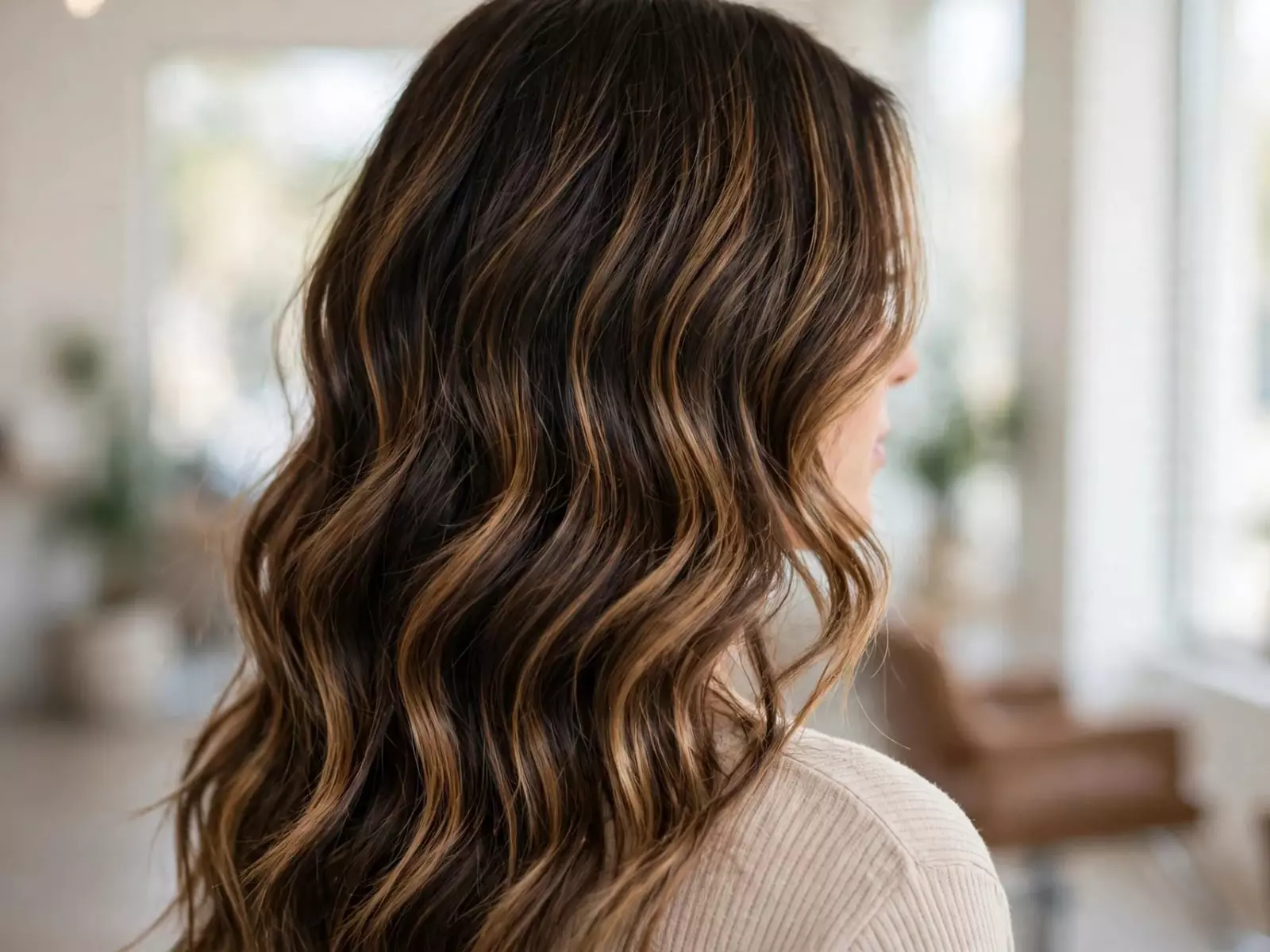
The consultation sheet says brown balayage, but the Pinterest board has forty pins that all look different. A warm caramel that fades gently or a cooler ash that grows out clean, the choice changes how often you reach for a purple shampoo. 2027 is the year of lived-in color that moves with you, not against you.
Which is why Elegant Brown Balayage Ideas 2027 fill so many saved boards: 27 options that span low-contrast blends for fine hair, high-contrast ash streaks for thick waves, and face-framing caramel pieces that soften a square jaw. The struggle is picking one that matches your natural base and your tolerance for root grow-out. This collection narrows it down.
Dark brown base with soft caramel balayage highlights
Caramel sweeping through a dark brown base looks one continuous piece, not separate highlights. The balayage technique places color where light naturally hits, so the caramel stays soft rather than lined up. Hair that is thick and wavy, starting at the shoulder, gives the blend room to breathe. Oval and long face shapes benefit from the even distribution of tone. This style requires salon visits every eight to ten weeks for a trim to maintain the shape of the layers and the health of the ends. Ask your colorist for: dark brown base, soft caramel balayage.
Contrast with ash blonde balayage on dark brown
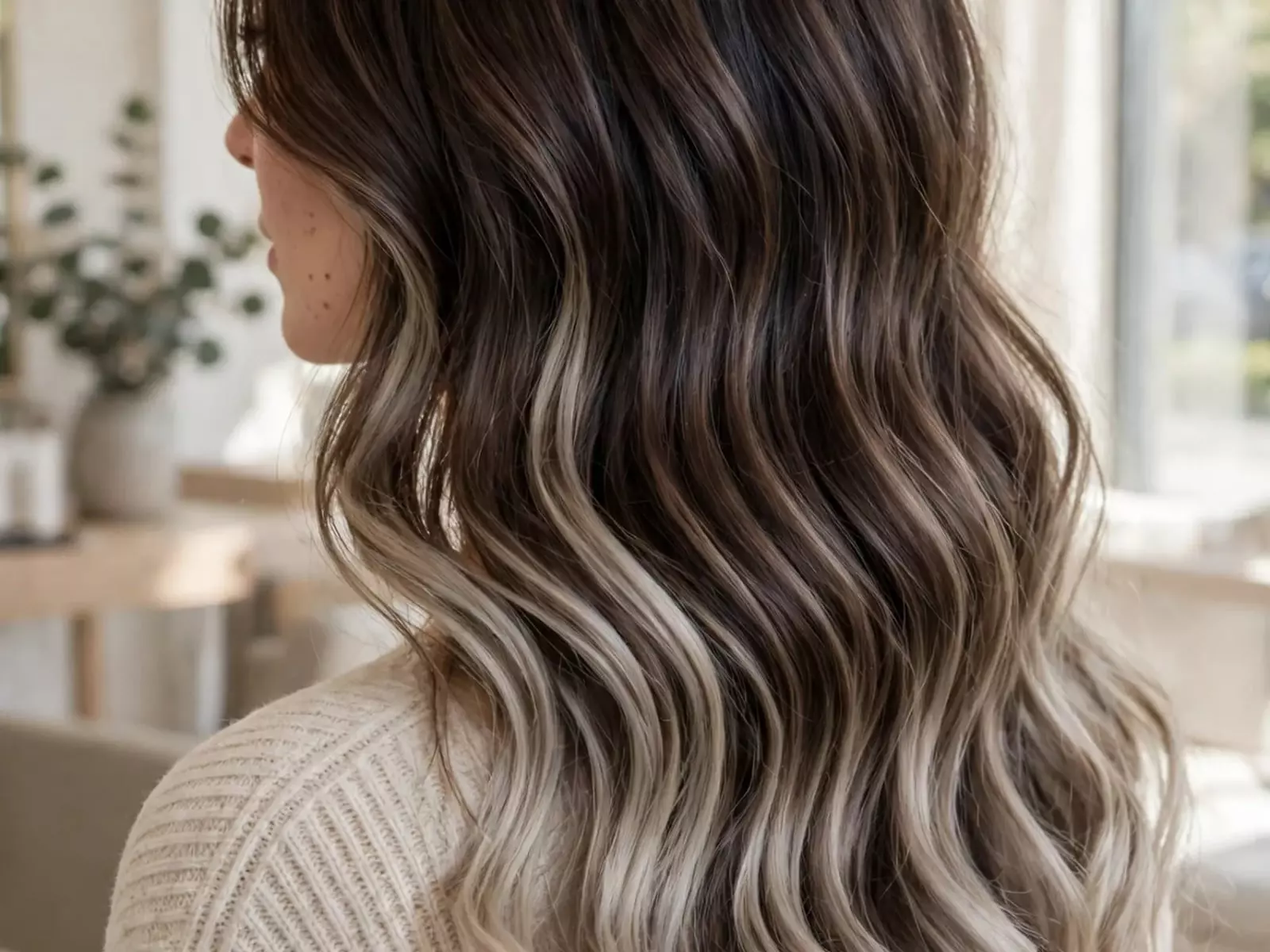
Where caramel warms, ash blonde cools. That is the difference between this and the previous look. The ash tone sits against the dark brown base without competing, creating a deliberate contrast. Thick, wavy hair at shoulder length or longer holds the separation well, and the middle parting keeps both sides balanced. Most face shapes work here. Fine hair may not hold the wavy style well. To maintain the ash tone, use a purple shampoo once a week.
Medium brown with subtle caramel balayage
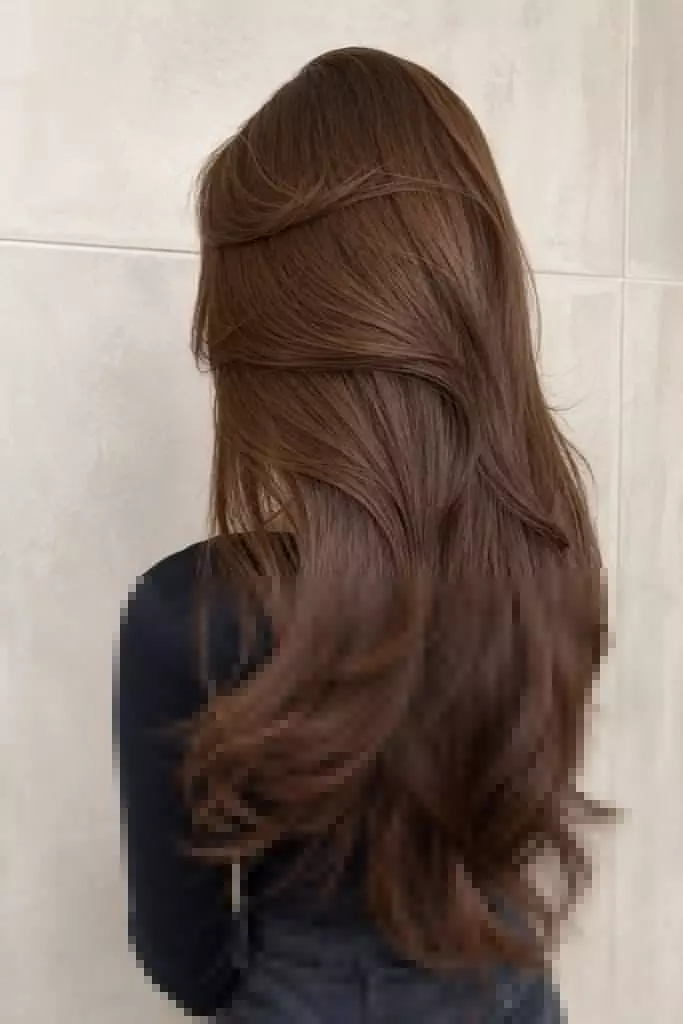
Fine, wavy hair at shoulder length gets a soft lift without the contrast going hard. The medium brown base sits close to the caramel, so the balayage is a gentle shift rather than a jump. That subtlety flatters round and heart faces by keeping the eye moving along the layers. Coarse hair may not achieve this soft texture. Tell your colorist: medium brown base, subtle caramel balayage, layered cut. A trim every six to eight weeks keeps the layered shape defined.
Two tones: dark brown with ash blonde balayage
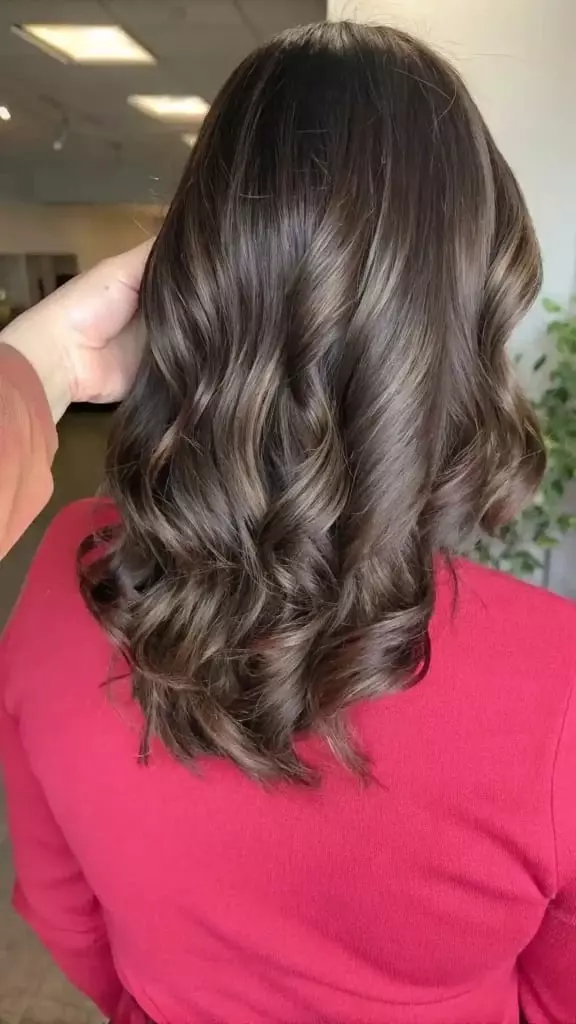
Two distinct tones, one dark brown base and one ash blonde balayage, sit side by side without blending into each other. The back view shows how the balayage technique places the lighter pieces lower, so the dark base stays dominant at the crown. Hair that is thick and wavy at shoulder length gives the layers enough weight to hold the separation. Oval and square face shapes suit the clean line of the middle part. Fine hair may lack the density for this level of dimension.
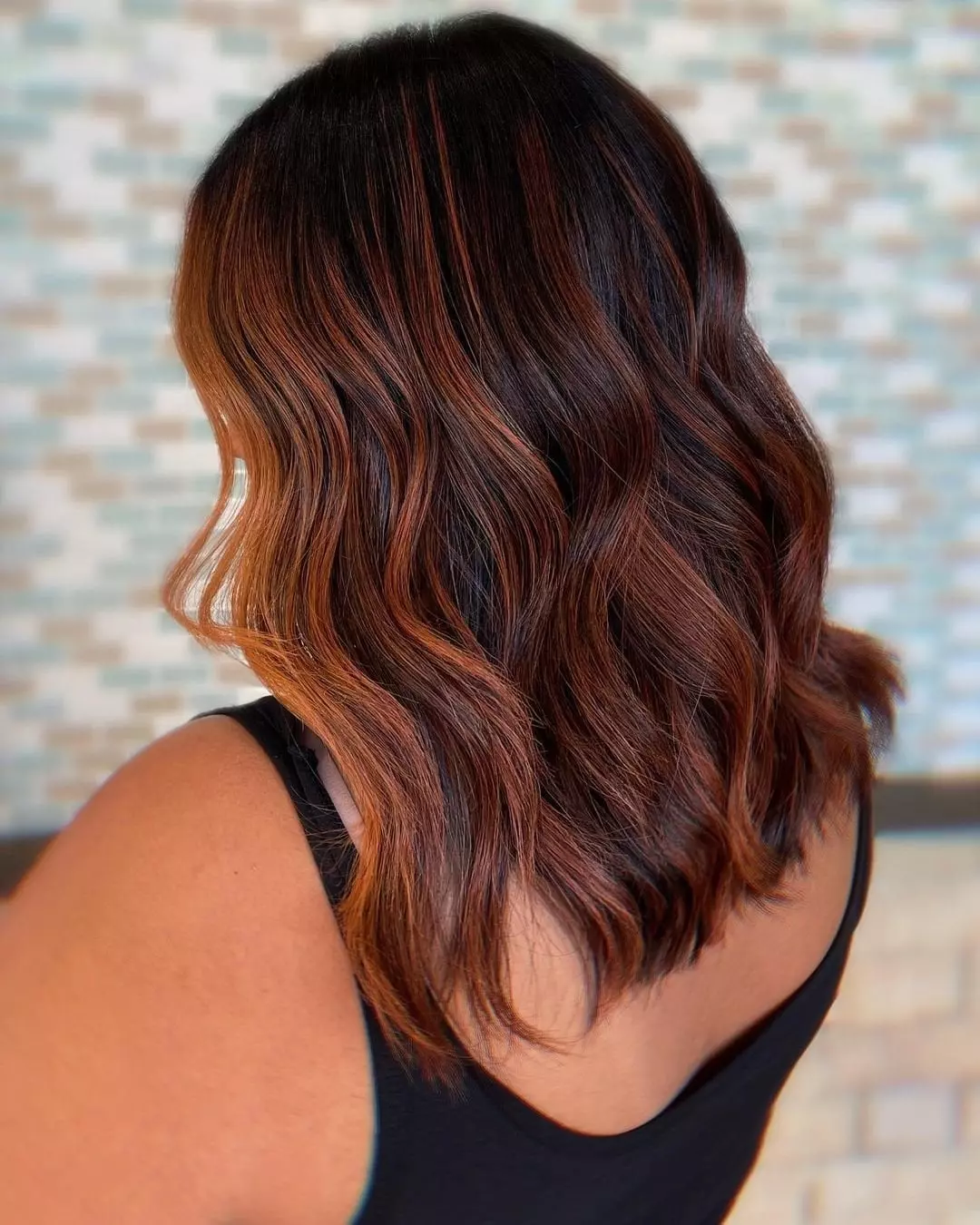
Caramel highlights on a dark brown base with wavy blowout
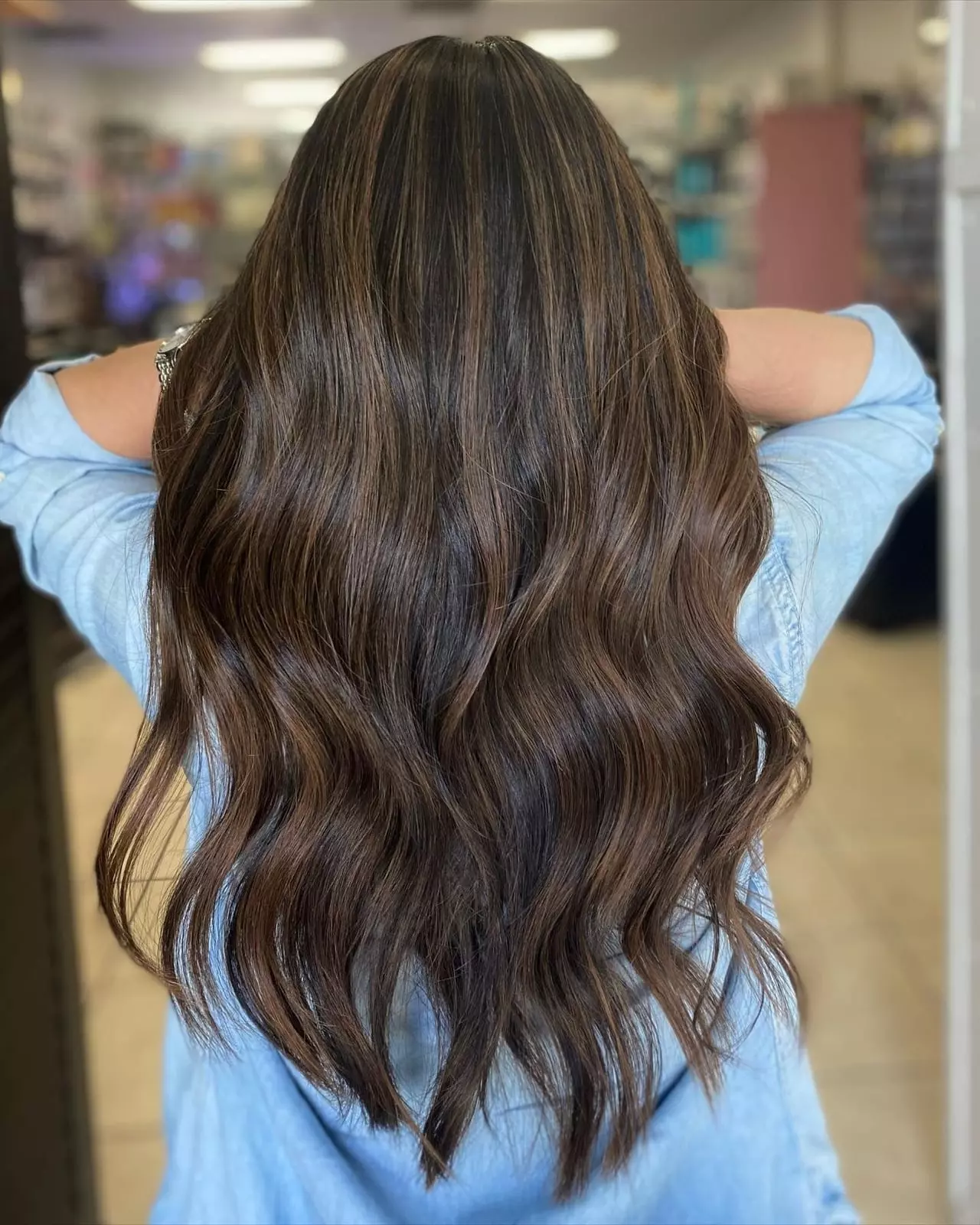
Fall and winter pull warmth from a caramel balayage on dark brown. The back view shows the color concentrated on the lower half, so the base stays rich near the roots. Hair that is thick and wavy at shoulder length or longer gets the full effect of the soft wavy layers. Most face shapes work here. Skip it if you have fine hair that may not achieve this full effect. Tell your colorist: dark brown base, caramel balayage highlights, wavy layers. Apply a texturizing spray to enhance the waves and volume.
Subtle lighter brown balayage on dark brown hair
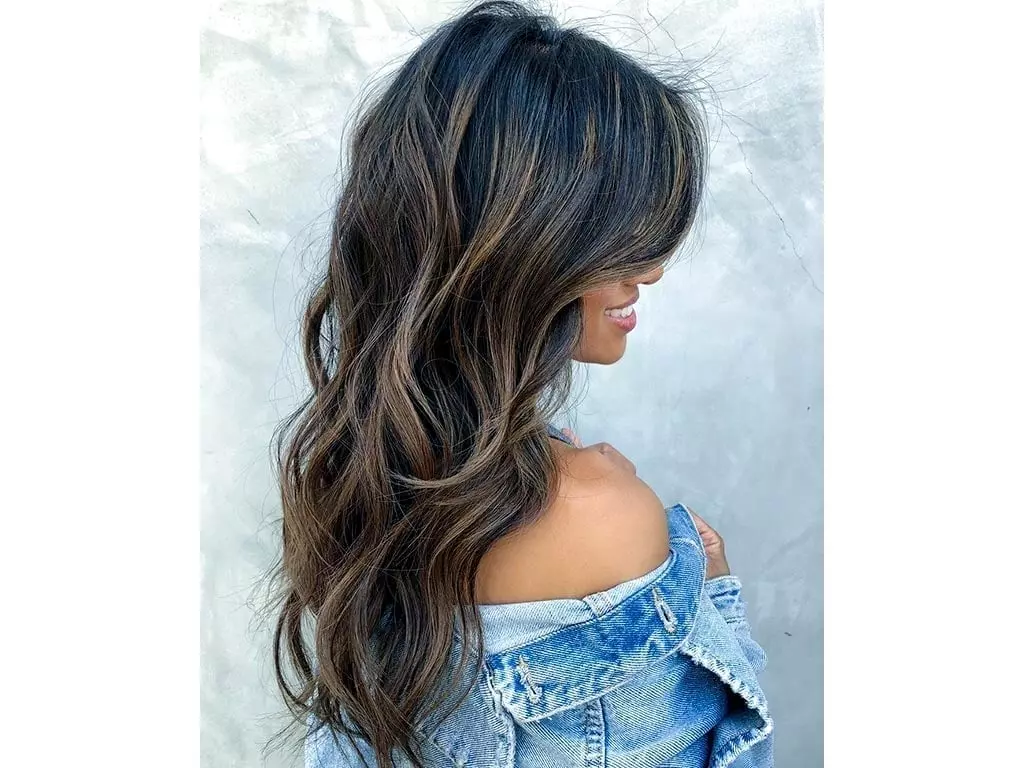
Not every balayage needs high contrast. This one keeps the contrast low, with a dark brown base and lighter brown pieces that blend naturally. The wavy texture helps the color look natural, not applied. Request: dark brown base, subtle lighter brown balayage. A trim every ten weeks keeps the shape clean, but the real work is the toning: a purple shampoo once a week stops the lighter brown from turning brassy.
Balayage transition from dark brown to blonde
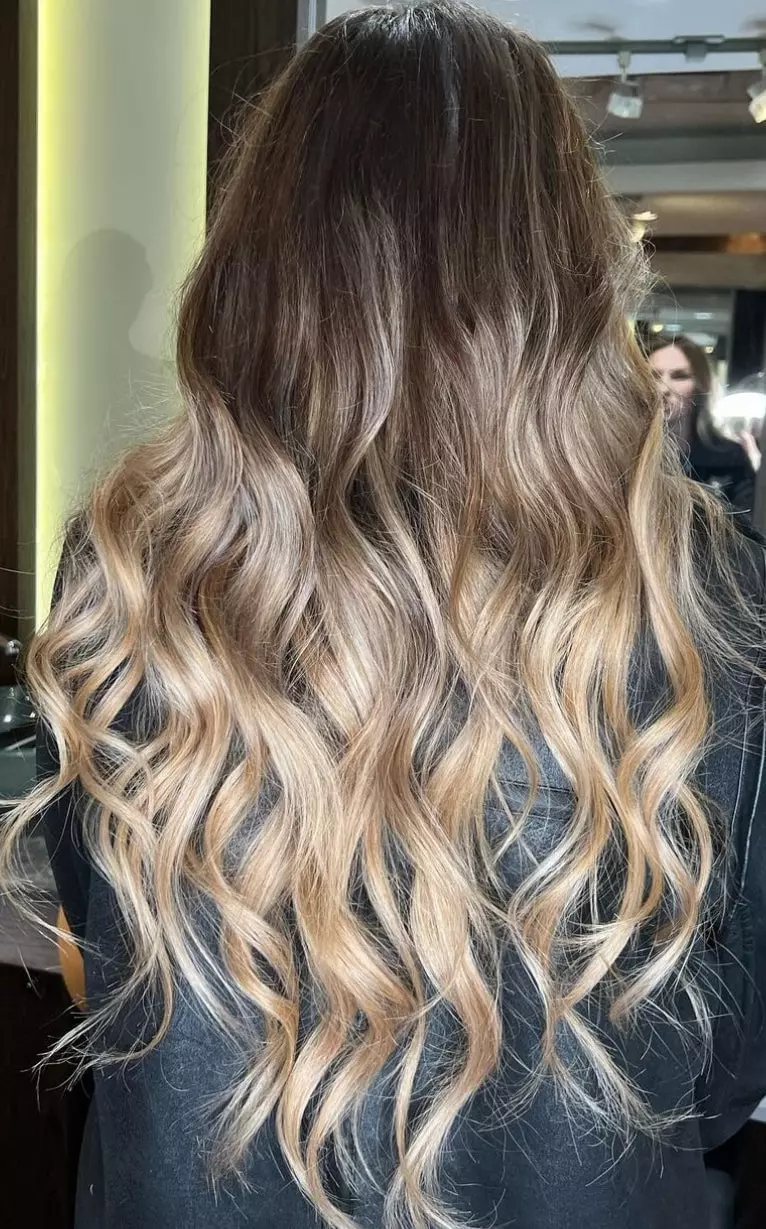
The design here is deliberate: the dark brown root stays deep for two inches, then the balayage begins its slow fade into bright blonde at the ends. No harsh line, no band of orange. The wavy blowout spreads the multi-dimensional tones so the blonde looks like a gradient, not a stripe. This works best on thick, wavy hair at least shoulder length, and suits heart and oval faces well. A subtle color change or very fine hair that may be damaged by the lightening needed are not ideal for this look.
Dark brown base with caramel balayage highlights, close-up take
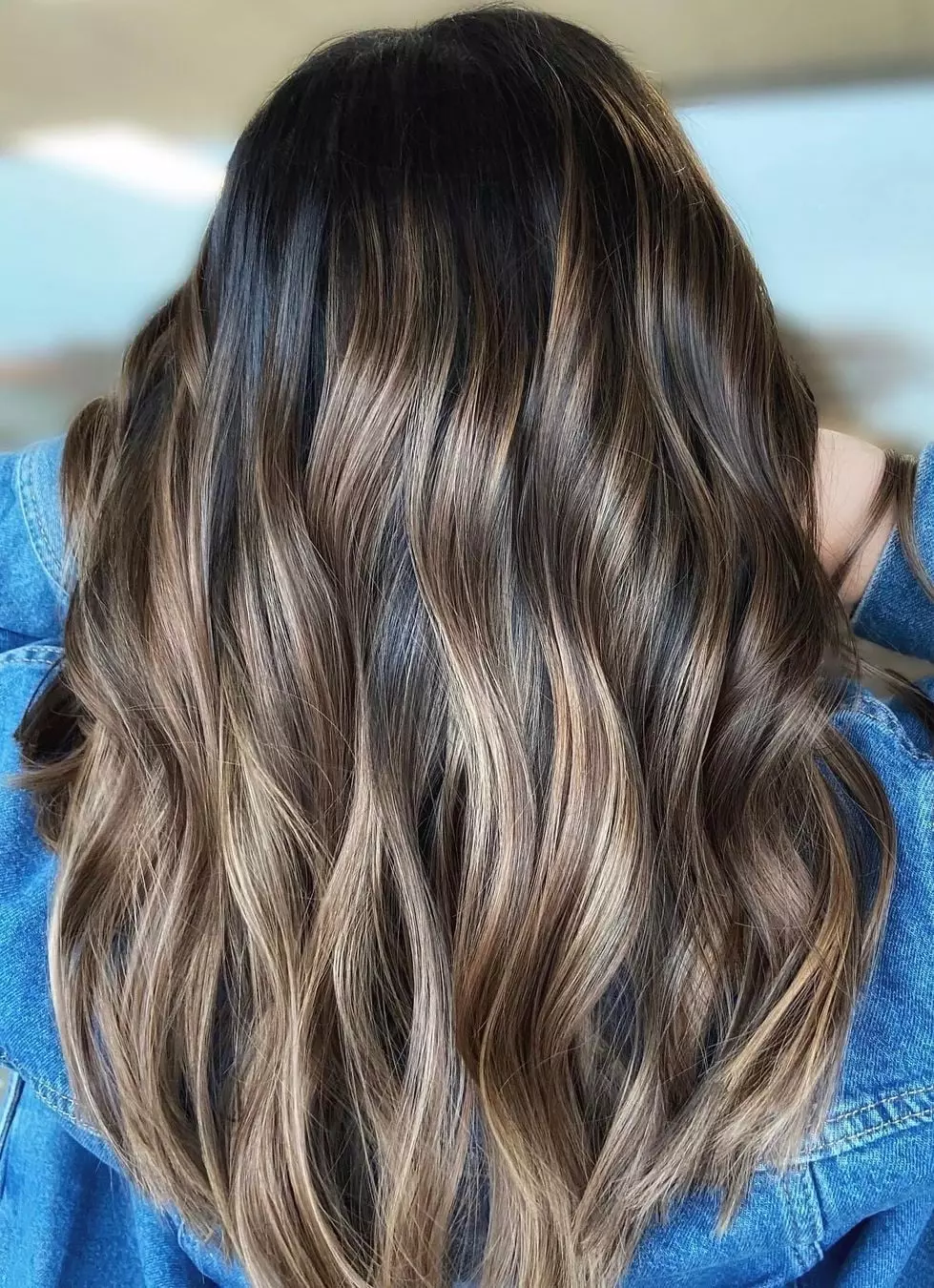
The key is placement: the caramel pieces sit mid-shaft to ends, concentrated around the face and through the mid-lengths. A salon does this better than a box, because the stylist paints each section by hand to avoid stripes. The waves are your friend here. They break up the color and keep the rich brown and caramel from blending into one flat tone.
Lighter brown balayage adds movement to dark brown waves
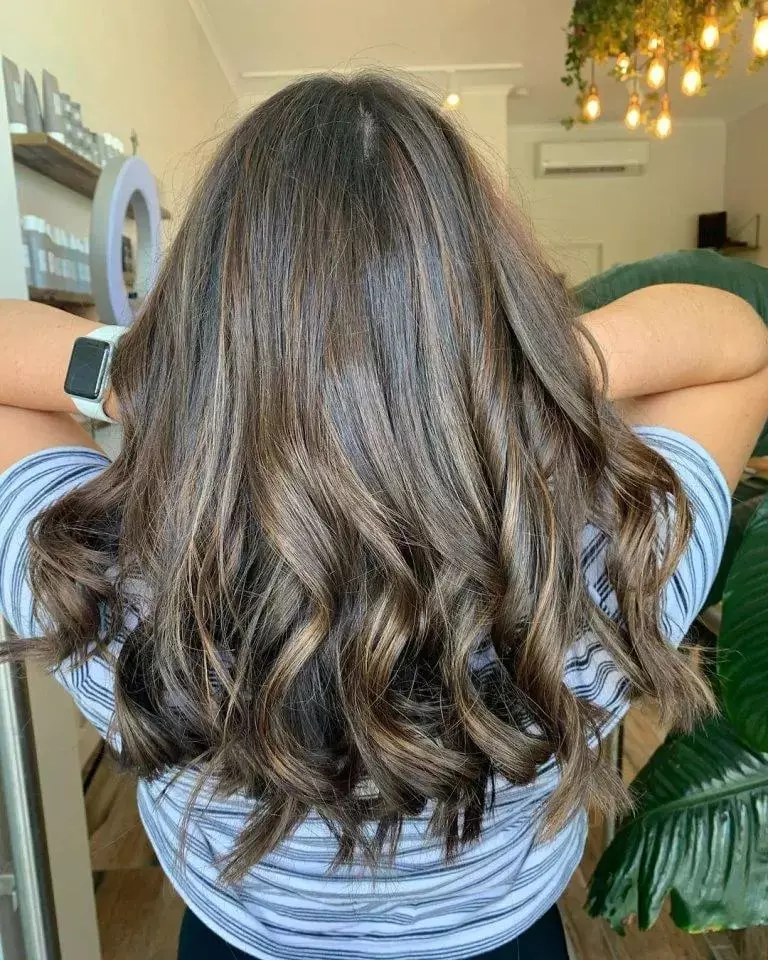
A subtle lighter brown balayage on dark brown hair sounds easy, but the mistake people make is going too light. The lighter brown here sits only a shade or two above the base, so it looks a natural highlight, not a separate color. The waves help, but the real trick is the blending. If the lighter brown is painted too close to the root, you lose the depth that makes dark brown work. One real drawback: the subtlety means it fades fast. A toning gloss every six weeks keeps it distinct.
Lob with caramel balayage for dimension
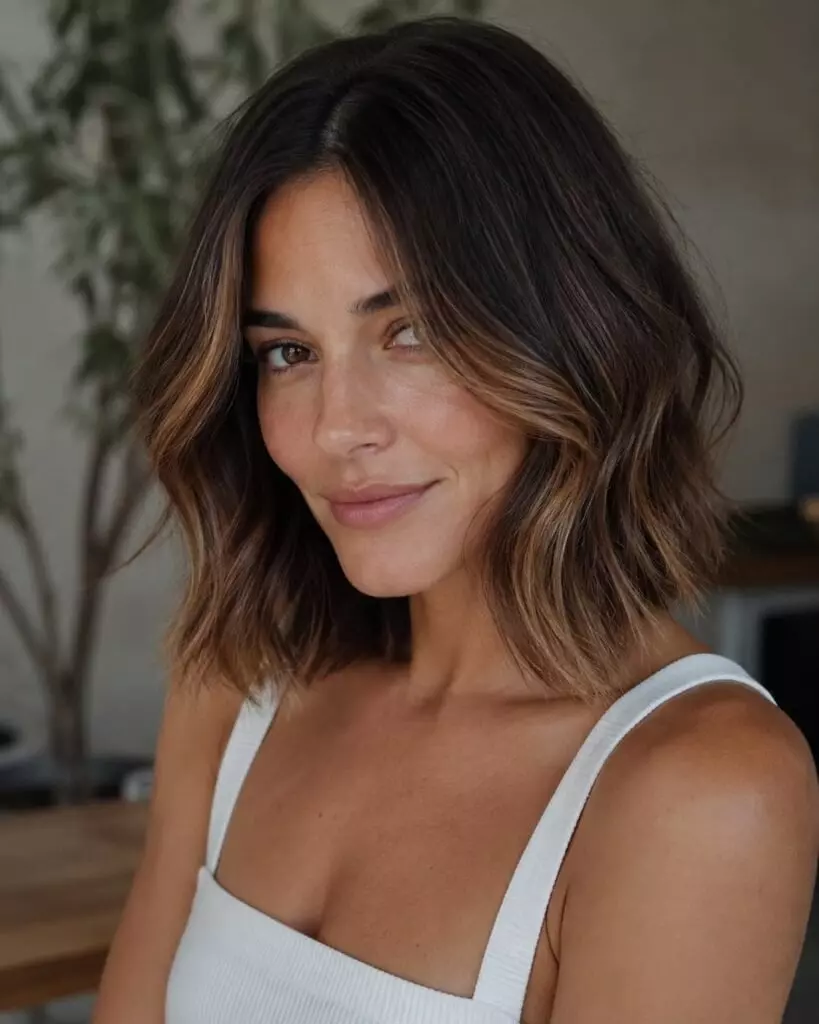
A lob lands at a specific spot: between the chin and the shoulder. That length makes the caramel balayage visible without overwhelming the cut. The dark brown base anchors the color, while the caramel pieces run through the mid-lengths and ends, adding warmth. This suits round and heart faces because the lob’s shape balances the jawline. Skip it if you prefer longer hair or a blunt cut. The caramel needs the layered movement to show.
Brown balayage with blonde highlights creates blended tones
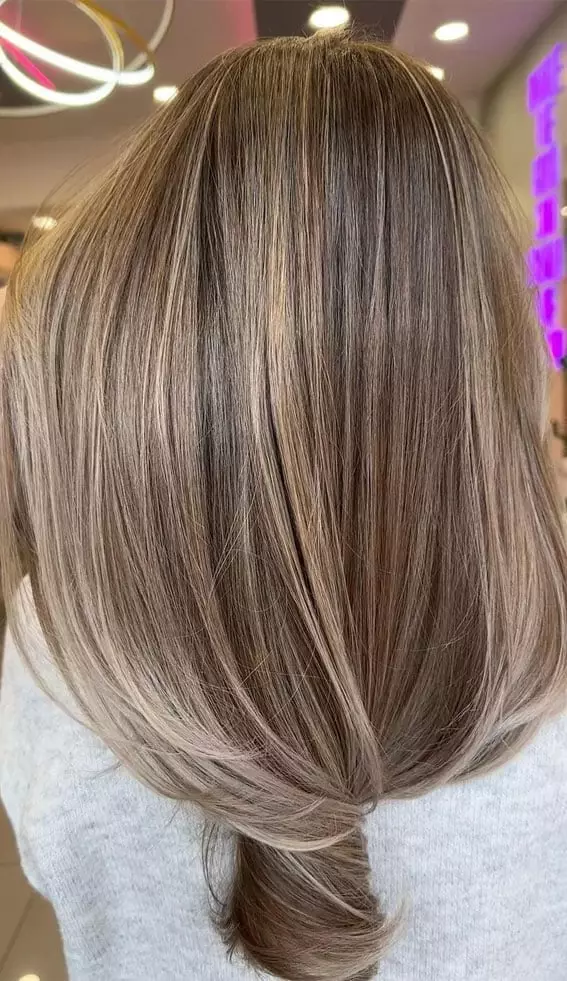
Consider a single-tone brown, then consider this. Brown balayage with blonde highlights cuts the contrast, so the shift looks a natural evolution rather than a hard line. The layered cut and smooth blowout work together, the fine, wavy texture catching the lighter pieces without effort. You need at least shoulder length for the layers to register properly. The catch: this look favors fine hair over coarse, since too much density can swallow the blonde pieces.
Round faces benefit from the vertical lines a middle part and layers create. Long faces get a break from the width at the sides. The result is a color that works for work and weekends without announcing itself.
Dark brown with caramel balayage highlights
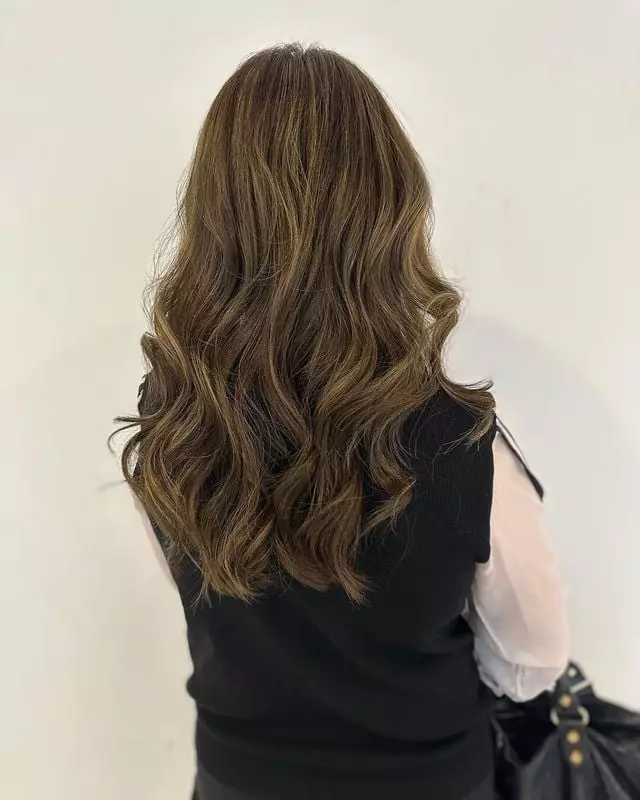
Back-view framing shows the caramel balayage on a dark brown base wrapping around the waves, so the warmth reads from every angle, not just the front. The layers sit just below the shoulder, the thick texture holding the wave pattern without deflating. Request: dark brown base, caramel balayage highlights, wavy style. The dimension comes from placing the lighter sections where the hair naturally bends, not from a uniform lift. This look announces itself with a noticeable color change.
Dark brown base with caramel balayage
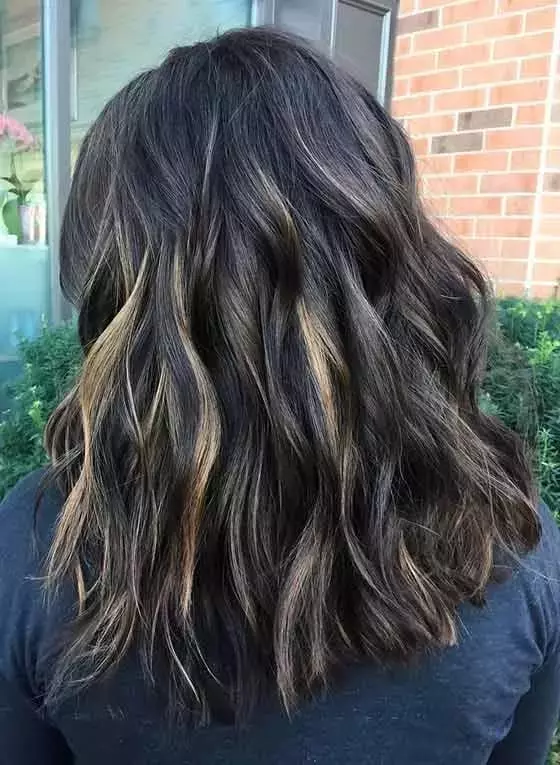
Soft layers and loose waves give this version a lighter feel that looks accidental. It is not. The thick, wavy texture holds the caramel placement exactly where the stylist painted it, and the grow-out is the main event here. Balayage on a dark brown base fades gracefully, so you can stretch the salon visit to every twelve weeks without a harsh root line.
The drawback: very fine hair may not cooperate with the loose wave pattern. A sea salt spray helps, but the texture needs some innate grip.
Soft caramel balayage highlights frame a dark brown face
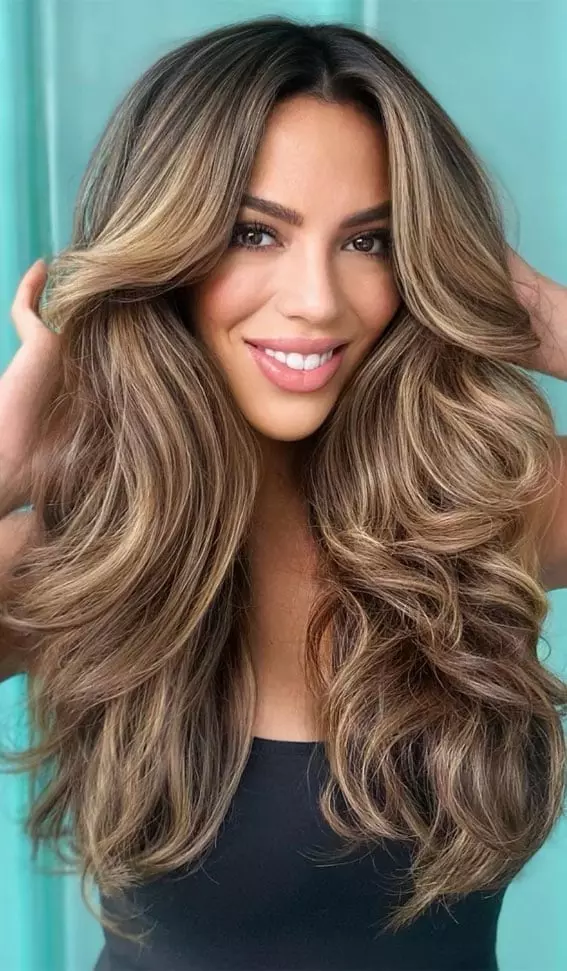
Wondering how to get the face-framing effect without the commitment of full highlights? The answer is strategic placement around the front sections. Soft caramel balayage on a dark brown base skips the middle and concentrates brightness where it meets the cheekbones and jaw. The thick, wavy texture keeps the lighter pieces from looking pasted on. Request: dark brown base, face-framing caramel balayage, loose waves. Round and square faces benefit most, since the lighter sections pull attention outward rather than down. Skip it if you prefer an all-over color that doesn’t draw attention to any one area.
Dark brown base with warm caramel balayage, wavy
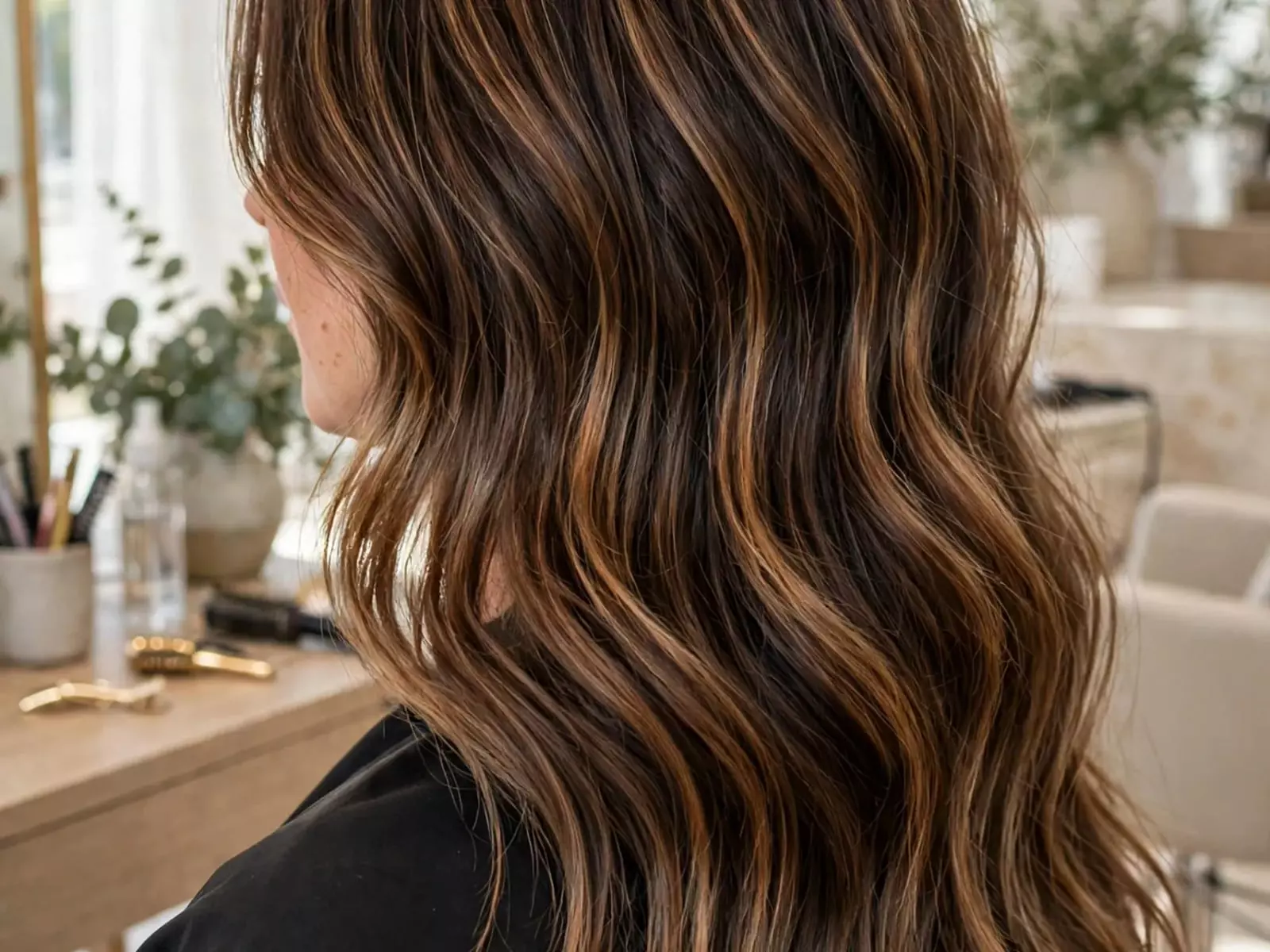
Warm caramel balayage on a dark brown base lands best in the transition months, when the light is low and the sun is unreliable. The warm highlights catch the afternoon slant without needing actual sunlight. The thick, wavy texture gives the caramel pieces enough surface area to register as a deliberate contrast. A color-safe shampoo keeps the warmth from turning brassy at week four. It suits those who prefer warm tones or a color that shifts with the light. The result is a vacation color without the plane ticket.
Smooth caramel balayage adds depth to dark brown
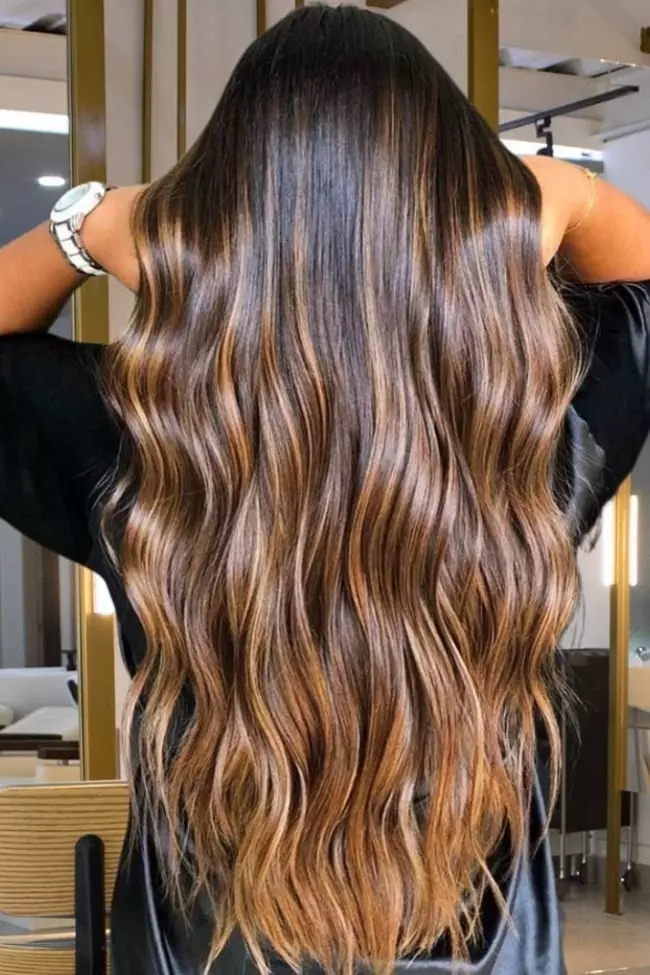
Paint the balayage sections close to the root for the first few inches, then feather the caramel through the ends. A dark brown base with caramel balayage on thick, wavy hair at shoulder length or longer lets the lighter pieces sit where waves naturally bend. Skip it if you prefer high contrast. This technique melts the line instead of drawing it. The seamlessness means you lose the defined root shadow that some brown balayage looks rely on.
Dark brown base with caramel balayage and perfect for a sharp
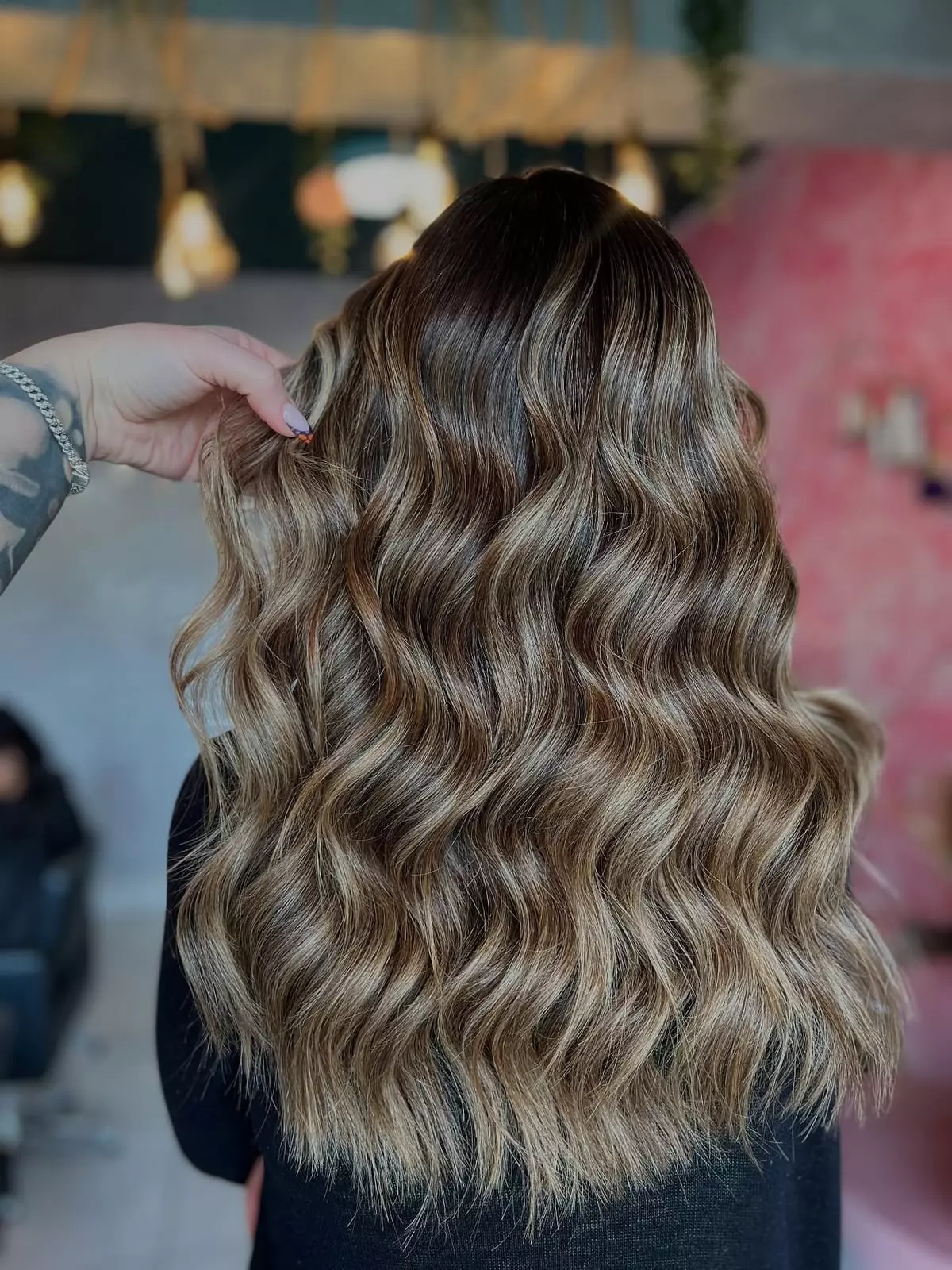
Two tones on the same head: dark brown at the root and caramel through the mid-lengths and ends. A dark brown base with caramel balayage on thick, wavy hair at shoulder length or longer looks grown-in rather than painted on. The multi-tonal effect happens because the caramel pieces hit at slightly different heights. Pass when you want a single, uniform shade. This relies on variation. A texturizing spray at the mid-lengths gives the waves enough grip to hold the color bands visible.
Warm brown base with caramel balayage
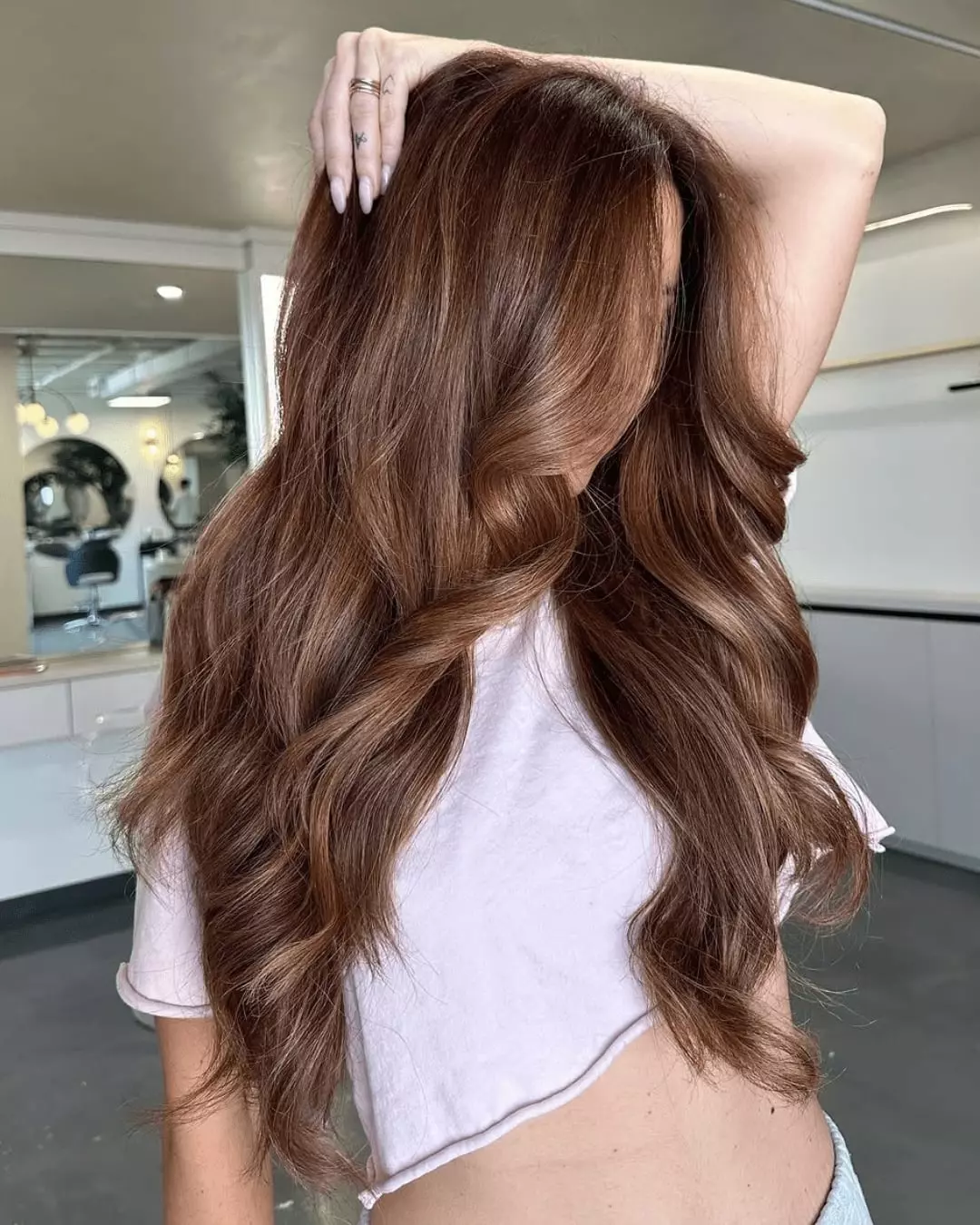
Cool-toned balayage gets all the attention, but a warm brown base with lighter caramel balayage sits closer to what most brown hair does in the sun. The loose waves on thick, wavy hair let the caramel look a natural progression rather than an addition. A toning appointment every six weeks keeps the caramel from pulling orange. The subtle blending means grow-out is gentle, no hard line at the root.
Dark brown base with caramel balayage, everyday version
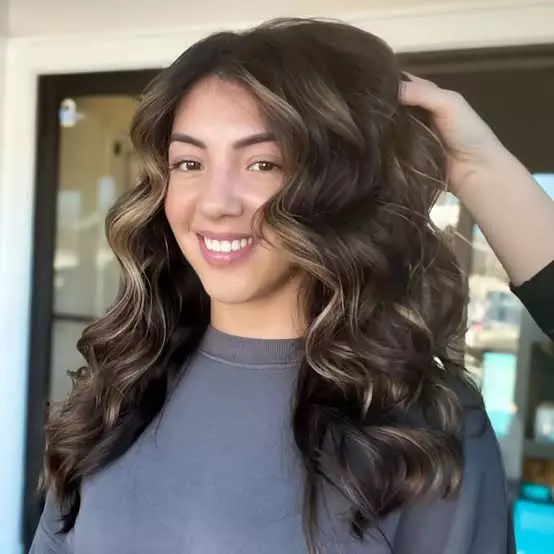
Book it as: dark brown base with caramel balayage, wavy blowout. The salon version uses a round brush and a dryer; you can replicate it at home with a large-barrel wand and a heat protectant. A dark brown base with caramel balayage on thick, wavy hair at shoulder length or longer looks more neat than a lived-in balayage but less formal than a full highlight. Skip it if you air-dry exclusively. The wave pattern is what shows the caramel placement.
Dark brown base with lighter brown balayage
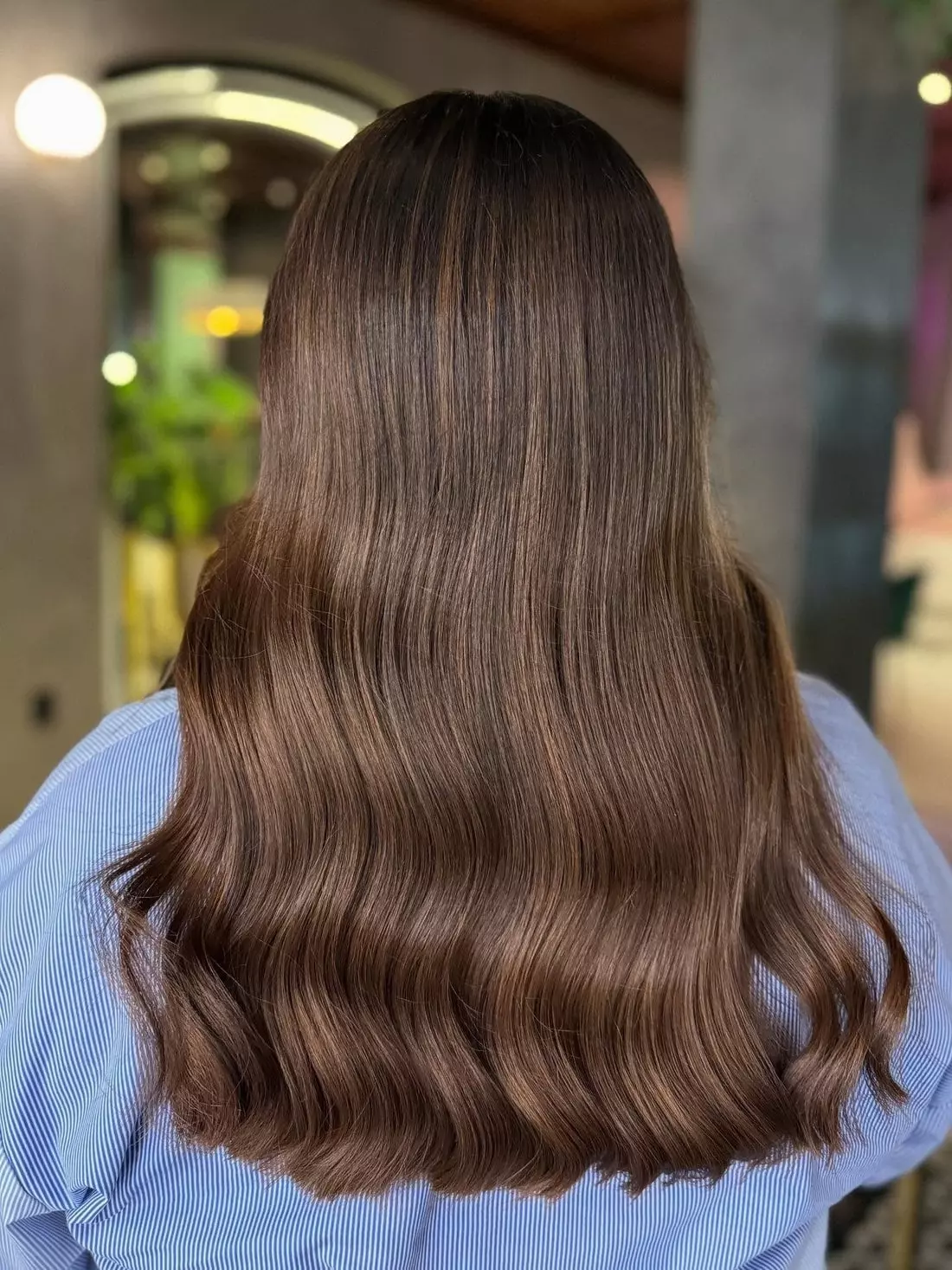
The mistake people make with a dark brown base and lighter brown balayage is asking for too much lift, then needing toner to correct the warmth. A middle part on thick, wavy hair at shoulder length or longer lets the softer sections frame both sides evenly. The drawback: the blend looks flat if the stylist paints too wide a section. Keep the balayage sections narrow, about a quarter-inch, so the dark base stays visible between them.
Layered cut with blonde highlights in brown balayage
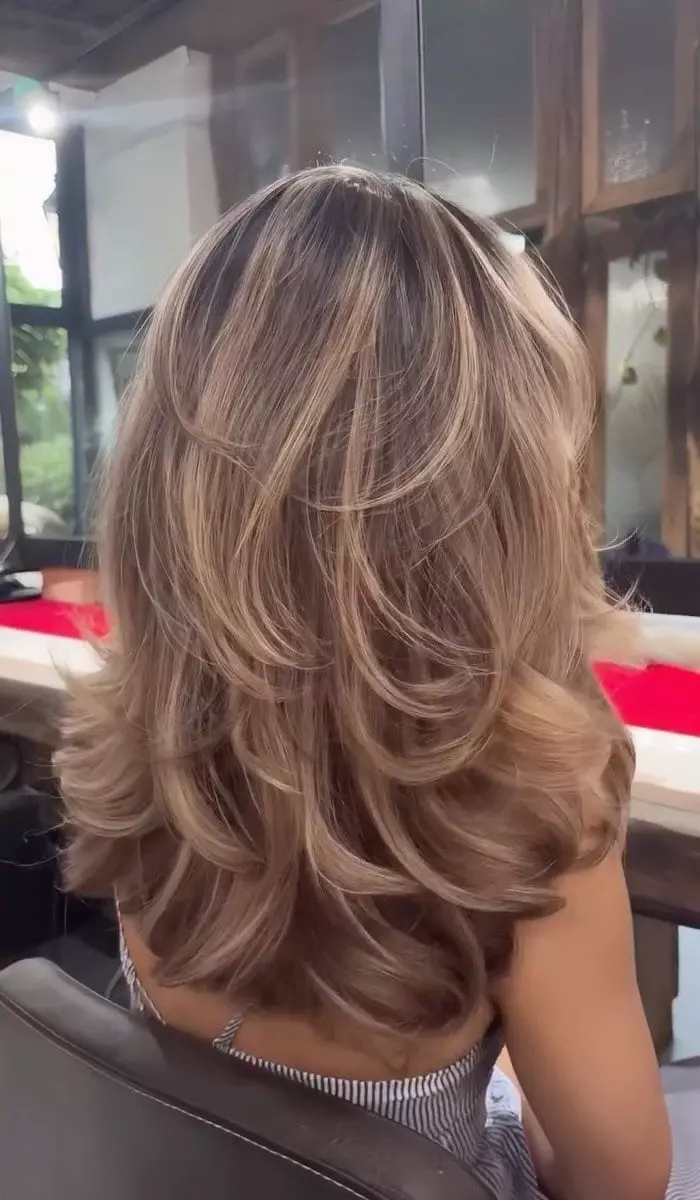
Blonde highlights feel deliberate against the brown balayage base, while lighter pieces run through the layers and catch the eye. Hair that is thick and wavy at least shoulder length handles this best. The texture gives the blonde something to bounce off. A middle part and a blowout finish the look. Fine hair tends to lose the separation between base and highlight, so pass if yours is on the thinner side. Ask your stylist for: layered cut, brown balayage with blonde highlights, middle part.
Ash blonde balayage blended smoothly on dark brown
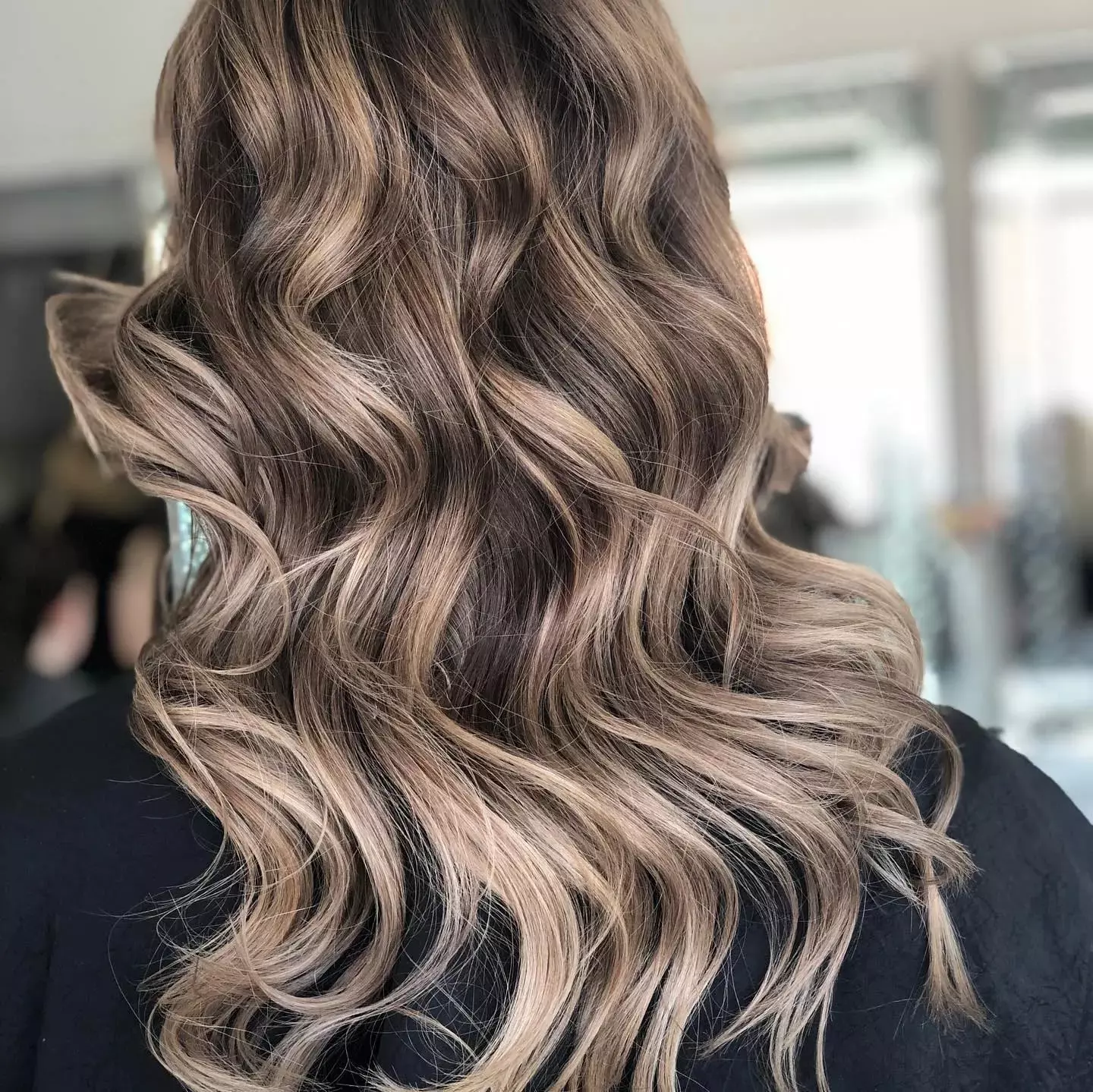
Warm caramel gets all the attention, but ash blonde on dark brown does something cooler. The contrast lands softer than a blonde streak and sharper than a single-process brown. Loose waves help the ash tone avoid looking flat, which is the main risk with cool shades. Hair that is thick and wavy at shoulder length or longer suits oval and long faces best. Ash blonde requires a neutral wardrobe to look cohesive. Request: dark brown base, ash blonde balayage, soft transitions.
Bob with caramel balayage highlights
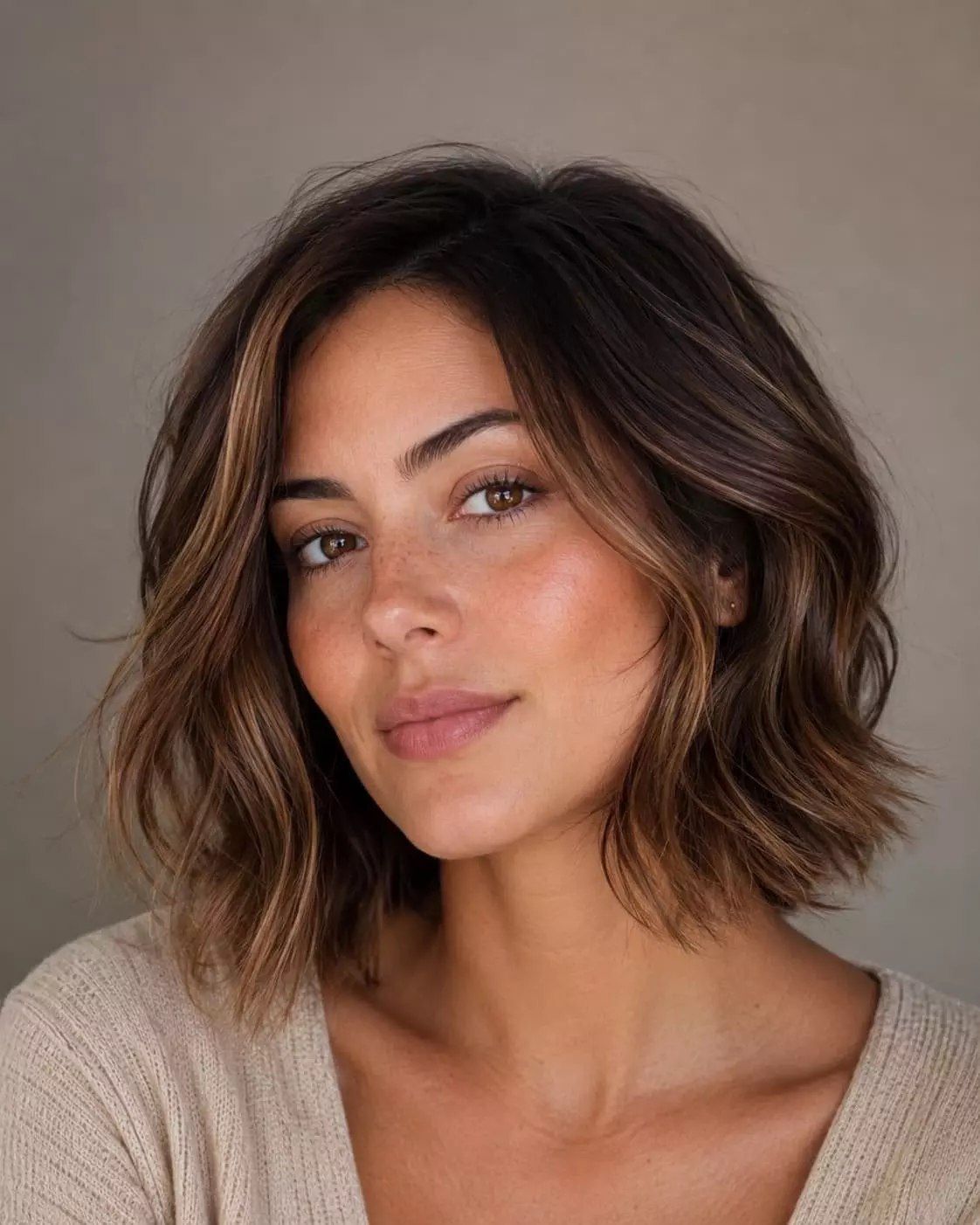
A bob with caramel balayage works because the cut does the heavy lifting. The dark brown base keeps the shape grounded, and the caramel pieces land around the jaw where they add warmth without competing with the line of the bob. Fine, wavy texture is ideal here. The subtle balayage looks movement rather than damage. Round and heart faces benefit from the side part and the soft wave breaking up the perimeter. Pass when you prefer longer hair or a blunt cut. Ask your stylist for: bob haircut, dark brown base, subtle caramel balayage.
Balayage transition from dark brown to ash blonde, wavy
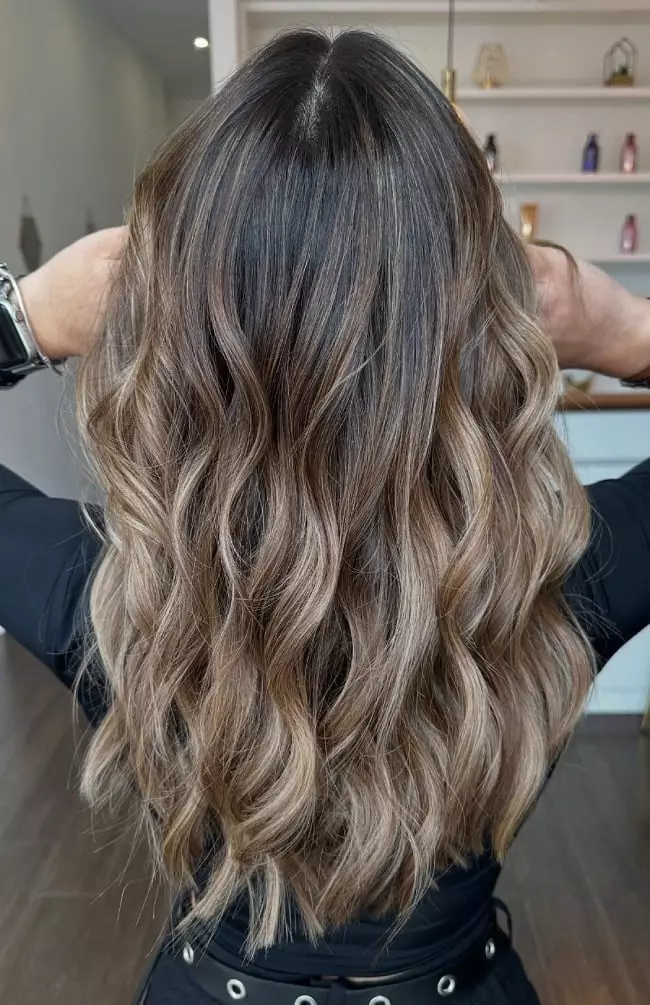
Ash blonde on dark brown grows out better than caramel does. The root line stays softer because the base color and the highlight share a similar depth at the scalp. Waves help the transition look intentional rather than overdue.
The catch: ash tones need more maintenance than warm ones. Hair that is thick and wavy at shoulder length or longer handles the contrast best. Oval and long faces suit the vertical dimension this creates. Request: dark brown base, ash blonde balayage, waves.
Dark brown base with caramel balayage, side-swept
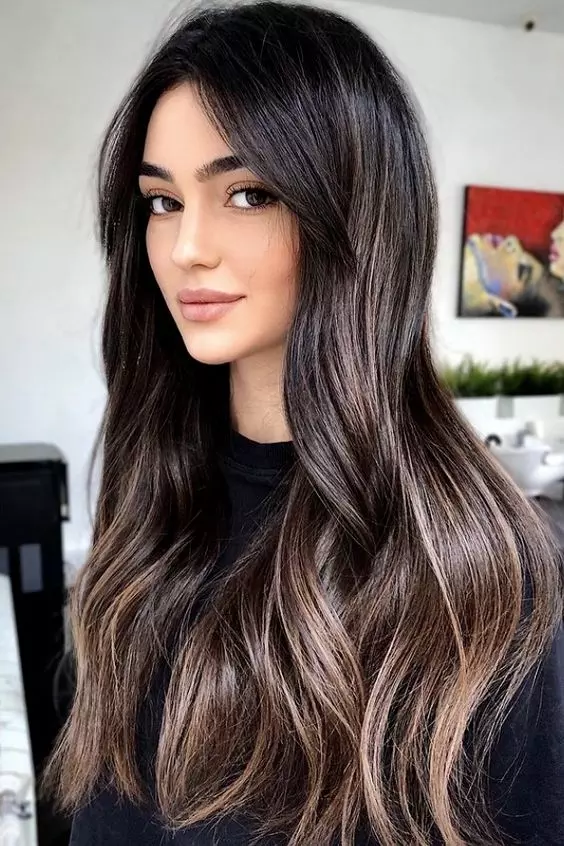
Side-swept bangs and caramel balayage together need a colorist who understands placement. The caramel should hit the face-framing layers first, then fade into the dark brown base. Hair that is thick and wavy with face-framing layers suits round and heart faces by breaking up the width at the cheekbone. This is a salon job. The transition from dark brown to caramel requires precise sectioning. A subtle or all-over color is a different look. Book it as: dark brown base, smooth caramel balayage, face-framing layers.
Dark brown base with lighter brown balayage, softer variation
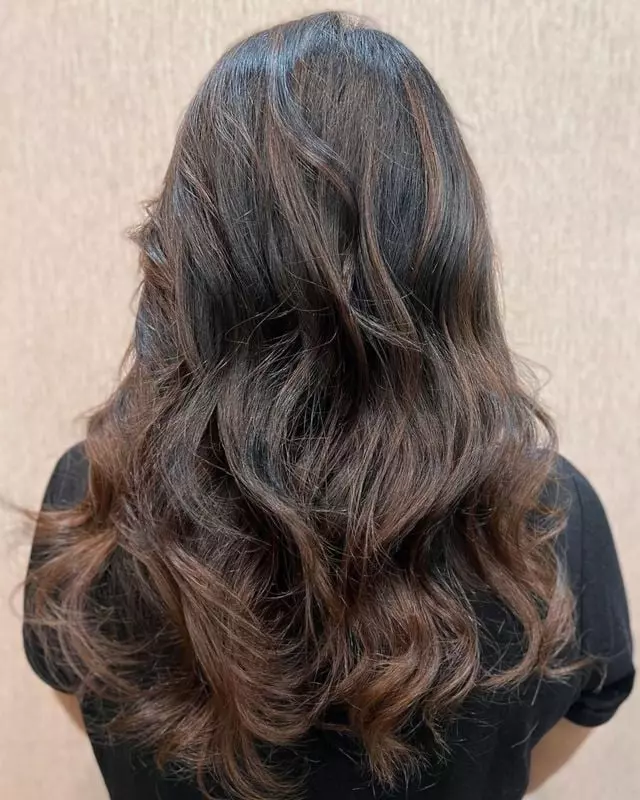
Keep the lighter pieces a shade or two above your natural base. The common mistake is lifting too light, which kills the soft transition you are after. A dark brown base with lighter brown balayage works best when the contrast looks a shadow, not a stripe. Hair that is thick and wavy at shoulder length or longer carries this technique naturally.
Pass when you want high contrast or bold highlights. The softness comes from keeping the lighter sections fine and the blend gradual. The result is a color shift that moves with the wave, not against it.
Balayage transition from dark brown to blonde, close-up take
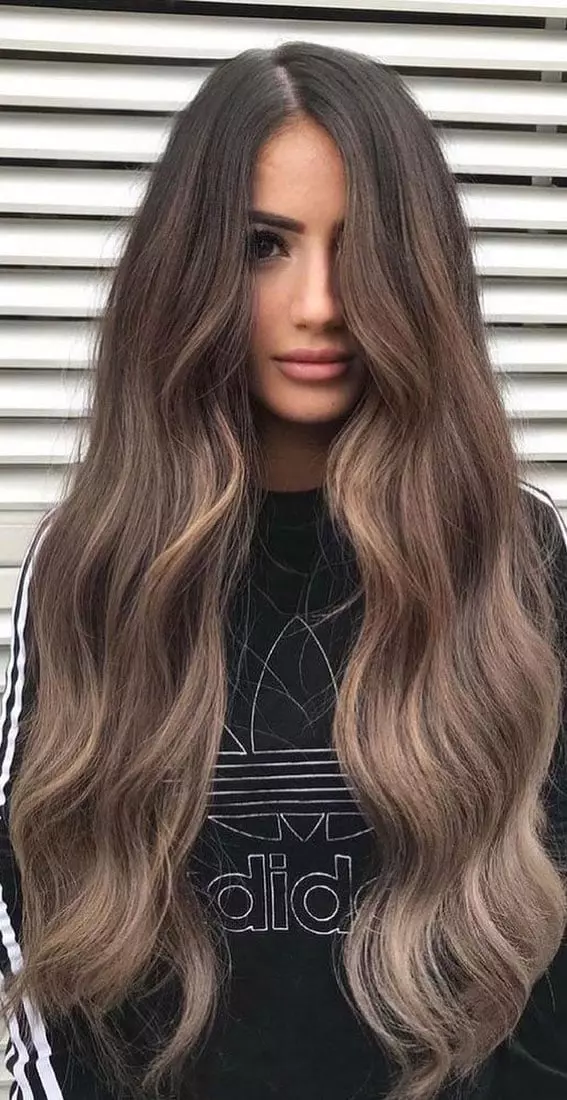
One clear assessment: this finish requires maintenance. The balayage technique here paints the lighter sections freehand, starting mid-length and concentrating toward the ends.
Hair that is thick and wavy at shoulder length or longer gives the transition room to breathe. Skip it if you prefer warm tones or a very subtle color change. The loose waves show off the gradient without effort.
Final Thoughts
Pick the brown balayage that fits your base color and your patience for root appointments.
- Fine hair: choose softer contrast to keep depth.
- Cool base that pulls brassy: ash blonde balayage, toned every 8 weeks.
- Warm skin tone: caramel highlights avoid a muddy look.
- Low upkeep priority: darker lift, longer grow-out window.
Find the brown balayage that complements your style and maintenance routine.